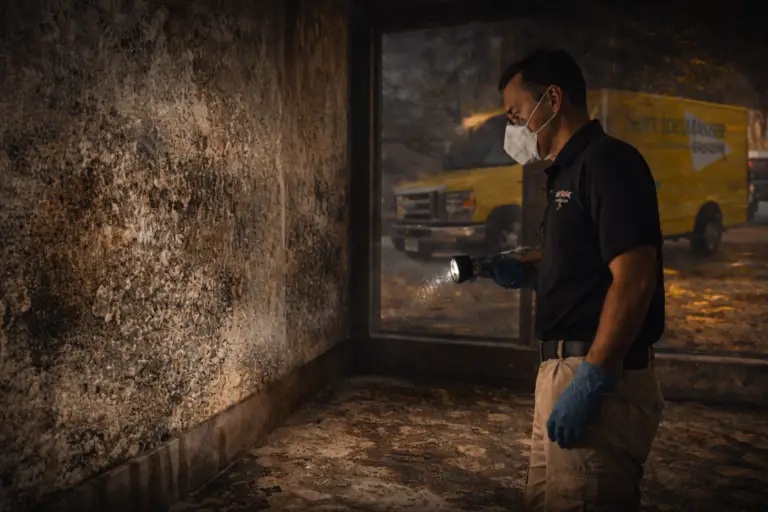
Mold problems often start quietly, but they can become serious surprisingly fast. A little moisture from a leak, humidity issue, basement dampness, or past water event can create the right conditions for spores to grow behind walls, under flooring, around insulation, or inside neglected corners of the home. Because mold often hides before it becomes visible, many property owners do not realize they have a problem until odors develop, stains spread, or indoor comfort begins to change.
That is why mold should never be treated as just a cosmetic issue. It is a moisture problem first, a cleanup problem second, and a long-term property protection issue throughout the entire process. If the source of moisture is not addressed, surface cleaning alone rarely solves the problem. For homeowners in DuPage County, the smartest approach is to recognize early warning signs, understand where mold commonly hides, and know what professional remediation actually involves. The more you understand the process, the easier it becomes to act before the issue affects both the building and the people living inside it.
Why Mold Is More Than a Surface-Level Problem

One of the biggest misconceptions about mold is that if you wipe away the visible spots, the problem is gone. In reality, visible growth is often only a small part of the issue. Mold thrives where moisture persists, and those conditions often exist in concealed building materials rather than open surfaces. That means the actual source may be behind drywall, beneath flooring, inside insulation, near plumbing lines, or around ventilation trouble spots.
Mold also spreads through microscopic spores, which is why disturbed growth can move contamination into new areas if cleanup is handled improperly. This matters because improper handling does not just leave the original issue in place. It can expand it. The effect on the property can include stained materials, weakened drywall, damaged trim, deteriorated finishes, and recurring odor problems. In more advanced situations, sections of material may need to be removed to restore safe, dry conditions.
The most effective mold remediation is built on two principles: remove contamination properly and eliminate the moisture conditions that allowed growth in the first place. Without both steps, the problem tends to return. That is why professional remediation focuses on assessment, containment, air control, safe removal, and preventive treatment rather than quick cosmetic fixes.
Signs Mold May Be Growing in Your Home
Many homes show clues before mold becomes obvious. Paying attention to those clues can help owners act earlier and avoid a larger remediation project.
- A persistent musty smell is often one of the earliest indicators of hidden growth, especially in basements, bathrooms, utility rooms, or enclosed storage areas.
- Dark or discolored spots on walls, ceilings, grout, or trim may suggest active growth, particularly when they keep returning after cleaning.
- Peeling paint or bubbling surfaces can point to trapped moisture behind finished materials.
- Water stains or old leak marks should always be taken seriously, even if they appear dry now.
- Worsening indoor allergy-like discomfort may lead some owners to investigate air quality and moisture conditions more closely.
- Warped materials or recurring dampness often signal the type of environment where mold can take hold.
When several of these signs appear together, it is wise to stop guessing and have the area assessed. Early professional evaluation is often the most efficient next step.
Where Mold Commonly Hides and Why It Spreads
Mold prefers moisture, still air, and organic materials to feed on. That combination is more common in homes than many people realize. Bathrooms, kitchens, laundry areas, basements, crawl spaces, attics, window perimeters, and mechanical rooms all deserve attention because they tend to trap humidity or experience occasional leaks.
Basements are especially vulnerable. Water intrusion, poor drainage, foundation seepage, and limited airflow create ideal conditions for growth. Bathrooms may support mold through steam, grout moisture, hidden plumbing leaks, and poor exhaust performance. Attics are another overlooked area. Roof leaks and ventilation problems can let moisture build up slowly over time without immediate visibility from the living space below.
Mold also spreads because moisture problems are often underestimated. A homeowner may notice a stain, dry the area, and assume the issue is resolved. But if the cavity behind the wall remains damp, growth can continue. In some cases, previous water damage that seemed minor becomes a mold issue weeks later because drying was incomplete. That is why moisture control and remediation are so closely connected. If one is ignored, the other will not hold.
What Professional Mold Remediation Usually Includes
A strong remediation plan is more than cleaning. It is a controlled process designed to locate, contain, remove, and prevent.
- Inspection and assessment identify visible and hidden moisture-related problem areas so the scope is based on evidence, not guesswork.
- Containment barriers and negative air control help keep spores from spreading into clean areas during removal.
- Safe removal of contaminated materials protects unaffected rooms and reduces the chance of recontamination.
- HEPA filtration and detailed cleaning address airborne particles and settled contamination in the work zone.
- Antimicrobial treatment and surface sanitization support a cleaner, healthier environment after removal is complete.
- Moisture correction and prevention planning reduce the chance of the same issue returning later.
This process matters because mold remediation should restore confidence, not just appearances. A clean-looking room is not enough if moisture remains hidden behind the finished surface.
How to Lower the Risk of Mold Returning

Once remediation is complete, prevention becomes the next priority. The most important thing to remember is that mold needs moisture to survive. That means long-term prevention is really about managing leaks, airflow, humidity, and water-prone areas consistently. Owners who think only about cleaning often miss the bigger issue, which is environmental control.
Start by addressing plumbing leaks promptly and checking under sinks, behind appliances, and around utility lines regularly. Make sure bathrooms, laundry spaces, and kitchens have proper ventilation and that exhaust fans are actually moving moisture out instead of letting it linger. Basements benefit from monitoring too, especially after storms or seasonal humidity changes. If a space tends to feel damp, it should be watched more carefully.
It also helps to respond quickly after any water event, even one that seems minor. Small intrusions are easier to dry thoroughly when handled right away. Delays give moisture time to sink into building materials and create the conditions mold needs. Consistency matters more than perfection. A property that is inspected regularly and dried promptly is far less likely to face a recurring mold issue.
A Practical Moisture Control Checklist for Owners
Prevention is easier when it is tied to a simple routine rather than a one-time fix.
- Inspect under sinks, around toilets, and near tubs or showers for drips, staining, or soft materials.
- Check basement corners and storage zones after heavy rain or seasonal weather changes.
- Watch ceilings and upper walls for new discoloration that could suggest roof or pipe trouble.
- Use ventilation consistently in bathrooms, kitchens, and laundry areas where moisture builds fast.
- Do not ignore musty odors, even if no visible mold is present yet.
- Act quickly after leaks or flooding so drying begins before mold can take hold.
Following these simple habits will not eliminate every risk, but it will dramatically improve your ability to catch problems early. The homes that avoid major mold issues are usually the ones where moisture changes are noticed and addressed before they become prolonged.
Protect Your Home With Trusted Mold Remediation Help
If you’ve noticed musty odors, moisture issues, or visible mold growth, now is the time to act. ServiceMaster Restore delivers professional mold remediation solutions designed to address the source of the problem and help create a safer indoor environment. We proudly service this area from Lisle to Woodridge, with dependable support for local property owners.
Reach out to ServiceMaster Restore today for professional mold remediation you can rely on.