


How does commercial mold remediation differ from residential work?
Commercial mold remediation follows the same core rule as any job: remove the growth and fix the moisture. The difference is the people and systems around it. EPA's guide for schools and commercial buildings adds a remediation manager, occupant communication, containment scaled to job size, HVAC protection and scheduling that limits disruption to the business.
Offices, schools, restaurants and apartment buildings share air systems, ceiling plenums and corridors, so a problem in one suite can affect many people. That's why EPA wrote a separate guide, Mold Remediation in Schools and Commercial Buildings, aimed at building managers, custodians and the contractors they hire.
What does EPA's commercial guide say about containment and protective gear?
EPA scales the response to the size of the moldy area. Limited containment is generally recommended for 10 to 100 square feet of contamination: a single layer of 6-mil fire-retardant polyethylene with a slit entry and covering flap, with supply and air vents, doors, chases and risers sealed. Full containment is recommended above 100 square feet, or whenever occupied space would likely be contaminated without it. It uses double layers of polyethylene and a decontamination chamber or airlock for entry and exit.
Both levels are kept under negative pressure, usually with a HEPA-filtered fan unit exhausted outside the building. Protective equipment scales the same way, from an N-95 respirator on small jobs to half-face or full-face respirators with HEPA cartridges, and powered air-purifying respirators where heavy, long exposures are expected. EPA adds that size is only a starting point: heavy growth in a small area can release more spores than light growth in a large one. Our containment and HEPA air filtration page goes into the build details.
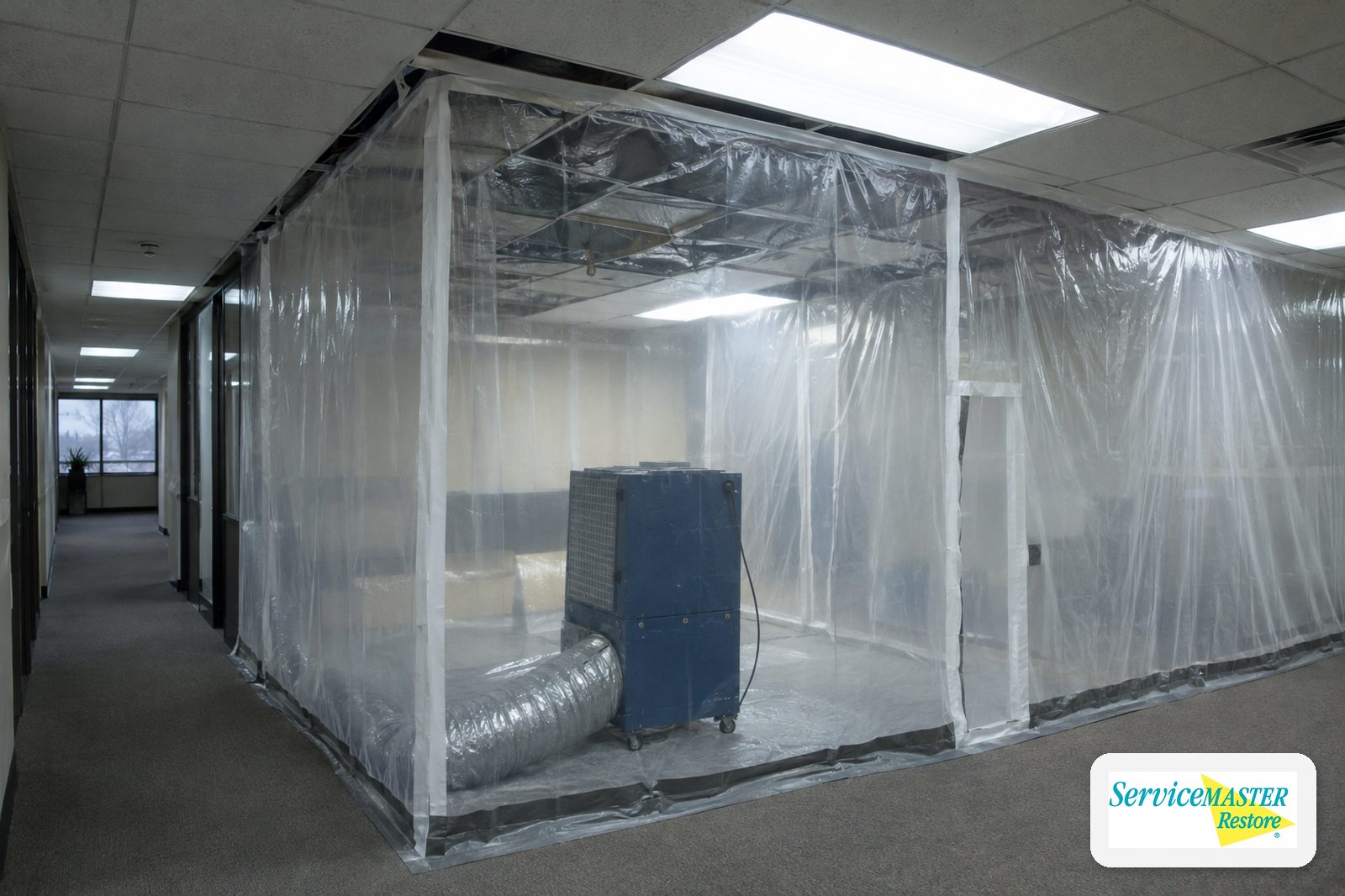
Ceiling tiles and return-air plenums
When the space above a drop ceiling is used as a return-air plenum, EPA says heavy mold on ceiling tiles can affect the HVAC system. In that case containment should run from the floor all the way to the ceiling deck, and the filters in the air handlers serving the area may need replacing once remediation is finished.
How should building managers communicate with occupants?
EPA's Appendix C on communicating with building occupants is blunt: people's perception of health risk can rise if they think information is being withheld. It recommends naming one contact person, explaining the project's size, activities and timetable, and posting regular updates through to a final notice.
| Project | What EPA recommends |
|---|---|
| Small remediation | Usually no formal communication process, but take individual concerns seriously and use common sense |
| Medium or large remediation | Understand and address occupant concerns; explain clearly what has to be done and any possible health concerns |
| Ongoing projects | Regular memos or meetings with time for questions; posted progress updates; a final memo or meeting at completion |
| Schools | Notify teachers, parents and affected groups of significant issues as soon as they're identified; consider a special meeting for parents |
| Any relocation | Notify people in advance when possible and plan for people with asthma, allergies or compromised immune systems |
Source: U.S. EPA, Mold Remediation in Schools and Commercial Buildings, Appendix C
How can a business reduce downtime during mold remediation?
EPA recommends scheduling remediation during off-hours when possible, so occupants are less affected. For large areas of contamination, the plan may include temporarily relocating some or all occupants. EPA says that decision should weigh the size and type of the affected area, the health effects people report, the potential risks from debris, and how much disruption the work will cause.
Good containment is what lets the rest of the building stay open. A sealed, negative-pressure work zone means a restaurant can keep its dining room running while a back corridor is remediated, or an office can keep most floors occupied. Fast drying after a leak matters too. EPA's guidance centers on drying wet materials within 24 to 48 hours, before mold starts. Our mold inspection and assessment defines the real footprint so the work zone is no bigger than it needs to be.
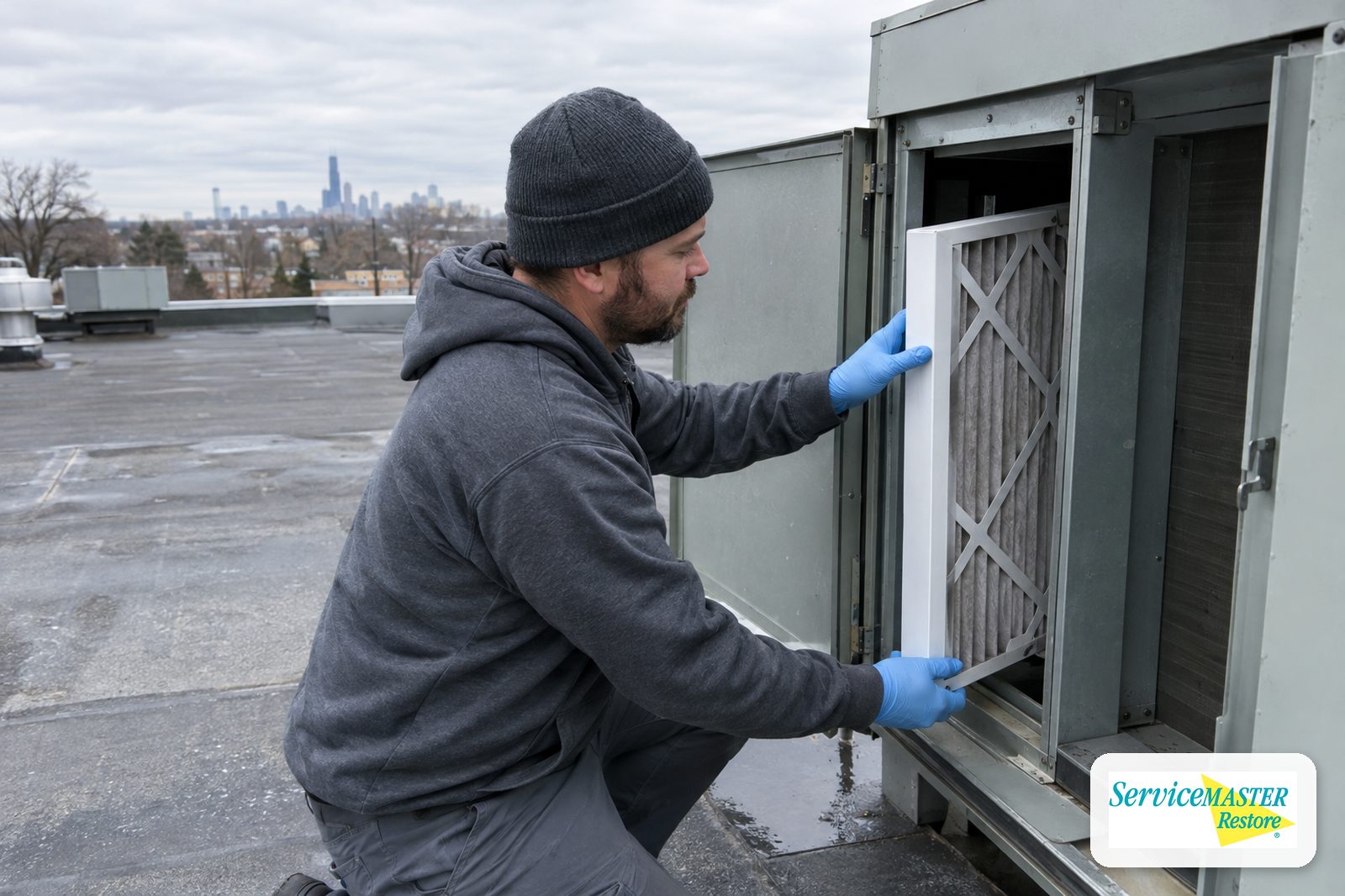
HVAC: shut it down before it spreads spores
EPA's rule is simple: don't run the HVAC system if you know or suspect it is contaminated with mold. Instead, consult EPA's guide Should You Have the Air Ducts in Your Home Cleaned?, which EPA says also applies to other buildings. During remediation, EPA suggests considering filters rated MERV 8 and changing them after the work is done.
What should a commercial remediation project document?
For property managers, insurers and sometimes attorneys, the paper trail matters as much as the cleanup. The ANSI/IICRC S520 standard includes a full section on administrative procedures, documentation and risk management, along with inspection, HVAC remediation and post-remediation verification. In practice that means moisture readings, photos before and after, the containment layout, a waste log and a clear statement of what was removed. EPA notes that sampling can be useful when litigation is involved or the source is unclear. Timeframes for each phase are in our guide to how long mold remediation takes.
- Select a remediation manager. EPA recommends one for medium or large jobs, or small jobs that need more than one person.
- Assess size and materials. Measure the moldy area and note which materials are damaged, including hidden areas above ceilings and in pipe chases.
- Find the moisture source. Leaks, condensation, HVAC drip pans and envelope failures all go on the list.
- Plan and communicate. Adapt EPA's guidelines to the building, choose PPE and containment, and brief occupants.
- Remediate. Fix the water problem, clean and dry moldy materials, and discard what can't be cleaned.
- Check for return. EPA's last step is to check that moisture and mold haven't come back, and to revise the plan if hidden mold turns up.

Commercial mold remediation in DuPage and Will County
Our certified technicians serve offices, schools, restaurants, warehouses and multi-unit buildings from our Lisle base. See mold remediation in Oak Brook, Oakbrook Terrace, Aurora and Romeoville. Ongoing humidity and drainage plans fall under moisture control and long-term prevention. For homes, see residential mold remediation; all services are on our mold remediation hub.
Insurance: Commercial property policies differ widely on mold. Review your policy with your agent, and use our insurance claim assistance to keep documentation organized. We help document; we don't negotiate claims or act as a public adjuster.
Managing a building with a mold problem? Request a site assessment or call (630) 241-1111 any time.
Frequently asked questions
Do we have to close the building during mold remediation?
Not usually. EPA recommends scheduling remediation during off-hours when possible and says temporary relocation is mainly a consideration for large areas of contamination. The decision should weigh the size of the affected area, health effects occupants report, risks from debris and the disruption involved. Sealed, negative-pressure containment is what allows the rest of a building to stay in use.
Who should occupants contact with questions during a mold project?
EPA's guidance on communicating with building occupants recommends identifying one person whom occupants can contact directly about the remediation. That contact should share the project's size, planned activities and timetable, post regular updates, and send a final notice when the work is complete. Open communication reduces rumors and lets managers spend more time fixing the problem.
Can our maintenance staff handle small mold jobs in-house?
EPA wrote its schools and commercial buildings guide partly so maintenance staff with little mold experience could judge whether a job can be handled in-house. Small areas can often be cleaned by trained staff using at least an N-95 respirator, gloves and eye protection. EPA notes that respirator use in the workplace must follow an OSHA respiratory protection program, including training and fit testing.
Can outdoor fungicides be used to treat mold inside a building?
No. EPA's commercial buildings guide says not to use fungicides developed for outdoor use for mold remediation or any other indoor situation. It also notes that biocides are not recommended as a routine part of mold remediation, and that some states require only registered pesticide applicators to apply such products in schools. Physical removal and cleaning come first.
How do we know the remediation contractor did the job right?
EPA lists the end-of-job checks: the water or moisture problem is fixed, no visible mold, mold-damaged materials or moldy odors remain, the site shows no new water damage when revisited, and occupants can return without health complaints. If sampling was done, indoor mold types and levels should be similar to outdoor air. Many commercial owners also request written post-remediation verification.
Sources
- U.S. EPA: Mold Remediation in Schools and Commercial Buildings, Chapter 3
- U.S. EPA: Mold Remediation in Schools and Commercial Buildings, Appendix C: Communicating with Building Occupants
- U.S. EPA: Should You Have the Air Ducts in Your Home Cleaned?
- IICRC: ANSI/IICRC S520 Standard for Professional Mold Remediation
- U.S. EPA: Mold Remediation in Schools and Commercial Buildings, Chapter 1
