


What counts as fire damage, and how is it restored?
Fire damage is more than charred material. It includes heat damage, smoke and soot residue, odor, water from hoses or sprinklers, and openings firefighters cut to vent the building. Restoration addresses each one in order: secure the property, dry it, clean residue, remove odor, then repair what heat destroyed. The work follows the ANSI/IICRC S700 standard.
This page is the starting point for every fire service we offer in DuPage and Will County. It explains what a fire actually leaves behind, how big the problem is nationally, what the industry standard covers, and where to go next for a home or a business.
What does a fire leave behind besides burned material?
Most of the damage in a typical fire is not where the flames were. It falls into four groups, and each one needs its own crew skills and equipment.
Heat and flame
Charring, melted plastics, warped fixtures and weakened framing. Anything structural has to be evaluated before people work near it, and heavily burned materials are removed rather than cleaned.
Smoke, soot and odor
Smoke carries fine particles and odor-causing compounds into every room the air reaches. That residue is handled through smoke and soot cleanup, and lingering smell through odor removal and air quality treatment.
Water from suppression
Hose streams and sprinklers soak drywall, insulation, flooring and contents. That water mixes with soot, and USFA warns that the soot and dirty water left behind may contain things that could make you sick. Our page on water damage cleanup after firefighting covers drying.
Openings made by firefighters
The U.S. Fire Administration's After the Fire guide explains that firefighters may break windows, cut holes in the roof to release smoke, and open walls to make sure no fire is hiding inside. Those openings let in weather until they are closed with board-up and roof tarping and structural stabilization.
How much damage do fires cause in the United States?
The National Fire Protection Association estimates that local fire departments responded to 1,388,000 fires in 2024, causing about $19 billion in direct property damage. Structure fires were only 34% of those fires but caused 83% of the property damage. On average, a fire department responded to a structure fire every 67 seconds.
Direct property damage from U.S. fires by type
Billions of dollars, national estimates, 2024 (residential is part of the structure total)
Source: National Fire Protection Association, Fire Loss in the United States (2024 data)
Homes carry most of that loss. NFPA estimates 351,000 residential structure fires in 2024, responsible for $11.7 billion in direct property damage.
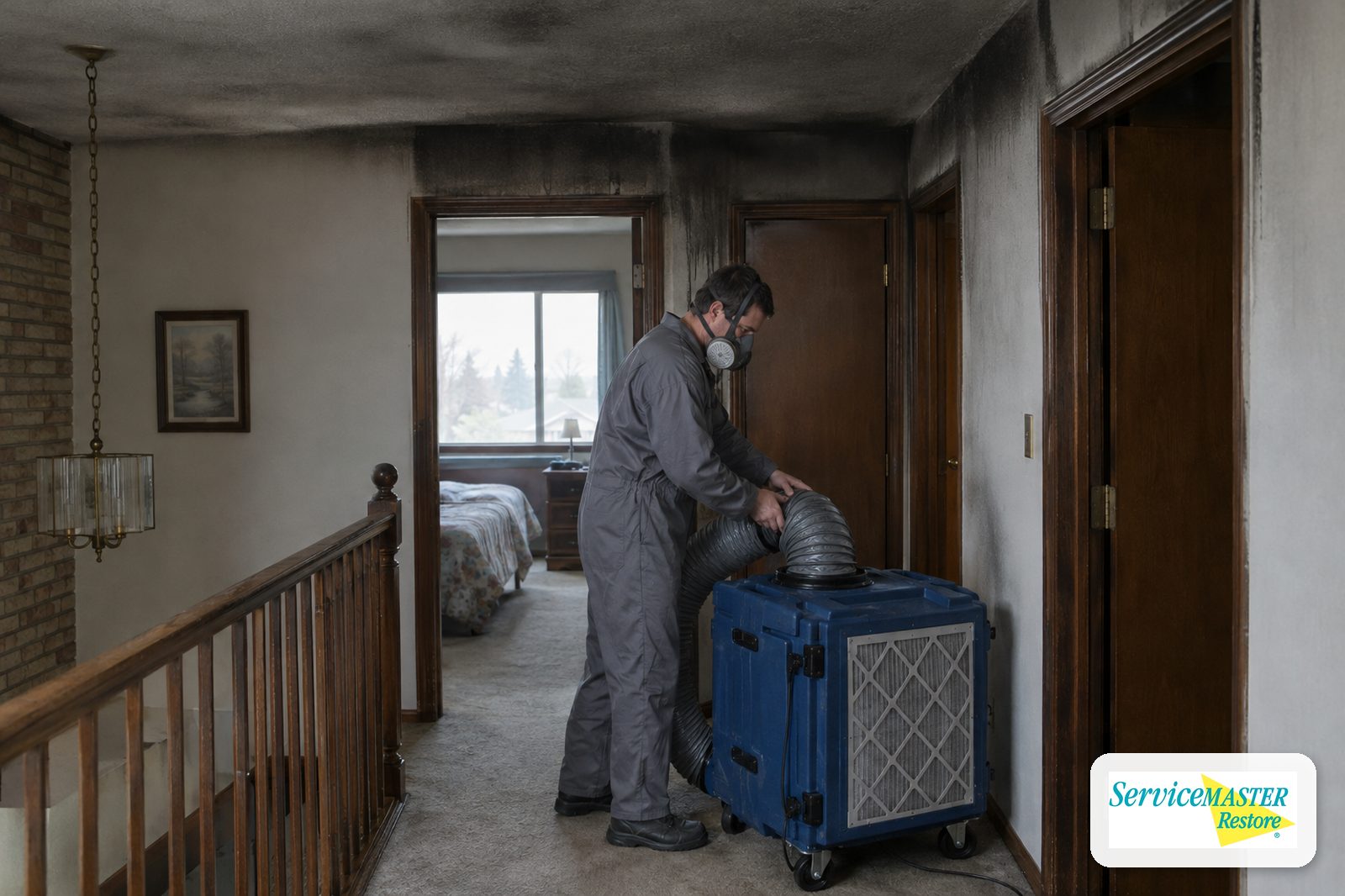
Fire damage in a home
House fires usually start in the kitchen, and smoke spreads through stairwells and ductwork to bedrooms and finished basements. Homeowners need help with safe re-entry, belongings, and insurance coverage for a place to stay. Our residential fire damage restoration page walks through those first days.
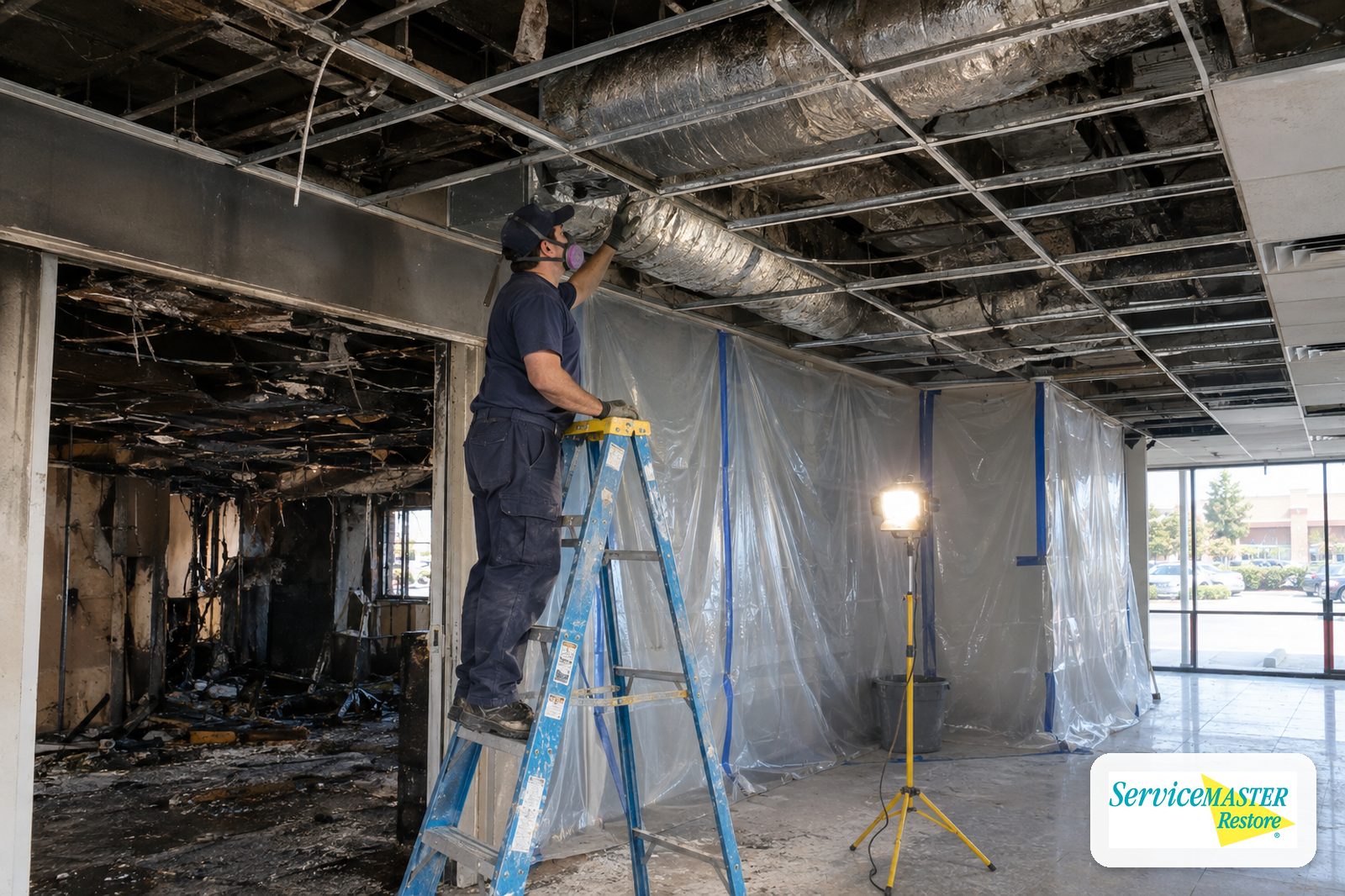
Fire damage in a business
Commercial losses add tenants, inventory, business interruption and code compliance to the job. Smoke from one suite can reach neighbors through shared plenums and air systems. Commercial fire damage restoration covers restaurants, offices, retail and warehouses, and how to keep operating during the work.
What does the ANSI/IICRC S700 standard cover?
ANSI/IICRC S700 is the Standard for Professional Fire and Smoke Damage Restoration. IICRC lists the current version as the First Edition, 2025, and says a consensus body has already begun revising it. In plain terms, the standard covers:
- Assessing where fire residues and odors are present, how heavy they are and where their boundaries lie, in the building, its systems such as HVAC, and its contents.
- Restoration cleaning and fire odor management of buildings and contents, including equipment, tools and materials.
- Contractor qualifications, a written Restoration Work Plan, documentation of project events, and compliance with the authority having jurisdiction.
It is just as useful to know what S700 does not comprehensively address: reconstruction, wildfires, and chemical or industrial fires that pose environmental hazards, along with buildings and occupants with special requirements such as healthcare facilities or people with respiratory disease. The standard also tells restorers to watch for regulated hazardous materials in buildings and to follow local regulations when they are suspected.
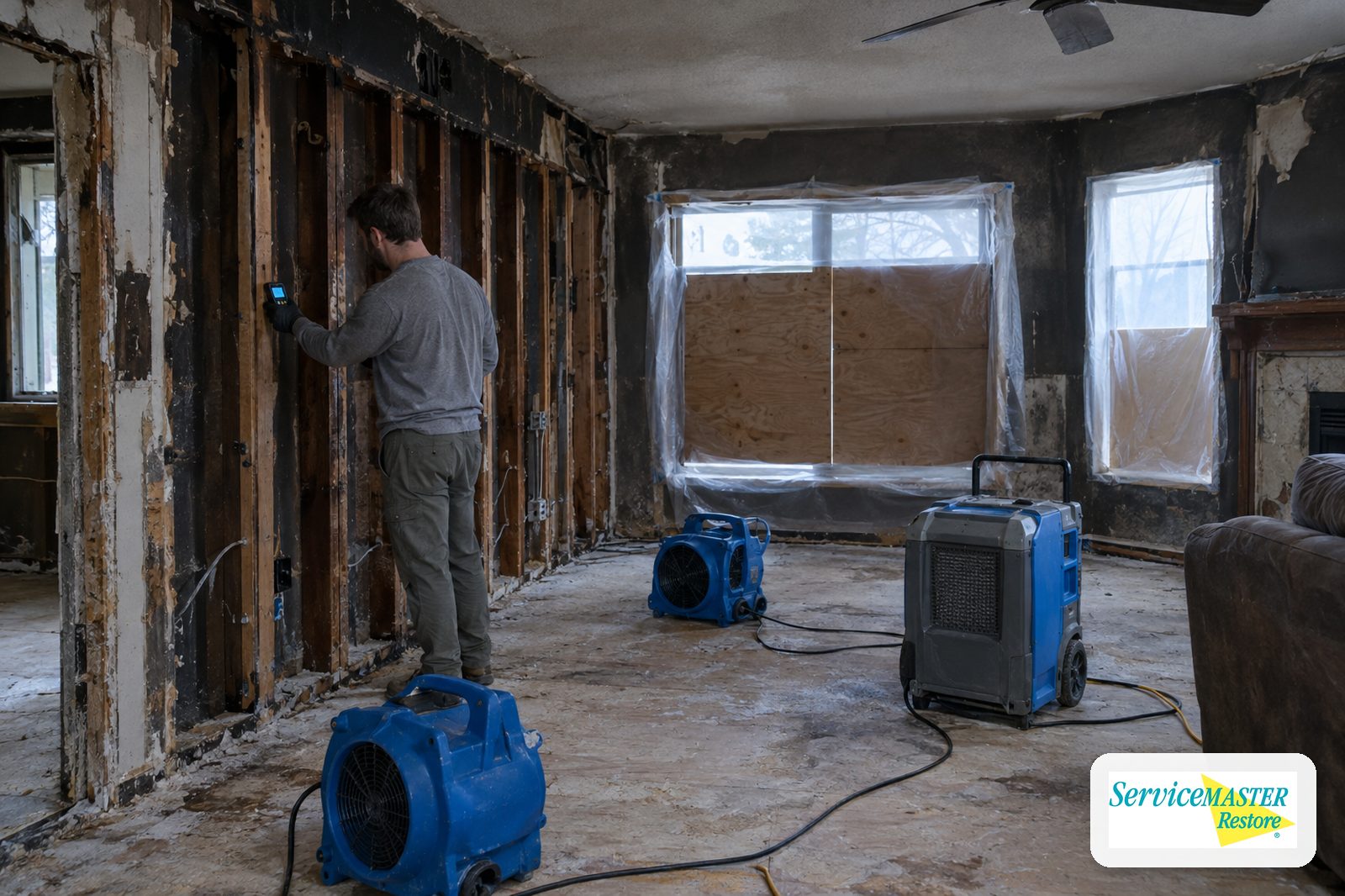
Why the order of work matters
Odor treatment before cleaning wastes money, because the residue keeps producing smell. Cleaning before drying can trap moisture and invite mold. Rebuilding before contents and ducts are clean puts new drywall in a dirty building. A written plan that follows the sequence below protects both the property and the insurance claim.
What are the stages of fire damage restoration?
- Emergency call and safety release. The fire department releases the property and confirms utilities are safe or shut off before anyone works inside.
- Securing. Broken windows, doors and roof openings are boarded or tarped against weather and entry.
- Assessment and plan. Damage from heat, residue, odor and water is mapped and written into a restoration work plan the owner and insurer can review.
- Water mitigation. Suppression water is extracted and the structure is dried and monitored.
- Residue cleaning. Structure, contents and HVAC are cleaned, and unsalvageable materials are removed.
- Odor management. Remaining odor is treated once its sources are gone.
- Repair. Reconstruction follows local codes and permits.
For costs and a deeper walk-through, read our guide to the fire and smoke damage restoration process and cost, and our explainer on types of smoke damage. If the loss involves an insurance claim, see insurance claim assistance; a contractor can document damage but cannot act as a public adjuster in Illinois.
Where do we provide fire damage restoration?
We are based at 924 Ogden Ave in Lisle and serve all of DuPage and Will County, from established neighborhoods with older homes to newer subdivisions and commercial corridors. Town pages include fire damage restoration in Aurora, Hinsdale, Lombard and Lockport.
Our certified technicians have 20+ years of experience with residential and commercial fire losses and respond 24/7. Use our contact form or call (630) 241-1111 to start a fire damage assessment.
Frequently asked questions
What is the difference between fire damage and smoke damage?
Fire damage usually means material burned, charred or weakened by heat, which is generally removed and rebuilt. Smoke damage is residue and odor deposited on surfaces, contents and air systems, often in rooms the fire never reached, and much of it can be cleaned. Most losses involve both, plus water from firefighting, so all three are assessed together.
Why did firefighters break windows and cut holes in my roof?
The U.S. Fire Administration explains that firefighters ventilate a burning building to slow the fire's growth and clear dark smoke that makes it hard to see, and they may open walls to confirm no fire is hidden inside. Those openings need prompt board-up and tarping so rain, snow and intruders do not add to the loss.
What is the IICRC S700 standard?
ANSI/IICRC S700 is the Standard for Professional Fire and Smoke Damage Restoration. IICRC lists the current version as the First Edition, 2025. It covers assessing fire residues and odors in buildings, HVAC systems and contents, restoration cleaning and odor management, and documentation through a written restoration work plan. It does not comprehensively address reconstruction.
Are fire damage restoration and fire damage repair the same thing?
They overlap but are not the same. Restoration covers securing, drying, cleaning residue and removing odor, guided by the IICRC S700 standard. Repair, or reconstruction, rebuilds burned framing, drywall, roofing and finishes under local building codes and permits. Many projects need both, and the cleaning stage should finish before new materials go in.
How much of U.S. fire property damage comes from building fires?
Most of it. The National Fire Protection Association estimates that in 2024, structure fires were 34% of reported fires but caused 83% of direct property damage, about $15.3 billion of roughly $19 billion. Residential structure fires alone accounted for an estimated $11.7 billion.
Sources
- National Fire Protection Association: Fire Loss in the United States
- IICRC: ANSI/IICRC S700 Standard for Professional Fire and Smoke Damage Restoration
- U.S. Fire Administration (FEMA): After the Fire: Returning to Normal (FA-46)