



What do residential cleaning services include?
Residential cleaning services cover recurring upkeep, one-time deep cleaning, kitchen and bathroom detailing, move-in or move-out cleaning and seasonal resets. A good plan matches the type of cleaning to how your household lives, targets dust and high-touch surfaces, and uses products correctly so the home is cleaner without adding new irritants to the air.
Which type of home cleaning do you actually need?
Most homeowners in DuPage and Will County need one of five service types, and the right one depends on how long it has been since the last thorough clean and what is coming up on the calendar.
Recurring upkeep
Routine house cleaning is the weekly or every-other-week visit that keeps floors, bathrooms, kitchen counters and dusted surfaces from slipping. It works best once a home is already at a clean baseline.
Catch-up and detail work
Deep cleaning services reach the places routine visits skip: baseboards, inside appliances, grout lines, vent covers and the tops of door frames. Many households book a deep clean first, then switch to recurring service.
Room-focused service
Kitchen and bathroom cleaning concentrates on grease, soap scum, mildew and the fixtures everyone touches. It suits busy homes where the rest of the house stays manageable.
Transitions and one-off events
Move-in and move-out cleaning handles empty rooms between owners or tenants. Seasonal or one-time cleaning covers spring resets, holiday hosting and the day after a party, and post-construction cleaning deals with the fine dust left by a remodel.
Why indoor air is part of a clean home
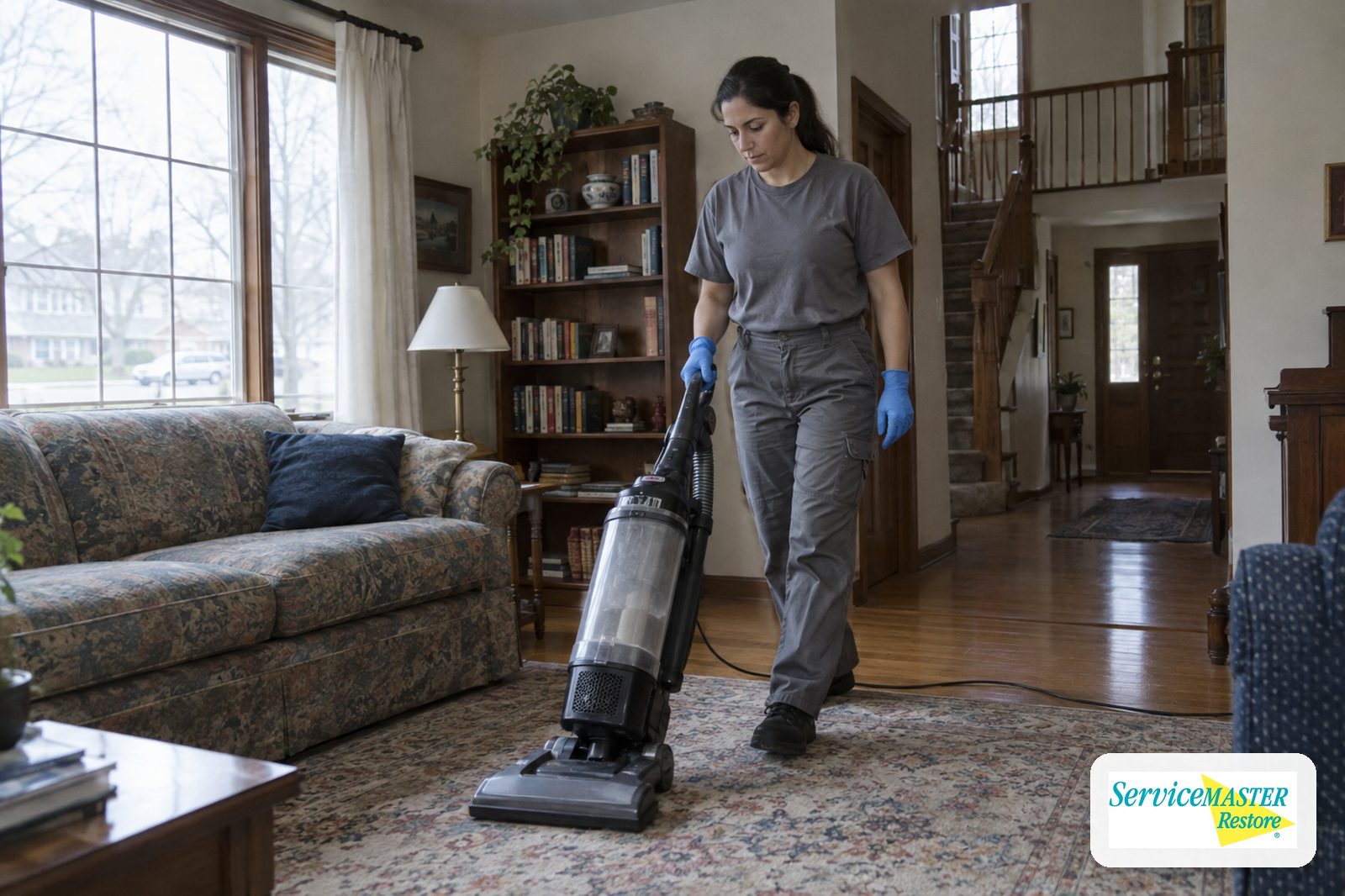
According to the U.S. EPA, Americans spend roughly 90 percent of their time indoors, where concentrations of some pollutants are often 2 to 5 times higher than typical outdoor levels. Dust, pet dander and fumes from products all settle into that indoor air.
That is why method matters as much as effort. Capturing dust instead of spreading it, and ventilating while you clean, changes what you breathe after the cleaner leaves.
How often should you schedule house cleaning?
There is no single right frequency. The useful question is how fast your home returns to "needs attention" after a thorough clean. A couple in a condo may stretch to every other week. A household with young children, a shedding dog and a busy kitchen often needs weekly visits.
Weigh these factors when choosing a schedule:
- Pets and allergies. Dander and dust collect quickly on floors and upholstery, so allergy-prone homes usually benefit from more frequent vacuuming.
- Household size. More people means more traffic, more laundry lint and more bathroom use.
- Work-from-home time. Homes that are occupied all day get dirty faster than homes that sit empty until evening.
- Season. Spring pollen and winter slush both raise the amount of dirt tracked indoors.
Start with a schedule you can sustain, then adjust after a month. Changing frequency is easier than recovering from a long gap.
Can regular cleaning make a home healthier?
Cleaning will not cure anything, but it can reduce exposure to common indoor triggers. The EPA's guide to asthma triggers lists dust mites, mold, cockroaches and other pests, pets and chemical irritants among the triggers found in homes.
The same EPA guidance recommends practical steps a cleaning routine supports: vacuuming carpets and furniture every week with a HEPA-filter vacuum, keeping counters, sinks and floors free of crumbs and clutter, and keeping indoor humidity between 30 and 50 percent to discourage mold. If someone in your home has asthma, follow their clinician's advice on triggers and treat cleaning as one supporting piece.
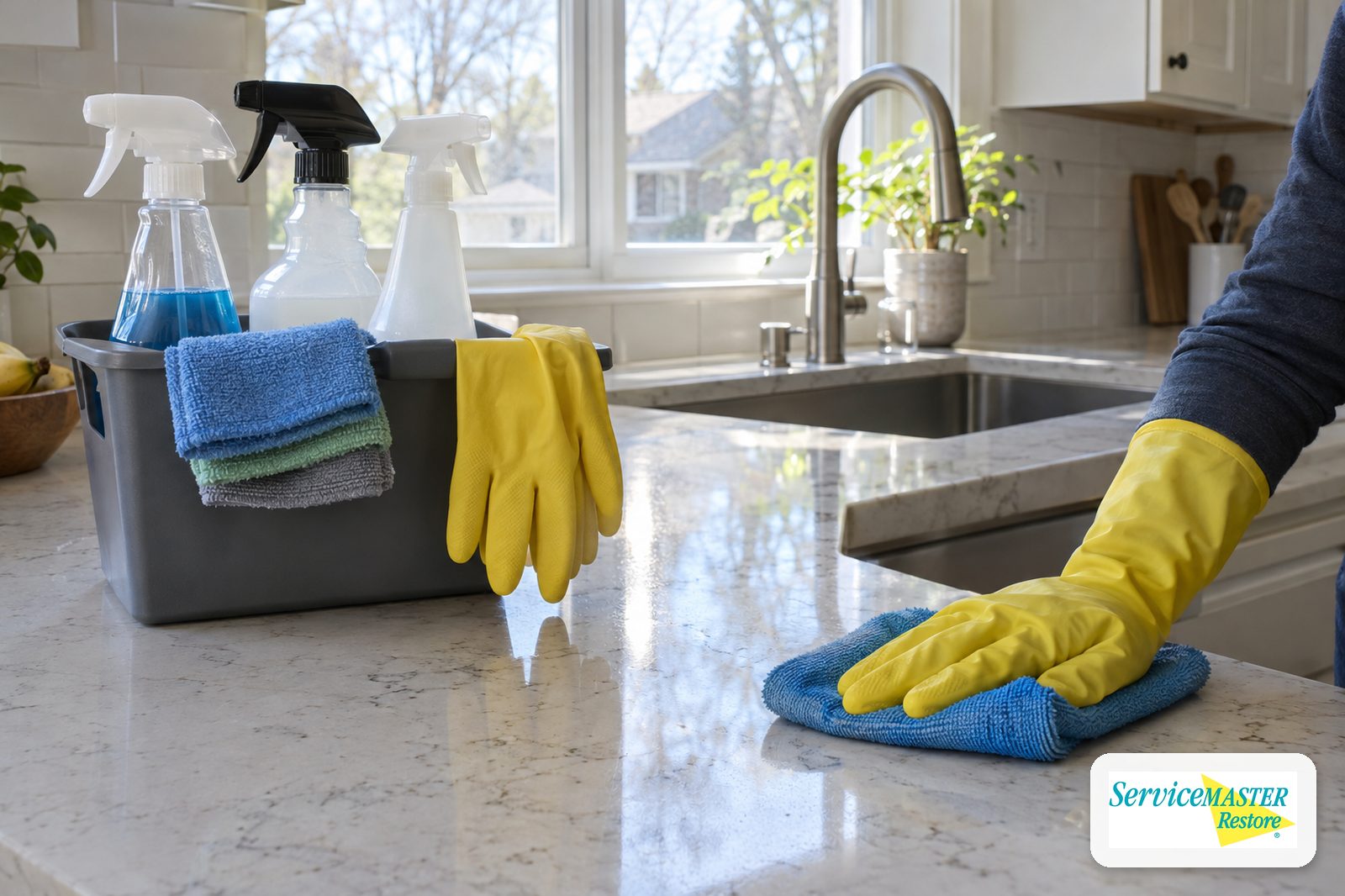
Safer products: what the Safer Choice label means
Homeowners often ask for "green" products. A more reliable signal is the EPA Safer Choice label. EPA reviews every chemical ingredient in a labeled product, regardless of its percentage, and the product must also perform comparably to conventional cleaners.
There is also a Safer Choice Fragrance-Free label for people who prefer to avoid added scent. A label alone does not mean a product suits every surface, so the label directions still apply.
Cleaning, sanitizing or disinfecting: what's the difference?
These words are often used interchangeably, but EPA defines them differently. Knowing the difference keeps you from using a strong chemical where soap and water would do, or skipping disinfection where it matters.
| Step | What it does | Typical home use |
|---|---|---|
| Cleaning | Removes dirt and organic matter from surfaces using soap or detergents | Floors, counters, shelves, most everyday surfaces |
| Sanitizing | Kills bacteria on surfaces using chemicals; not intended to kill viruses | Food-contact areas, where the product label allows |
| Disinfecting | Kills viruses and bacteria on surfaces using chemicals | High-touch surfaces, especially when someone is sick |
Source: U.S. EPA, What's the difference between products that disinfect, sanitize, and clean surfaces?
EPA also stresses contact time: a disinfectant only works if the surface stays wet for the time printed on the label.
What to expect from a professional cleaning visit
Every company has its own checklist, but a well-run residential visit generally follows the same industry logic:
- Walkthrough and priorities. The cleaner confirms which rooms are in scope, any fragile surfaces, and areas you want extra attention on.
- Declutter and prep. Loose items are moved so surfaces can actually be cleaned rather than cleaned around.
- Top to bottom, dry to wet. Dusting high surfaces comes first so debris falls to floors that have not been cleaned yet.
- Wet cleaning with dwell time. Cleaners go on kitchens and bathrooms early so they have time to work before scrubbing.
- High-touch surfaces. Handles, switches and faucets are cleaned and, where needed, disinfected per label directions.
- Floors last. Vacuuming and mopping finish the room so nothing is tracked back across clean floors.
- Final check. A last walkthrough catches missed spots before the visit ends.
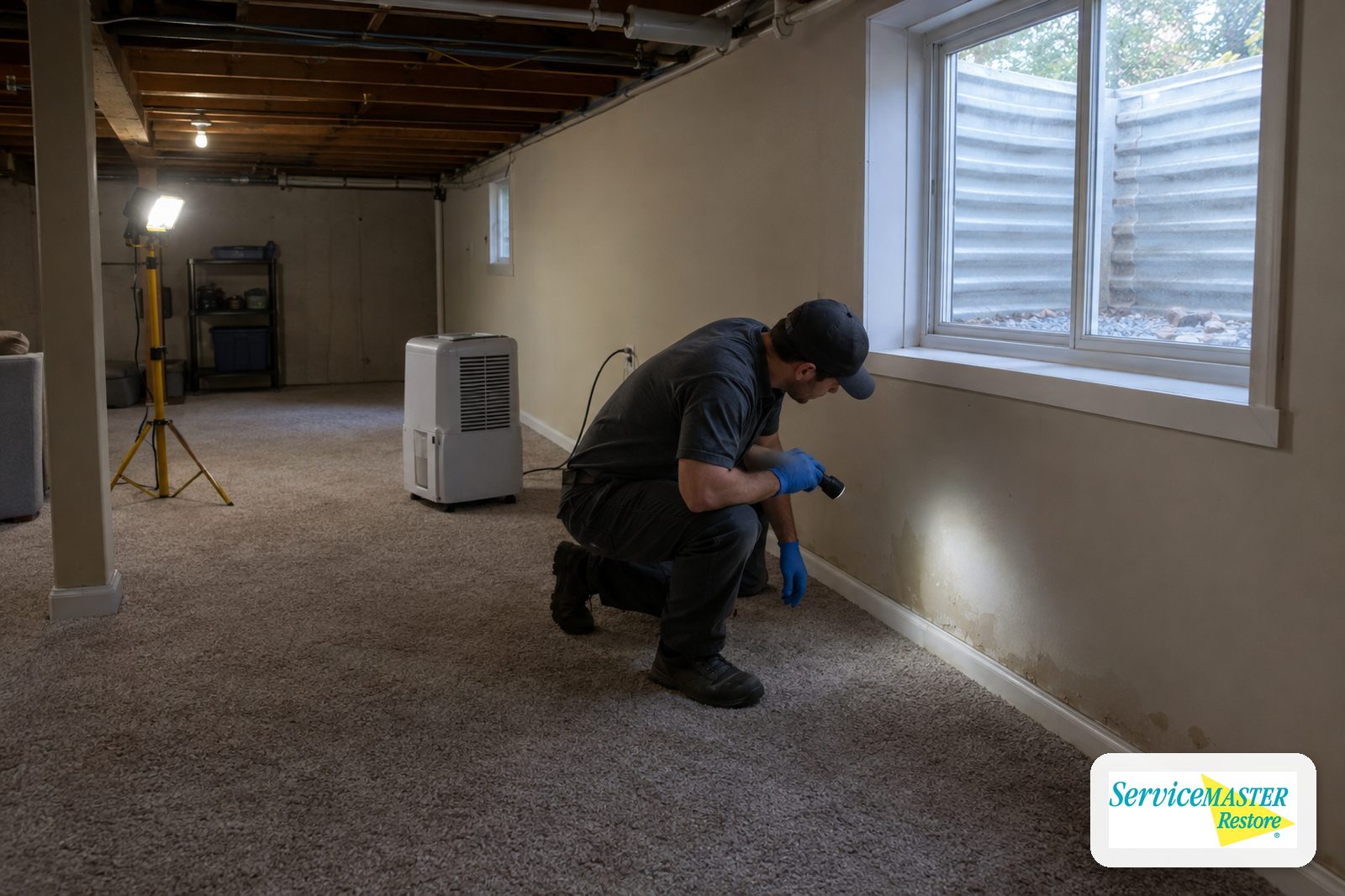
When cleaning isn't the right fix
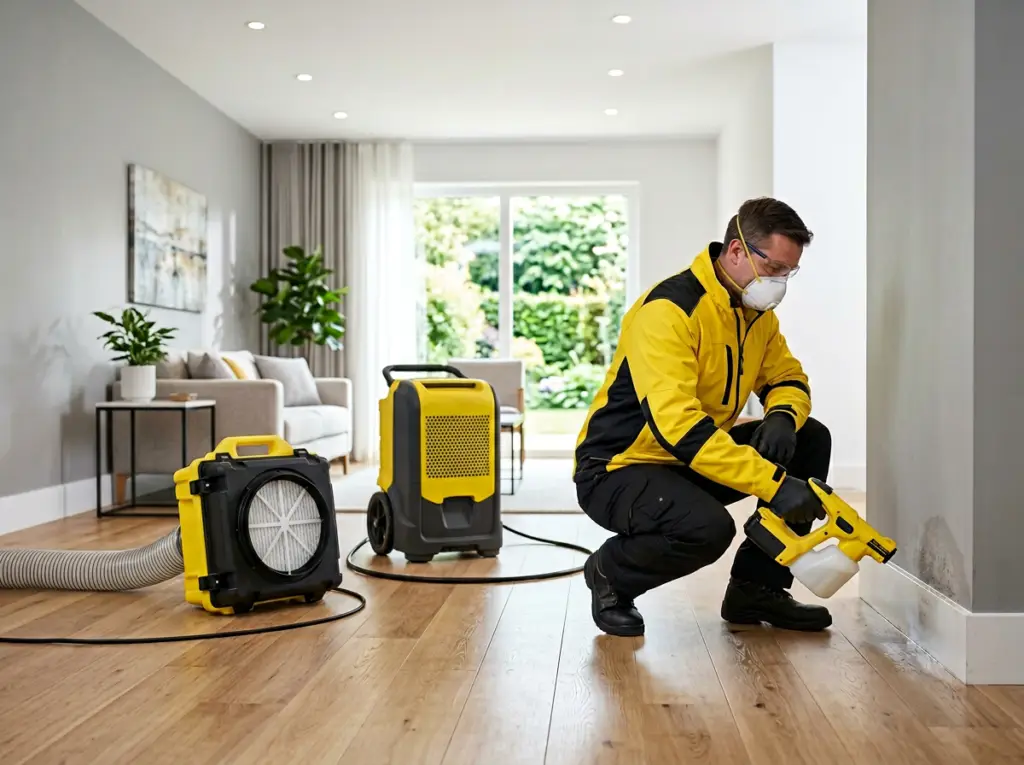
A cleaning crew can wipe surface mildew from tile, but recurring growth on drywall, a musty smell from a finished basement or staining around a window usually signals a moisture problem. EPA notes that mold patches larger than about 10 square feet call for more than routine cleanup.
In those cases, professional mold remediation addresses the source. Our guide to black mold signs and health risks explains what to look for.
Residential cleaning across DuPage and Will County
Chicago-suburb homes face a predictable cycle: pollen in spring, humid summers that encourage bathroom mildew, and long winters with windows closed and road salt tracked across entry floors. Finished basements add square footage that collects dust and needs regular attention.
From our Lisle headquarters, we serve homeowners across both counties, with local pages for cleaning services in Naperville, Downers Grove, Woodridge and Hinsdale. For offices and storefronts, see our commercial cleaning services, or browse every option on the cleaning services overview.
To plan a visit or ask about scheduling, send us a message or call (630) 241-1111 to talk through the cleaning plan that fits your home.
Frequently asked questions
Do I need to be home during a residential cleaning visit?
Not necessarily. Many homeowners are present for the first visit to walk through priorities and point out delicate surfaces, then arrange access for later visits. Whatever you choose, put away valuables, prescription medications and important papers, and secure pets in one room so the cleaner can move through the house without interruptions.
Should I tidy up before the house cleaners arrive?
A quick pickup helps. When counters, floors and tables are clear of loose items, cleaning time goes to actual cleaning rather than moving clutter. You do not need to pre-clean. Just put away personal items, toys and paperwork so surfaces are reachable and nothing important gets moved or mixed up.
Are green cleaning products always safer?
Not automatically. The American Lung Association notes that a green label does not necessarily mean a product is safer. A more dependable signal is the EPA Safer Choice label, which requires EPA to review every chemical ingredient in the product. Fragrance-free options also help people who react to scents.
Can I ask for products I already own or prefer?
Usually yes. If a family member reacts to certain scents or ingredients, tell the cleaner up front and show them the products you prefer. Keep those products in their original containers with labels intact, so anyone using them can follow the directions for surfaces, ventilation and contact time.
Is residential cleaning different from commercial cleaning?
Yes. Residential cleaning is built around living spaces such as bedrooms, kitchens and bathrooms, with schedules around family routines and attention to personal belongings. Commercial cleaning covers offices, retail floors and shared restrooms, often after business hours and on a fixed janitorial schedule with different traffic levels and surface types.
Sources
- U.S. Environmental Protection Agency: Indoor Air Quality (Report on the Environment)
- U.S. Environmental Protection Agency: Asthma Triggers: Gain Control
- U.S. Environmental Protection Agency: Learn About the Safer Choice Label
- U.S. Environmental Protection Agency: What's the difference between products that disinfect, sanitize, and clean surfaces?
- American Lung Association: Cleaning Supplies and Household Chemicals
- U.S. Environmental Protection Agency: A Brief Guide to Mold, Moisture and Your Home
