



How does residential water damage restoration work for DuPage County homes?
Residential water damage restoration removes water, dries the structure to measured moisture levels and repairs damage in a home people still live in. For homeowners the big questions are usually what can be saved, what insurance typically covers and whether the family can stay during drying. Sudden plumbing and appliance leaks are generally covered; floods and neglect usually are not.
The services above cover what we do in a home. This section answers the questions homeowners in DuPage and Will County ask most once the water is stopped: where it came from, who pays, how to protect belongings and what living with drying equipment is like.
Where does water damage usually start in a suburban home?
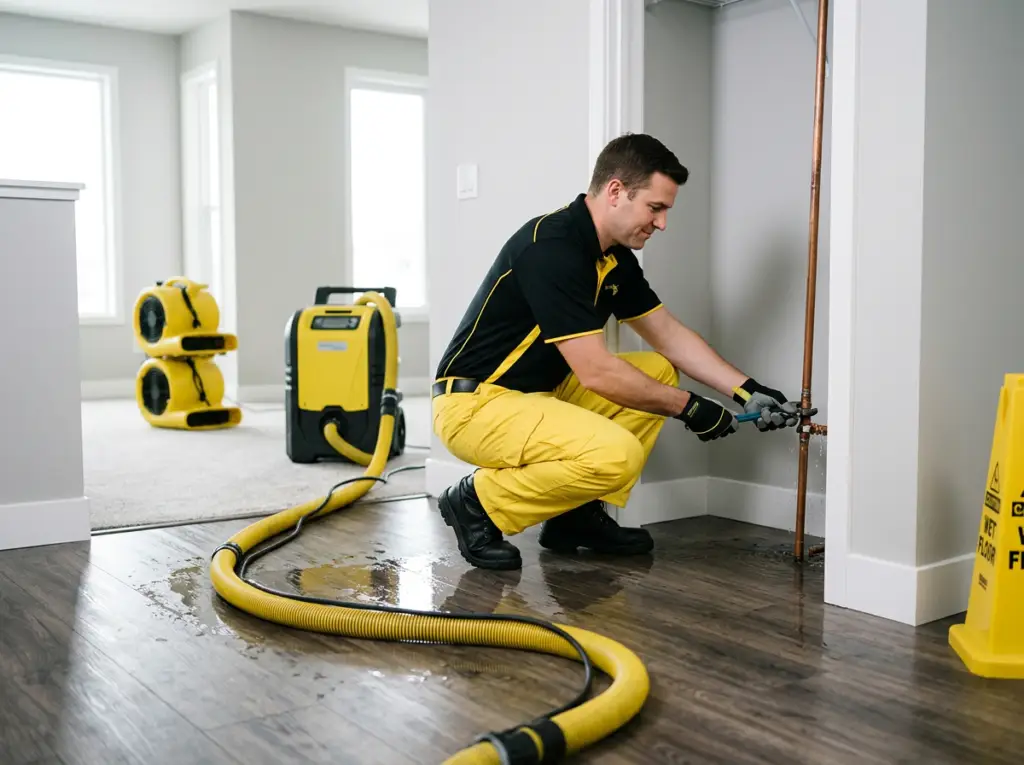
Most residential losses start with something ordinary. A washing machine hose splits, a toilet supply line fails, a water heater rusts through, or a pipe in an exterior wall freezes during a cold snap. In this area, finished basements and sump pumps add another layer of risk every storm season, which our basement water damage page covers in detail.
Hoses are the easiest place to prevent a loss. The Insurance Information Institute suggests replacing appliance hoses every five to seven years, shutting off the washing machine supply when you travel and considering a leak monitoring and shut-off system. If a pipe has already failed, our burst and leaking pipe service handles locating and containing the leak.
Winter brings its own risk. The III's winter weather checklist suggests adding insulation to attics, basements and crawl spaces, and insulating garages and other unfinished areas so pipes running through them are less likely to freeze. Its water damage guide also suggests an emergency pressure release valve to protect against the pressure that builds in freezing pipes. Our fall maintenance checklist for DuPage homeowners turns those tips into a weekend to-do list.
Leaks that start upstairs
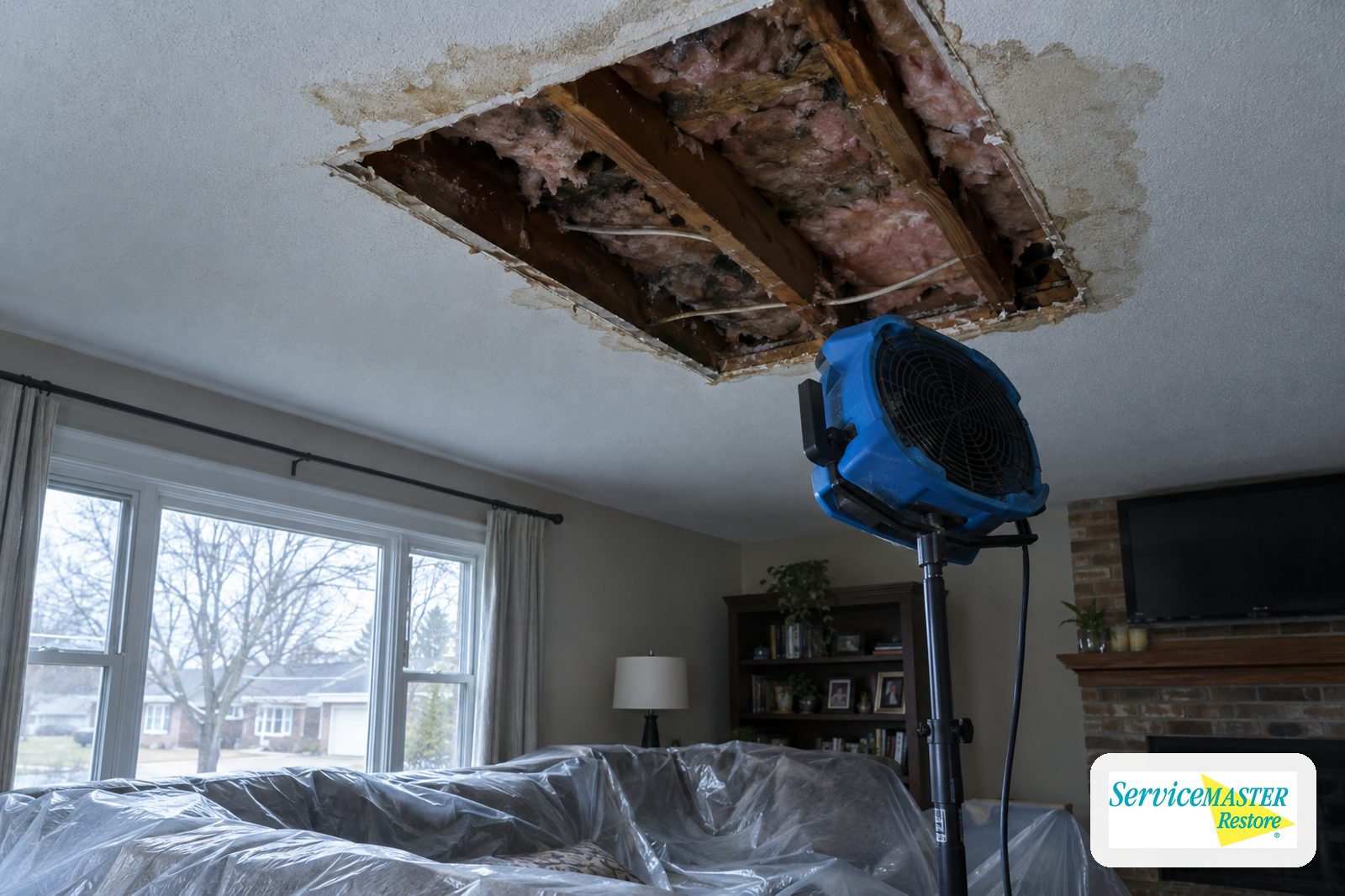
A second-floor bathroom or laundry leak rarely stays put. Water runs along joists, soaks ceiling drywall and insulation below, and can show up in a light fixture or a room away from the source. Those losses usually need moisture readings in the ceiling and walls of the floor below, and sometimes small openings to dry the cavity, even when the upstairs floor looks fine.
What does homeowners insurance typically cover for water damage?
Coverage depends on the cause. The Insurance Information Institute's guide to covered disasters lists accidental discharge or overflow of water from plumbing, heating, air conditioning or fire sprinkler systems or household appliances, and freezing of those systems, among the perils standard policies cover. It also says flood damage is excluded and needs a separate flood policy, sewer backups need an endorsement or separate product, and damage due to lack of maintenance or mold is not covered.
Policies vary, so read yours or ask the Illinois Department of Insurance. A restoration contractor can document the damage and share photos, moisture maps and drying records with your adjuster. In Illinois, negotiating the settlement is between you and your insurer, or a public adjuster you choose to hire. Our guide Does homeowners insurance cover water damage in Illinois? walks through claims and exclusions, and our insurance claim assistance page explains the documentation side.
Share of US homeowners insurance losses by cause
Percent of losses, homeowners multiple-peril policies, 2023
How can you protect your belongings during cleanup?
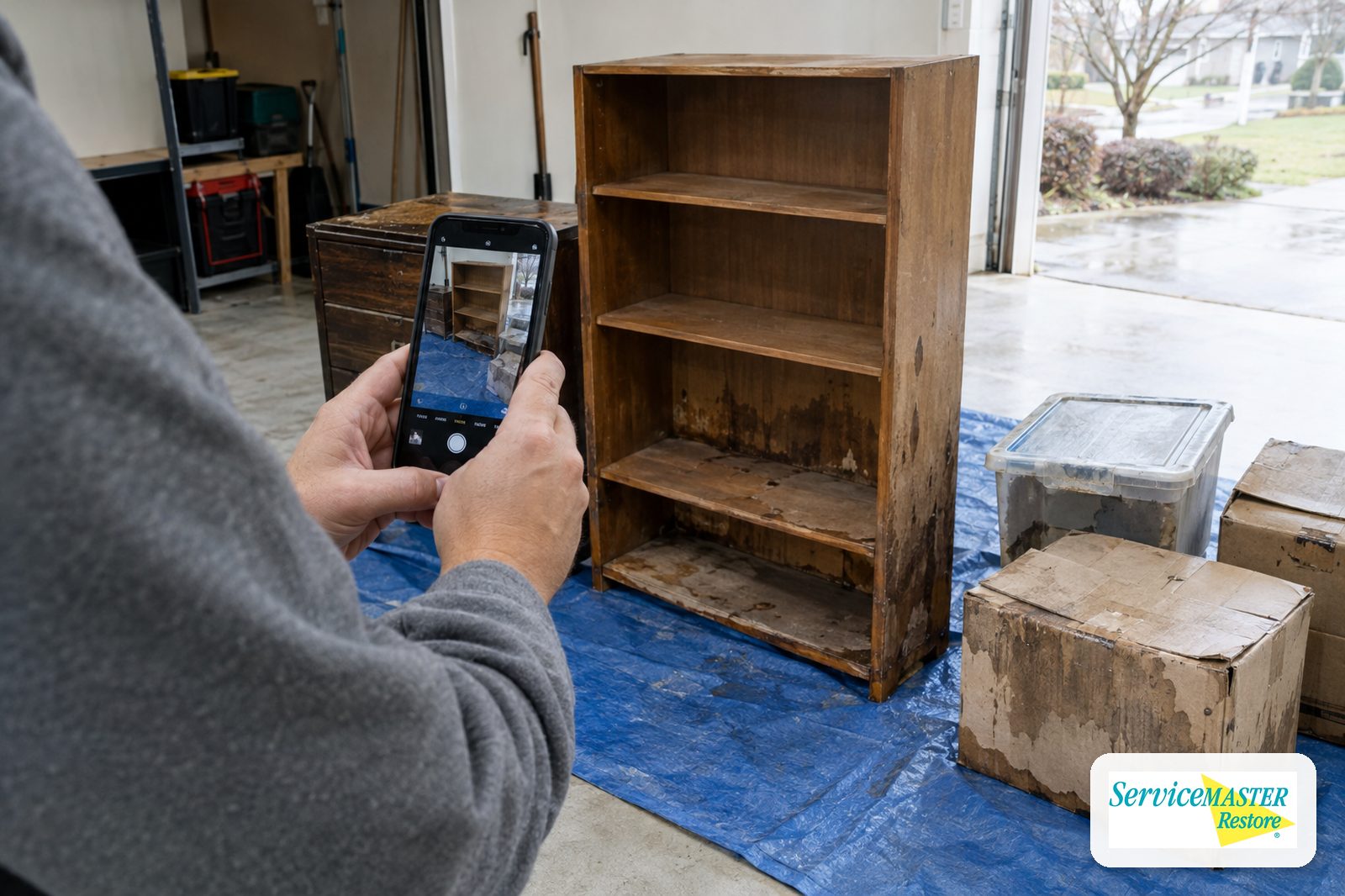
Contents are often where homeowners feel the loss most. A few habits in the first day make the claim smoother and save more of what matters:
- Photograph first. Capture each room and each damaged item before anything moves, including model and serial numbers on electronics and appliances.
- Separate wet from dry. Move dry items out of the affected rooms so they do not pick up moisture from humid air.
- Rescue irreplaceables early. Family photos, documents and keepsakes come first; set them aside for professional advice rather than drying them on a heater.
- Keep a written inventory. The Illinois Department of Insurance points homeowners to the NAIC Home Inventory app to record belongings, group them by category and scan barcodes.
- Ask before discarding. Check with your adjuster before throwing out damaged items, and keep receipts for any emergency purchases.
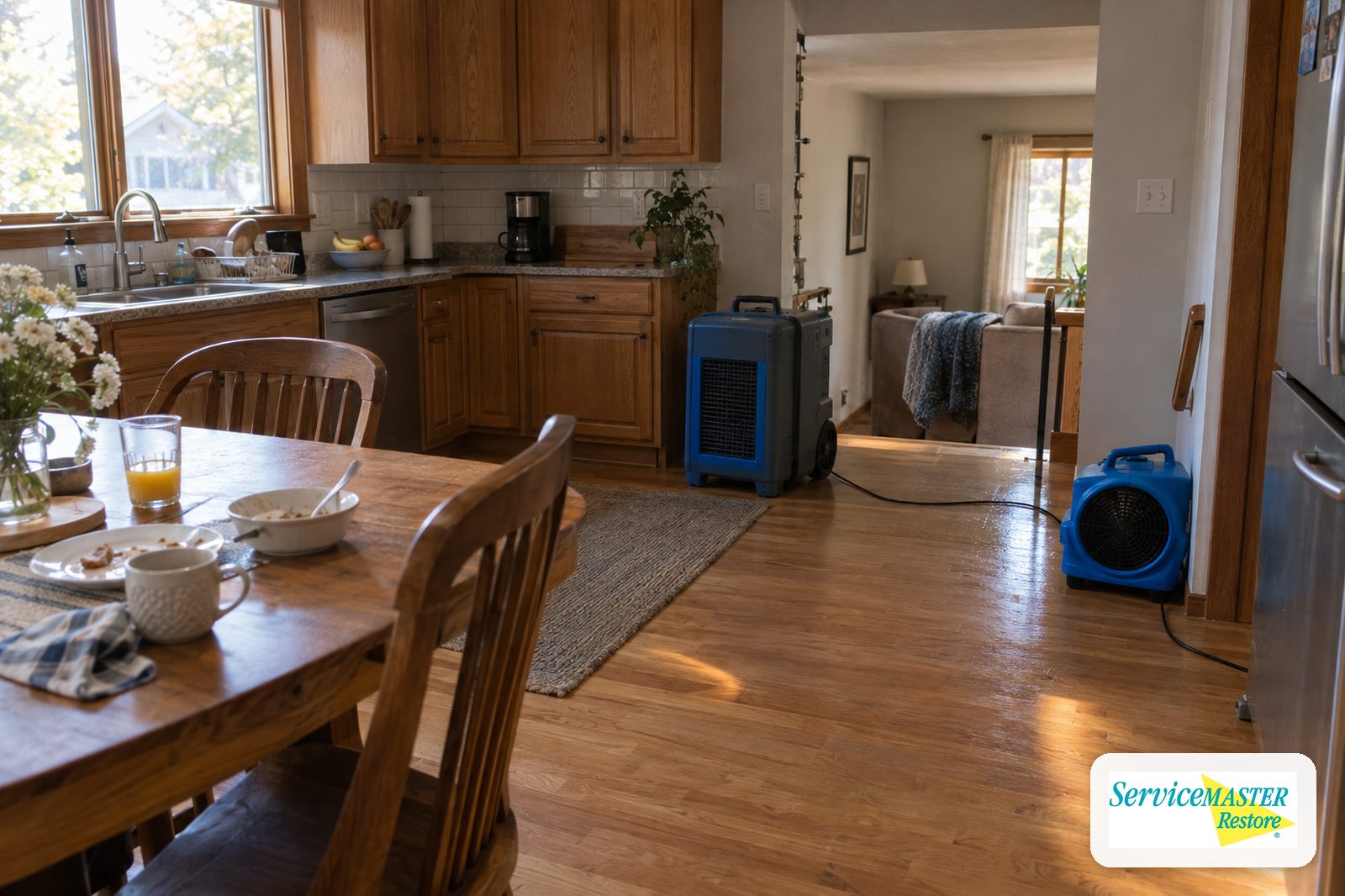
Can your family stay home while the house dries?
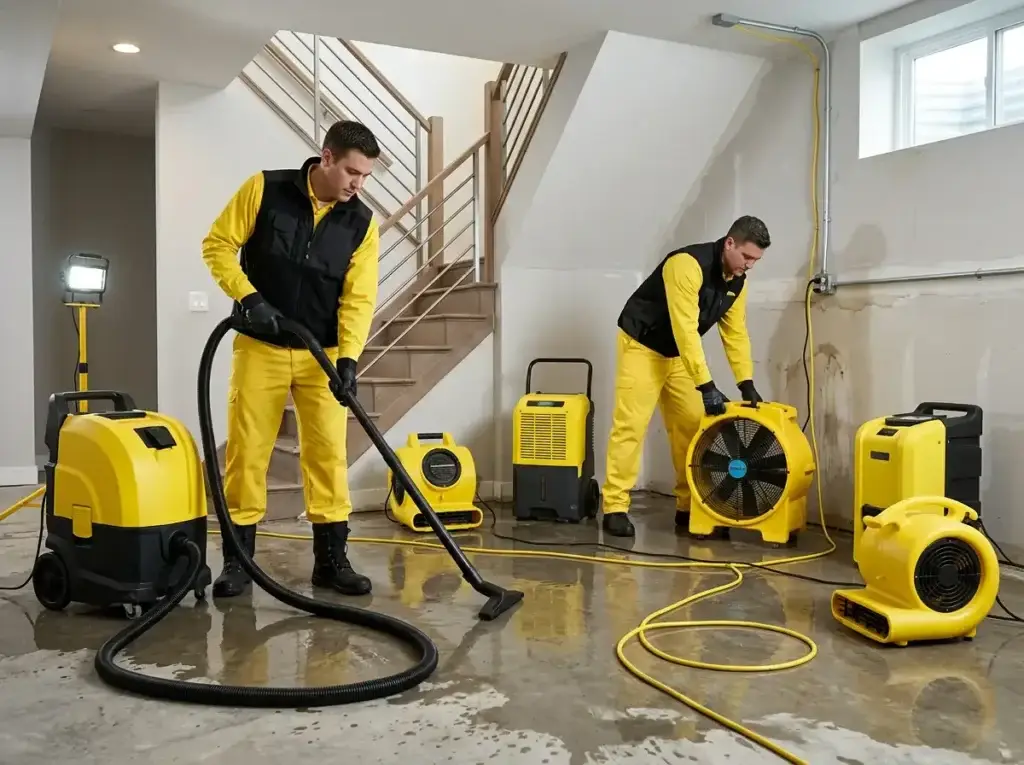
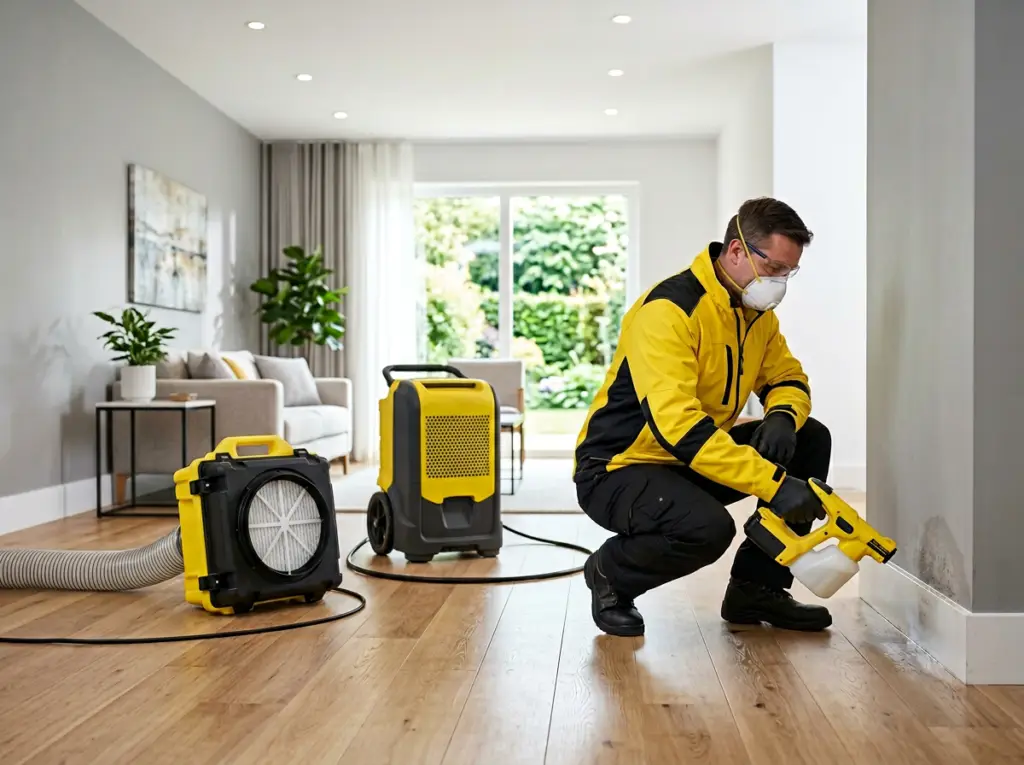
Often, yes. With a clean-water loss limited to one area, most families stay put while air movers and dehumidifiers run around the clock. Expect steady noise and warm air, and leave the equipment on unless the technician says otherwise. Contaminated losses are different: containment barriers can close off rooms, and the EPA advises people with health concerns to consult a health professional before mold cleanup. If the only kitchen or bathroom is out of service, a short stay elsewhere may be more practical.
Which DuPage and Will County homes do we restore?
From our Lisle headquarters, our certified technicians restore houses, townhomes and condos across both counties, including Plainfield, Bolingbrook, Darien and Westmont. Newer subdivisions and decades-old homes fail in different ways, but the drying principles in the IICRC S500 standard apply to both.
Getting the house back to normal
Once drying records show every area has reached its goal, repairs start: drywall, trim, paint, flooring and sometimes cabinets. If you want the full step-by-step picture, our water damage restoration process page explains inspection, drying standards, timelines and typical costs. For water categories and first steps, see our water damage hub. Own a rental building or run a business? Our commercial water damage restoration team handles those properties. To get on the schedule, contact us.
Water in your home right now? Call (630) 241-1111 and talk with our residential team.
Frequently asked questions
Does homeowners insurance cover a burst pipe or appliance leak?
Usually, when the event is sudden. The Insurance Information Institute lists accidental discharge or overflow of water from plumbing, heating, air conditioning or sprinkler systems or household appliances, and freezing of those systems, among perils standard policies cover. Damage from lack of maintenance, such as a leak ignored for months, is not covered. Policies vary, so check your policy or ask the Illinois Department of Insurance.
How common are water damage insurance claims?
Very common. According to Insurance Information Institute data from ISO/Verisk, water damage and freezing made up 22.6 percent of homeowners insurance losses in 2023, second only to wind and hail. From 2019 to 2023, the average water damage and freezing claim was about $15,400. Those figures are national; your own risk depends on your home's plumbing, basement and maintenance.
How often should washing machine and dishwasher hoses be replaced?
The Insurance Information Institute recommends checking hoses to water heaters, dishwashers, washing machines and refrigerator ice makers every year, replacing any with cracks or leaks immediately, and replacing all of them every five to seven years. It also suggests shutting off the washing machine supply when you travel and never leaving home while the washer or dishwasher is running.
What is the easiest way to document belongings after a water leak?
Start with photos and video of each room, then close-ups of damaged items with model and serial numbers. The Illinois Department of Insurance points homeowners to the NAIC Home Inventory app, which lets you record belongings, group them by category and scan barcodes. A written list with approximate ages and purchase prices makes the contents part of a claim easier to review.
Should I throw away wet items before the adjuster visits?
Not without checking first. Photograph everything, then ask your adjuster which items they need to see before disposal. Items that create a health risk, such as spoiled food or materials soaked by sewage, may need to go sooner, so document them carefully before they leave the house. Keep receipts for any emergency purchases while your home is being dried.
Sources
- Insurance Information Institute (Triple-I): Facts + Statistics: Homeowners and renters insurance
- Insurance Information Institute (Triple-I): Which disasters are covered by homeowners insurance?
- Insurance Information Institute (Triple-I): How to protect your home from water damage
- Insurance Information Institute (Triple-I): Protect your home from winter weather
- Illinois Department of Insurance: Home Inventory
- US EPA: Mold Cleanup in Your Home
- IICRC: Category of Water Damage and Weather-related Events (ANSI/IICRC S500 Consensus Body position statement, 2026)
