


How does commercial water damage restoration keep a business running?
Commercial water damage restoration removes water and dries a building while limiting downtime for tenants, staff and customers. It follows the same IICRC S500 principles as residential work at a larger scale: zoned and phased drying around operations, daily moisture records for insurers, and clear communication with everyone who uses the building.
The property types and services above show what we handle. This section is written for owners, facility managers and property managers who need to make decisions quickly: what makes a commercial loss different, how multi-unit buildings are handled, what insurers expect to see and how to plan before the next one.
What makes a commercial water loss different from a home?
The drying science does not change, but almost everything around it does. Commercial losses often span several floors or units, involve sprinkler and mechanical systems, and affect people who are not the owner: tenants, employees, patients, students or shoppers. Several parties may share decisions, from the building owner and property manager to tenants and their insurers.
The real cost is usually time. Ready.gov's business impact analysis guidance lists the effects a disruption can cause, including lost and delayed sales and income, increased expenses such as overtime and expediting costs, regulatory fines, contractual penalties and customer dissatisfaction. That is why our damage mitigation for businesses work focuses on stabilizing the building fast and keeping unaffected areas in use.
Larger drying systems and zoned work
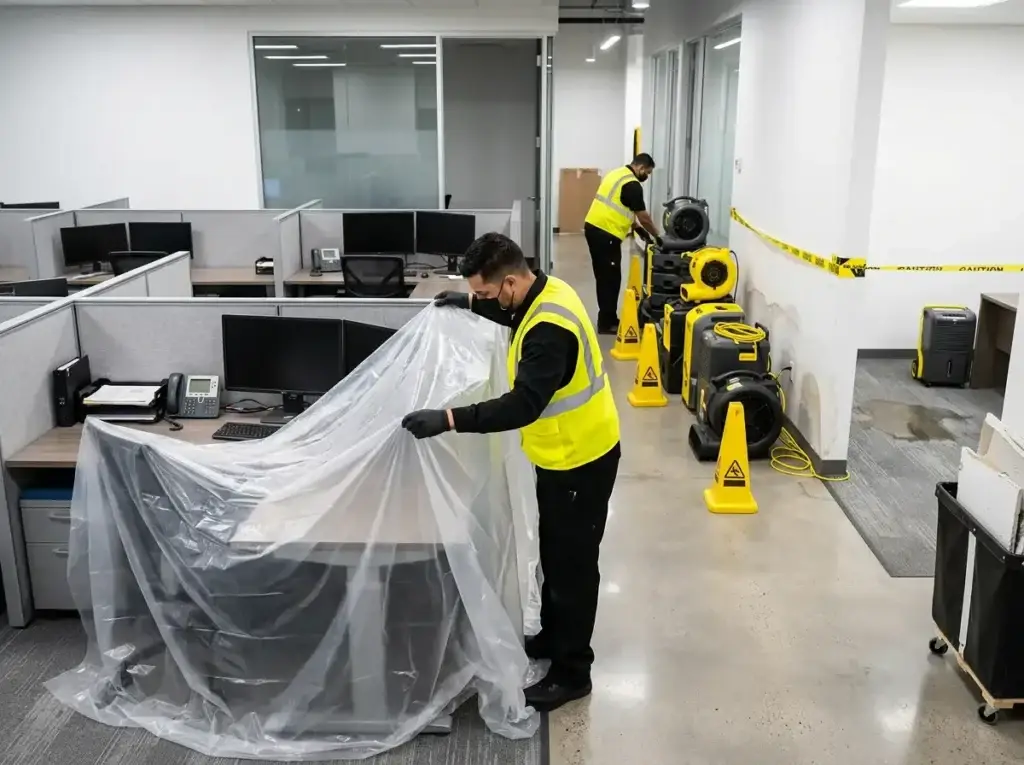
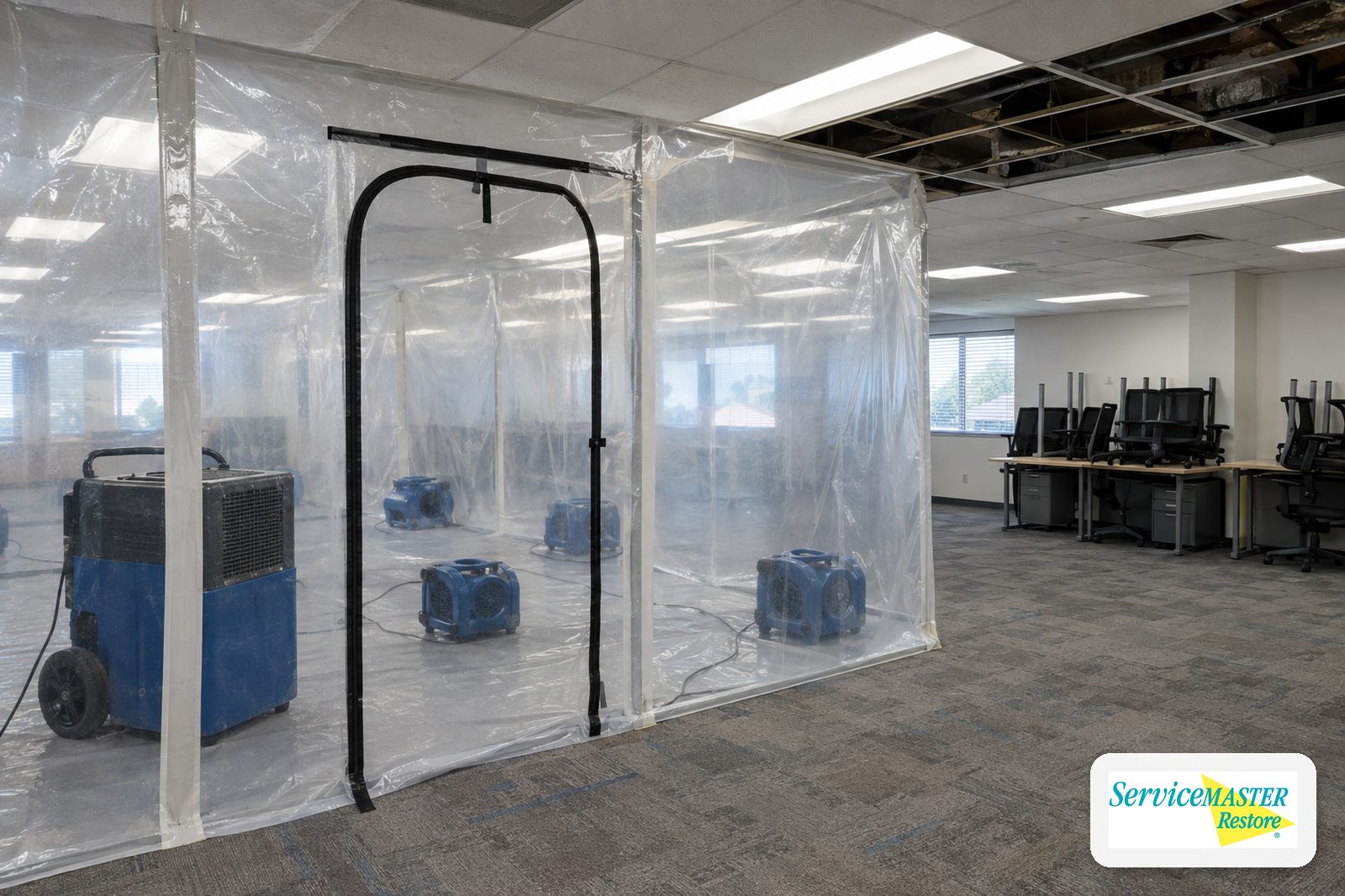
Big open floor plates, concrete slabs and ceiling plenums take more than a few air movers. Large losses often call for high-capacity dehumidifiers, ducted air delivered into wall and ceiling cavities, and sometimes temporary power. Poly containment divides the building into drying zones so one area can dry while the rest keeps operating. Our large-scale structural drying page explains how those systems are set up.
How are multi-unit and office buildings handled?
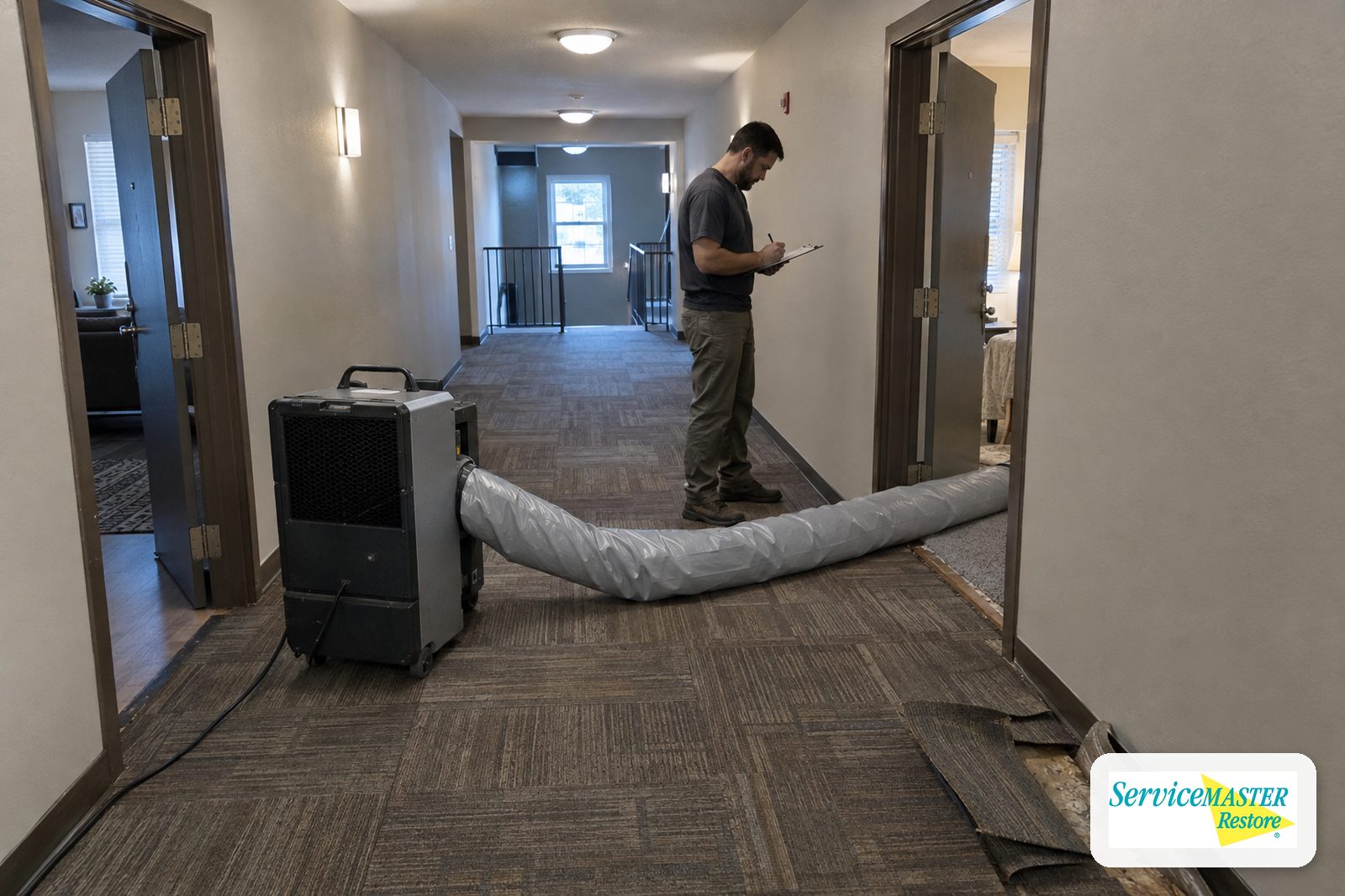
Water moves down and sideways. A failed supply line in a third-floor unit can reach two units below and the hallway beside them, so the moisture map has to include neighboring spaces, not just the one where the leak started. That means coordinating access, scheduling around tenants and documenting each unit separately, because responsibilities between owners, associations and tenants depend on leases, bylaws and policies.
Communication is half the job. Ready.gov's crisis communications planning page recommends identifying audiences in advance, such as employees, customers, suppliers, management and government officials or regulators, and compiling their contact information before an incident. For a multi-tenant building, add tenants and their insurers to that list.
- Make the building safe. Stop the water source, isolate affected electrical circuits through qualified staff and keep occupants out of hazardous areas.
- Walk the site with the decision maker. Agree on priorities such as server rooms, inventory, patient areas or tenant spaces, and on which areas must stay open.
- Determine the category and contain. For Category 2 or 3 water, the S500 calls for contamination controls and worker protection before restorative drying.
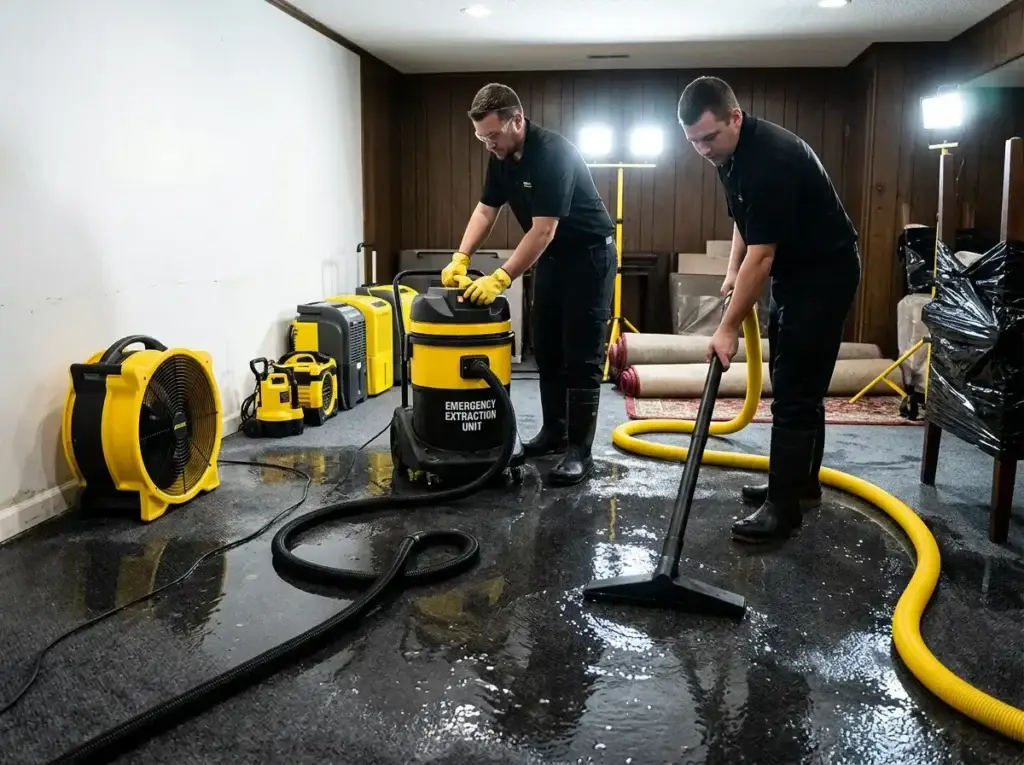
- Extract and remove by zone. Pull standing water, then remove materials that cannot be saved, zone by zone so operations can shift around the work. Emergency water removal covers this stage.
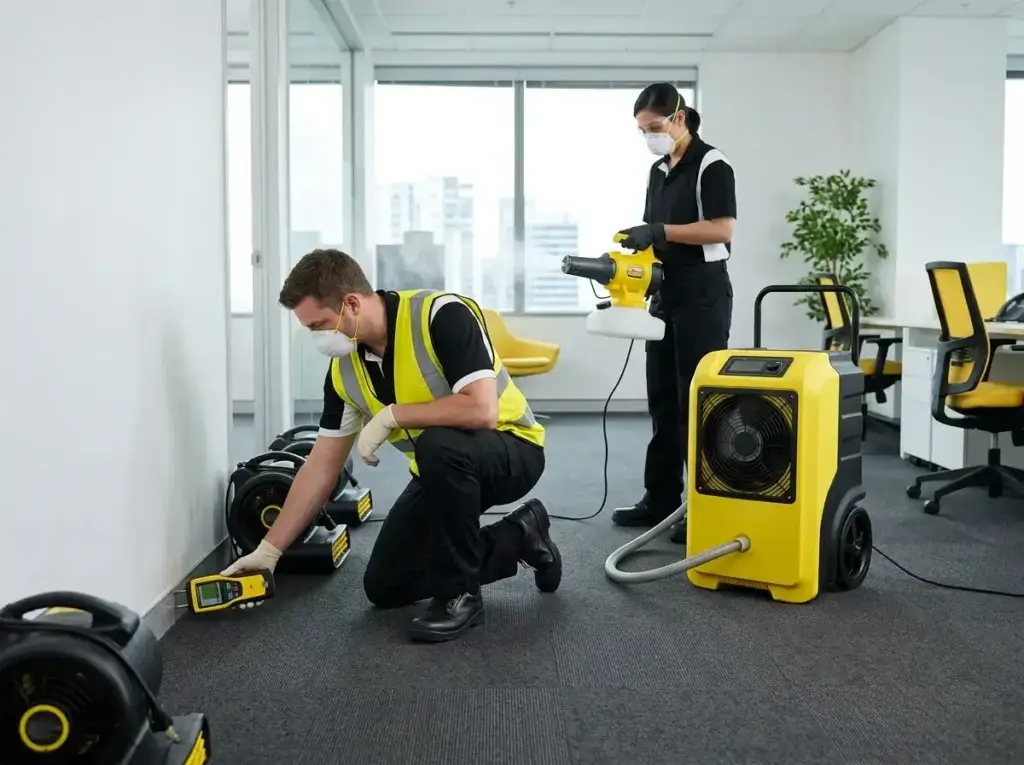
- Dry and record daily. Log humidity and material moisture readings for every zone and unit so progress is visible to owners and adjusters.
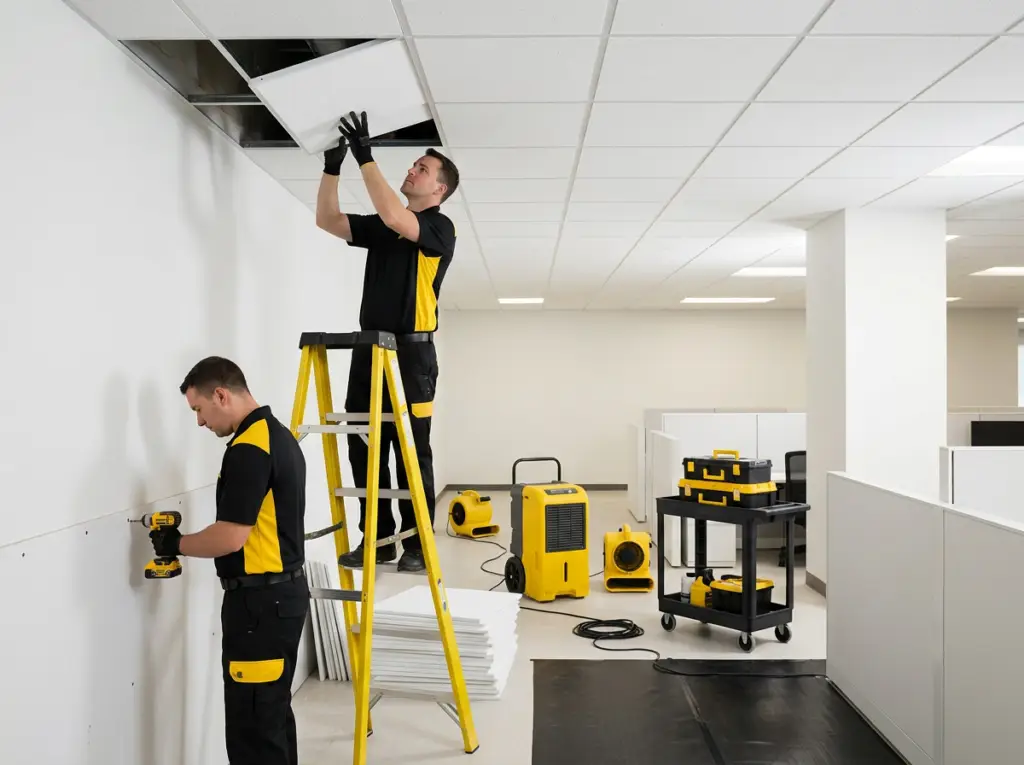
- Verify and hand over. Confirm each zone meets its drying goal, then release it for repairs and reoccupancy.
When an indoor environmental professional is needed
Most water losses do not need outside testing. The 2021 S500 standard says an indoor environmental professional should be retained when elevated risks exist, such as high-risk occupants, a public health issue in places like elderly care or childcare facilities, public buildings and hospitals, or contaminants believed to be aerosolized. Medical offices, schools and senior living properties should plan for that possibility.
What documentation do insurers expect after a commercial water loss?
Commercial claims run on records. Expect to provide dated photos, moisture maps, daily drying logs, equipment lists, a scope of removed materials and an inventory of damaged contents and stock. If income is affected, keep sales records and receipts for extra expenses from the first day. Our insurance claim assistance page explains how restoration documentation supports that file.
| Coverage | Designed to pay for | Notes for water losses |
|---|---|---|
| Commercial property, often inside a business owners policy | Buildings and contents the company owns | Read the water, sewer and flood exclusions in your policy |
| Business interruption (business income) | Income lost when a fire or other catastrophe disrupts operations | Can include the extra expense of operating from a temporary location |
| NFIP commercial flood insurance | Direct flood damage to the building and its contents | Up to $500,000 each for building and contents; does not cover business interruption losses |
Source: Insurance Information Institute, What does a business owners policy cover?; FEMA FloodSmart, What flood insurance covers
FloodSmart also notes that most business insurance does not cover flood damage. On the claim itself, a restoration contractor documents the loss but does not negotiate the settlement. The Illinois Department of Insurance explains that a public adjuster works for the policyholder for a fee, usually a percentage of the settlement, and that hiring one is optional.
How can a business prepare before the next water loss?
The time to plan is before anything is wet. Ready.gov recommends organizing a business continuity team and compiling a business continuity plan to manage a disruption, then testing it. For water specifically, that plan should name who can shut off water and sprinkler zones, where the shut-off valves are, which areas and equipment get protected first, how tenants and staff will be told, and which restoration and insurance contacts to call. Keeping floor plans and recent photos of each space on file speeds up both drying and the claim.
Commercial properties across DuPage and Will County
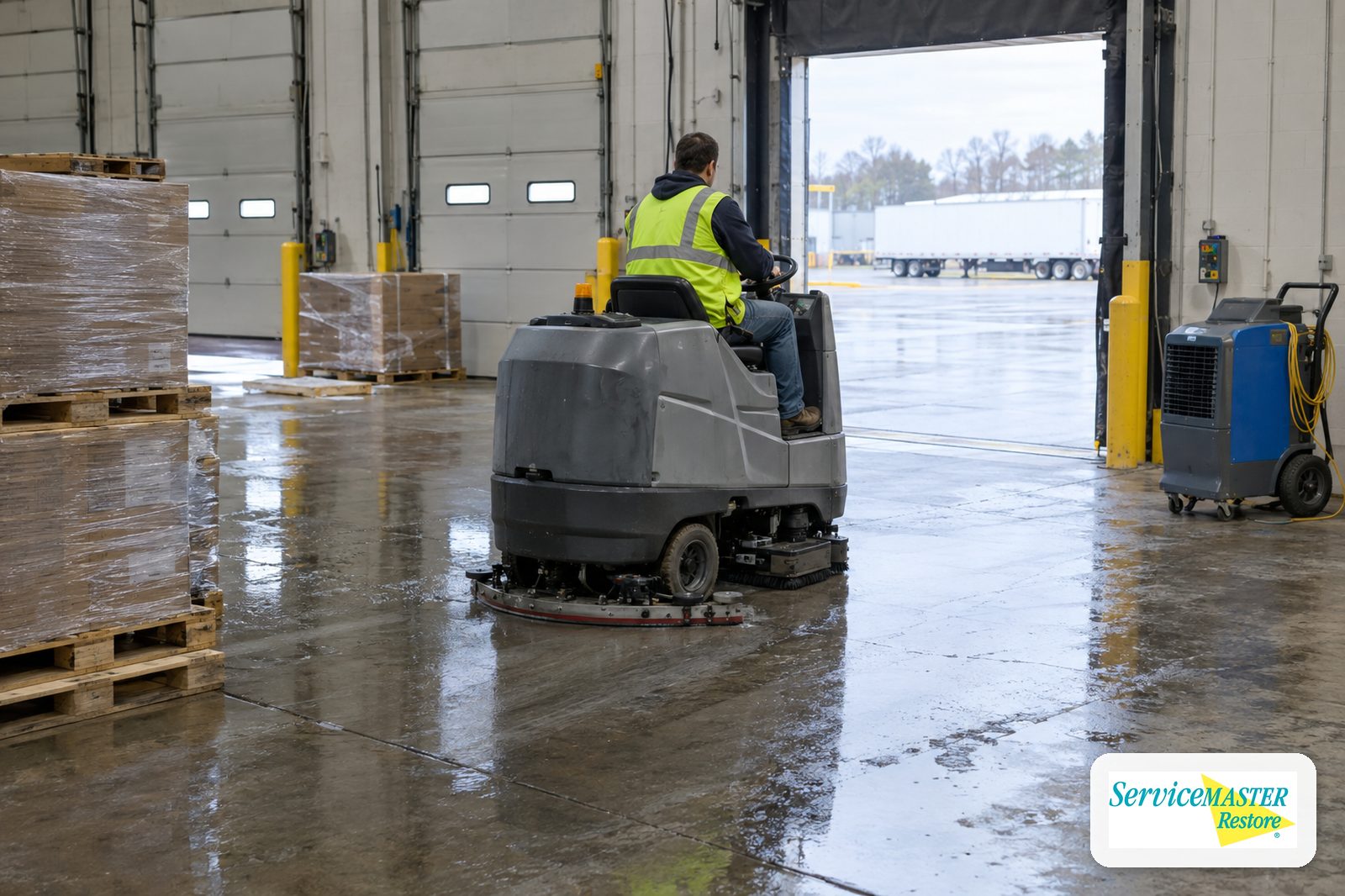
From our Lisle headquarters we work with office buildings in Oak Brook and Oakbrook Terrace, retail and medical space in Elmhurst, and warehouses and industrial buildings around Romeoville. For planning ahead, read our guide to business-continuity restoration for DuPage and Will County companies. The full step-by-step method is on our water damage restoration process page, causes and water categories are on the water damage hub, and owners of single-family rentals may find residential water damage restoration a closer fit. Facility managers can contact us to set up a pre-loss walkthrough.
Water in your building right now? Call (630) 241-1111 for 24/7 commercial emergency response.
Frequently asked questions
Does business interruption insurance cover a shutdown caused by water damage?
It can. The Insurance Information Institute describes business interruption insurance as covering the loss of income resulting from a fire or other catastrophe that disrupts operations, and it can include the extra expense of operating from a temporary location. Whether a specific water loss qualifies depends on your policy's covered causes and exclusions, so review it with your agent and keep detailed income and expense records.
Does commercial flood insurance cover lost income?
No. FEMA's FloodSmart lists financial losses caused by business interruption among the things NFIP flood policies do not cover. NFIP commercial flood insurance covers direct flood damage to the building and its contents, up to $500,000 each, and FloodSmart notes that most business insurance does not cover flood damage at all. Ask your agent how flood and income coverage fit together.
Do we have to hire a public adjuster for a commercial water claim?
No. The Illinois Department of Insurance explains that a public adjuster works for the policyholder, not the insurer, and is typically paid a percentage of the settlement. Hiring one is optional, and insurance policies do not cover their fees. A restoration contractor can document the damage and share drying records, but it does not negotiate the settlement on your behalf.
Can our business stay open while the building dries?
Often, at least in part. Restorers divide large buildings into drying zones with poly containment, work in phases and schedule disruptive tasks around operating hours where possible. Whether an area can stay open depends on the water category, safety, air quality and access needs. Areas with Category 2 or 3 water require contamination controls and usually stay closed until cleaned.
When should an indoor environmental professional be brought in after a water loss?
The 2021 IICRC S500 standard says an indoor environmental professional should be retained when elevated risks are present, such as high-risk occupants, a public health issue in places like elderly care or childcare facilities, public buildings or hospitals, likely health effects on workers or occupants, or contaminants believed to be aerosolized. Many routine losses do not need one.
Sources
- Ready.gov (FEMA): Business Impact Analysis
- Ready.gov (FEMA): Crisis Communications Plans
- Ready.gov (FEMA): Business Continuity Planning
- IICRC: Category of Water Damage and Weather-related Events (ANSI/IICRC S500 Consensus Body position statement, 2026)
- Insurance Information Institute (Triple-I): What does a business owners policy (BOP) cover?
- FEMA FloodSmart (NFIP): Flood insurance coverage and rates (What's covered)
- Illinois Department of Insurance: Commercial Property Public Adjusters
