


How is mold remediated in a house?
Residential mold remediation finds the moisture source, isolates the moldy area, removes growth and damaged porous materials, cleans what can be saved, and dries the home so mold can't return. EPA says patches under about 10 square feet are usually a do-it-yourself job; larger areas, sewage water or a moldy HVAC system call for a professional.
In most homes the mold is a symptom. The real problem is a basement that stays damp, an attic that traps warm air, or a bathroom that never dries out. Each one has a different fix, and remediation only lasts when that fix is part of the plan.
Why do basements in DuPage and Will County grow mold?
Basements sit below grade, so they collect water from every direction: rain that pools against the foundation, seepage through floor cracks, and summer humidity that condenses on cool concrete and cold-water pipes. Many local homes have finished basements, where carpet, drywall and stored boxes give mold plenty of food.
EPA's Brief Guide to Mold, Moisture and Your Home recommends sloping the ground away from the foundation, cleaning gutters and drying any leak or spill within 24 to 48 hours, when in most cases mold will not grow. The Insurance Information Institute also advises against carpet in damp areas such as basements. Our moisture control and long-term prevention service focuses on these fixes.
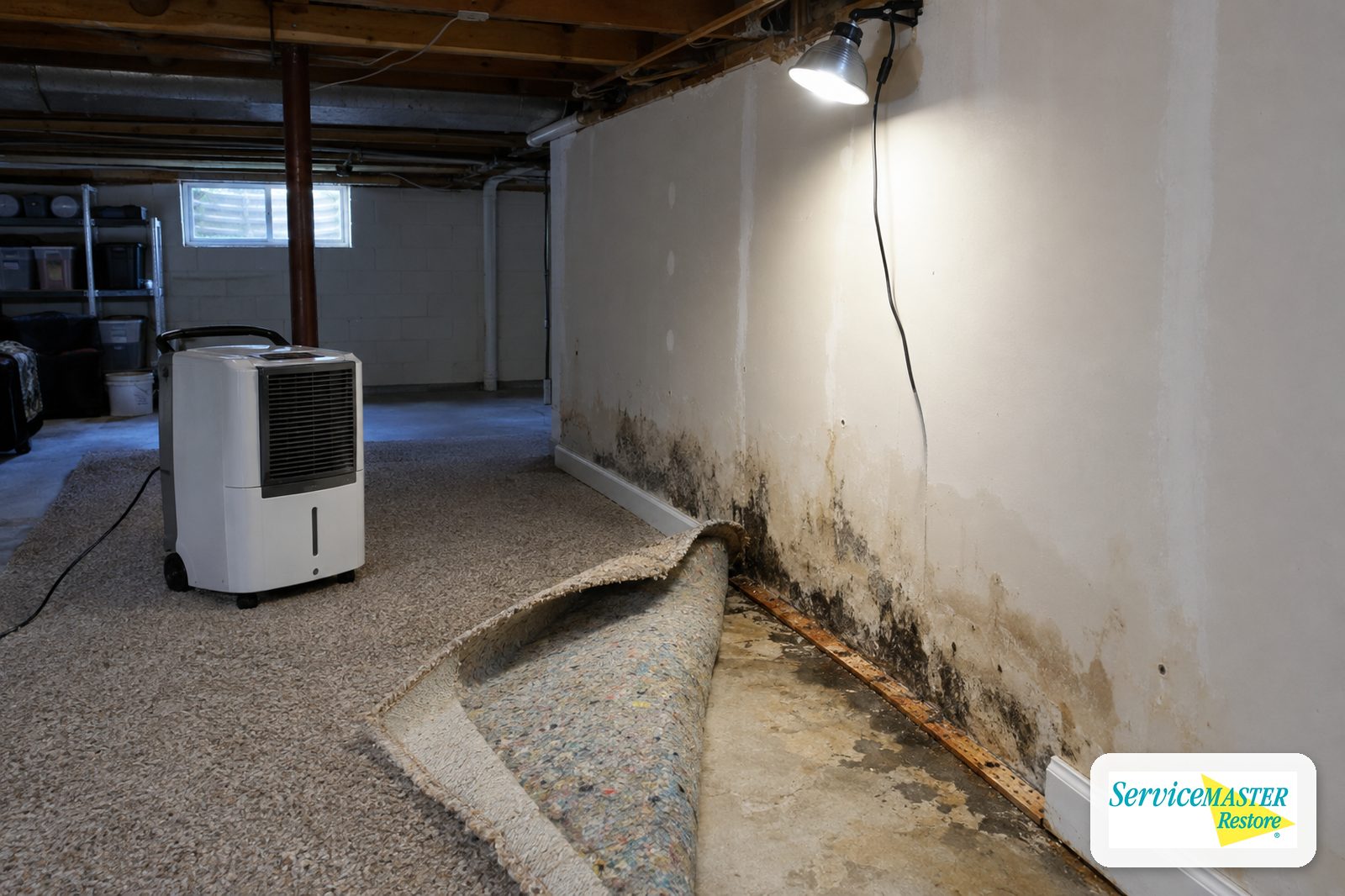
Finished basements hide the evidence
Paneling, carpet pad and the back side of drywall can hold mold long before anything shows on the room side. EPA notes that a musty smell with no visible source, or past water damage, is a reason to suspect hidden mold. A mold inspection and assessment maps the damp areas before anything is torn out.
What causes attic mold in Chicago-area winters?
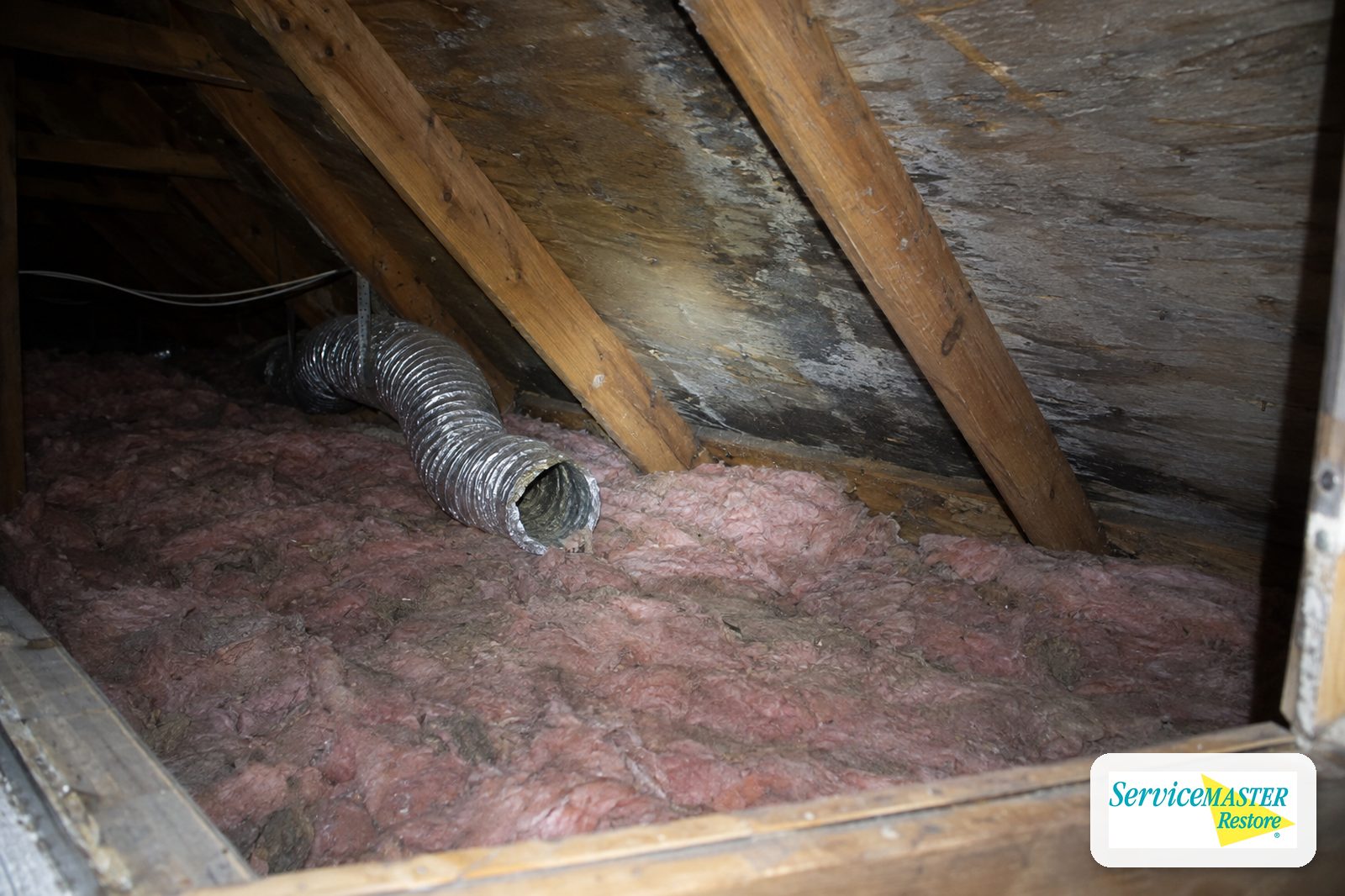
Attic mold usually comes from the house below, not the roof above. The U.S. Department of Energy's Consumer Guide to Durable Attics calls moisture the attic's number one enemy and lists three common routes: roof and flashing leaks, water vapor from inside the home without enough ventilation to escape, and ice dams that push water under shingles.
DOE also warns that venting bathroom, kitchen or dryer exhaust into the attic is a major moisture source that can lead to mold. Its fixes are to seal air leaks between the top floor and the attic, insulate properly including the eaves, and ventilate with soffit and ridge vents. Signs to look for include wet insulation near the eaves, mold or mildew on roof sheathing, and warped or rotting wood.
Why does bathroom mold keep coming back?
Showers put moisture into a small room several times a day. EPA says places that are often damp can be hard to keep completely free of mold, and that running a fan or opening a window and cleaning more often will usually keep it to a minimum. Mold that returns after cleaning, spreads past the tub surround, or shows up on the ceiling of the room below points to a hidden leak or a fan that doesn't vent outdoors.
| Area | Common moisture source | Recommended fix |
|---|---|---|
| Basement | Water pooling at the foundation; seepage | Slope ground away, clean gutters, consider a sump pump or regrading |
| Attic | Warm, moist air leaking up; fans vented into the attic | Seal air leaks, vent fans outdoors, insulate and ventilate |
| Bathroom | Shower humidity | Run the fan or open a window; clean more often |
| Windows, walls, pipes | Condensation from high humidity | Lower humidity, insulate cold pipes, add air movement |
| Laundry and kitchen | Dryers and cooking | Vent appliances to the outside |
| Air conditioning | Clogged drip pans and drain lines | Keep pans clean and lines flowing |
Source: U.S. EPA, A Brief Guide to Mold, Moisture and Your Home; U.S. DOE, Consumer Guide to Durable Attics; EPA Mold Course, Chapter 9
What to do when you find mold at home
Before anyone starts scrubbing, a few early decisions protect the rest of the house and keep your options open with your insurer.
- Stop the water. Fix the leak or shut off the supply. EPA says mold cleanup isn't finished until the water problem is fixed.
- Don't disturb it. Avoid touching, scraping or fanning the growth, which can release spores into the air.
- Leave the HVAC off if it's involved. EPA warns not to run a system you suspect is contaminated, because it can spread mold through the house.
- Measure the area. Under about 10 square feet is usually a homeowner job under EPA guidance; larger areas call for a professional.
- Photograph everything. Pictures of the growth, the leak and damaged belongings help with any later insurance conversation.
- Book an assessment. A professional plan should follow EPA's commercial-buildings guidance and the IICRC S520 standard for containment and removal.
Renting or owning: who handles mold?
EPA tells renters to report plumbing leaks and moisture problems to the building owner or manager right away. If a landlord doesn't respond, the Illinois Department of Public Health recommends contacting your local building or code enforcement office, since mold problems often stem from property maintenance code violations. IDPH notes it does not inspect rental housing or enforce mold rules itself. Owners carry the repair, and that includes the leak behind the mold.
Does homeowners insurance pay for mold remediation?
Often only in part, if at all. The Insurance Information Institute says mold is generally treated as a maintenance issue that standard policies don't cover, unless it is the direct result of a covered peril such as a burst pipe. Federal flood insurance may cover mold only when it is directly caused by a flood. Policies vary, so read yours or check with the Illinois Department of Insurance. Our insurance claim assistance helps you document the loss; we don't act as a public adjuster. Typical price ranges are in our Illinois mold remediation cost guide.
Children, allergies and asthma: EPA says mold can trigger asthma attacks in people with asthma who are allergic to it, and its commercial-buildings guide calls for a more cautious approach when sensitive individuals, such as people with severe allergies or asthma, are present. Keep them out of the work area, and ask a health professional about symptoms. Our guide to black mold health risks covers what the agencies actually say.

Home mold remediation near you
Our certified technicians, based in Lisle, work in homes across DuPage and Will County, from older homes to newer builds with finished lower levels. See local details for mold remediation in Glen Ellyn, Hinsdale, Woodridge and Bolingbrook. Larger properties are covered under commercial mold remediation, and every service is outlined on our main mold remediation page.
Found mold at home? Send us the details or call (630) 241-1111, day or night.
Frequently asked questions
Is it safe to run my furnace if there is mold in the basement?
It depends on whether the system is involved. EPA advises against running a heating or cooling system you know or suspect is contaminated, for example when mold is near the return or intake or the system is part of the moisture problem, because it can spread mold through the house. If the furnace area is clean and sealed off from the work zone, an assessment can confirm whether it is safe to use.
Do I have to throw away carpet that got moldy?
Usually, yes. EPA notes that absorbent materials such as carpet and ceiling tile may have to be thrown away once they become moldy, because mold grows into the fibers and backing and may be impossible to remove completely. The Insurance Information Institute also recommends avoiding carpet in damp areas such as basements and bathrooms when you rebuild.
Who do I contact if my landlord won't fix mold in Illinois?
The Illinois Department of Public Health recommends contacting your local building or code enforcement officials, because mold problems often come from property maintenance code violations. Residents of incorporated areas should contact their city or village, and unincorporated residents should contact the county. IDPH also suggests legal aid or tenant organizations for questions about remedies such as repair and deduct.
Why does my basement smell musty when I can't see any mold?
A musty smell usually means mold is growing somewhere out of sight. EPA explains that mold produces microbial volatile organic compounds that cause the moldy odor, and it lists the back of drywall, paneling, the underside of carpet pad and wall cavities around pipes as common hidden spots. A moisture survey can locate the damp area without opening every wall.
Can I clean up a small patch of mold myself?
For areas under about 10 square feet, EPA says most homeowners can handle the job. Wear an N-95 respirator, long gloves and goggles without vent holes, scrub hard surfaces with detergent and water, and dry them completely. Throw away moldy porous items that can't be cleaned. If the mold came from sewage water, covers more area, or keeps coming back, call a professional.
Sources
- U.S. EPA: A Brief Guide to Mold, Moisture and Your Home
- U.S. Department of Energy, Energy Saver: Consumer Guide to Durable Attics
- Illinois Department of Public Health: Mold Frequently Asked Questions
- Insurance Information Institute (Triple-I): Protecting your home from mold
- U.S. EPA: Mold Course Chapter 9
- U.S. EPA: Mold Remediation in Schools and Commercial Buildings, Chapter 3
- U.S. EPA: Mold Course Chapter 1
