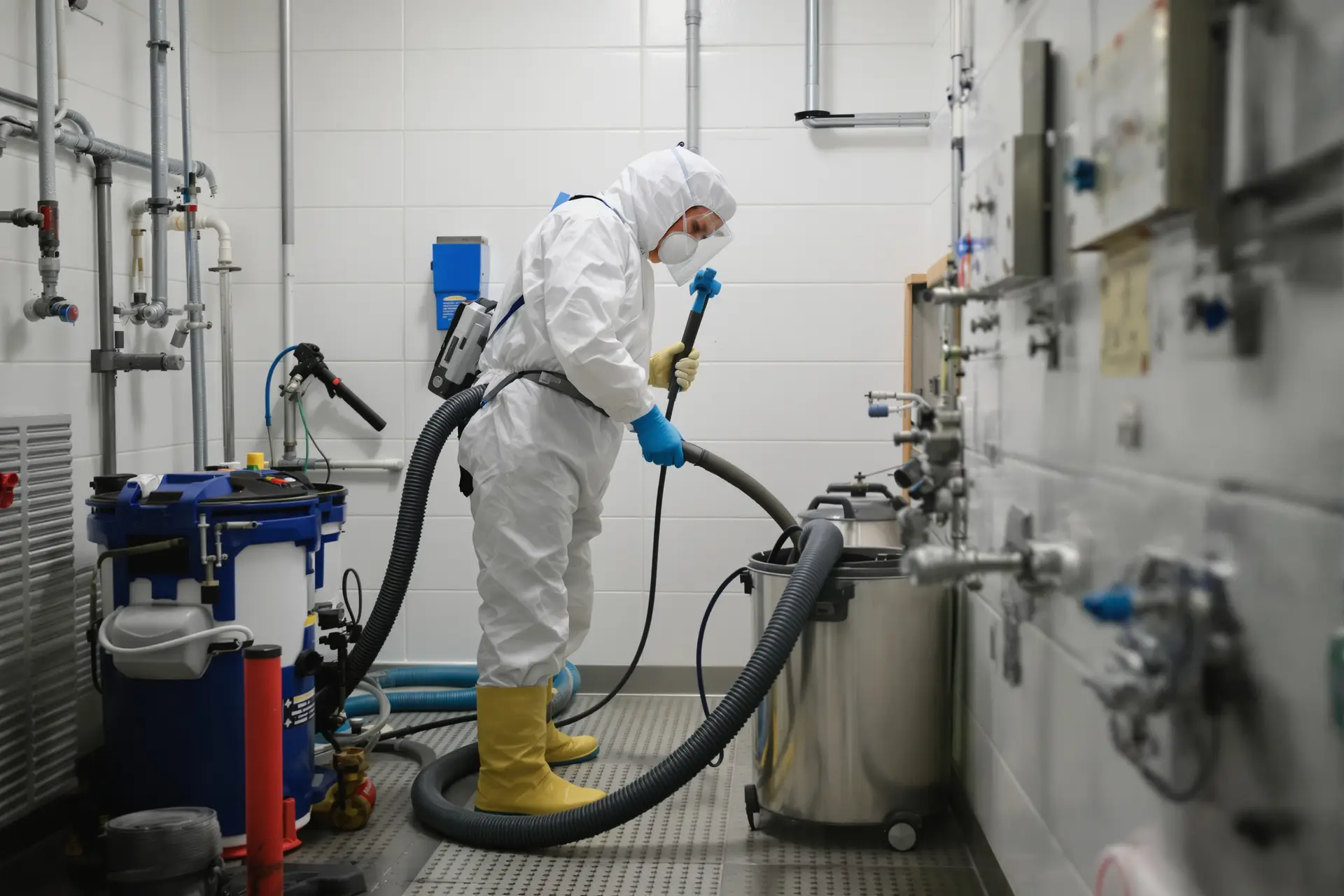
Sewage backup is Category 3 water — grossly contaminated “black water” that can carry
bacteria, viruses, and parasites. The IICRC classifies it as a biohazard, so it is not a
mop-and-bucket job. Stay out of the water, keep people and pets away, and call a certified pro to
extract, remove contaminated materials, and sanitize the space properly.
Few things a homeowner deals with are as unnerving — or as genuinely hazardous — as
sewage coming back up through a floor drain, a toilet, or a basement fixture. The instinct is to grab
a mop and start bailing, and that instinct is exactly the problem. Sewage backup is not “dirty water.”
Under the water-restoration industry’s own standard, it is Category 3 water, the most
contaminated class there is, and the right response is closer to a hazardous-materials cleanup than to
ordinary housework.
This guide explains why sewage is Category 3, what the health risks actually are according to the
CDC, the safety steps to take in the first hour, how professionals clean and sanitize a
Category 3 loss, what it costs in 2026, and how Illinois insurance treats sewer backups.
ServiceMaster Restoration Services has handled these calls across DuPage and Will County for 20+
years, and our IICRC-aligned certified
technicians are available 24/7 at (630) 241-1111.
Why sewage is Category 3 — and why the health hazards are real
The restoration industry sorts water losses into three categories based on how contaminated the
water is, using the standard published by the Institute of Inspection, Cleaning and Restoration
Certification (IICRC S500). The category, not the color or smell, drives everything about how a loss
is handled.
-
Category 1 — clean water. Water from a sanitary source, like a supply line
or a fresh-water tank. It poses little immediate health risk when handled promptly. -
Category 2 — gray water. Water with significant contamination that can cause
illness if contacted or consumed — think a washing-machine overflow, a dishwasher discharge,
or a toilet overflow that contained urine but no feces. -
Category 3 — black water. Grossly contaminated water that can contain
pathogenic (disease-causing), toxigenic, or other harmful agents. Sewage backups, toilet overflows
containing feces, and rising water from rivers or storms all fall here. The IICRC treats Category 3
as a biohazard.
(IICRC, S500)
An important point that surprises a lot of homeowners: “black water” is not about how the water
looks. Sewage backup water can appear cloudy, gray, or nearly clear. The classification comes
from the source and condition of the water, not its color. Water that starts as clean or gray can also
degrade into Category 3 if it sits, warms up, and grows bacteria — which is one more
reason time matters.
What is actually in it
The reason Category 3 gets the biohazard label is what it carries. Raw sewage can contain bacteria,
viruses, and parasites — disease-causing organisms that are perfectly happy to make people sick.
The CDC is direct about the risk from water contaminated with sewage: floodwater “may contain sewage,
and eating or drinking anything contaminated by floodwater can cause diarrheal disease,” and exposure
to contaminated floodwater can cause “wound infections, skin rash, gastrointestinal illness, [and]
tetanus.”
(CDC, Floodwater Safety)
Common culprits in sewage include bacteria such as E. coli and Salmonella, viruses
like norovirus and hepatitis A, and parasites such as Giardia and Cryptosporidium.
Exposure does not require drinking it. Contamination can enter through the mouth from hands or
splashes, through cuts and scrapes, and through mucous membranes. That is why the CDC advises against
bathing in “water that may be contaminated with sewage or toxic chemicals” and says that if you must
enter floodwater, you should “wear rubber boots, rubber gloves, and goggles.”
(CDC)
There is also an airborne dimension: as porous materials stay wet, the space can develop bacterial
and mold growth that affects air quality. Everyone in the home — especially children, older
adults, pregnant people, and anyone with a weakened immune system or respiratory condition —
should stay out of the affected area until it has been professionally cleaned.
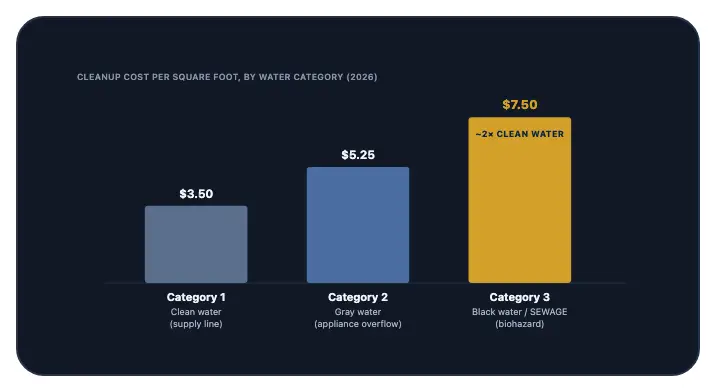
fall into — runs roughly twice the per-square-foot cost of clean water because it demands
containment, disposal of contaminated materials, and sanitization. Sources: IICRC S500 categories;
2026 per-square-foot figures via Bob Vila.
What to do first (safety before cleanup)
With a sewage backup, the first hour is about protecting people, not property. Everything on this list
comes before you touch a single towel. If the backup is large, or it reaches finished space,
outlets, or the furnace, skip straight to calling a professional.
-
Keep everyone out of the affected area. Rope it off. Keep children and pets away
entirely, and do not walk back and forth through the space tracking contamination into clean rooms.
Treat the water as a biohazard from the first minute, because it is. -
Do not touch the water with bare skin. If you must be near it at all, the CDC’s
guidance for contaminated water applies: “wear rubber boots, rubber gloves, and goggles.”
(CDC)
Never let sewage contact cuts, scrapes, your face, or your mouth. -
Mind the electricity. If any outlets, cords, appliances, the furnace, or the
electrical panel are wet or submerged — or you would have to stand in the water to reach the
breaker — stay out and call an electrician or your utility. Water plus electricity is a
separate, immediate hazard on top of the contamination. -
Stop adding to it. Do not run water, flush toilets, use sinks, or run the washing
machine or dishwasher — anything that drains could push more sewage back into the home. If it
is safe and you know how, this is the moment to stop using the plumbing entirely. -
Shut off the HVAC if you can do so safely. Turning off forced-air heating and
cooling helps keep contaminants and odor from being circulated through the house while the area is
still soiled. -
Ventilate if you can, without spreading it. Open a window in the affected area if
weather allows, but do not set up fans that blow across the sewage and into living space —
that aerosolizes contamination. Proper drying comes later, under containment. -
Document the damage for insurance — from a safe distance. Take wide photos
and video of the affected area and close-ups of damaged flooring, drywall, and belongings before
anything is moved or discarded. Do not throw things away yet; just photograph them. -
Call a certified restoration company. A true sewage backup is a job for
professionals with the right protective equipment, containment, extraction, and antimicrobial
treatment. Our crews are available around the clock at
(630) 241-1111.
Put plainly: anything more than a small, contained spill you can reach in full protective gear is not
worth a DIY cleanup. Porous materials that soak up sewage usually cannot be salvaged, household
products do not disinfect to a sanitary standard, and the health exposure is genuine. For the wider
picture, our water damage restoration hub walks through the
full process.
The professional cleanup process
A professional Category 3 cleanup follows the IICRC S500 framework, and it looks different from a
clean-water dry-out because the goal is not only to dry the structure but to return it to a
sanitary condition. Here is what that involves, in the order it generally happens.
1. Inspection, safety setup, and containment
Technicians arrive in personal protective equipment, assess the source and the extent of the
contamination, and establish containment so the affected area is isolated from the rest of the home.
This step keeps pathogens, moisture, and odor from spreading into clean space while the work is done.
2. Extraction of contaminated water
All standing sewage is removed first with commercial extraction equipment. You cannot sanitize or dry
a structure that is still sitting in contaminated water, and the faster it comes out, the less it
migrates into clean, dry materials.
3. Removing and disposing of unsalvageable materials
This is the part that catches people off guard. Under Category 3 protocols, porous materials that
absorbed sewage — carpet and padding, saturated drywall, insulation, particleboard, and similar
items — generally cannot be cleaned back to a safe state and must be removed and disposed of as
contaminated waste. A reputable restorer removes what genuinely has to go and documents why, rather
than gutting more than the contamination justifies. If a company wants to tear out far more than the
damage seems to warrant, it is fair to ask them to show the readings and reasoning behind it.
4. Cleaning and antimicrobial sanitization
Every remaining surface that contacted or was exposed to the sewage is cleaned and treated with
professional-grade antimicrobial products. This is the core difference between sanitizing a biohazard
and simply wiping up water — it is about killing the pathogens the CDC warns about, not just
removing what you can see.
5. Structural drying and monitoring
Once the space is clean, commercial air movers and dehumidifiers dry the framing, subfloor, and wall
cavities, and technicians track moisture readings until materials return to normal. Speed matters here
too: the EPA notes that drying wet materials within 24–48 hours in most cases prevents mold from
growing, so a sanitized space still needs drying on that clock.
(EPA, Mold, Moisture and Your Home)
6. Deodorizing and final verification
Sewage odor lingers in materials, not just the air, so deodorization targets the source rather than
masking it. The area is then verified dry and sanitary before any rebuild — new drywall,
flooring, and paint — begins. Throughout, our technicians document the loss to support your
insurance claim, and we work directly with your carrier.
Cost, and does insurance cover it?
Sewage cleanup costs more than clean-water restoration for a simple reason: the extra containment,
protective equipment, disposal of contaminated materials, and sanitization all add labor and cost.
For 2026 planning, national cost data puts a typical sewage backup cleanup in the range of roughly
$2,000 to $10,000, and on a per-square-foot basis, Category 3 black water runs about
$7.50 per square foot — compared with roughly $3.50 for clean water and $5.25
for gray water.
(Bob Vila, 2026)
A small, contained backup in a single bathroom naturally sits at the low end, while a sewage event
that fills a finished basement can run well into five figures for the cleanup alone
(HomeGuide, 2026).
Every loss is different; the honest answer is that scope and square footage drive the number, which is
why a real on-site assessment beats any phone quote.
The insurance part everyone gets wrong
Here is the piece that catches Illinois homeowners at the worst possible moment. A standard
homeowners policy typically does not cover sewer or drain backup, and neither does flood
insurance. The Insurance Information Institute is clear that sewer backup coverage “is available from
most providers for a nominal cost” — but only if you have actually added it.
(Insurance Information Institute)
That coverage is a separate sewer backup endorsement (sometimes called a rider or
add-on) that you buy on top of your homeowners policy, and according to the III it often costs only
around $50 a year. Without it, a sewage backup can be an entirely out-of-pocket loss.
It is worth keeping three separate things straight, because they are covered by three different
things:
- A sudden, accidental event like a burst pipe is typically covered by standard homeowners insurance.
- Overland flooding from rain and surface water is generally not covered by homeowners insurance and requires separate flood coverage.
- A sewer or drain backup requires its own sewer backup endorsement — it falls under neither of the above.
Coverage varies by policy and insurer, so check yours and confirm the details with your agent or the
Illinois Department of Insurance before you assume anything. If you are trying to sort out what your
policy will and will not pay for after a water loss, our guide to
whether homeowners insurance covers water damage in Illinois
breaks down the sudden-versus-gradual and flood distinctions in plain language. Whatever your
coverage, ServiceMaster works with all major carriers and documents the loss to support your claim.
Why DuPage and Will County see so many backups
Sewage backups spike here for reasons that have little to do with anything a homeowner did. Many older
neighborhoods across the Chicago suburbs are served by aging storm sewers, and some older areas still
rely on combined sewers that carry stormwater and sanitary waste in the same pipe. When a
heavy late-summer thunderstorm drops more rain than the system was built to move, the excess has to go
somewhere — and sometimes that is backward, up through the lowest drain in the neighborhood,
which may be the floor drain in your basement. Add the region’s dense clay soil, reliance on sump
pumps, and a lot of finished basements, and the result is predictable. We see it across Naperville,
Lisle, Downers Grove, Wheaton, Bolingbrook, Woodridge, Lombard, Glen Ellyn, Hinsdale, Aurora,
Plainfield, Romeoville, and Lockport every storm season. When a storm both backs up the sewer and
floods the basement, the two overlap — our
basement flooding after heavy rain guide covers
the flooding side of that same night.
Dealing with a sewage backup right now?
Do not try to clean Category 3 water yourself. ServiceMaster Restoration Services responds 24/7
across DuPage & Will County — Naperville, Lisle, Downers Grove, Bolingbrook and beyond.
IICRC-aligned certified technicians, residential and commercial, and we work directly with your
insurance. Call (630) 241-1111 or
request help online. The faster it is contained and sanitized, the safer
and less costly it is.
Frequently Asked Questions
What should I do after a sewage backup?
Treat it as a biohazard from the first minute. Keep everyone, including pets, out of the affected
area; do not touch the water with bare skin; and mind the electrical hazard if outlets or the panel
are wet. Stop using your plumbing so nothing drains back in, turn off forced-air HVAC if you safely
can, and photograph the damage for insurance without moving things. Then call a certified
restoration company — anything beyond a small, contained spill you can reach in full
protective gear is not a safe DIY job.
Is sewage backup water dangerous?
Yes. Sewage is Category 3 “black water,” which the IICRC classifies as a biohazard because it can
contain pathogenic bacteria, viruses, and parasites. The CDC notes that water contaminated with
sewage can cause diarrheal disease, and that exposure to contaminated floodwater can cause wound
infections, skin rash, gastrointestinal illness, and tetanus. You do not have to drink it to get
sick — contamination can enter through the mouth, cuts, or mucous membranes — so keep
out of it and let professionals clean and sanitize the space.
How much does sewage backup cleanup cost?
For 2026, national cost data puts a typical sewage backup cleanup in the range of about $2,000 to
$10,000, with Category 3 black water running roughly $7.50 per square foot — about double the
cost of clean water — because of the containment, disposal of contaminated materials, and
sanitization involved. A small single-bathroom backup sits at the low end, while a sewage event
that fills a finished basement can exceed $15,000 for cleanup alone. Scope and square footage drive
the price, so an on-site assessment is more accurate than any phone quote.
Does homeowners insurance cover sewer backup?
Usually not on its own. A standard homeowners policy typically does not cover sewer or drain backup,
and neither does flood insurance. According to the Insurance Information Institute, you generally
need to add a separate sewer backup endorsement (or rider) to your policy, often for around $50 a
year. Coverage and limits vary by insurer, so confirm what you have with your agent before a
backup happens rather than after.
Can I clean up a sewage backup myself?
For anything beyond a very small, contained spill you can reach in full protective gear, no. Sewage
is a biohazard, household products do not disinfect to a sanitary standard, and porous materials
that soaked up sewage generally must be removed and disposed of rather than cleaned. The health
exposure is real, and improper cleanup often leaves contamination and odor behind that a
professional has to redo. When in doubt, keep out of the water and call a certified restoration
company.
This article is general information for DuPage & Will County homeowners, not professional medical,
electrical, or insurance advice. Sewage backups involve genuine health and safety hazards — when
in doubt, stay out and call a professional. Coverage varies by policy; confirm details with your own
insurer or the Illinois Department of Insurance. ServiceMaster Restoration Services · HQ 924
Ogden Ave, Lisle, IL · (630) 241-1111 · serving
DuPage & Will County, 24/7.