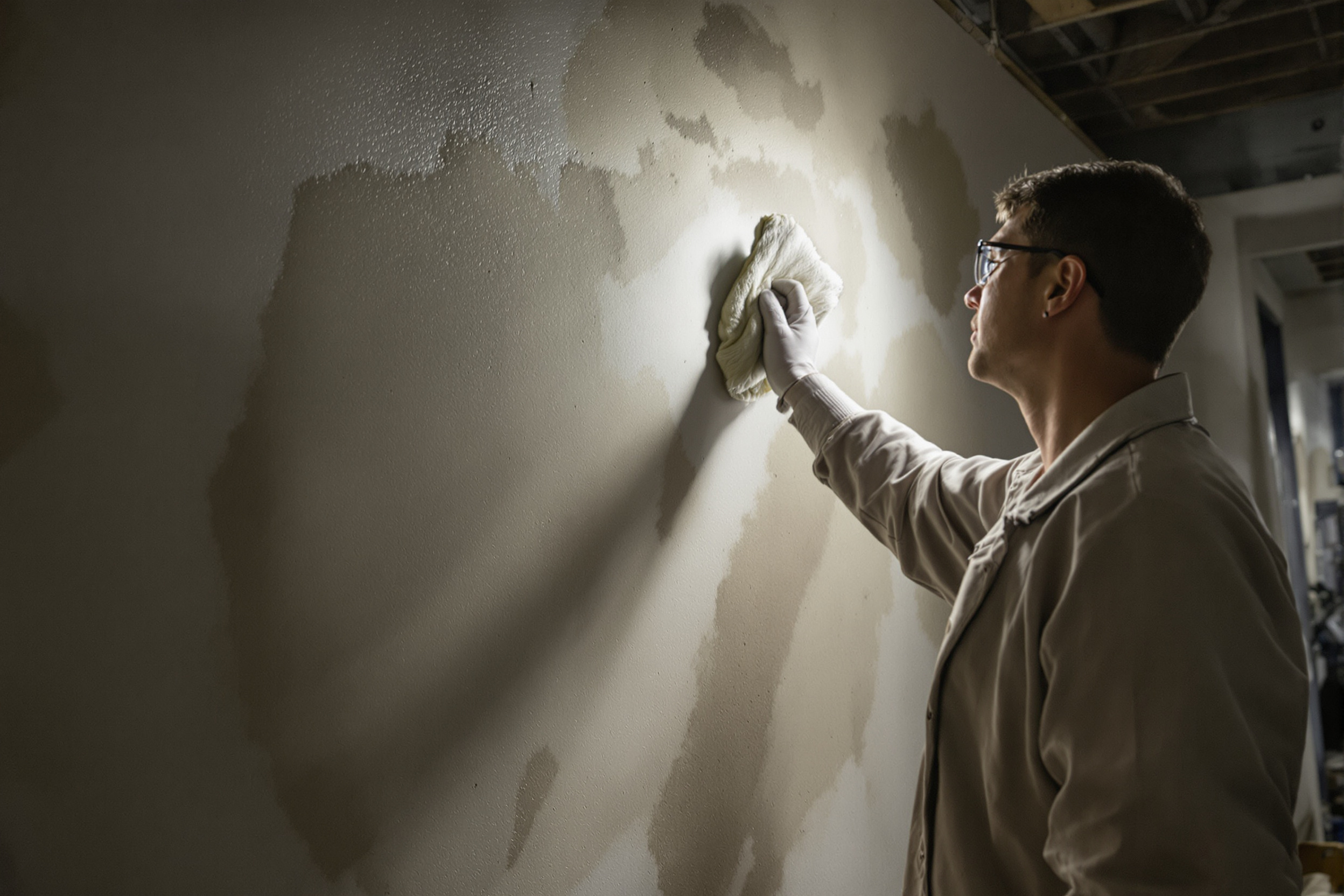
Fire and smoke damage restoration follows a set order: emergency assessment, board-up and
roof-tarp to secure the home, water removal from firefighting, soot and smoke cleanup, deodorization,
and finally rebuild. Nationally it averages around $27,000 but ranges from roughly $3,000 to over
$50,000, driven by fire size, smoke type, and water damage.
A house fire is rarely a single event. By the time the fire department leaves, you are usually
dealing with three overlapping problems at once: the burned materials themselves, the acidic soot
and stubborn odor that spread far beyond the flames, and the water and chemicals used to put the
fire out. Understanding how a professional restoration crew tackles each of those — and in what
order — makes the whole process far less overwhelming, and helps you spot whether the company
working on your home is doing it right.
This guide walks through the fire and smoke damage restoration process step by step, gives you honest
2026 cost ranges, explains how pros actually get the smoke smell out, and covers the part most people
do not expect: the water damage a fire leaves behind. ServiceMaster Restoration Services has answered
fire calls across DuPage and Will County for 20+ years, and our IICRC-aligned certified technicians
are available 24/7 at (630) 241-1111.
The fire & smoke restoration process step by step
Every fire is different, but professional restoration follows a predictable sequence. The industry
reference for this work is the ANSI/IICRC S700 Standard for Professional Fire and Smoke Damage
Restoration — the first publicly reviewed American National Standard for the trade, published in
2025 — along with the IICRC’s Fire and Smoke Restoration Technician (FSRT) certification, which
covers scoping, mitigation, cleaning, deodorization, and documentation of fire-damaged structures and
contents.
(IICRC, FSRT)
Here is what that sequence looks like in a real home.
-
Emergency assessment and safety check. Before anyone cleans anything, a technician
inspects the structure to gauge what is safe, what is salvageable, and what has to go. The Red Cross
is clear that you should “stay out of fire-damaged homes until local fire authorities say it is
safe” to re-enter, because “the soot and dirty water left behind may contain things that could make
you sick.”
(American Red Cross)
A crew documents the damage room by room for your insurance claim and builds a scope of work. -
Board-up and roof-tarp (securing the property). Fires break windows, burn through
walls, and leave holes in roofs. Until the home is watertight and secure, it is exposed to weather,
animals, and theft. Emergency board-up of openings and tarping of a damaged roof is one of the first
things a restoration company does — and it is often the first thing your insurer expects, to
prevent further loss. Across DuPage and Will County, this matters year-round: a tarp keeps a
late-summer thunderstorm or a winter freeze from turning a contained fire into a whole-house water
problem overnight. -
Water removal and structural drying. This is the step homeowners forget: the water
used to extinguish the fire has to come out, fast. Crews extract standing water, then set air movers
and commercial dehumidifiers to dry framing, subfloor, and wall cavities before mold can take hold.
(More on why this matters in the water-after-a-fire section below.) -
Soot and smoke residue cleanup. Soot is acidic and it spreads — it travels
through the HVAC system and settles on surfaces in rooms the flames never touched. Left alone, it
etches metal, discolors walls, and corrodes electronics within days. Technicians clean surfaces,
contents, and ductwork using methods matched to the residue type (dry soot, oily/protein smoke, or
fuel-based smoke each behave differently), removing what can be saved and disposing of what cannot. -
Deodorization. Smoke odor lives in porous materials — drywall, insulation,
fabrics, framing — and it will keep resurfacing until it is neutralized at the source rather
than masked. Pros use thermal fogging, ozone or hydroxyl treatment, HVAC cleaning, and sealing to
break down odor-causing particles. (See how smoke odor removal works.) -
Repairs and rebuild. Once the structure is clean, dry, and odor-free, the home is
put back together — drywall, flooring, paint, cabinetry, and finishes. On a small kitchen fire
this may be a few days of work; on a major structural loss it can mean weeks of reconstruction.
Running alongside those six stages is contents restoration — the furniture,
clothing, electronics, documents, and keepsakes inside the home. Badly affected items are sometimes
“packed out,” inventoried, and cleaned or restored off-site, then stored until the home is ready for
them. It is often the most emotional part of a fire loss, and a good crew separates what can be saved
from what cannot with care, documenting everything for your claim rather than discarding items on your
behalf.
Timing matters at every stage. Soot is acidic and corrosive, so the longer it sits, the more permanent
the etching and staining become; smoke odor sets deeper by the day; and firefighting water starts the
mold clock immediately. That is why the first three steps — assess, secure, and dry —
happen fast, often within the first day, while cleanup, deodorization, and rebuild follow over the
days and weeks after.
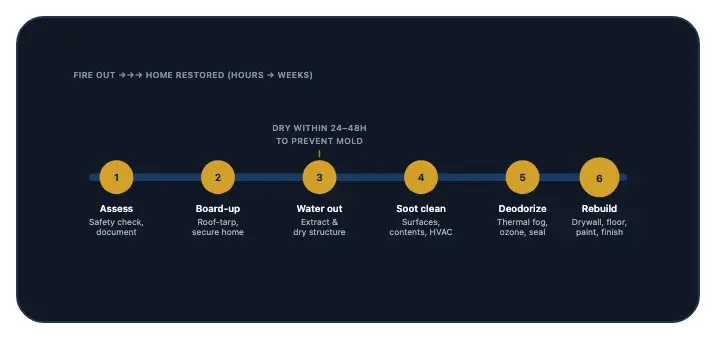
reflect professional practice under the ANSI/IICRC S700 fire and smoke restoration standard and the
EPA’s 24–48 hour guidance for preventing mold after water intrusion. Sources: IICRC; EPA.
How much does fire & smoke damage restoration cost?
There is no honest way to quote a fire without seeing it — a stovetop flare-up that mostly left
smoke is a different job from a fire that consumed a bedroom. But for planning, here is what national
2026 cost data shows.
Full fire damage restoration averages around $27,000 nationally, with a typical range
of roughly $3,000 to over $51,000, or about $4 to $7 per square foot
depending on the size of the home, the fire category, and the extent of the damage.
(Angi, 2026)
That wide range exists because the number is really several jobs bundled together: securing the home,
removing water, cleaning soot and smoke, killing odor, and rebuilding.
If your loss is mostly smoke and soot rather than structural fire, the pieces break down like this:
-
Smoke odor and cleanup, per room: roughly $200 to $1,200, covering
deep cleaning, deodorization, and ozone treatment.
(Angi) -
Soot removal: dry soot typically runs $400 to $700, while oily or
protein soot (common with kitchen fires) starts around $1,000 and climbs, because it
is far harder to clean. -
Overall smoke remediation: averages about $3,000, ranging from
$200 to $12,000 depending on the type of smoke, the amount of soot, and how far it
spread.
(HomeGuide) -
Thermal fogging: about $200 to $585.
Ozone treatment: about $400 to $800.
HVAC duct cleaning (often necessary, since soot travels through the ducts):
about $150 to $800.
Two things move these numbers most. First, the type of smoke: dry smoke from a
fast, high-heat fire is easier to clean than the greasy, sticky residue from a low-heat kitchen or
plastics fire. Second, water damage: because firefighting soaks the structure, many
fire jobs include a water mitigation and drying bill on top of the soot and rebuild work. For how that
water damage may or may not be covered, see our guide on
whether homeowners insurance covers water damage in Illinois.
A note on insurance, since it is the first question most families ask: a standard homeowners policy
(an HO-3, for example) generally covers sudden, accidental fire and the resulting smoke and
firefighting water damage. Coverage and limits vary by policy, so confirm the specifics with your own
insurer. ServiceMaster works with all major insurance carriers and can document the loss and
communicate with your adjuster so the claim moves faster — a real relief when you are already
dealing with everything else a fire brings.
Locally, one more factor shapes both the timeline and the paperwork: the insurance carrier. Most DuPage
and Will County fire jobs are handled through a homeowners claim, and the parts that push a bill toward
the high end are almost always structural rebuild and contents — a fire that burns through
framing and finishes costs far more than one that mostly left smoke. A restoration company that works
directly with your carrier, documents the loss thoroughly, and sequences board-up and drying before
weather can do more damage will usually keep the total lower than one that starts cleaning without
securing the home first.
Getting the smoke smell out: thermal fogging, ozone, and why masking fails
The single most common complaint after a fire is the smell — and the reason it lingers is that
smoke is made of microscopic particles that force their way into porous materials and settle deep in
the HVAC system. You can scrub every visible surface and the odor will still bloom back on the first
humid day, because the source is inside the walls, the insulation, the ductwork, and the soft
furnishings. Air fresheners and consumer sprays only mask it. Real deodorization neutralizes the odor
at its source, which is why it is a distinct, engineered step rather than a final wipe-down.
Thermal fogging
Thermal fogging is the workhorse of smoke-odor removal. A machine heats a deodorizing compound into a
dense fog of tiny particles that behaves like smoke — penetrating the same cracks, pores, and
cavities the smoke reached — and chemically bonds with and neutralizes the odor molecules it
finds there. Because it follows smoke’s own path, it reaches places surface cleaning simply cannot.
Nationally it runs about $200 to $585.
Ozone and hydroxyl treatment
Ozone generators fill a sealed space with ozone that oxidizes odor molecules, breaking them apart
rather than covering them up. It is highly effective, but the area must be unoccupied during treatment
— people, pets, and plants have to be out — so it is scheduled carefully. Hydroxyl
generators achieve a similar result more gently and can sometimes run while a space is occupied. Ozone
treatment typically costs about $400 to $800.
HVAC cleaning and sealing
Because forced-air systems pull soot and odor through every room, duct cleaning is frequently part of
a complete deodorization — budget roughly $150 to $800. Where residue has soaked
into framing or subfloor that will stay in the home, technicians may also seal those surfaces to lock
in any remaining odor before the rebuild. For a deeper look at soot behavior and cleaning, see our
smoke and soot cleanup page.
Why there’s water damage after a fire
It surprises almost everyone: after a fire, one of the biggest threats to your home is water. Putting
out a house fire takes hundreds or thousands of gallons, and all of it ends up in your floors, walls,
ceilings, and belongings. The Red Cross specifically warns that water from firefighting efforts may
have flooded the property, and advises staying out of any building with water around it until it is
checked.
(American Red Cross)
That water creates a second disaster on top of the fire:
-
Mold. Wet framing and drywall are prime mold territory. The EPA notes that if wet
materials are dried within 24–48 hours, in most cases mold will not grow — which is
exactly why fast water extraction is step three, not an afterthought.
(EPA) -
Structural weakening. Water soaks into subfloor, sill plates, and wall cavities,
and if it is not dried thoroughly it can warp floors and compromise materials the fire never
touched. -
Soot plus water equals acidic sludge. When firefighting water mixes with soot, it
creates an acidic, staining slurry that spreads the corrosive residue further and faster across the
home.
This is why fire restoration and water restoration are two halves of the same job. A company that only
cleans soot and skips proper structural drying can leave you with a mold problem weeks later. A
complete crew addresses both from the first day — which is exactly how our
fire and smoke damage restoration team approaches every loss across
Naperville, Lisle, Downers Grove, Wheaton, Bolingbrook, Aurora, Plainfield, and the surrounding
DuPage and Will County communities.
Dealing with fire or smoke damage right now?
ServiceMaster Restoration Services responds 24/7 across DuPage & Will County — from
emergency board-up and roof-tarp through soot cleanup, deodorization, and full rebuild.
IICRC-aligned certified technicians, residential and commercial, and we work directly with your
insurance carrier. Call
(630) 241-1111 or
request help online. The sooner we secure and dry your home, the more we
can save.
Frequently Asked Questions
What is the fire damage restoration process, step by step?
Professional fire restoration follows six stages in order: (1) emergency assessment and a safety
check, (2) board-up and roof-tarp to secure the property, (3) water removal and structural drying
from firefighting, (4) soot and smoke residue cleanup of surfaces, contents, and ductwork,
(5) deodorization using thermal fogging, ozone, or hydroxyl treatment, and (6) repairs and rebuild.
The work follows the ANSI/IICRC S700 fire and smoke restoration standard.
How much does fire and smoke damage restoration cost?
Full fire damage restoration averages around $27,000 nationally in 2026, with a typical range of
roughly $3,000 to over $51,000, or about $4 to $7 per square foot, according to Angi. If the loss is
mostly smoke, expect roughly $200 to $1,200 per room for cleaning and deodorization, with overall
smoke remediation averaging about $3,000. Cost depends heavily on fire size, smoke type, and how
much water damage the firefighting left behind.
How do you get the smoke smell out of a house?
Smoke odor has to be neutralized at its source, not masked. Professionals use thermal fogging
(about $200–$585), which sends a deodorizing fog into the same pores and cavities the smoke
reached; ozone or hydroxyl treatment (about $400–$800) to oxidize odor molecules; and HVAC
duct cleaning, since soot spreads through the ductwork. Porous materials that stay in the home may
also be sealed. Consumer sprays only cover the smell temporarily.
Why is there water damage after a fire?
Extinguishing a house fire takes large volumes of water, which soak floors, walls, ceilings, and
belongings. The Red Cross warns that firefighting water may flood the property. That water can cause
mold if it is not dried within 24–48 hours (per the EPA), weaken the structure, and mix with
soot into an acidic sludge. That is why water extraction and structural drying are core parts of
fire restoration, not a separate concern.
Can I stay in my house after a small fire?
Not until it is cleared. The Red Cross advises staying out of a fire-damaged home until local fire
authorities say it is safe to re-enter, because the soot and dirty water left behind may contain
things that can make you sick, and there can be hidden structural, electrical, and air-quality
hazards. Even after a small fire, lingering smoke odor and soot spread by the HVAC system usually
mean at least a professional cleaning and deodorization before the home is fully comfortable again.
This article is general information for DuPage & Will County homeowners, not professional safety,
medical, or insurance advice. After a fire, stay out of the home until fire authorities say it is safe
to re-enter. Cost figures are national 2026 estimates and will vary with your specific loss; coverage
varies by policy — confirm details with your own insurer. ServiceMaster Restoration Services
· HQ 924 Ogden Ave, Lisle, IL ·
(630) 241-1111 · serving DuPage & Will County, 24/7.