
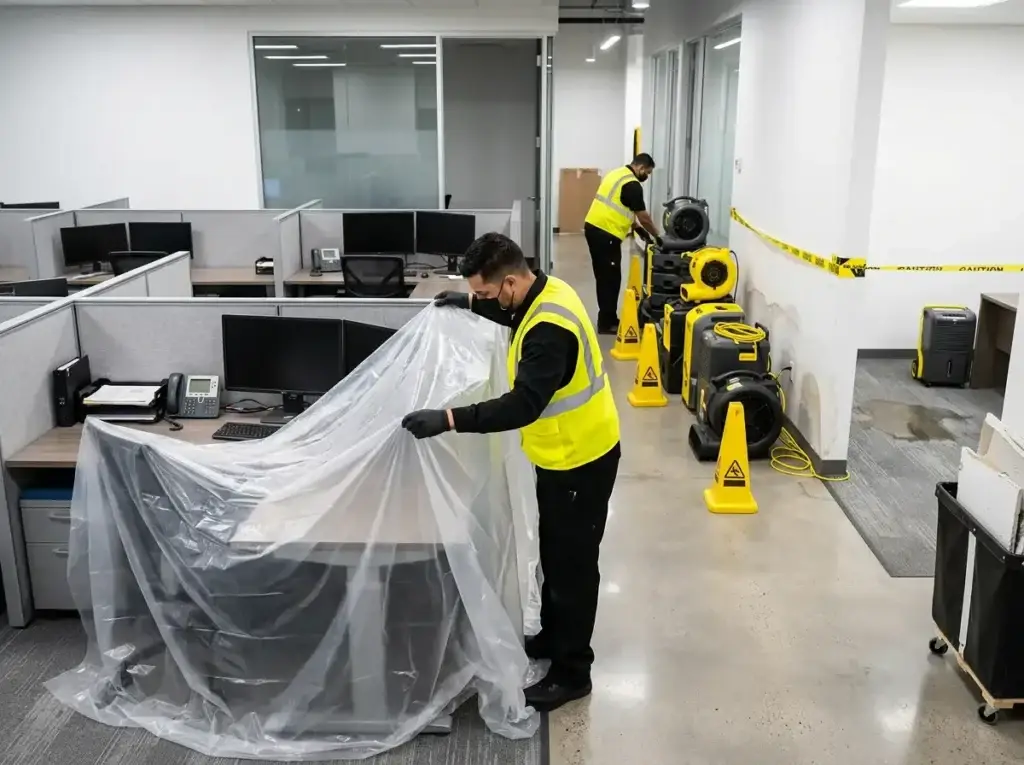

What is professional smoke and soot cleanup?
Professional smoke and soot cleanup removes fire residue from walls, ceilings, contents and air systems without spreading it or setting stains. Technicians test each surface, contain the work area, HEPA-vacuum and dry-clean loose soot first, then wet-clean with products matched to the residue. Odor treatment comes after, once the residue that causes the smell is gone.
The order matters more than the products. Most soot stains that become permanent got that way because someone wiped or washed too early. Below is how the work is sequenced and why.
Why does soot travel so far and settle everywhere?
Because most of it is extremely small. The U.S. EPA classifies soot and smoke as particulate matter and explains that fine particles, called PM2.5, are generally 2.5 micrometers across or smaller. An average human hair is about 70 micrometers wide, roughly 30 times larger than the largest fine particle. Particles that size stay in the air, follow air currents through doorways and ducts, and settle on cooler surfaces far from the fire.
How small smoke particles are
Diameter in micrometers (µm), U.S. EPA reference sizes
Source: U.S. EPA, Particulate Matter (PM) Basics; HEPA rating from U.S. EPA, What is a HEPA filter?
Size is also a health issue. EPA notes that some particles smaller than 10 micrometers can get deep into the lungs, and that PM2.5 poses the greatest risk. That is one reason technicians wear respirators and run filtration during cleanup, and why sweeping or dusting soot with an ordinary rag or shop vacuum is a bad idea.
How do restorers choose a cleaning method for each surface?
They test. A small, inconspicuous patch on each material shows how the residue responds before a whole wall or cabinet run is cleaned. Two things drive the choice:
- The residue. Dry, powdery soot behaves differently from oily, sticky or protein residue. Our guide to dry, wet, protein and fuel-oil soot describes each type.
- The surface. Flat paint, unsealed wood, acoustic ceiling tile and fabric absorb residue. Glass, metal, sealed wood and gloss paint hold it on the surface.
The industry standard, ANSI/IICRC S700, the Standard for Professional Fire and Smoke Damage Restoration, frames this as assessing the presence, intensity and boundaries of fire residues in the building, its HVAC system and its contents. Mapping those boundaries tells the crew where cleaning has to stop as well as where it starts.
Testing also answers a harder question: clean or replace? Hard, sealed surfaces almost always clean. Porous building materials with heavy residue, such as insulation, acoustic tile or badly stained unsealed wood, are often removed instead, because residue that has soaked in keeps releasing odor. Contents follow the same logic, and every replace decision should be photographed and listed for your insurer before anything is discarded.
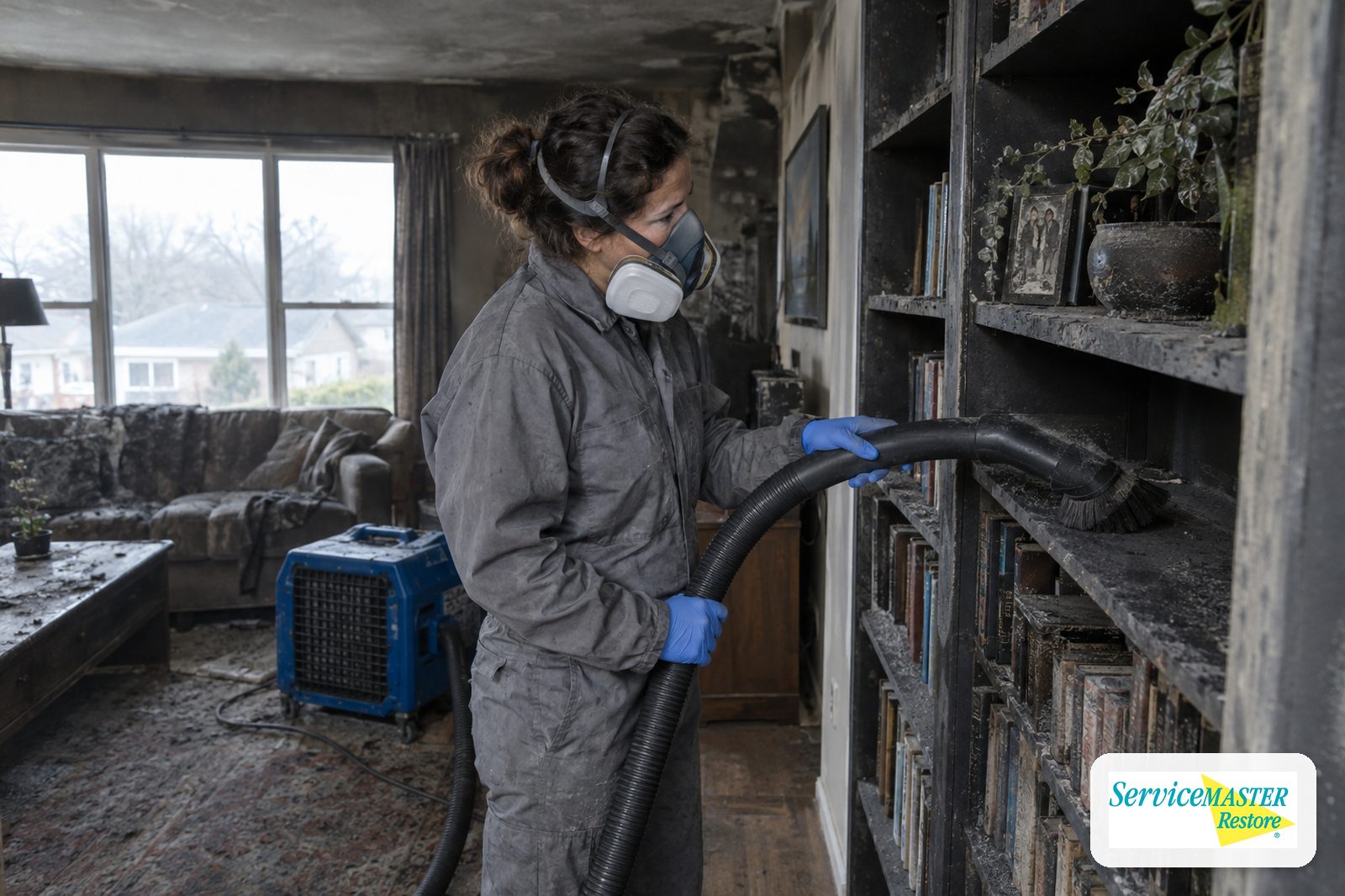
HEPA vacuuming comes first
Loose soot is lifted before anything touches the surface. Extension guidance from Alabama Cooperative Extension says to vacuum soot and ash off items, using a HEPA filter if possible, to wait until damp items are dry, and to lower suction for fragile pieces. EPA explains that a HEPA filter can theoretically remove at least 99.97% of airborne particles at 0.3 microns.
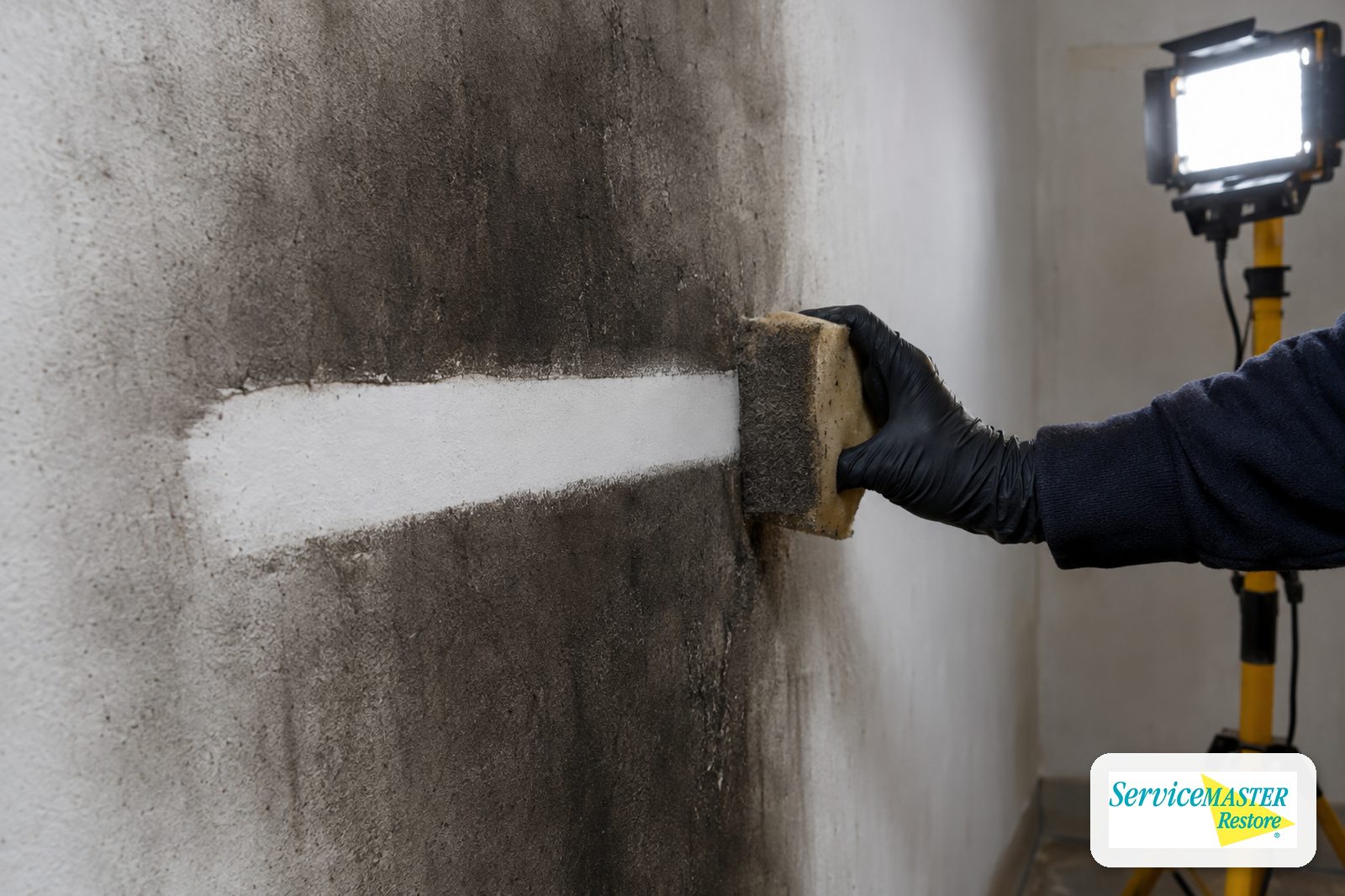
Dry soot sponges for what is left
A dry-cleaning soot sponge is a dry rubber sponge that pulls residue off a surface without water. The same extension guidance notes the sponge's dirty face can be cut away to expose a clean one. Technicians wipe in single strokes rather than scrubbing, because scrubbing grinds particles into flat paint and textured ceilings.
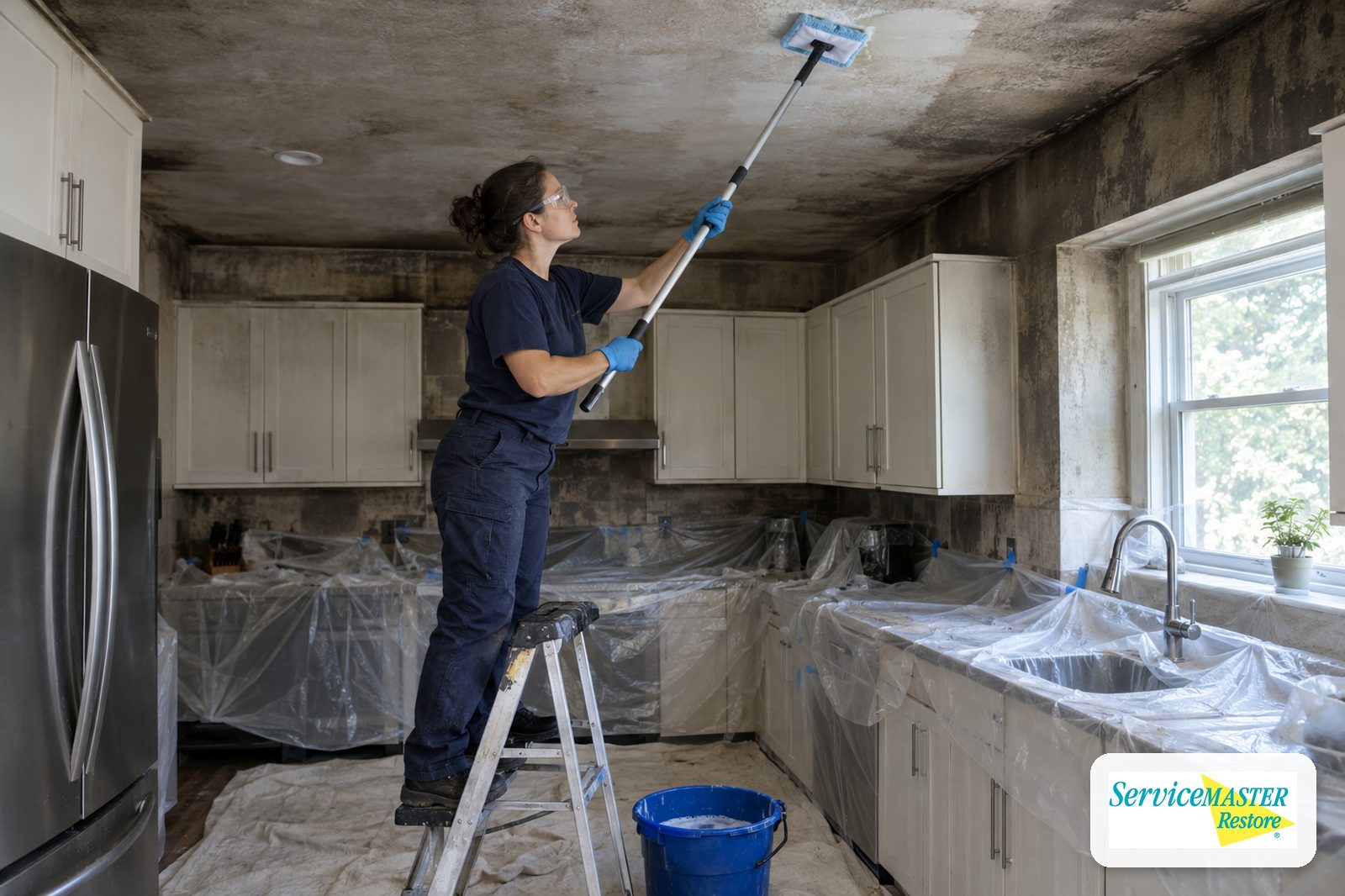
Wet cleaning, last and top-down
Only after dry removal do crews wet-clean, working ceilings first so drips land on surfaces not yet cleaned. Oily and protein residues need degreasing cleaners; light residue may need only a mild detergent and rinse. Surfaces that still stain after cleaning are usually primed with a stain-blocking sealer before repainting.
Why not just wash the walls?
Water spreads soot instead of lifting it. Alabama Cooperative Extension warns that water and other cleaning solutions drive soot and ash further into a surface, where it can become impossible to remove. That advice applies to walls, upholstery and keepsakes alike. The same goes for running a household vacuum without a HEPA filter, which can blow the finest particles back into the room.
Containment matters for the same reason. Poly sheeting and containment with HEPA air filtration keep particles disturbed during cleaning from drifting into rooms that are already clean. Lingering smell is handled afterward through odor removal and air quality treatment, and wet materials from hoses go through water damage cleanup after firefighting before residue cleaning.
What is the standard sequence for soot cleanup?
- Assess and test. Residue type, surface materials and the boundaries of contamination are identified, with test patches on each material.
- Contain and filter. The work area is isolated and HEPA air scrubbers capture airborne particles.
- HEPA vacuum. Loose soot is removed from surfaces and contents without contact scrubbing.
- Dry sponge. Remaining dry residue is lifted with soot sponges in single strokes.
- Wet clean. Cleaners matched to the residue are applied top-down, then rinsed.
- Inspect. Cleaned areas are checked in good light; stubborn staining is sealed or the material is replaced.
- Hand off to deodorization. Once residue is gone, odor treatment and HVAC cleaning follow.
Soot cleanup in DuPage and Will County homes and businesses
Heating season brings its own soot problems here, from furnace malfunctions to fireplace backdrafts. Our guide to furnace puffback soot cleanup covers the oily residue a puffback leaves. We serve both counties from Lisle, including fire and smoke cleanup in Elmhurst, Westmont and Darien. Soot cleanup is part of our full fire damage restoration service for homes and businesses, and we can document cleaning for your carrier through insurance claim assistance.
Certified technicians, 20+ years of experience and 24/7 availability. Reach us on the contact page or call (630) 241-1111 to schedule smoke and soot cleanup.
Frequently asked questions
What is a dry soot sponge and when is it used?
A dry soot sponge is a rubber cleaning sponge used without water to lift dry residue from walls, ceilings and sturdy items. It is used after loose soot has been vacuumed and before any wet cleaning. Alabama Cooperative Extension notes the sponge's dirty surface can be cut away to expose a clean face as you work.
Why should soot be vacuumed before it is wiped?
Wiping pushes particles into the surface, while vacuuming lifts them off. EPA explains that a HEPA filter can theoretically capture at least 99.97% of particles at 0.3 microns, so a HEPA vacuum removes fine soot without exhausting it back into the room. Extension guidance also advises waiting until damp items dry before vacuuming them.
Can soot-stained ceilings be cleaned, or do they need repainting?
Many painted ceilings clean well with dry sponging followed by careful wet cleaning, especially with light residue. Heavier or oily residue on flat or textured ceilings may leave a shadow that needs a stain-blocking primer and fresh paint. Acoustic ceiling tiles absorb residue and are often replaced. A test patch shows which result to expect.
Is breathing soot dust harmful during cleanup?
It can be. EPA says some particles smaller than 10 micrometers can get deep into the lungs, and fine particles of 2.5 micrometers or less pose the greatest health risk. That is why cleanup crews wear respirators and run HEPA air scrubbers, and why occupants should stay out of rooms while soot is being disturbed.
Does soot cleanup also remove the smoke smell?
It removes most of the source, which is the biggest step, but it is not always the last one. Odor molecules can remain in porous materials, wall cavities and ductwork after visible residue is gone. That is why deodorization and, where needed, HVAC cleaning follow soot cleanup rather than replace it.
Sources
- U.S. EPA: Particulate Matter (PM) Basics
- U.S. EPA: What is a HEPA filter?
- IICRC: ANSI/IICRC S700 Standard for Professional Fire and Smoke Damage Restoration
- Alabama Cooperative Extension System: Cleaning After a Fire
- U.S. EPA: Should You Have the Air Ducts in Your Home Cleaned?