
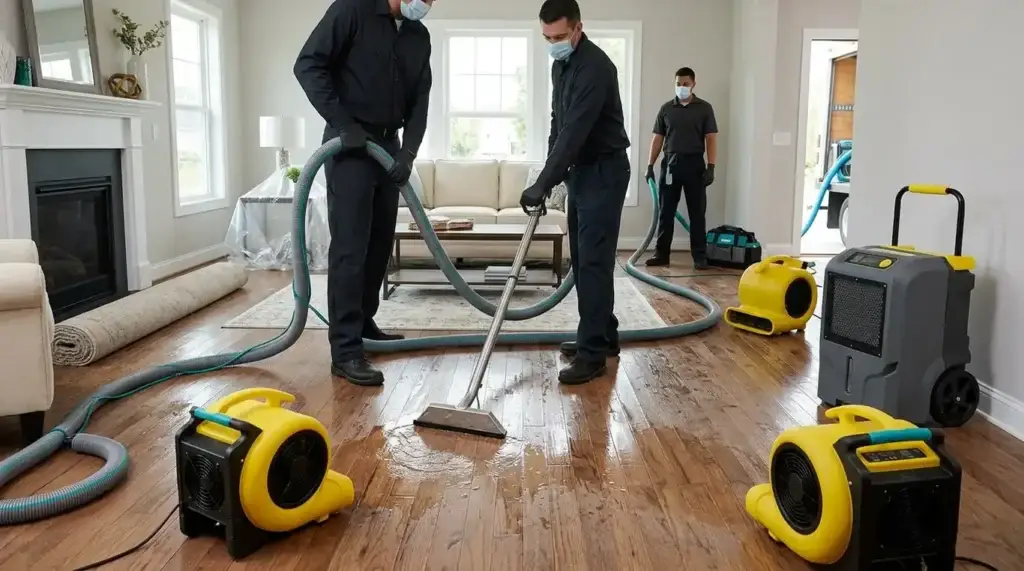

What is included in a janitorial maintenance program?
A janitorial maintenance program is recurring cleaning on a fixed schedule: trash and recycling, restroom cleaning and disinfecting, restocking soap and paper, dusting, high-touch surfaces, entrance care and floor maintenance. Frequencies are set area by area based on traffic, and regular quality inspections confirm the work matches the agreed scope.
Janitorial work is the part of facility care that nobody notices when it is done well. This page goes past the basics on our service summary above and covers the details that make a recurring program hold up over months: frequencies by area, entrance and matting control, restroom hygiene, consumables and inspections.
How often should each area of a building be cleaned?
Frequencies should follow how an area is used, but several published standards set useful minimums. The table below pulls them together.
| Area | Published guidance | Source |
|---|---|---|
| Restrooms and hand-touch surfaces | Clean and disinfect daily, and more often with high traffic or occupancy | Green Seal GS-42, 2.2.3.2 |
| Break rooms and food areas | Clean and sanitize surfaces at least daily | Green Seal GS-42, 2.2.4.1 |
| Outside entryways and walk-off mats | Clean outside entryways daily; vacuum mats daily and as needed | Green Seal GS-42, 2.2.5 |
| Workroom floors | Keep clean and, to the extent feasible, dry | OSHA 29 CFR 1910.22(a)(2) |
| Washing facilities | Maintain in a sanitary condition | OSHA 29 CFR 1910.141(d)(1) |
| Waste receptacles | Leak-proof, easy to clean and kept sanitary; solid tight-fitting cover unless sanitary without one | OSHA 29 CFR 1910.141(a)(4)(i) |
Sources: Green Seal, GS-42 Commercial and Institutional Cleaning Services; OSHA, 29 CFR 1910.141 Sanitation; OSHA, 29 CFR 1910.22 Walking-working surfaces
Everything else, such as dusting, glass, low-traffic offices and storage rooms, is usually set weekly or as needed. The point of writing frequencies down is that both the cleaning crew and the facility manager can see what "done" means on any given night.
Why do entrances and matting matter so much?
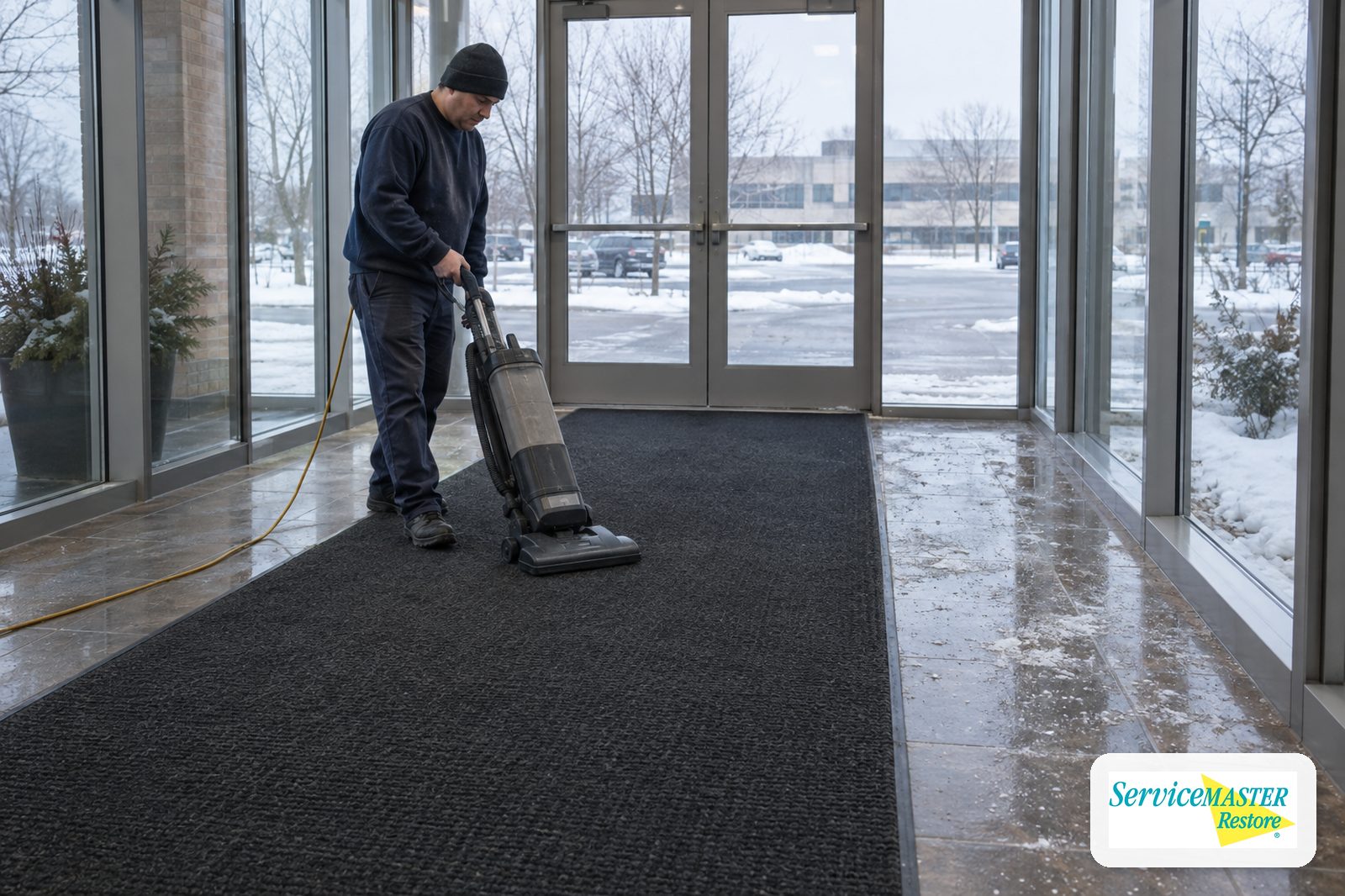
Stop soil at the door
Grit that walks in on shoes ends up spread across every floor in the building. Green Seal GS-42 calls for walk-off matting at all building entryways: 6 to 10 feet of scraper/wiper matting followed by 6 to 10 feet of wiper matting, vacuumed daily. The standard allows smaller mats where an entry is too small.
Matting only works when it is maintained. A saturated mat stops trapping soil and starts spreading it, and a curled edge is a trip hazard. OSHA requires employers to keep walking-working surfaces free of hazards such as spills, snow and ice, and to keep workroom floors clean and, where feasible, dry.
In DuPage and Will County winters, entrances take the worst of it. Slush and road salt leave white residue on hard floors and wick into carpet. A winter program usually adds mid-day mat checks, more frequent entry mopping and periodic neutral rinsing of hard floors to remove salt film.
What does good restroom hygiene look like?
Restrooms are where lapses get noticed first, and they are where disinfecting matters most. OSHA's sanitation standard requires that washing facilities be maintained in a sanitary condition, and GS-42 lists toilets, urinals, sinks, door knobs, light switches and handles among the surfaces to clean and disinfect daily.
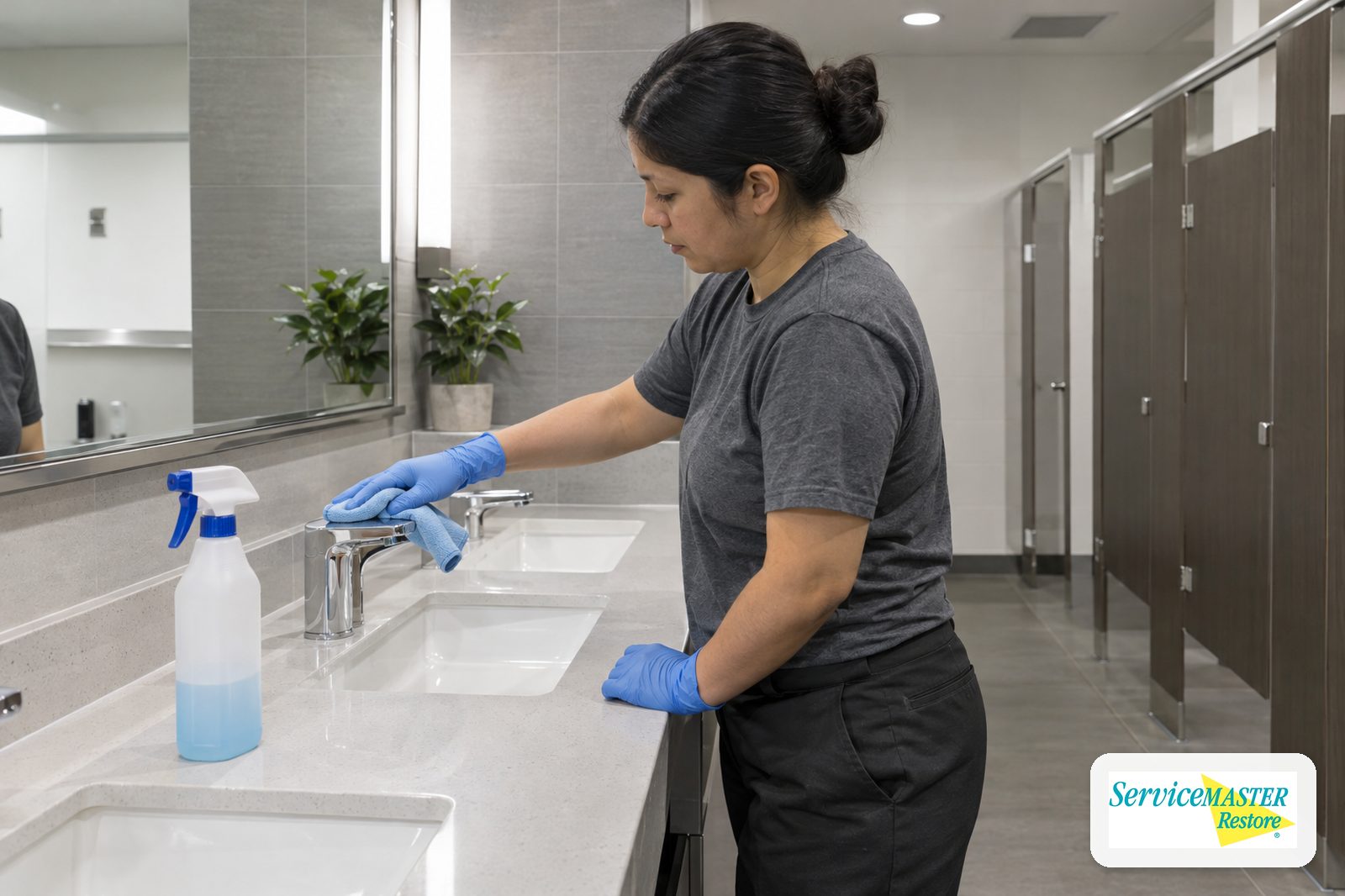
Disinfect the right way
The surface is cleaned first, then an EPA-registered disinfectant is applied and left wet for its full contact time. EPA's lists of registered disinfectants show which products are registered against specific pathogens, such as norovirus on List G. Crews should wear gloves and wash their hands after removing them.
Good restroom routines also work top to bottom and clean to dirty: dispensers and mirrors, then sinks and counters, then fixtures, then floors. Separate color-coded cloths for fixtures and counters keep toilet soil from traveling to faucets.
How should consumables and supplies be managed?
Empty soap and towel dispensers are a quick way to lose a tenant's confidence. A simple system prevents most of those calls:
- Par levels. Agree on a minimum stock for each restroom and break room, and restock to it on every visit.
- Clear ownership. The scope should say whether the building or the cleaning provider buys paper, soap, liners and dispensers.
- Usage logs. Tracking what is used each week flags leaks, broken dispensers or a jump in occupancy early.
- Product choice. GS-42 calls for environmentally preferable hand soaps, tissue and paper towels. The EPA's Safer Choice product search is one way to find cleaning products with reviewed ingredients.
How do quality inspections keep a janitorial program on track?
Inspections turn a scope of work into something measurable. The common cycle used across the industry looks like this:
- Set the standard. The scope defines what each area should look like after service.
- Inspect on a schedule. A supervisor walks a sample of areas each week, scoring floors, restrooms, touch points and trash against the scope.
- Log and share findings. Results go to the facility manager so both sides see the same record.
- Correct quickly. Missed items are fixed and the cause, such as time, product or training, is addressed.
- Report building issues. GS-42 expects cleaning services to report pests and maintenance problems to building management.
- Adjust frequencies. Areas that keep failing get more service; areas that stay clean can be scaled back.
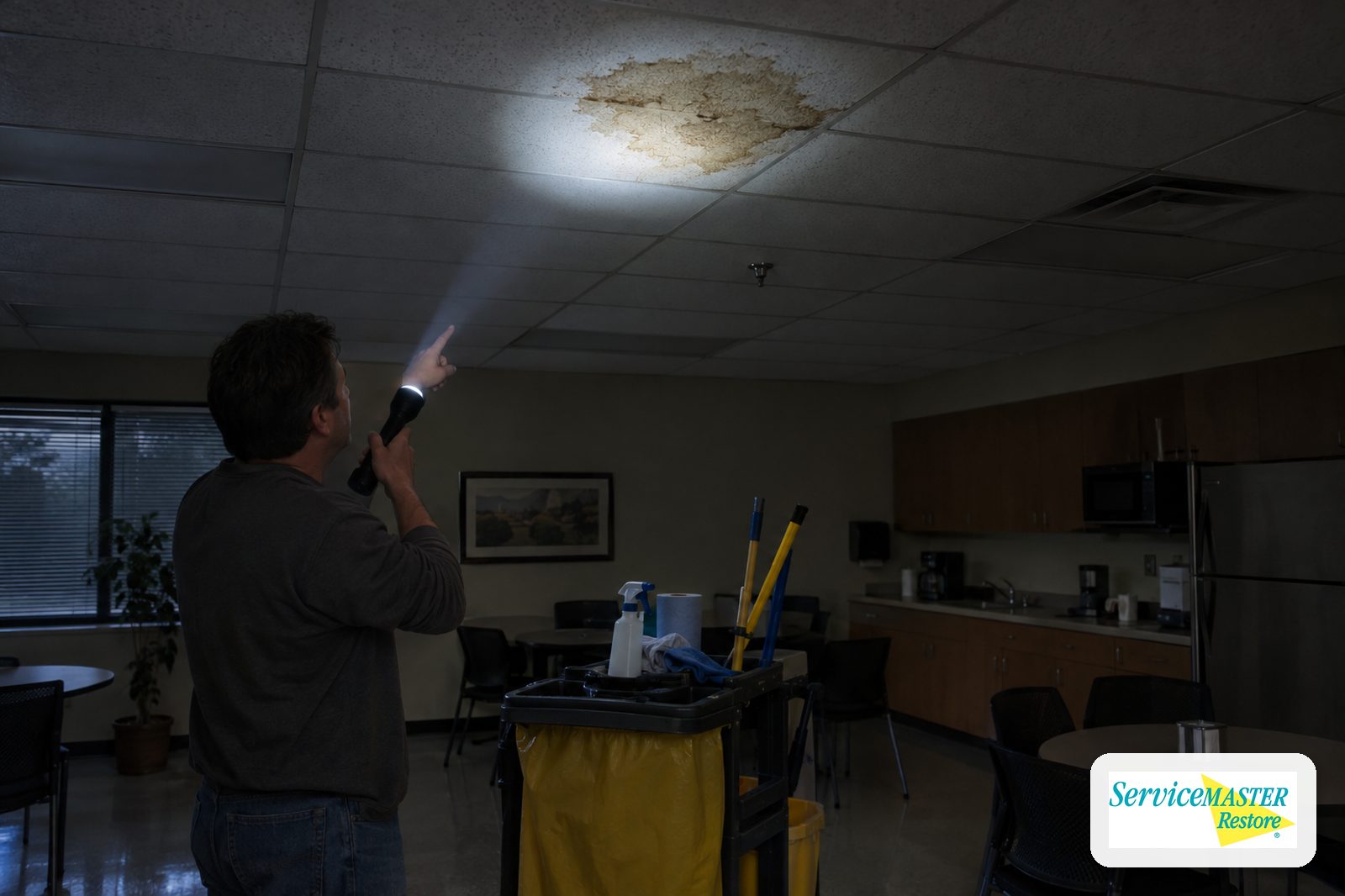
The crew that sees everything first
Night crews are often the first to notice a running toilet, a dripping supply line or a stained ceiling tile. Reporting those early is part of the job. If a leak gets ahead of you, our guide on what to do in the first hour after a burst pipe walks through the first steps.
Janitorial maintenance in Lisle and nearby communities
Our janitorial maintenance is part of our commercial cleaning services and our wider cleaning services from our Lisle headquarters. We serve office parks, stores and multi-tenant buildings including janitorial service in Woodridge, Westmont, Romeoville and Lockport. Recurring programs pair well with tailored office cleaning, retail cleaning or specialized facility cleaning for buildings with extra requirements.
Ready to set frequencies for your building? Send us your details or call (630) 241-1111.
Frequently asked questions
How often should commercial restrooms be cleaned?
At least daily, and more often when traffic is heavy. Green Seal's GS-42 standard calls for surfaces where pathogens can collect, such as toilets, urinals, sinks and door handles, to be cleaned and disinfected daily and more frequently with high traffic or occupancy. Busy buildings often add a mid-day restroom check and restock.
Who should supply paper towels, soap and trash liners?
Either party can, but the contract should say which. Some buildings buy consumables in bulk and have the janitorial crew restock them; others have the provider supply and bill for them. Agreeing on par levels for each restroom and break room avoids empty dispensers and disputes over usage.
What is a day porter?
A day porter is a cleaning worker on site during business hours. Typical duties include restroom checks and restocking, spill cleanup, trash runs, lobby and entrance care and conference room resets. Day porters complement an after-hours janitorial crew in busy buildings rather than replacing it.
How do winter conditions change a janitorial schedule?
Snow, slush and road salt in the Chicago suburbs mean entrances need more attention from late fall to early spring. Common adjustments include extra or larger walk-off mats, mid-day mat checks or swaps, more frequent entry mopping and periodic neutral rinsing of hard floors to remove salt film.
What should a janitorial inspection check?
An inspection should score each sampled area against the scope of work: floors, restroom fixtures and supplies, high-touch surfaces, trash, glass and dusting. Findings should be logged and shared with the facility manager, missed items corrected and building issues such as leaks or pests reported to management.
Sources
- Green Seal: GS-42 Commercial and Institutional Cleaning Services (Edition 2.3)
- Occupational Safety and Health Administration (OSHA): 29 CFR 1910.141 Sanitation
- OSHA: 29 CFR 1910.22 Walking-working surfaces: General requirements
- U.S. EPA: Selected EPA-Registered Disinfectants
- U.S. EPA: Safer Choice Products