


What is specialized facility cleaning?
Specialized facility cleaning adapts commercial cleaning to buildings with extra requirements, such as medical and dental offices, schools, gyms and light industrial spaces. The differences are which surfaces get disinfected, which EPA-registered products are used and how, how often touch points are cleaned, and how the work is scheduled around the people inside.
A standard office checklist doesn't fit a pediatric waiting room, a locker room or a warehouse floor. This section explains what changes by facility type, where official guidance applies, and how disinfectants should be chosen and used. It is general information; each facility's own policies and its local health department set the final rules.
How is cleaning different in medical and professional offices?
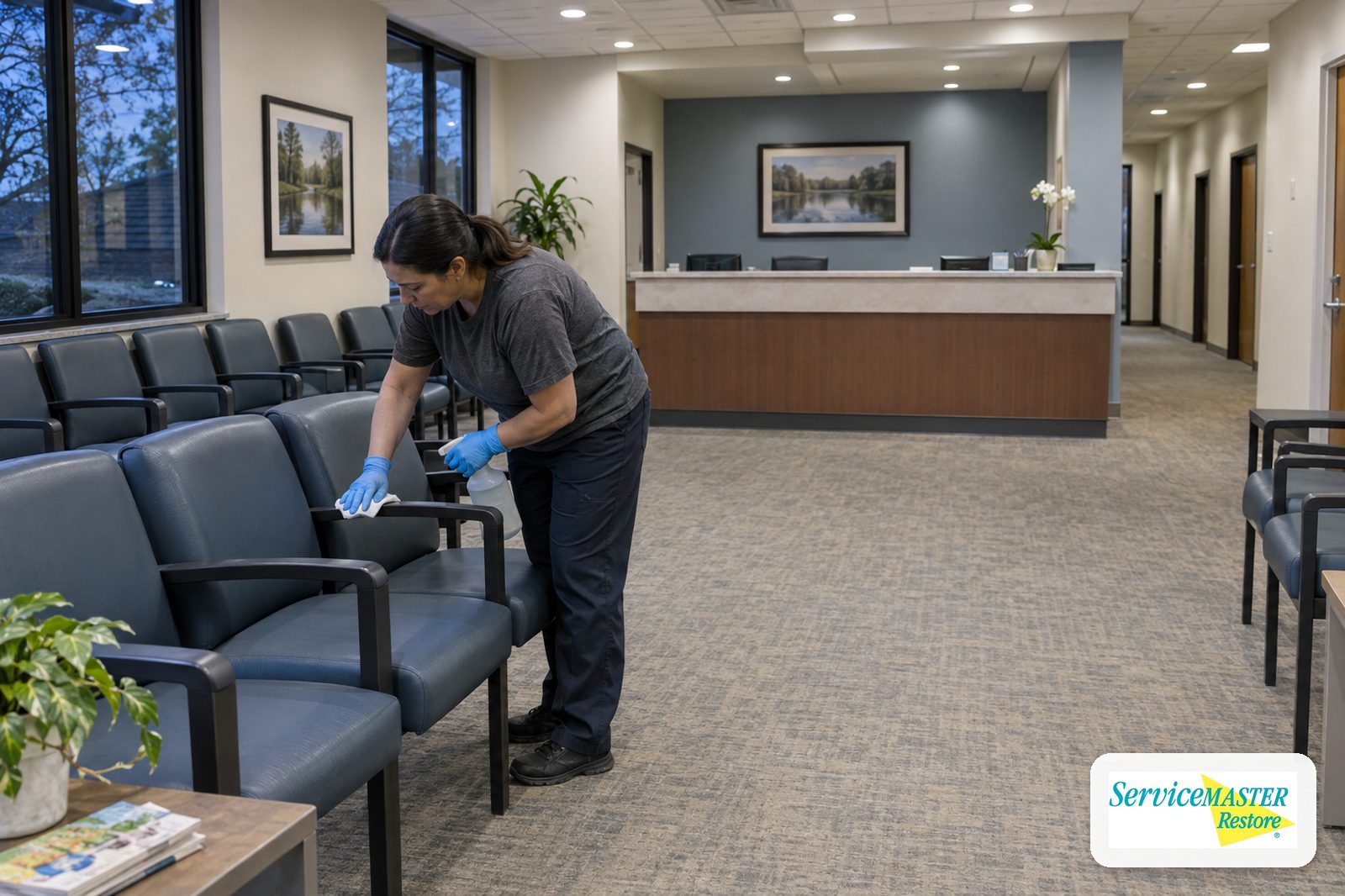
Follow the practice's protocols
In a medical or dental office, a cleaning contractor typically handles non-clinical areas: waiting rooms, reception counters, offices, restrooms, break rooms and floors. Clinical spaces and patient-care equipment fall under the practice's own infection-control program, and the cleaning scope should state clearly which areas and items the crew does and doesn't touch.
The CDC's Guidelines for Environmental Infection Control in Health-Care Facilities (2003) are written for healthcare facilities and their staff. They are a useful reference for a practice manager writing a cleaning scope, but they are not a checklist a general cleaning crew applies on its own. The practice decides which products, contact times and procedures it requires, and the cleaning provider follows them.
In waiting areas, the priorities are predictable: chair arms, check-in counters and pens, door hardware, restroom fixtures and children's areas. Schedules are often built around patient hours, with a full clean after closing.
What do schools and child-focused facilities need?
Schools see heavy use of shared surfaces by people who don't always wash their hands. The CDC's everyday actions for schools say routine practice typically means daily cleaning and sanitizing of surfaces and objects touched often, such as desks, doorknobs, keyboards, faucet handles, phones and toys. For food service areas and bathrooms, CDC says schools should follow local policy or other regulation.
The same CDC guidance says surfaces visibly soiled with blood or other body fluids should be cleaned immediately, using gloves and other protective equipment as warranted, then disinfected. Incidents that go beyond a routine spill are a job for trained biohazard cleanup technicians rather than a nightly crew; our guide on what biohazard cleanup involves explains the difference.
Indoor air is part of the picture too. EPA's Indoor Air Quality Tools for Schools program offers schools guidance on IAQ practices, including ventilation and cleaning.
What about gyms and fitness facilities?
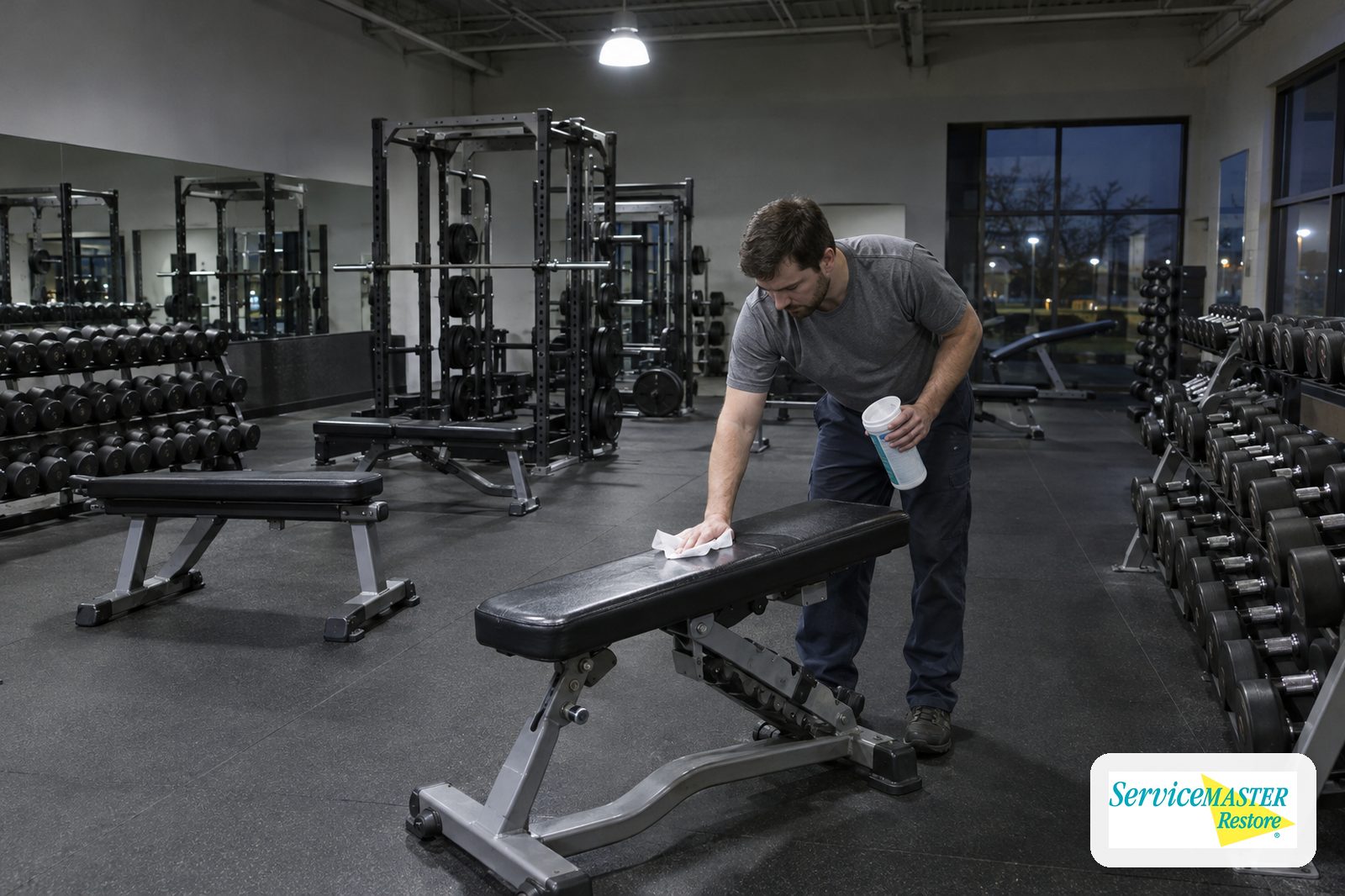
Equipment, mats and moisture
Gyms combine skin contact, sweat and damp rooms. Equipment grips, benches, mats and touchscreens need frequent cleaning during open hours, usually by staff and members with supplied wipes, plus a thorough clean after closing. Locker rooms and showers need daily cleaning and disinfecting, with attention to drains, grout and anywhere water stands.
Product choice matters here. EPA keeps lists of disinfectants registered against specific pathogens, including List G for norovirus and List H for MRSA and/or VRE. Whatever product a gym uses, the label must allow it on the surface in question, such as vinyl upholstery or rubber flooring, and it must stay wet for its contact time.
How is light industrial and warehouse space cleaned?
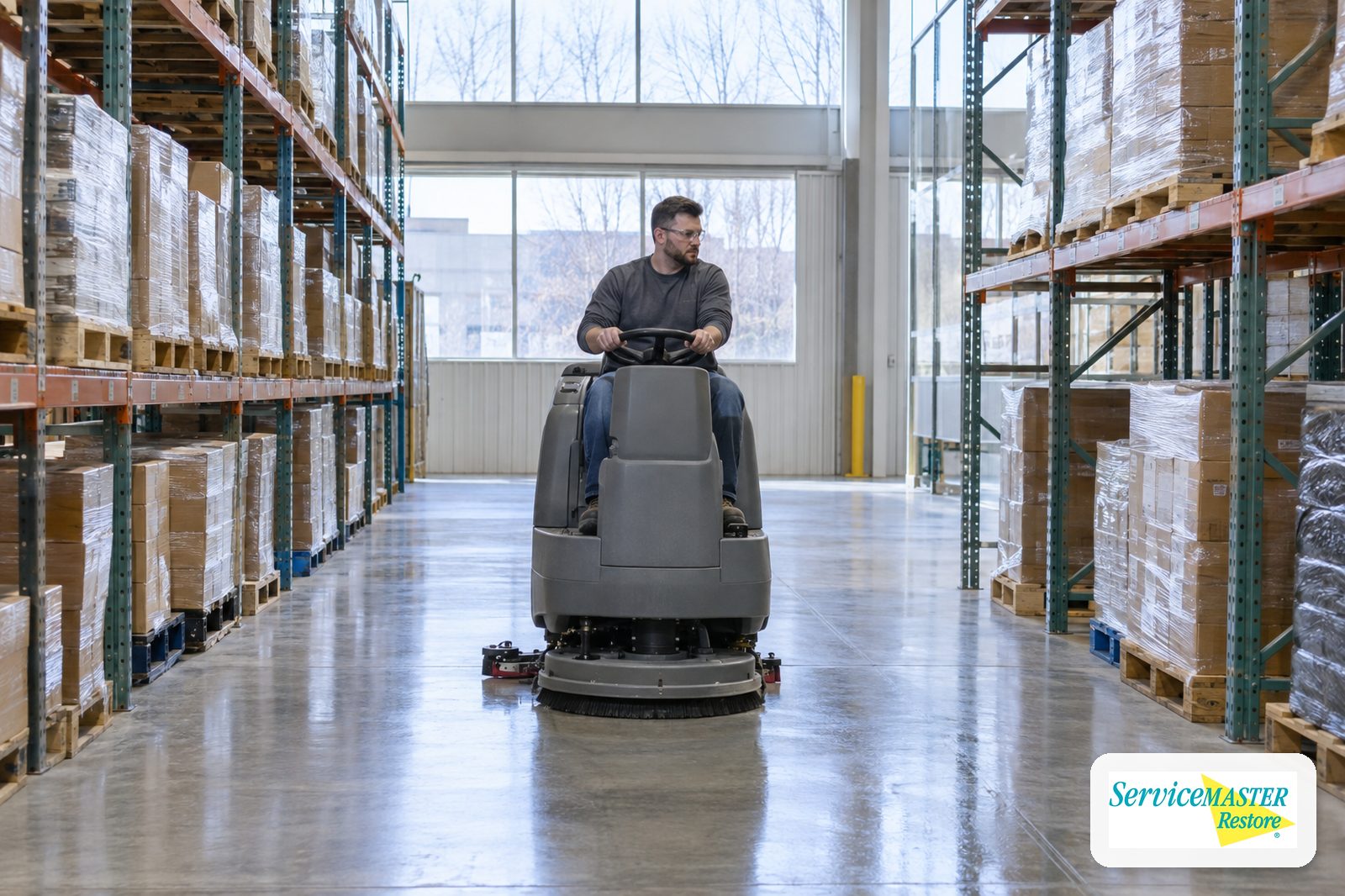
Warehouses and light manufacturing spaces are less about disinfecting and more about dust, debris and safe walking surfaces. OSHA requires employers to keep places of employment, passageways and storerooms clean, orderly and sanitary, and to keep floors free of hazards such as spills. A typical program pairs ride-on or walk-behind floor scrubbers for large slabs with periodic high dusting of racking and fixtures, while offices, break rooms and restrooms get the same daily attention as any commercial building.
How should an EPA-registered disinfectant be chosen and used?
In every facility type, disinfectants are where mistakes are most common. The label is the instruction manual, and EPA says users must read and understand it before applying a product.
| Label item | What it tells you |
|---|---|
| EPA Reg. No. | The product is registered with EPA; the number can be checked against EPA's lists, such as List N for SARS-CoV-2 |
| Pathogens on the label | Which organisms the product has been shown to kill; EPA's pathogen lists include G (norovirus), H (MRSA/VRE), K (C. difficile spores) and S (bloodborne pathogens) |
| Use sites and surface types | Where the product may be used and on which materials |
| Contact time | How long the surface must stay visibly wet for the product to work |
| Precautionary statements | Required gloves or other protection, ventilation and first aid |
Sources: EPA, Selected EPA-Registered Disinfectants (2026); EPA, List N: Disinfectants for Coronavirus (COVID-19)
EPA's own six-step method is a sound process for any facility:
- Check that the product is EPA-registered. Find the EPA registration number and confirm it on EPA's lists.
- Read the directions. Check use sites, surface types and precautionary statements.
- Pre-clean the surface. Wash with soap and water if the directions call for it or the surface is visibly dirty.
- Follow the contact time. Keep the surface wet for the whole time on the label.
- Wear gloves and wash hands. Discard disposable gloves after cleaning and wash hands after removing gloves.
- Lock it up. Keep lids tightly closed and store products out of reach of children.
Routine cleaning is not infection control
A cleaning provider supports a facility's health and safety program but doesn't replace it. Outbreaks, unusual pathogens or specialized disinfection needs should be handled with guidance from the facility's own experts and the local health department, as CDC advises for schools.
Specialized facility cleaning in DuPage & Will County
We serve medical offices, schools, fitness centers and light industrial buildings from our Lisle headquarters, including facility cleaning in Hinsdale, Elmhurst, Plainfield and West Chicago. This work is part of our commercial cleaning services and our full range of cleaning services, and it often runs alongside recurring janitorial maintenance or office cleaning for administrative areas.
Share your facility's requirements through our contact page, or call (630) 241-1111 to plan a scope that fits them.
Frequently asked questions
Can a general cleaning company clean a medical or dental office?
Yes, for the areas the practice assigns, typically waiting rooms, offices, restrooms, break rooms and floors. Clinical spaces and patient-care equipment follow the practice's infection-control program. The cleaning scope should list exactly which areas and items the crew handles and which products and contact times the practice requires.
What is EPA List N?
List N is EPA's list of disinfectants it expects to kill SARS-CoV-2, the virus that causes COVID-19, when used according to label directions. You can check a product by entering the first two parts of its EPA registration number in EPA's List N tool. Inclusion on the list is not an EPA endorsement.
How often should school surfaces be cleaned?
CDC says routine practice for schools typically means daily cleaning and sanitizing of surfaces and objects touched often, such as desks, doorknobs, keyboards, faucet handles, phones and toys. Food service areas and bathrooms follow local policy or regulation, and outbreaks call for guidance from the state or local health department.
Who should clean up blood or body fluids in a facility?
CDC advises that surfaces visibly soiled with blood or other body fluids be cleaned immediately by staff wearing gloves and other protection as warranted, then disinfected. Small, routine incidents are handled under the facility's own procedures; larger or traumatic incidents should go to trained biohazard cleanup technicians.
Which disinfectant should a gym use?
There is no single answer. Choose an EPA-registered product whose label lists the organisms you are concerned about and allows use on your surfaces, such as vinyl, rubber or tile. EPA keeps pathogen-specific lists, including List G for norovirus and List H for MRSA and VRE. Then follow the labeled contact time.
Sources
- CDC: Environmental Infection Control Guidelines (Guidelines for Environmental Infection Control in Health-Care Facilities, 2003)
- CDC: Everyday Actions for Schools to Prevent and Control the Spread of Transmissible Infections
- U.S. EPA: Indoor Air Quality Tools for Schools
- U.S. EPA: Selected EPA-Registered Disinfectants
- U.S. EPA: List N: Disinfectants for Coronavirus (COVID-19)