

What does retail store cleaning cover?
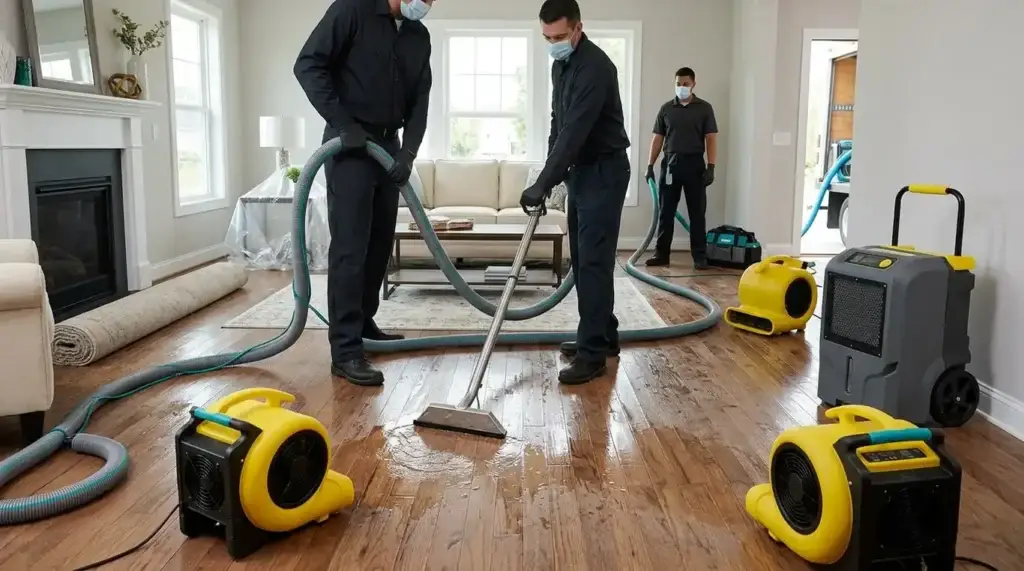
Retail store cleaning keeps entrances, glass, sales floors, fitting rooms, restrooms and stockrooms clean and safe, before opening, after closing and during the day when spills happen. Floor care is the core of most retail programs, because entrances and aisles take the most soil and walking surfaces must be kept clean, dry and hazard-free.
A store is cleaned for two audiences at once: shoppers who judge the space in seconds and employees who work on those floors all day. This section covers the parts of retail cleaning that need the most planning: entrances and glass, slip prevention, fitting rooms and stockrooms, and timing around store hours.
Why are entrances and glass the first things to get right?
The first ten feet
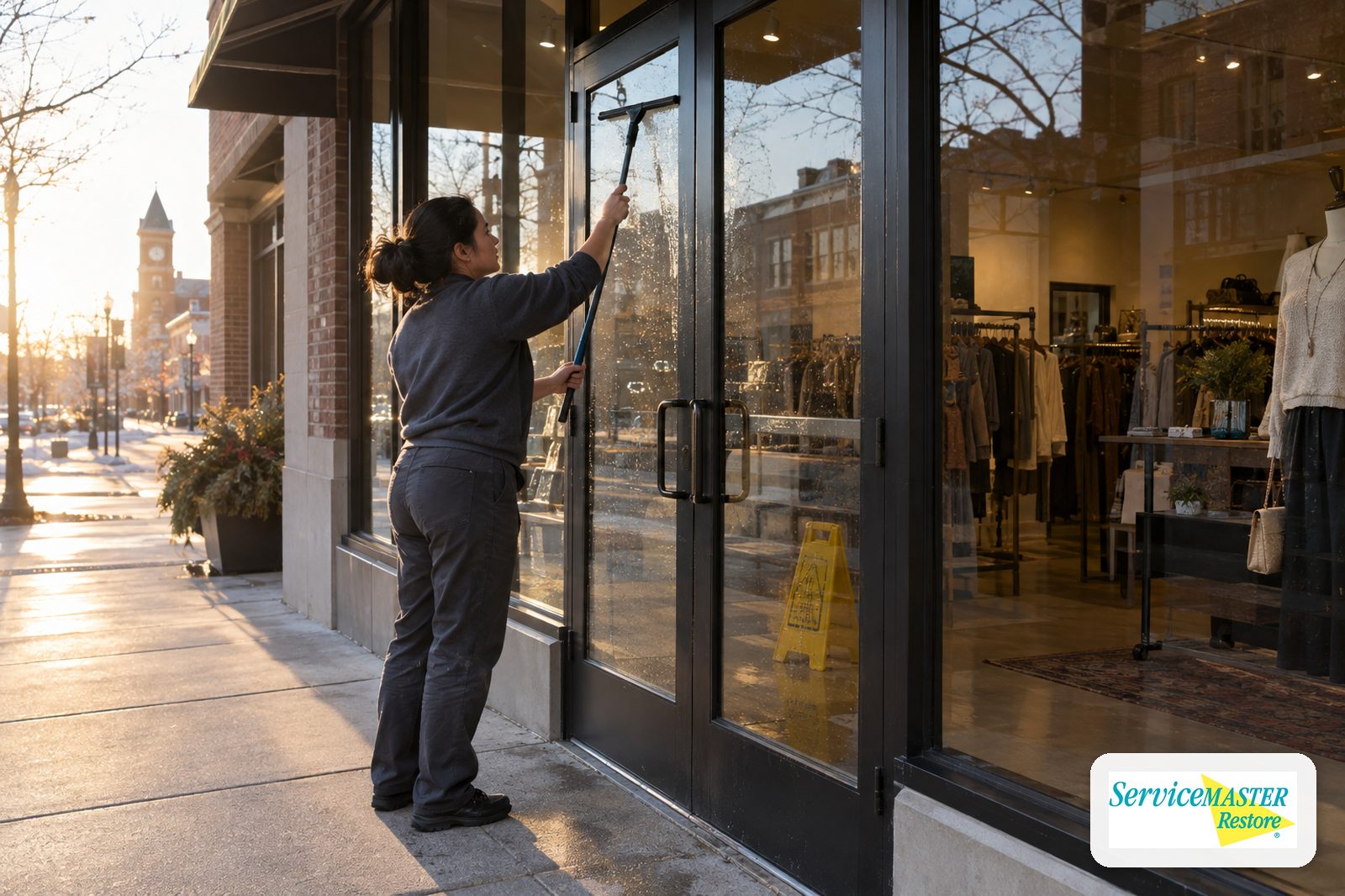
The entrance is the first thing every shopper sees and the place where outside soil, water and salt enter the building. Door glass collects fingerprints within hours of opening, and display cases near the register get the same treatment. A daily glass routine for doors, cases and mirrors, with spot cleaning during the day, keeps the front of the store looking cared for.
Entrance floors carry the heaviest load. In DuPage and Will County, winter brings slush and road salt from parking lots straight onto vinyl, tile and polished concrete. Walk-off mats help trap it, but only when they are sized for the entry, kept flat and cleaned or swapped before they are saturated.
Rain and snow days call for a plan, not a reaction: extra mats staged and ready, a wet-floor sign at the door and someone assigned to check the entry at set intervals.
How does floor care help prevent slips and falls?
For employees, floor condition is a workplace safety requirement. OSHA's walking-working surfaces standard sets clear duties for employers, and they map neatly onto a retail floor-care plan:
| OSHA requirement | What it means in a store |
|---|---|
| Places of employment, passageways, storerooms and service rooms kept clean, orderly and sanitary (1910.22(a)(1)) | Sales floor, back hallways and stockrooms are part of the cleaning scope, not just customer areas |
| Workroom floors kept clean and, to the extent feasible, dry (1910.22(a)(2)) | Mop in sections, dry as you go and use dry standing places such as mats where wet work happens |
| Surfaces kept free of hazards such as leaks, spills, snow and ice (1910.22(a)(3)) | A spill response routine and an entrance plan for winter weather |
| Surfaces inspected regularly and as necessary (1910.22(d)(1)) | Scheduled floor walks, logged during the day |
| Hazards corrected before use, or guarded until they can be (1910.22(d)(2)) | Cone off a spill or damaged area until it is cleaned or repaired |
Source: OSHA, 29 CFR 1910.22 Walking-working surfaces, general requirements
Products matter too. Residue from the wrong floor cleaner or an over-applied finish can leave a surface slick. Use the cleaner and dilution the floor's manufacturer recommends, and rinse after stripping. The National Floor Safety Institute, a nonprofit that develops slip, trip and fall prevention standards, also tests and certifies floor products for slip resistance, which is useful when choosing finishes and cleaners.
How should fitting rooms and stockrooms be handled?
Fitting rooms
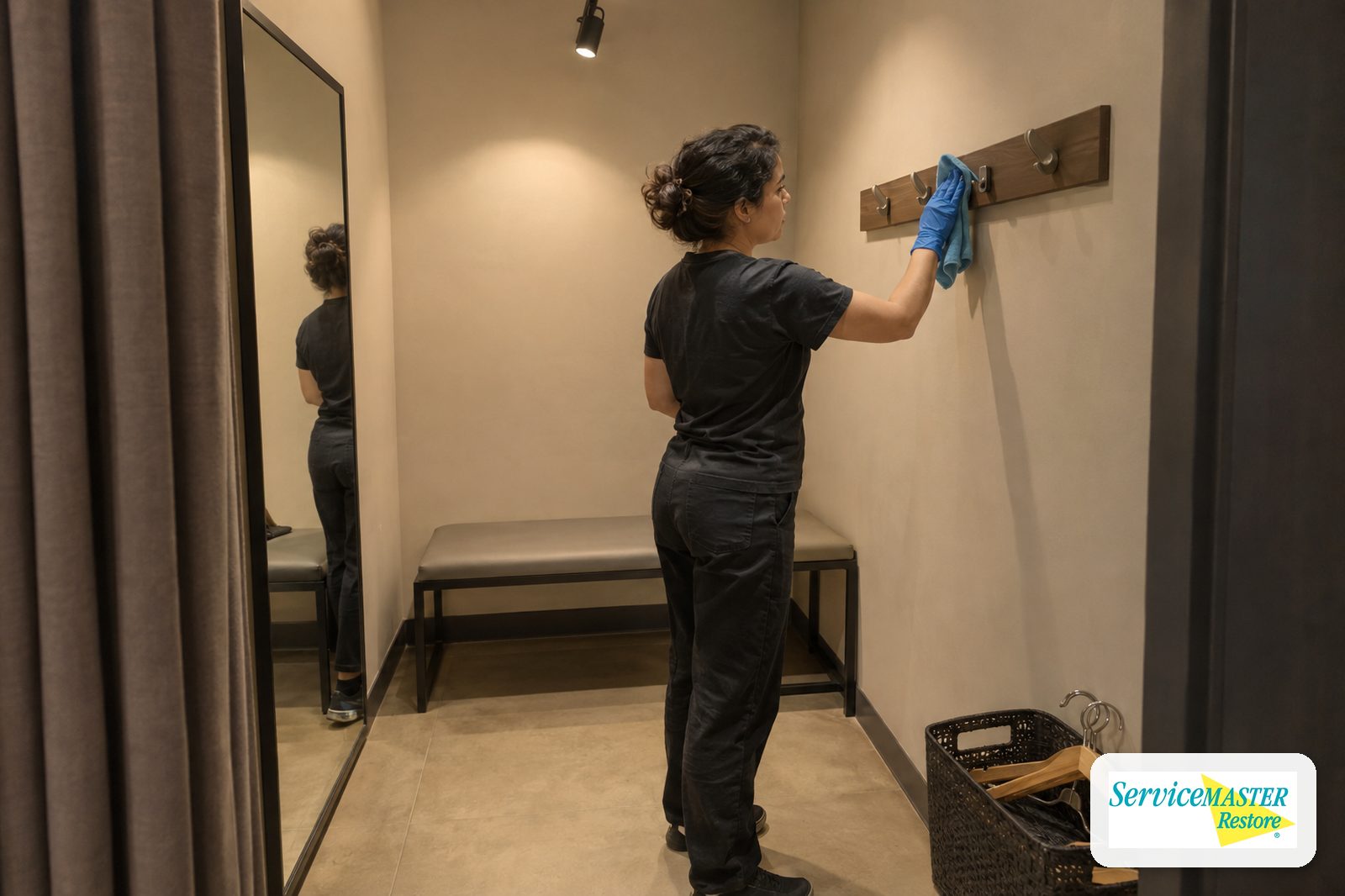
Fitting rooms combine high-touch surfaces with tight spaces. Hooks, door handles, benches and mirrors get handled constantly, and corners collect tags, pins and hangers. A good routine clears and checks each room through the day, then cleans mirrors, wipes touch points and vacuums or mops after closing.
Stockrooms and back of house
Stockrooms are easy to forget because shoppers never see them. They still count: OSHA's standard covers storerooms and passageways, and cardboard dust, broken pallets and shrink-wrap scraps are both a mess and a trip hazard. Clear aisles, regular sweeping or scrubbing, and a schedule for breaking down boxes keep the back of house safe. Employee break rooms and restrooms belong in the scope too.
When should retail cleaning happen?
Most stores use a mix of timing:
- Before opening: entrance glass, restrooms and a final floor check.
- During hours: spill response, restroom checks and entrance mats on bad-weather days, often handled by staff or a day porter.
- After closing: full floor care, fitting rooms, fixtures and back of house.
- Periodically: carpet extraction (the IICRC S100 standard covers professional carpet cleaning methods), floor stripping and refinishing, and high dusting of fixtures and vents.
Seasonal peaks change the plan. Holiday shopping, back-to-school weekends and sales events bring more soil, more fitting-room use and more trash, so stores often add a day porter or an extra overnight floor pass for those weeks. Agreeing on those temporary changes ahead of time avoids scrambling for coverage when the store is busiest.
Across the industry, an after-hours store clean usually runs in this order:
- Walk the floor. Note spills, damaged areas and anything left in aisles or fitting rooms.
- Trash and recycling. Empty bins at registers, fitting rooms, restrooms and break rooms.
- Glass and fixtures. Clean door glass, display cases, mirrors and counters, top to bottom.
- Restrooms and touch points. Clean, then disinfect fixtures and high-touch surfaces following the label and contact time, as EPA's six steps for disinfectant use describe.
- Floor care. Dust mop or vacuum, then auto-scrub or mop hard floors and let them dry fully.
- Entrance reset. Clean or swap mats so the store opens with a dry, clean entry.
Retail cleaning in Naperville, Bolingbrook and nearby towns
Storefronts across the western suburbs
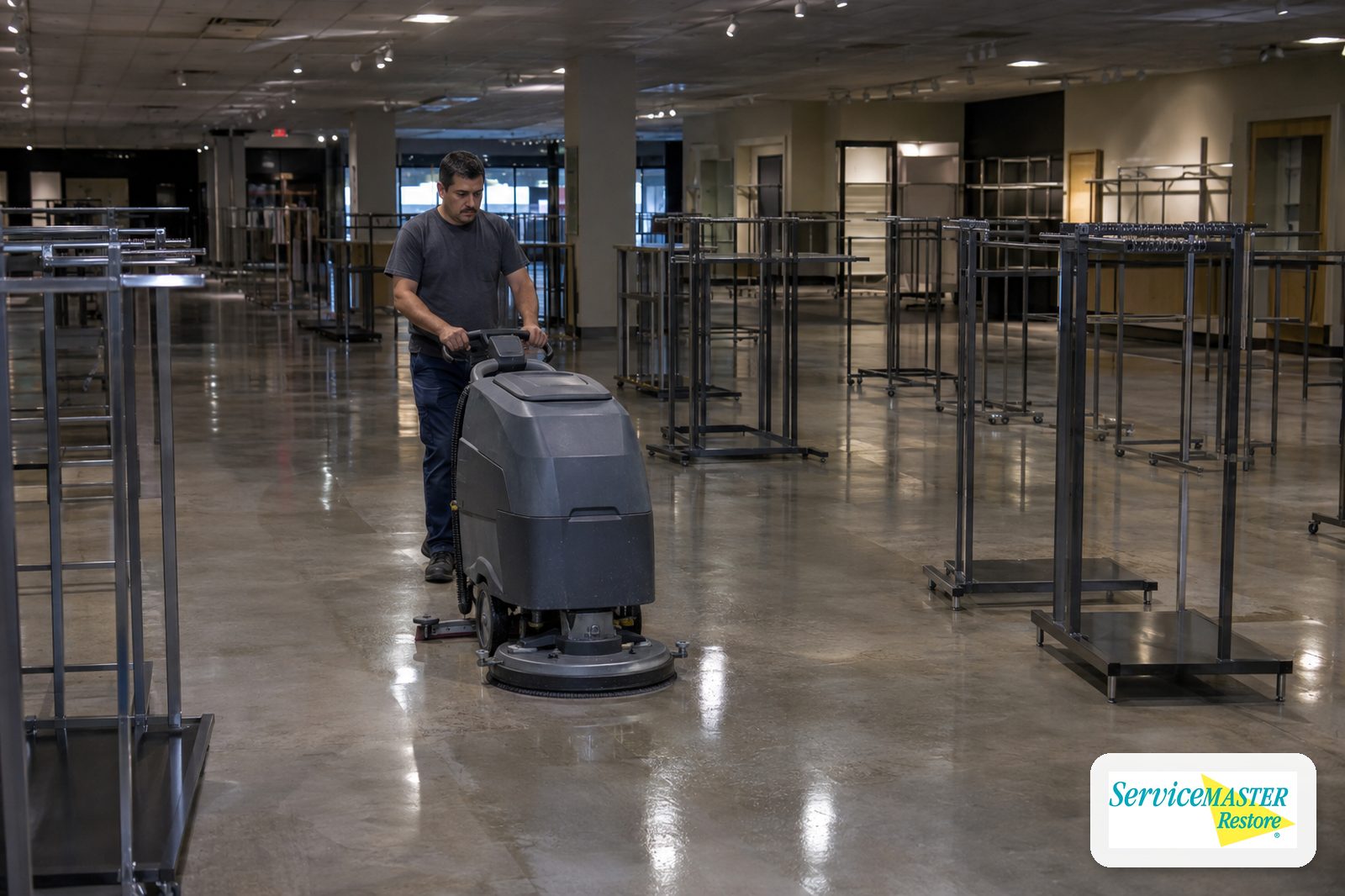
We clean shops, showrooms and multi-tenant retail centers from our Lisle headquarters, including retail cleaning in Naperville, Bolingbrook, Aurora and Lombard.
Retail cleaning is part of our commercial cleaning services and our broader cleaning services. Stores often add recurring janitorial maintenance for shared center areas, seasonal deep cleaning or office cleaning for back offices. If a roof leak or sprinkler discharge ever reaches your sales floor, our guide to business-continuity restoration explains what to do next.
To plan cleaning around your store hours, get in touch or call (630) 241-1111.
Frequently asked questions
What should a store do right after a spill?
Block the area first with a cone or sign, then remove the liquid, clean any residue and dry the surface before reopening the aisle. OSHA requires employers to keep walking-working surfaces free of hazards such as spills and to guard a hazard until it can be corrected. A sign alone is not a fix.
Can the wrong floor cleaner make floors slippery?
Yes. Residue from an incorrect product, too strong a dilution or an over-applied finish can leave a film that reduces traction. Use the cleaner and dilution the flooring manufacturer recommends, rinse after stripping, and consider products tested for slip resistance, such as those certified through the National Floor Safety Institute.
How often should store entrance mats be cleaned or replaced?
Entrance mats should be vacuumed or swapped often enough that they never become saturated, which on snowy or rainy days can mean several checks during business hours. A saturated or curled mat stops trapping soil and becomes a trip hazard, so a weather plan with spare mats is worth having.
Does retail cleaning include stockrooms and back offices?
It should. OSHA's walking-working surfaces standard covers storerooms, passageways and service rooms as well as sales floors, and cardboard dust, pallets and shrink-wrap create both mess and trip hazards. Employee break rooms, restrooms and back offices belong in the scope alongside customer areas.
Should retail cleaning happen before opening or after closing?
Usually both. Full floor care, fitting rooms and fixtures are done after closing, when aisles are empty and floors can dry. A short pre-opening pass covers entrance glass, restrooms and a final floor check, while spills and restroom checks during the day are handled by staff or a day porter.
Sources
- OSHA: 29 CFR 1910.22 Walking-working surfaces: General requirements
- National Floor Safety Institute (NFSI): National Floor Safety Institute
- IICRC: ANSI/IICRC S100 Standard for Professional Cleaning of Textile Floor Coverings (7th ed., 2021)
- U.S. EPA: Six Steps for Safe & Effective Disinfectant Use