


What is a deep cleaning service?
A deep cleaning service is a top-to-bottom clean that reaches the buildup routine visits skip: baseboards and trim, inside the oven and refrigerator, grout lines, vent covers, light fixtures, and the floor behind and under furniture. It resets a home to a true clean baseline, which is why it is often booked once or twice a year.
What does deep cleaning add beyond regular cleaning?
Regular cleaning keeps visible surfaces in shape. Deep cleaning goes after the slow-building grime that you only notice when the light hits it. These are the areas that separate the two.
Baseboards, trim and door frames
Dust and scuff marks collect along every edge of a room. A deep clean wipes baseboards, door frames, the tops of doors and window trim by hand rather than passing over them with a vacuum.
Inside appliances
Oven interiors, refrigerator shelves and drawers, microwave walls and the front of the dishwasher door are cleaned out. The American Cleaning Institute also suggests vacuuming refrigerator coils, since dust and lint there can reduce cooling performance.
Grout, tile and shower glass
Discolored grout and hazy shower glass need dwell time and scrubbing rather than a quick wipe. Kitchen backsplashes get the same treatment for grease film.
Vents, fans and fixtures
Ceiling fan blades, light fixtures, return-air grilles and supply registers are dusted and wiped. These surfaces push dust back into the room every time air moves across them.
Behind and under
Movable furniture is shifted so floors underneath can be vacuumed and mopped, and the gaps beside the stove and refrigerator are cleaned out.
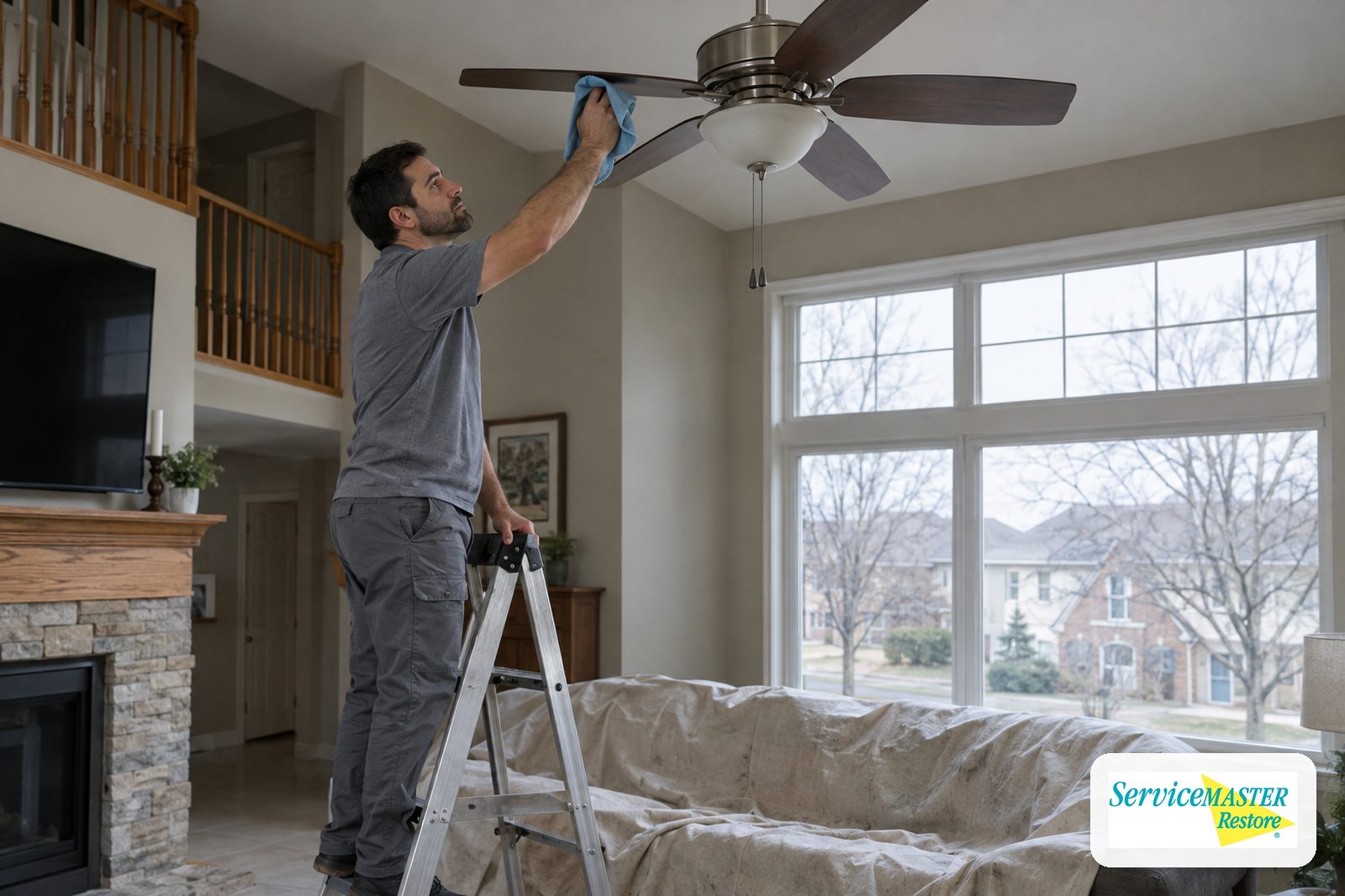
Start high, finish low
The American Cleaning Institute's spring cleaning checklist follows a simple rule: start with ceiling fans and cobwebs in wall corners, continue down through blinds, furniture and appliances, and end with baseboards, vents and floors.
Working this way means dust from the top of a room never lands on a surface you already finished. It is the same logic professionals use on any deep clean.
Routine cleaning vs. deep cleaning: how do they compare?
Both matter, and they do different jobs. The table below compares typical scope, using the American Cleaning Institute's published home cleaning routine as the reference for how often each task is suggested.
| Area or task | Routine visit | Deep clean | ACI suggested frequency |
|---|---|---|---|
| Floors in all rooms | Vacuum and mop open areas | Also under and behind movable furniture | Weekly |
| Bathroom sinks, counters, mirrors, toilets | Cleaned | Cleaned, plus grout and fixture detail | Weekly |
| Kitchen appliances and cabinet fronts | Exterior wipe | Inside oven and fridge, cabinet fronts detailed | Monthly |
| Light fixtures and blinds | Spot dusting | Each fixture and slat cleaned | Monthly |
| Curtains, windows, shower curtain | Not usually included | Included or arranged | Seasonal |
| Ceiling fans, walls, baseboards | Not usually included | Included | Yearly ("deep clean rooms") |
Source for frequencies: American Cleaning Institute, Home Cleaning Routine (updated 2026). Routine and deep scope columns describe common industry practice; every company's checklist differs.
How long a deep clean takes depends on square footage, how long it has been since the last one, and how much furniture must be moved, so ask for a scope-based estimate rather than a flat number.
When should you book a deep clean?
Timing a deep clean well makes the result last longer. These are the moments it pays off most.
- Spring. After a long Illinois winter with windows closed and furnaces running, dust has had months to settle on fans, vents and trim.
- Before and after hosting. Graduation parties, holidays and family visits are a natural reason to reset the whole house, and a second pass afterward handles the aftermath.
- After an illness in the home. High-touch surfaces such as handles, faucets and remotes can be cleaned and then disinfected. The EPA advises following label directions and paying attention to contact time, meaning how long the surface must stay wet.
- Before starting recurring service. A deep clean sets the baseline so routine house cleaning can maintain it.
- Before listing or after moving. Empty rooms show every mark. For that situation, move-in and move-out cleaning is built around vacant homes.
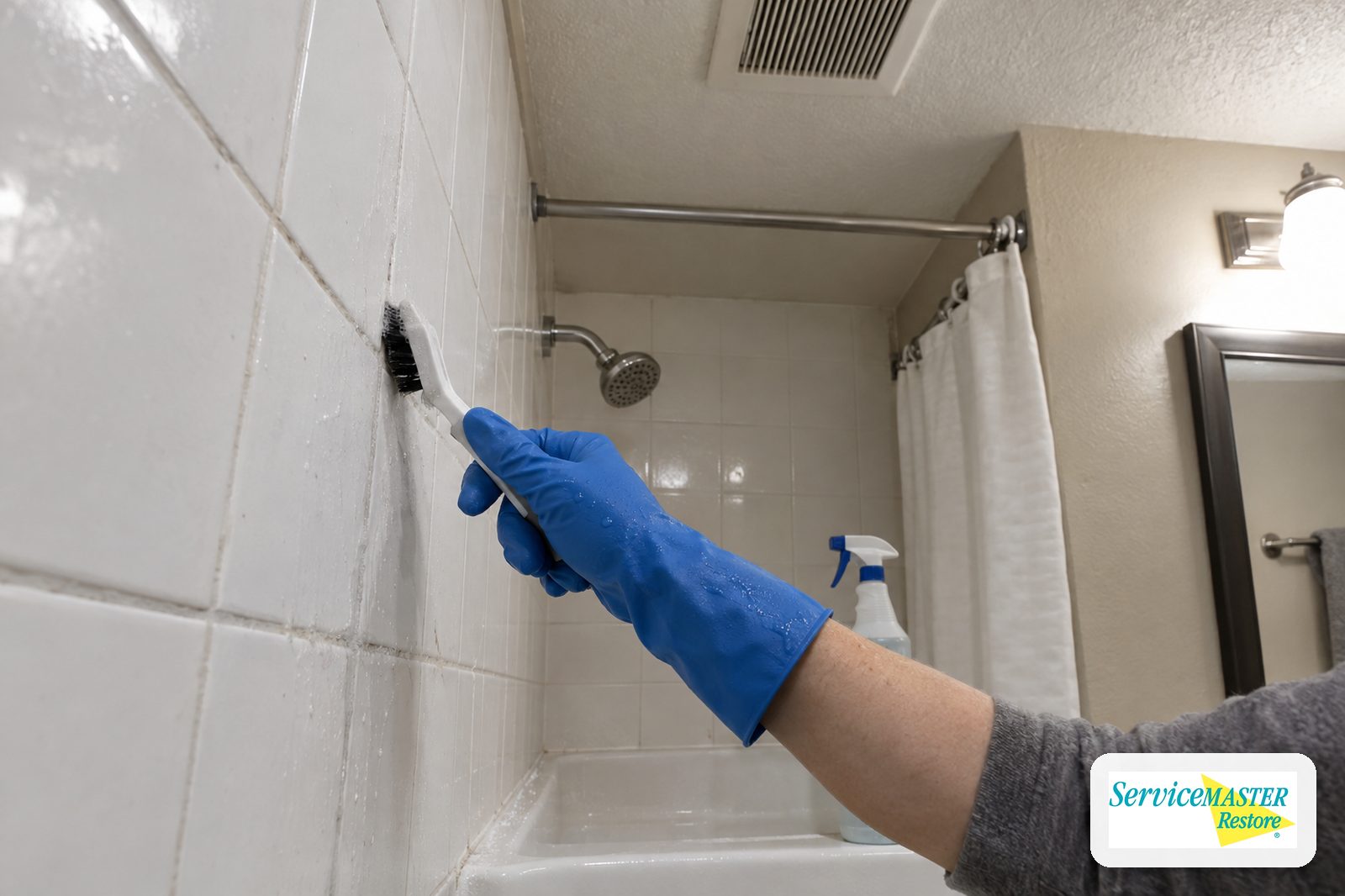
Grout and shower tile
Dark spots in shower grout are often mildew feeding on soap residue in a damp space. The EPA's mold and moisture guide says to scrub mold off hard surfaces with detergent and water and dry them completely, and to run the bathroom fan or open a window when showering.
If growth keeps returning or spreads beyond the tile onto drywall, the problem is moisture, not cleaning. EPA treats areas larger than about 10 square feet differently, and mold remediation is the right service at that point.
Should vents and air ducts be part of a deep clean?
Vent covers and return grilles, yes. The ductwork behind them is a separate question. The EPA does not recommend cleaning air ducts routinely, only as needed, and notes that duct cleaning has never been shown to actually prevent health problems. EPA points to substantial visible mold, vermin, or ducts clogged with excessive dust and debris as reasons to consider it.
Black streaks fanning out from registers after a furnace malfunction are a different issue. Our guide to furnace puffback soot cleanup explains why that soot needs restoration methods rather than standard cleaning.
How a professional deep clean is typically sequenced
Deep cleaning methods vary by company, but a sound process follows the same order.
- Scope walkthrough. Rooms, appliances to be cleaned inside, and furniture that can be moved are agreed in advance.
- Declutter. Surfaces are cleared so they can be cleaned fully, not around objects.
- High dusting. Ceiling fans, corners, fixtures and the tops of cabinets and doors come first.
- Pre-treat. Cleaners are applied to ovens, grout and shower glass so they can dwell while other work continues.
- Mid-level detail. Blinds, sills, cabinet fronts, appliance interiors and high-touch surfaces are cleaned.
- Low detail. Baseboards, door frames, vent covers and the floor under moved furniture are cleaned.
- Floors and final check. Floors are vacuumed and mopped last, followed by a walkthrough against the agreed scope.
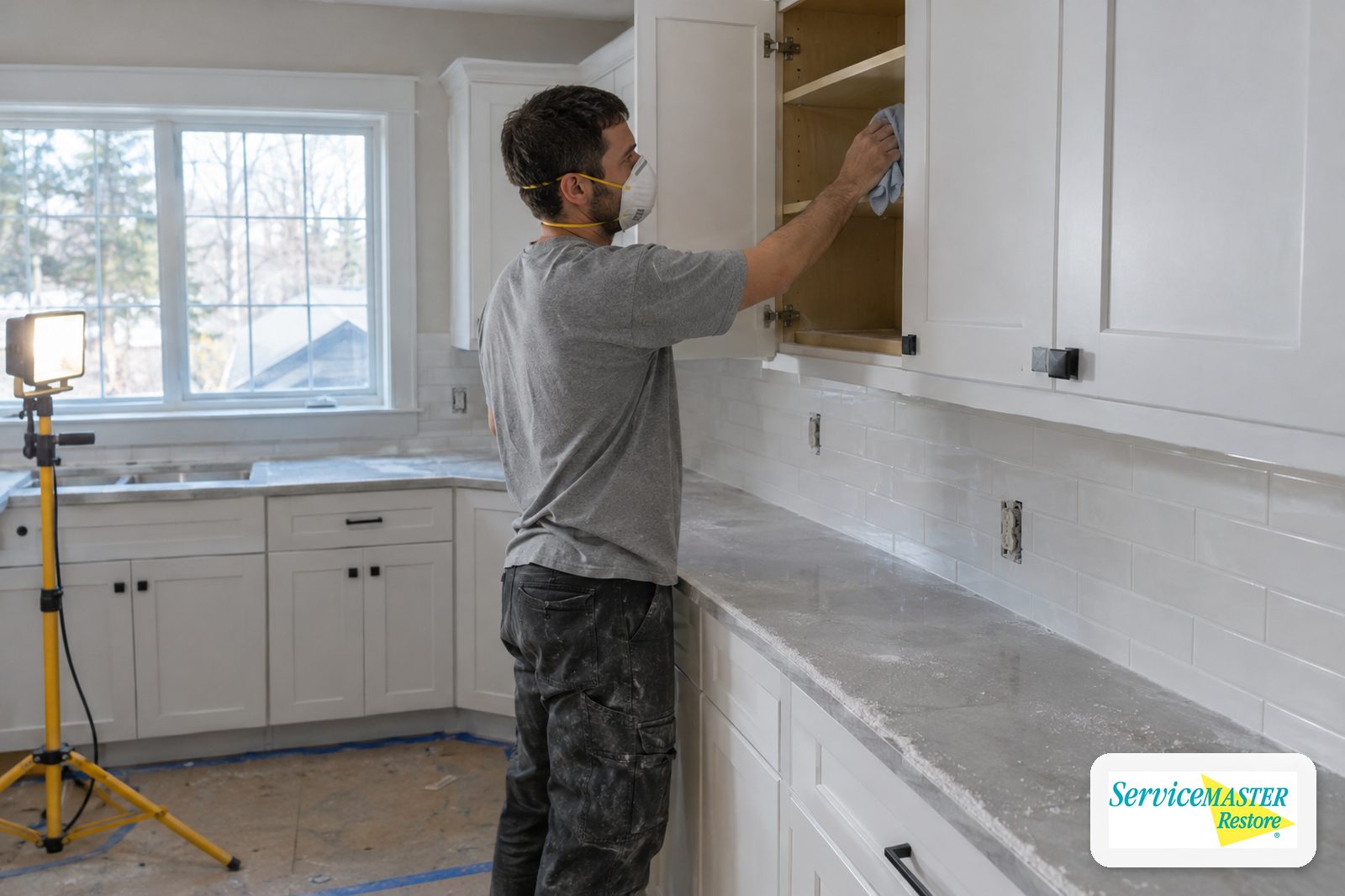
Deep cleaning vs. post-construction cleaning
A deep clean is built for lived-in buildup: grease, soap scum, dust and grime. A renovation leaves something different, fine drywall and sawdust that settles on every ledge, inside cabinets and in vent grilles for days after work ends.
If you just finished a remodel, post-construction cleaning is set up for that dust, often with several passes as it keeps settling.
Deep cleaning across DuPage and Will County
Homes across the western suburbs range from older houses with detailed trim and radiators to newer builds with open floor plans and tall ceilings. Both collect dust in places a weekly visit rarely reaches.
From our Lisle headquarters, we provide deep cleaning as part of our residential cleaning services, with local pages for cleaning services in Elmhurst, Oak Brook, Burr Ridge and Clarendon Hills. See every option on our cleaning services overview.
To scope a deep clean, contact us or call (630) 241-1111 and tell us which rooms need the most attention.
Frequently asked questions
How often should a home get a deep clean?
Many households schedule one or two a year, often in spring and before the holidays. The American Cleaning Institute's home routine lists deep cleaning rooms, including ceiling fans, walls and baseboards, as a yearly task. Homes with pets, allergies or heavy cooking may want a deep clean more often.
Do I need to empty the refrigerator before a deep clean?
It helps a great deal. Removing food lets shelves and drawers be pulled and washed, and gives you the chance to toss expired items. The American Cleaning Institute suggests cleaning one shelf at a time when food stays in, so items are not left at room temperature for long.
Is a deep clean worth it before starting weekly cleaning?
Usually yes. Recurring visits are designed to maintain a clean baseline, not to remove months of buildup. Starting with a deep clean brings grout, baseboards and appliance interiors up to standard, so each routine visit can focus on upkeep instead of catching up.
Can deep cleaning remove pet odors?
It can reduce them by removing hair, dander and residue from floors, upholstery, baseboards and vent covers. Odors soaked into carpet pad, subfloor or drywall are a different problem and may need targeted odor treatment. A walkthrough helps tell surface odor from odor that has soaked into building materials.
Does a deep clean include walls and windows?
Often it includes spot-cleaning walls, wiping switch plates and cleaning interior window glass, sills and tracks. Full wall washing and exterior windows are frequently quoted separately. The American Cleaning Institute lists washing windows and screens as a seasonal task, so confirm what your scope covers.
Sources
- American Cleaning Institute: Home Cleaning Routine
- American Cleaning Institute: Spring Cleaning Checklist (Spring Cleaning Plan)
- American Cleaning Institute: Fall Cleaning
- U.S. Environmental Protection Agency: What's the difference between products that disinfect, sanitize, and clean surfaces?
- U.S. Environmental Protection Agency: A Brief Guide to Mold, Moisture and Your Home
- U.S. Environmental Protection Agency: Should You Have the Air Ducts in Your Home Cleaned?