Unattended death cleanup is the professional cleaning, disinfection, and restoration of a home after someone has passed away alone and was not found right away. Families should call 911, let the police and coroner finish their work, and leave the affected area to trained technicians, because bodily fluids can carry bloodborne pathogens.
This guide is general information, written to be gentle and non-graphic. It is not legal, medical, or insurance advice. Policies, laws, and program rules vary, so confirm the details with your insurer, an attorney, or the agency involved.
If you are reading this, something hard has probably just happened. Maybe a parent who lived on their own in Downers Grove stopped answering the phone. Maybe you manage a building in Bolingbrook and a welfare check ended in news no one wanted. Either way, you are being asked to make practical decisions at the worst possible moment.
This article walks through the first days in order. If your main question is cost and coverage, our companion guide on biohazard and trauma cleanup costs and who pays covers that in depth.
What is an unattended death?
An unattended death is one where a person dies alone, without a doctor, caregiver, or family member present, and is not discovered immediately. Many are natural deaths of people who valued living independently. It happens in close, loving families, and it carries no blame.
Because no physician was present, Illinois brings in the county coroner. The Will County Coroner’s Office, for example, lists deaths where no physician attended the person within 72 hours before death among the cases that must be reported. That investigation is routine. It does not mean anyone is suspected of anything.
The first steps after an unattended death
1. Call 911, even if it is clear the person has passed
Calling 911 brings police or the sheriff’s office and starts the coroner’s involvement. Will County’s guidance says whoever discovers a death like this should notify the coroner immediately, and 911 is the simplest way to make sure that happens. Do not move the person or tidy the room.
2. Let the police and coroner finish their work
The coroner’s office takes the person into its care, completes its examination, and releases them to the funeral home the family chooses. In DuPage County, that happens once the exam is complete and a signed Order for Release of Remains is received from the legal next of kin, according to the DuPage County Coroner. Families with questions can call the DuPage office at 630-407-2600 or Will County at 815-727-8455.
3. Once the home is released, close the door and wait
The industry standard for this work, ANSI/IICRC S540 for trauma and crime scene cleanup, assumes every scene has been released by authorities before cleanup begins. Until a remediation team arrives, keep the affected room closed. Fans and fragrance will not address the source.
4. Make a short list of calls
Start with the funeral home, the homeowner’s or landlord’s insurer, a biohazard remediation company, and close family. The National Institute on Aging notes that Social Security, life insurers, banks, and credit bureaus can be notified over the following weeks, usually with copies of the death certificate.
Why you should not enter or clean the area yourself
Families often want to handle this themselves, out of love or to spare others. Please do not.
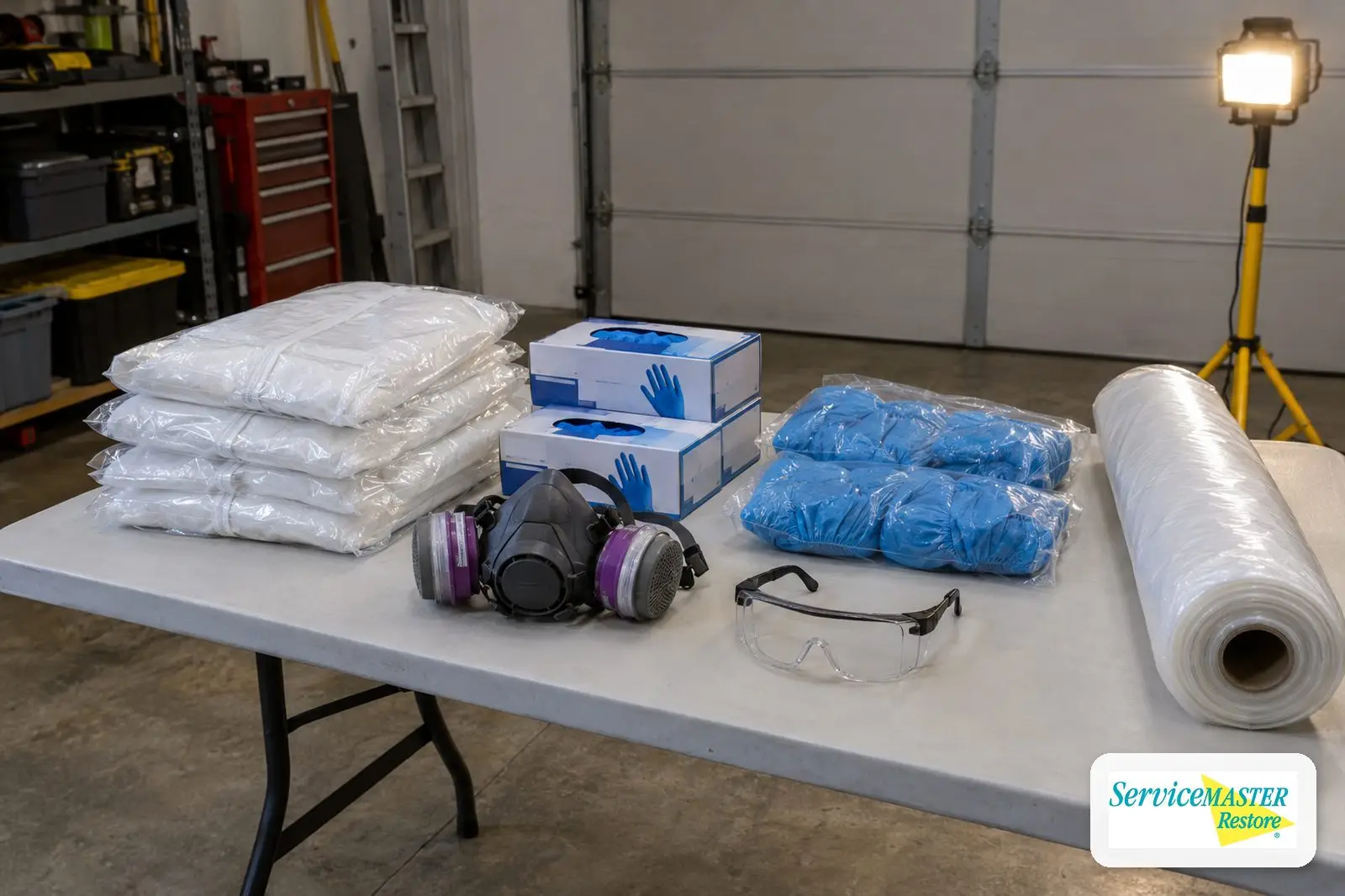
The first reason is infection risk. The federal OSHA Bloodborne Pathogens standard (29 CFR 1910.1030) defines bloodborne pathogens as microorganisms in human blood that can cause disease, including hepatitis B and HIV. It requires workers to follow “universal precautions,” treating all blood and other potentially infectious material as infectious, and to use protective equipment and sealed, labeled waste containers. The rule governs employers, not families, but the reason behind it applies to anyone. The CDC reports that hepatitis B can remain infectious on surfaces for at least seven days, even when no blood is visible.
The second reason is emotional. No grieving person should have to clean a room connected to their loss. If you need a wallet, medications, or papers from the house, stay in unaffected rooms or ask the remediation team to retrieve them.
What professional remediation involves
The S540 standard, now in its second edition (2023), covers structural remediation, contents remediation, the packaging, transport, and disposal of potentially infectious waste, and confirmation that the cleaning worked. In practice, a trained crew agrees on a written scope with you, protects the rest of the home, removes what cannot be safely cleaned, disinfects and deodorizes what remains, and verifies the space before handing it back. Our unattended death cleanup and biohazard cleanup pages explain our approach; if violence was involved, see trauma and crime scene cleanup.
Ask one question about waste. In Illinois, hauling potentially infectious medical waste requires an Illinois EPA permit and a manifest for each pickup, and it may only go to permitted facilities. A good company will explain plainly how its waste is handled. Our hazardous waste disposal page covers how that fits into a project.
Protecting the belongings that matter
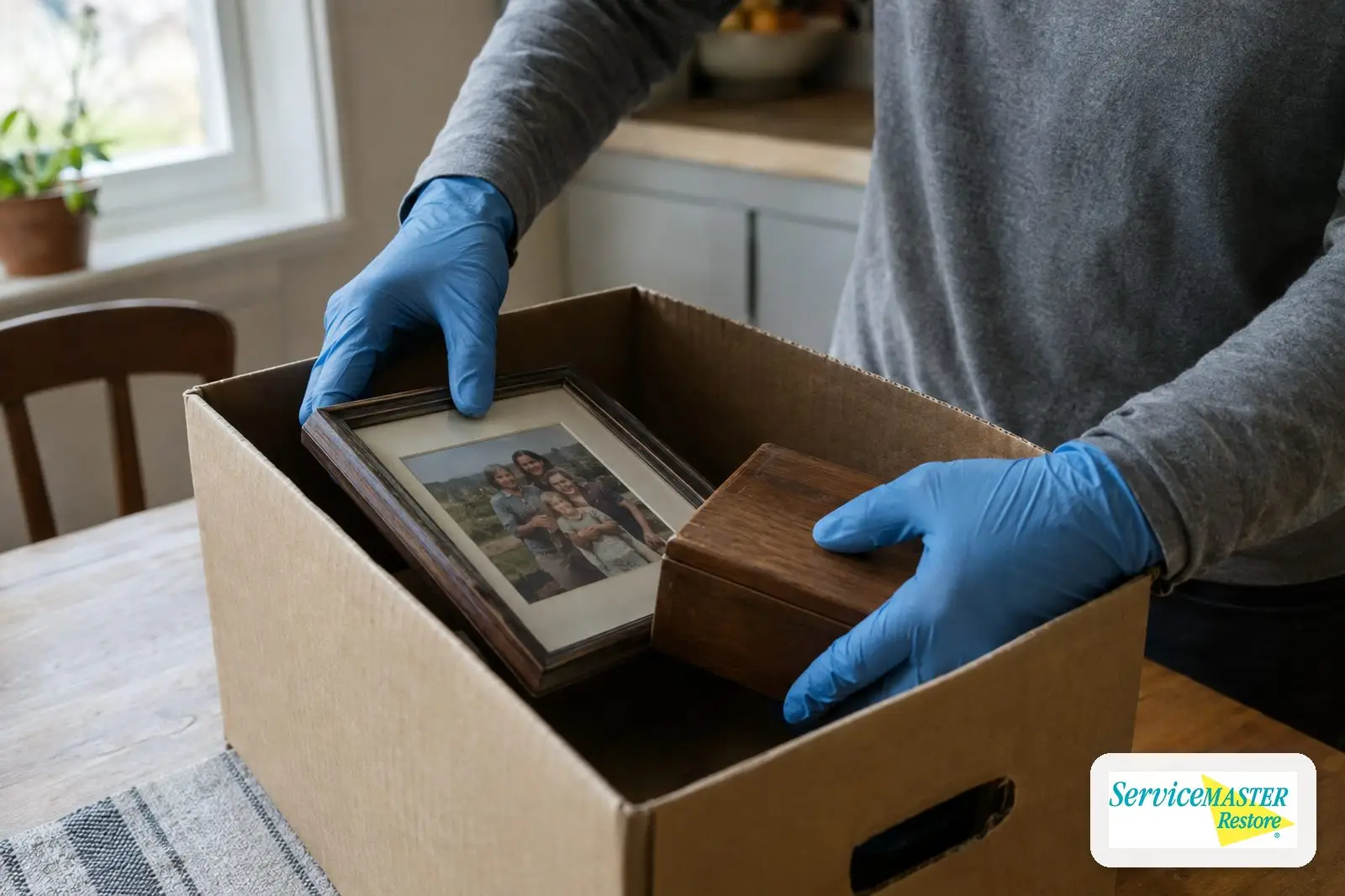
Before work begins, tell the crew what you want saved: photos, jewelry, a will, deeds, insurance policies, a favorite watch. Items outside the affected area are usually just set aside. Items inside it may be cleanable or may need to be discarded, and that decision should involve you and, if a claim is open, your adjuster.
Odor and structural materials: why “looks clean” is not the finish line
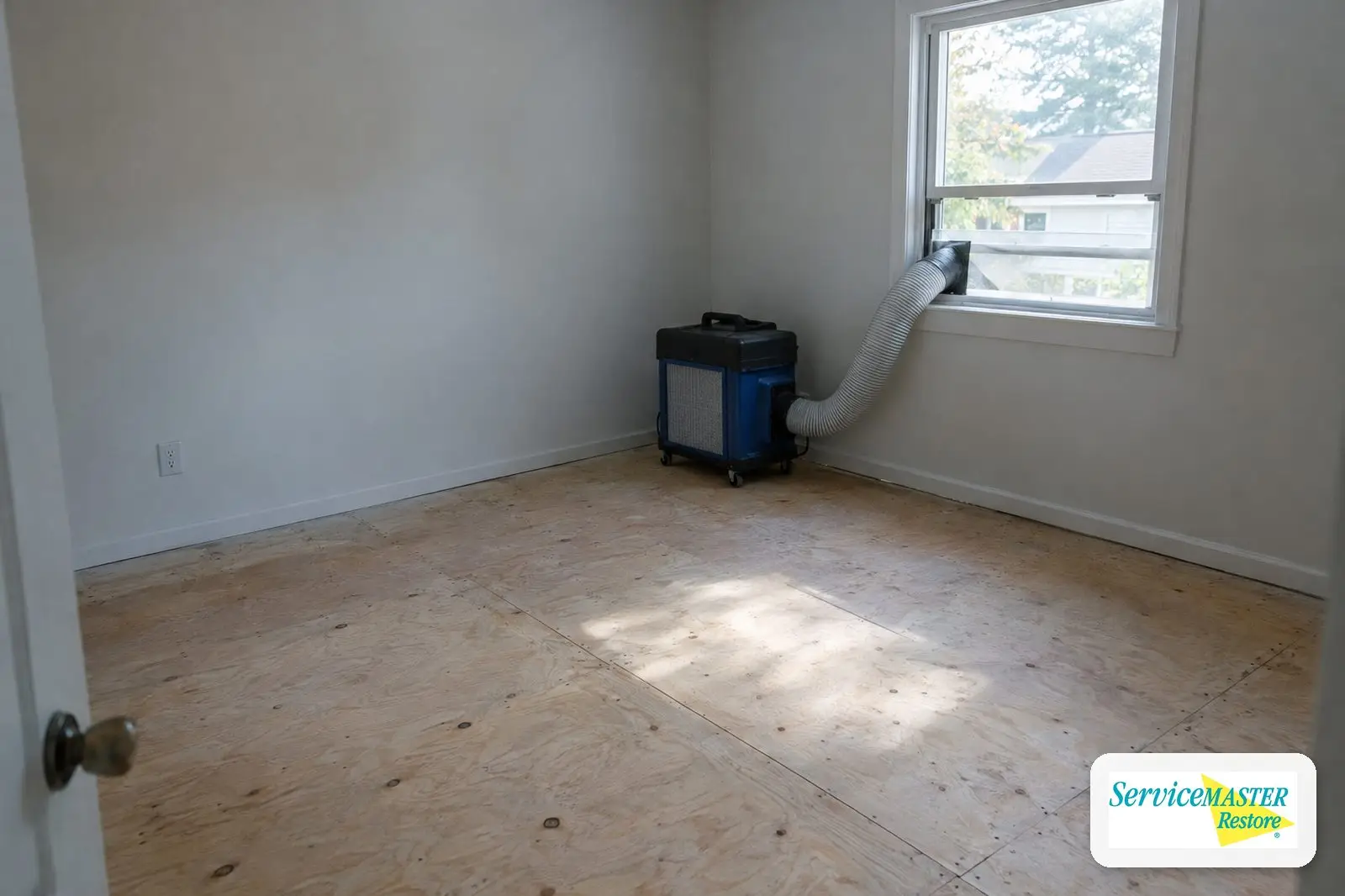
A room can look normal and still carry odor. Organic material and moisture move into porous building materials, such as carpet and pad, wood subfloor, drywall, and sometimes framing. Surface cleaning cannot reach those layers, and air movement can carry odor into nearby rooms and shared ductwork.
That is why remediation often means removing sections of flooring or subfloor, cleaning and sealing the framing beneath, and running air filtration and odor removal and air quality treatment until the source is gone rather than masked. Smoke odor is a different problem, covered in our guide on getting smoke smell out of a house, but the principle holds: remove the source, then treat the air. Afterward, the home may need ordinary repairs and reconstruction like new flooring, drywall, and paint.
For landlords and property managers
When a tenant dies alone in a unit, responsibilities split along a clear line: you own the structure, and the tenant’s belongings pass to their estate. The Insurance Information Institute explains that a landlord’s policy covers the structure and the owner’s financial interest in it, not the tenant’s possessions.
- Reach the tenant’s emergency contact or next of kin, and find out who is handling the estate.
- Do not discard the tenant’s belongings on your own. Illinois rules on property left behind are not uniform, so talk with an attorney first.
- Photograph the unit and notify your insurer before remediation starts.
- In multi-unit buildings, act promptly. Shared walls and ventilation can carry odor, and other residents deserve calm, limited information.
Property managers from biohazard cleanup in Naperville to biohazard cleanup in Downers Grove face these situations more often than tenants realize. If the unit also shows heavy accumulation, our guide to hoarding cleanup, safety, and insurance may help.
Who typically pays for unattended death cleanup
The short version is below; the full picture is in our who-pays guide.
- Homeowners insurance may cover remediation as a sudden loss, subject to your deductible. Policies vary, so call your adjuster before work begins. Our insurance claim assistance team can coordinate documentation with your carrier.
- Renters insurance centers on the tenant’s possessions, liability, and living expenses, per the Insurance Information Institute. Whether it responds here depends on the policy.
- The estate or property owner pays when no policy applies.
- Illinois Crime Victim Compensation applies only when a violent crime is involved. The Illinois Attorney General’s program lists crime-scene cleanup among eligible costs, subject to its rules. Most unattended deaths are natural and will not qualify. Questions go to 1-800-228-3368.
Privacy and discretion
You do not owe anyone an explanation; “we have some work being done at the house” is enough for neighbors. When you call remediation companies, it is fair to ask whether their vehicles and clothing avoid wording that reveals the job, whether photos are taken only for insurance documentation, and whether they can work with a family representative so you do not have to be on site. A company that hesitates is telling you something. Coroner reports stay private too: DuPage County releases them only after the investigation is complete, and only on request.
Taking care of yourself and your family
Shock, numbness, guilt, and anger are all normal after a death like this. The National Institute on Aging suggests finding grief support groups through hospitals, senior centers, faith communities, and funeral homes, and notes that hospice teams can offer bereavement support even if hospice was not used. It also advises putting off major decisions, like selling the house, until you feel steadier.
If the weight becomes too much, call or text 988 to reach the 988 Suicide & Crisis Lifeline. It is free, confidential, and available 24/7, and its counselors help with emotional distress, not only crisis. Landlords and neighbors who made the discovery can use it too.
What happens, in order
Step 1
Call 911. Police or the sheriff respond, and the coroner is notified.
Step 2
The coroner takes your loved one into care. After the exam, they go to your chosen funeral home once the next of kin signs a release.
Step 3
The home is released. Keep the affected room closed; do not clean it yourself.
Step 4
Walkthrough and written scope. Tell the crew which belongings to save.
Step 5
Remediation. Affected materials come out, surfaces are disinfected, and waste leaves under a permit and manifest.
Step 6
Odor treatment and verification. The space is confirmed safe.
Step 7
Repairs, then the keys come back. You decide when to return.
Sources: Will County Coroner’s Office; DuPage County Coroner; ANSI/IICRC S540 (2nd ed., 2023); Illinois EPA.
Frequently Asked Questions
Who do you call when someone dies at home alone?
Call 911 first, even if the person has clearly passed. Police or the sheriff’s office will respond, and the county coroner will be notified because no physician was present. Once the home is released, call a funeral home, your insurer or landlord, and a biohazard remediation company.
Can I clean up after an unattended death myself?
It is strongly discouraged. Bodily fluids can carry bloodborne pathogens such as hepatitis B, which the CDC says can stay infectious on surfaces for at least seven days. Professionals follow OSHA’s universal precautions, wear protective equipment, and dispose of waste under permit.
How long does unattended death cleanup take?
There is no single answer. It depends on the size of the affected area, which materials are involved, and whether flooring or subfloor must be removed. Remediation and repairs are separate phases, and insurance approval can add time. Expect a written scope and honest timeline after the walkthrough.
Does homeowners insurance cover unattended death cleanup?
It may. Homeowners policies often treat remediation as a sudden loss to the home, covered minus your deductible, but policies vary and only your insurer can confirm. Call your adjuster before work starts. Illinois crime victim compensation applies only when a violent crime is involved.
Does the smell go away after an unattended death?
Yes, when the source is properly removed. Odor lingers because organic material soaks into carpet, subfloor, drywall, and sometimes framing, so air fresheners only mask it. Professional remediation removes affected materials, cleans and seals what remains, and treats the air until the odor is gone.
Related guides and services
We are here day or night. ServiceMaster Restoration Services has served DuPage and Will County for over 20 years from Lisle, with certified technicians who work with your insurance. For confidential help, call (630) 241-1111, 24/7, or reach us online.
Sources
- OSHA, Bloodborne Pathogens Standard, 29 CFR 1910.1030
- CDC, Pink Book, Chapter 10: Hepatitis B
- IICRC, ANSI/IICRC S540 Standard for Trauma and Crime Scene Cleanup
- Will County Coroner’s Office, Reporting a Death
- DuPage County Coroner, Family Information
- Illinois EPA, Transporting Potentially Infectious Medical Waste
- Insurance Information Institute, Coverage for Renting Out Your Home
- Insurance Information Institute, Renters Insurance
- Illinois Attorney General, Crime Victim Compensation
- National Institute on Aging, What To Do After Someone Dies
- National Institute on Aging, Coping With Grief and Loss
- 988 Suicide & Crisis Lifeline