
Hoarding cleanup is the planned, respectful removal of excess belongings, debris, and contamination from a home, followed by cleaning, sanitizing, odor control, and repairs. Done well, it happens with the person’s consent and input, addresses fire and health hazards first, and leaves a safe, usable living space. Insurance coverage is often limited, so check your policy.
This guide is general education, not medical, legal, or insurance advice. Policies vary, so check your own policy and talk with your adjuster before making decisions.
If you are reading this, you may be worried about a parent, a sibling, a tenant, or yourself. Maybe the hallway has narrowed to a single path. Maybe the kitchen hasn’t been usable in a while, or a neighbor in Lisle or Bolingbrook has mentioned a smell. Hoarding is not a character flaw, and the person living with it deserves the same dignity as anyone else.
What hoarding disorder is (and what it isn’t)
The American Psychiatric Association describes hoarding disorder as persistent difficulty parting with possessions because of a perceived need to save them. Trying to discard things causes real distress, and over time the clutter makes living spaces hard or impossible to use for their intended purpose. It is a recognized mental health condition listed in the DSM, the manual clinicians use for diagnosis.
The APA puts overall prevalence at approximately 2.6%, with higher rates among adults over 60 and people who also live with anxiety or depression. Symptoms often begin in the teen years, and a stressful event such as the death of a loved one can make them worse.
The International OCD Foundation (IOCDF) notes that a diagnosis requires all three of these: collecting and keeping many items, clutter that keeps rooms from being used as intended, and distress or problems in daily life as a result. Not every cluttered home involves hoarding disorder. A house that fell behind after a surgery or a death in the family may look similar but calls for a different conversation.
Language that helps
The IOCDF uses person-first phrasing such as “the person with hoarding disorder” rather than a label. The National Fire Protection Association’s guidance for responders suggests matching the person’s own words: if they talk about their “collection” or their “things,” use that language, and avoid terms like “junk” or “trash.”

Why severe clutter becomes a health and safety issue
The IOCDF’s family guidance recommends a harm-reduction approach: focus on concrete safety concerns, like fire risk, instead of demanding that everything go.
Fire load and blocked exits
Fire is the most serious risk. The U.S. Fire Administration warns that belongings can crowd cooking and heating equipment, and that blocked windows and doors make it hard for firefighters to get in and search for occupants. Its two core tips are simple: keep anything that can burn at least 3 feet from cooking and heating equipment, and keep doorways and windows clear for escape.
The NFPA adds that many occupants die in fires in heavily cluttered homes because blocked exits prevent escape, and that responding firefighters face obstructed exits, falling objects, and excessive fire loading that can lead to collapse. Neighbors in townhouses and apartments can be affected quickly by heavy smoke, and residents themselves are often hurt by trips and falling piles.
Mold, pests, and biohazards
When clutter hides a slow leak, moisture can sit for months. The EPA advises drying water-damaged areas and items within 24 to 48 hours to prevent mold growth. Our article on black mold health risks and warning signs covers what to watch for.
The CDC’s guidance on cleaning up after rodents says not to sweep or vacuum droppings, urine, or nesting material, because that can put virus-containing particles into the air. Instead, it calls for ventilating for 30 minutes, wearing gloves, and soaking contaminated areas with disinfectant before wiping. Anyone exposed to blood or other potentially infectious material on the job falls under OSHA’s Bloodborne Pathogens standard, which is why heavily contaminated homes call for trained crews and proper biohazard cleanup.
How a respectful professional hoarding cleanup works
A good cleanup is a project done with the person, not to them. The IOCDF is direct: unwelcome cleanouts cause intense distress and rarely work in the long term, because the beliefs and habits behind the clutter are still there. Here is how a respectful hoarding cleanup and property restoration project typically unfolds.
The hoarding cleanup project, step by step
Timing depends on the home and the person’s comfort.
Step 1. A private first conversation
Who lives there, what worries the family, and what the person wants. Consent comes first.
Step 2. Walk-through and safety assessment
Blocked exits, items near the furnace or stove, unstable piles, leaks, mold, pests, or biohazards.
Step 3. A written plan
Which rooms come first, what counts as keep, donate, or discard, and what must never leave without asking.
Step 4. Make the home safe to work in
Protective equipment, ventilation, and clear paths to exits. Combustibles move at least 3 feet from heating and cooking equipment (USFA).
Step 5. Sorting, together
Room by room, with the person or family deciding. Papers, photos, and keepsakes are set aside, not tossed.
Step 6. Removal and proper disposal
Donations, recycling, and trash are separated. Contaminated or hazardous material is bagged and handled properly.
Step 7. Cleaning and sanitation
Wet-method cleanup of rodent waste (no dry sweeping, per CDC), disinfection, and deep cleaning of kitchens and baths.
Step 8. Odor control and air quality
Removing the sources first, then deodorizing so the home smells like a home again.
Step 9. Repairs, restoration, and ongoing support
Fix water damage, mold, flooring, and drywall uncovered along the way, and connect the person with therapy or a support group (IOCDF).
Sources: U.S. Fire Administration, Hoarding fire safety tips; CDC, How to Clean Up After Rodents; International OCD Foundation, How to Help a Loved One with HD.
Sorting is the heart of it
Sorting takes the most patience. Even a chaotic home usually holds important things: tax documents, insurance papers, medications, old photos, a grandparent’s watch. A careful crew flags anything personal or valuable instead of deciding on the person’s behalf. Shorter, regular sessions often go better than one exhausting marathon.
After the belongings: sanitation, odor, and the house itself
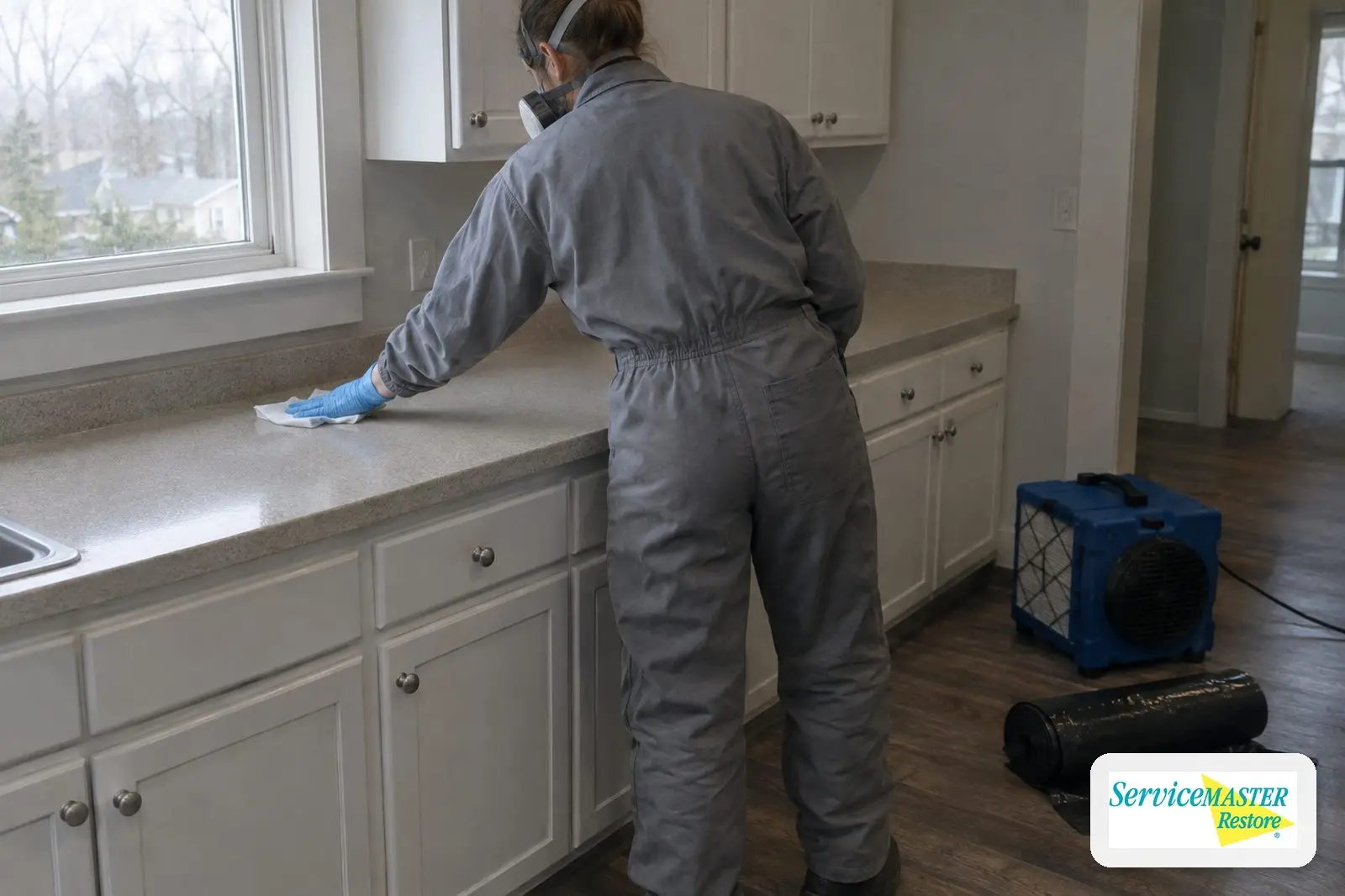
Once floors are visible, the real condition of the house shows: the drip under the sink, the stained subfloor, the mold behind a dresser. Then the work shifts to sanitization and deodorization, odor removal and air quality treatment, mold remediation when needed, and deep cleaning. If drywall, flooring, or cabinets have to come out, repairs and reconstruction close the loop.
Working with family members and landlords
For families, the hardest part is usually the relationship, not the cleaning. The IOCDF suggests talking openly and without judgment, focusing on specific safety concerns rather than whether the home “should” be clean, involving your loved one in the plan, and noticing whether you may be making things easier to continue, such as paying for a storage unit. It also cautions against expecting zero clutter at first. A safe kitchen and a clear path to the door are real wins.
For landlords and property managers in DuPage and Will County, the same principles apply, plus a duty to other tenants. NFPA notes that some communities ask property owners to tell the local fire service or building inspector when hoarding poses a fire risk to the occupant or neighbors. Document specific hazards, give the tenant a reasonable timeline, and keep the focus on safety. Lease enforcement is governed by Illinois law and local ordinances, so speak with an attorney before taking formal steps.
Does insurance cover hoarding cleanup?
Usually not on its own. The Insurance Information Institute explains that a policy will not cover damage due to lack of maintenance, mold, or infestation from termites or other pests, and that keeping up the home is the owner’s responsibility. Since hoarding conditions build up gradually, the cleanup itself typically falls outside coverage.
There are exceptions worth checking. If a covered event happens, such as a fire or sudden pipe burst, the resulting damage may be covered under the policy’s normal terms; fire is a covered peril on every standard homeowners form III lists. Renters, landlord, and condo policies each have their own rules. Read your exclusions, ask your adjuster in writing, and contact the Illinois Department of Insurance if you have questions about a claim. When there is a covered loss, our team can work with your insurance company; our insurance claim assistance page explains how. Our guide to biohazard cleanup and who pays covers similar questions.
Local support resources in DuPage and Will County
A cleanup addresses the home. Lasting change usually needs support for the person, too:
- IOCDF Hoarding Center. The IOCDF task force directory lists a Chicagoland Hoarding Task Force serving the Chicago area and a Kane County Hoarding Task Force. The site also lists therapists and support groups.
- Your county health department. For areas not listed, the IOCDF recommends contacting your local public health department or local government. Locally, that means the DuPage County or Will County Health Department, or your village hall.
- Illinois Adult Protective Services. If an adult age 60 or older, or an adult 18 to 59 with a disability, is living in conditions that seriously threaten their health, the Illinois Department on Aging’s Adult Protective Services program investigates reports of self-neglect. Its statewide, 24-hour hotline is 1-866-800-1409.
- A therapist trained in hoarding. The APA notes CBT is an effective treatment. Ask providers about their experience with hoarding disorder.
Choosing who to call
Look for a company that treats hoarding cleanup as both a safety job and a people job. Ask how they involve the person, handle keepsakes, manage biohazards, and handle the repairs that often follow. ServiceMaster Restoration Services brings over 20 years of experience and serves DuPage and Will County from our headquarters in Lisle, with certified technicians and 24/7 emergency service for residential and commercial properties. Learn more on our biohazard cleanup in Lisle and biohazard cleanup in Bolingbrook pages.

Frequently Asked Questions
Is hoarding a mental illness?
Yes. Hoarding disorder is a recognized mental health condition listed in the DSM, the diagnostic manual published by the American Psychiatric Association. The APA estimates it affects about 2.6% of people, with higher rates in adults over 60. It is not laziness or a lack of willpower. Cognitive behavioral therapy has the best evidence, and many people improve with the right support.
Does homeowners insurance cover hoarding cleanup?
Generally not by itself. Standard homeowners policies cover sudden, accidental losses and exclude damage from lack of maintenance, mold, and pests, according to the Insurance Information Institute. If a covered event such as a fire or burst pipe happens, damage from that event may be covered under your policy’s terms. Policies vary, so review your exclusions and ask your adjuster.
How long does a hoarding cleanup take?
It depends on the size of the home, how much is there, whether there are biohazards or structural repairs, and how involved the person wants to be in sorting. Smaller projects can move quickly. Others are spread over several sessions so the person can make decisions without being overwhelmed. A walk-through and written plan give you a realistic picture before work begins.
What if my loved one doesn’t want help with hoarding?
Avoid a surprise cleanout. The IOCDF warns that unwelcome cleanouts cause intense distress and rarely work long term. Start with one specific safety concern, such as a blocked exit or items near the furnace, and ask what they would be willing to change. A therapist trained in hoarding, or a local task force, can help families approach the conversation.
Who can help with hoarding in DuPage or Will County?
The IOCDF directory lists a Chicagoland Hoarding Task Force, and its site helps you find therapists and support groups. Your county health department or village hall can point to local resources. For adults 60 and older, or adults with disabilities facing serious health risks, Illinois Adult Protective Services takes reports at 1-866-800-1409. A restoration company handles the physical cleanup and repairs.
Related guides and services
Ready to talk it through, privately and without judgment? Call (630) 241-1111, 24/7. We can help you plan a safe next step.
Sources
- American Psychiatric Association: What is Hoarding Disorder?
- International OCD Foundation: About Hoarding Disorder
- International OCD Foundation: How to Help a Loved One with HD
- International OCD Foundation: Find a Hoarding Task Force
- U.S. Fire Administration (FEMA): Hoarding and fire safety
- National Fire Protection Association: Hoarding, Issues for the Fire Service
- CDC: How to Clean Up After Rodents
- U.S. EPA: A Brief Guide to Mold, Moisture and Your Home
- OSHA: Bloodborne Pathogens Standard, 29 CFR 1910.1030
- Insurance Information Institute: Which disasters are covered by homeowners insurance?
- Illinois Department on Aging: Adult Protective Services
- Illinois Department of Insurance