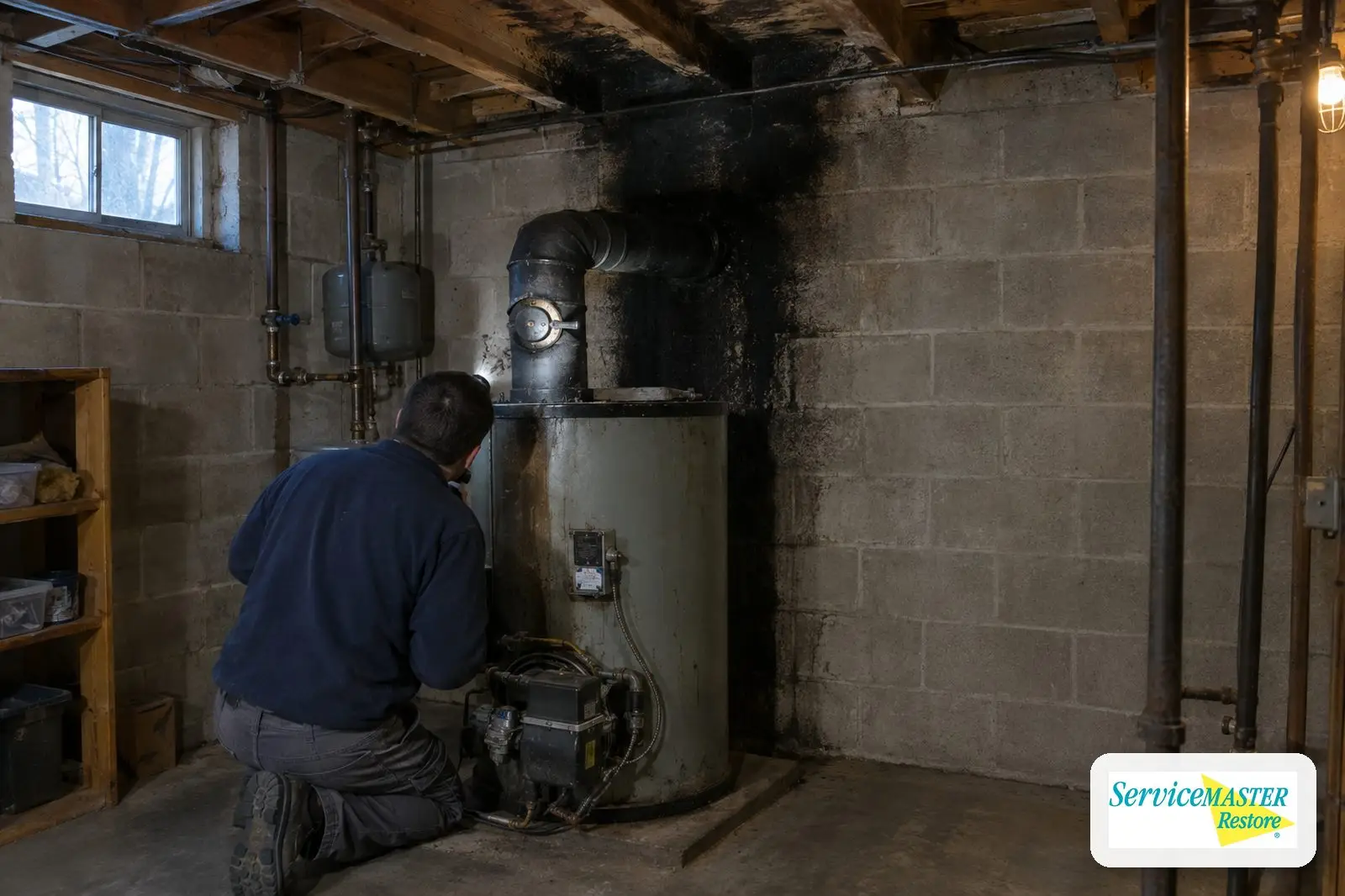
A furnace puffback is a small explosion inside a heating appliance when fuel builds up and ignites late, blowing oily soot into the house. Shut the system off, ventilate, check your carbon monoxide alarms, and avoid wiping the soot. Puffback residue smears easily, so professional cleanup of surfaces, ductwork, and contents is usually the safer route.
Puffbacks happen when a burner starts, so they cluster when heating systems come back on after summer; in DuPage and Will County, the first cold mornings of October and November. One thump from the basement, and by evening there are gray streaks around the registers.
What is a furnace or boiler puffback?
A puffback is the sudden ignition of fuel that has collected inside an appliance’s combustion chamber. Instead of a smooth, controlled flame, the pooled fuel or vapor lights all at once. The pressure pushes smoke and soot out of every gap it can find: around the burner, through the barometric damper on the flue pipe, and sometimes through a flue connector the blast knocked loose.
The classic version happens in oil-fired furnaces, boilers, and water heaters. The home-inspection reference InspectAPedia describes it as the ignition of unburned oil lying in the bottom of the combustion chamber and traces most cases to maintenance or installation problems:
- A dirty nozzle or worn, misadjusted ignition electrodes that delay ignition.
- A failing shutoff valve or an air leak in the supply line that lets extra oil into the chamber after the burner stops.
- Poor draft from a blocked or undersized chimney.
- Pressing the reset button over and over, adding more unburned oil each time.
How puffbacks differ on gas and propane systems
Natural gas and propane appliances can also have delayed ignition. InspectAPedia notes that gas puffbacks are uncommon but potentially more dangerous, because a pocket of unburned gas can start a fire or injure someone nearby. The usual sign is a loud bang or flash at the burner on startup, often from dirty burners, a faulty igniter, or venting problems.
The soot story differs too. A properly adjusted gas burner makes very little soot, so soot around a gas furnace, boiler, or water heater is a warning. The U.S. Consumer Product Safety Commission lists “sooting, especially on appliances and vents” among the signs of an improperly operating appliance, the kind that can produce carbon monoxide.
How common is oil heat in DuPage and Will County?
Rare. Census data shows most homes in both counties heat with utility gas, and oil is a tiny fraction of a percent. So a soot event here is more often a gas or propane appliance burning dirty, an older building still on an oil boiler, or a commercial property with aging equipment.
How homes are heated in DuPage and Will County
Share of occupied housing units by primary heating fuel
Utility (natural) gas
Electricity
Bottled, tank, or LP (propane) gas
Fuel oil or kerosene
Source: U.S. Census Bureau, American Community Survey 2019–2023 5-year estimates, Table B25040, House Heating Fuel. DuPage: 349,497 occupied units. Will: 241,310 occupied units. Bar lengths are scaled to the largest value. Other fuels and homes with no fuel make up the remainder.
Signs you have had a puffback
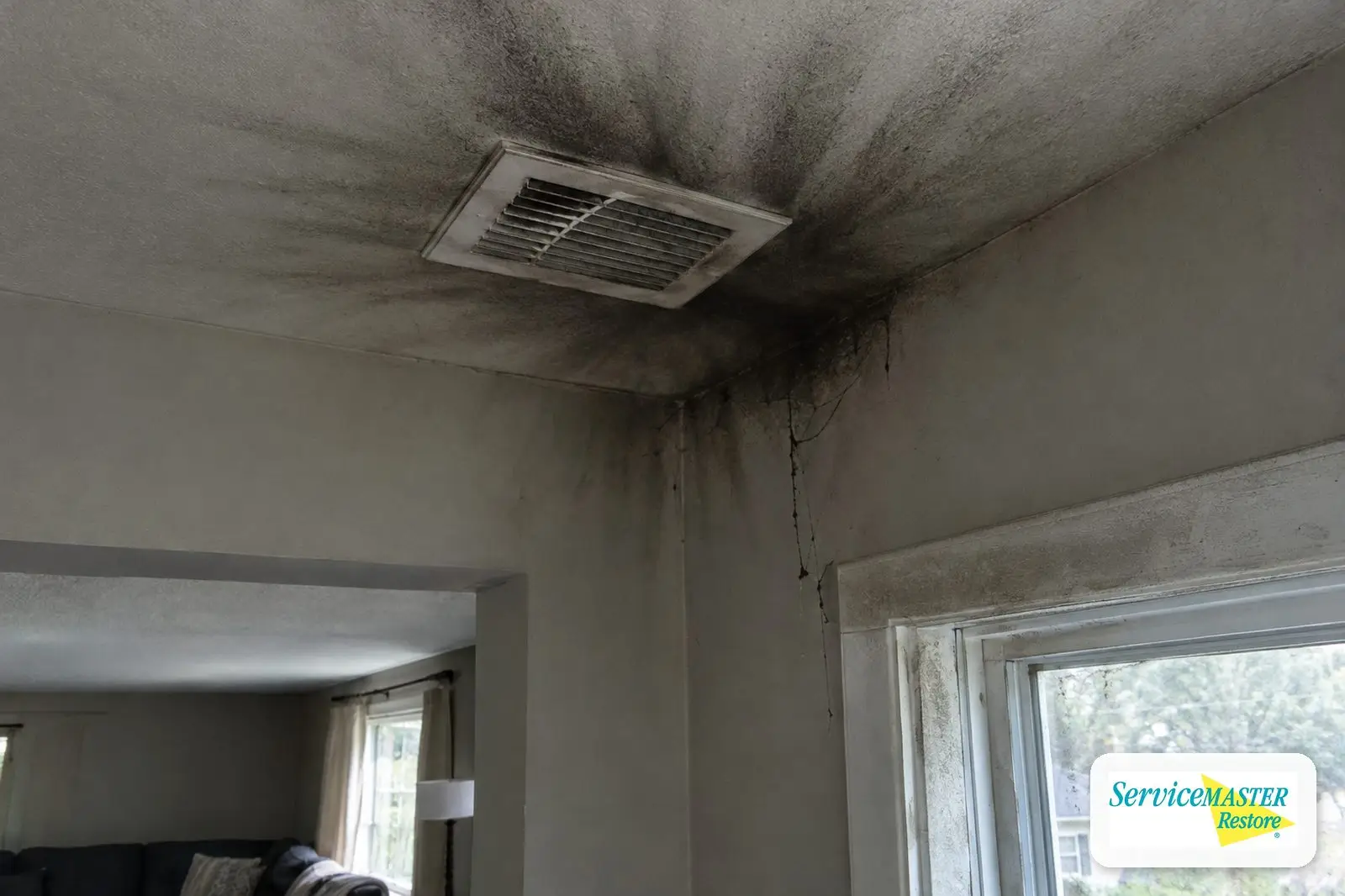
Some puffbacks bang; others are only noticed as a dirty windowsill a day later. Look for:
- A thump, boom, or “whoosh” from the furnace or boiler as it starts.
- Black or gray streaks around supply registers and return grilles.
- Dark “soot webs” in ceiling corners, usually old cobwebs that caught airborne soot.
- A greasy film on windowsills, white appliances, lampshades, and blinds.
- A fuel or burnt-oil odor, or soot on the appliance and flue pipe.
Earlier warnings, per InspectAPedia: sooty, smelly, noisy burner operation.
What to do in the first hour after a puffback
Step 1. Turn the heating system off
Set the thermostat to off, then use the appliance’s service switch. Do not keep pressing reset.
Step 2. Check for carbon monoxide and gas
If a CO alarm sounds or anyone has a headache, dizziness, or nausea, get everyone outside and call 911. If you smell gas, leave without flipping switches and call from outside.
Step 3. Ventilate and limit exposure
Open windows if weather allows. Keep children, pets, and anyone with asthma, heart, or lung conditions out of sooty rooms.
Step 4. Document before you touch anything
Photograph every affected room, the registers, and the appliance. Note when you heard the noise.
Step 5. Call a heating technician
The appliance must be inspected and repaired before it runs again, or it can push more soot through the ducts.
Step 6. Call your insurer and a restoration company
Report the loss and get the soot assessed. Until then, no wiping or household vacuuming.
Sources: CPSC, The “Invisible” Killer (Pub. 464); CDC, Carbon Monoxide Poisoning Basics; InspectAPedia, Oil Burner Puffbacks.
Why carbon monoxide deserves your attention
A puffback means fuel was not burning cleanly, and the blast can loosen the flue pipe that carries exhaust outside. Both raise the risk of carbon monoxide, which you cannot see or smell. The CDC describes CO symptoms as often “flu-like”: headache, dizziness, weakness, upset stomach, vomiting, chest pain, and confusion. The CPSC advises anyone who suspects CO poisoning to leave the home, get medical care, and let the fire department decide when it is safe to return.
The CDC recommends battery-operated or battery back-up CO detectors near every sleeping area. The CPSC adds alarms on each level of the home, tested monthly. Illinois’ Carbon Monoxide Alarm Detector Act requires at least one approved CO alarm within 15 feet of every room used for sleeping in most homes.

Why puffback soot is oily and travels through the whole house
Soot is tiny carbon particles left by incomplete combustion. In a puffback, they are coated with unburned fuel, so the residue feels greasy and clings. Size matters too: the EPA notes that particles smaller than 10 micrometers can get deep into the lungs, with children, older adults, and people with heart or lung disease most affected.
Particles that small ride air currents. In a forced-air furnace, the blower pulls soot into the return, coats the ducts and blower, and pushes it out of every supply register. Boilers have no ducts, but soot still drifts up stairwells and settles inside closets, behind furniture, and on cool exterior walls.
Puffback residue belongs to the fuel-oil family of soot, which behaves differently from house-fire or kitchen-fire residue. Our guide to the types of soot and smoke damage covers each in depth:
| Residue type | Typical source | How it behaves |
|---|---|---|
| Dry smoke | Fast, hot fires burning paper or wood | Powdery, easier to lift if not smeared |
| Wet smoke | Smoldering, low-heat fires, plastics and rubber | Sticky, smeary, strong odor |
| Protein | Burned food in kitchen fires | Nearly invisible film, very strong odor |
| Fuel oil (puffback) | Oil burner misfires and puffbacks | Black, greasy, spreads through ducts, lingering fuel smell |
Why wiping puffback soot makes it worse
Resist the rag and spray bottle. Oily soot does not lift like dust; a cloth drags it across the surface and presses it into flat paint, textured ceilings, grout, and fabric. Water and all-purpose cleaners can spread the grease into a wider gray haze. And without a HEPA filter, a household vacuum can blow particles this fine right back into the room.
Restoration technicians usually test the residue first, then match the method: dry chemical sponges and HEPA vacuuming for light deposits, degreasing cleaners for oily films, working top down so clean areas stay clean. The IICRC’s first fire and smoke standard, ANSI/IICRC S700, published in 2025, covers assessing fire residues and odors in a building, its HVAC system, and its contents, which is exactly what a puffback touches.
What professional puffback cleanup includes
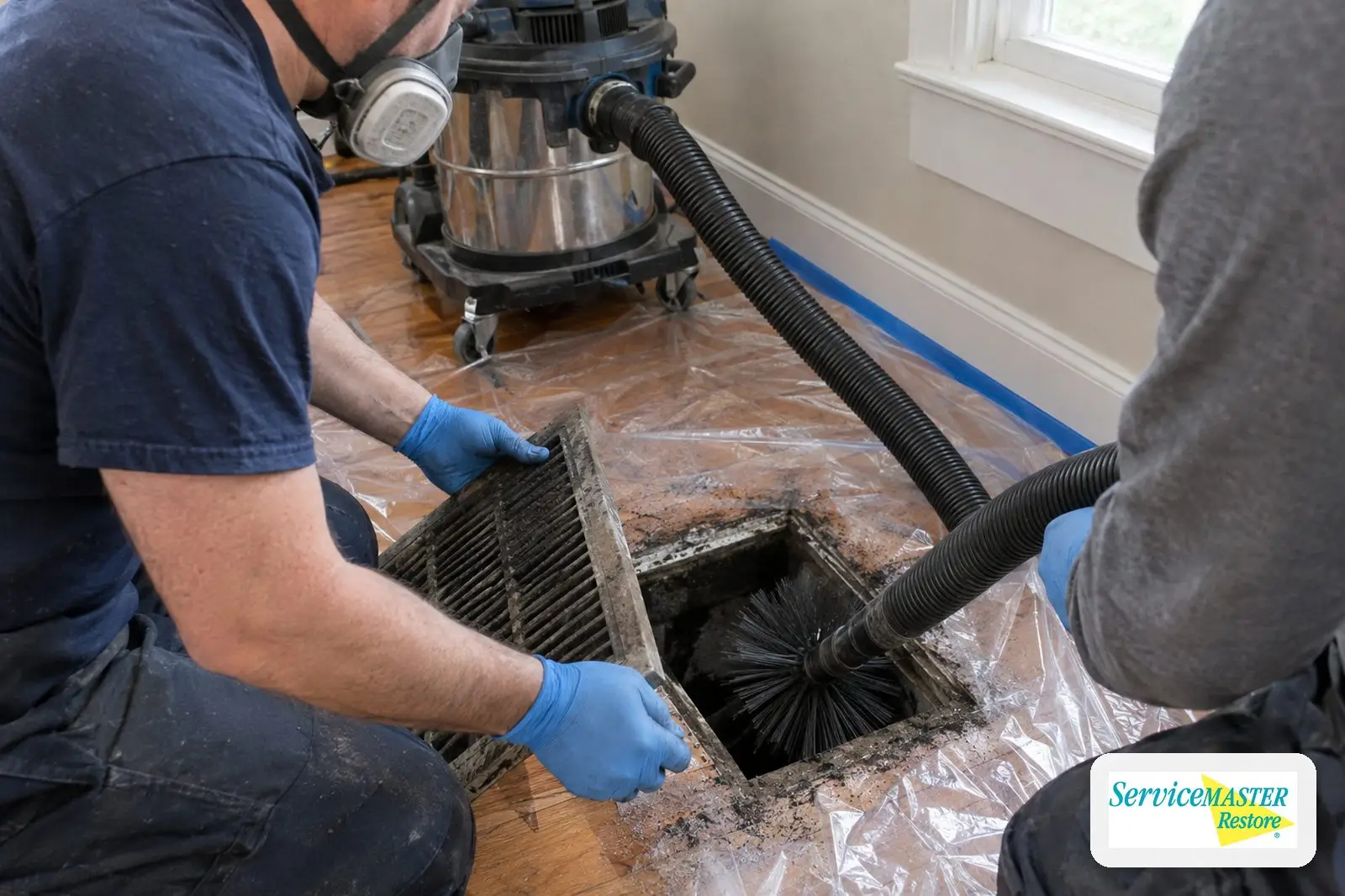
Cleaning walls while the ducts still hold soot only sets up new streaks, so a typical scope covers:
- Assessment of affected rooms, surfaces, belongings, and hidden spots.
- HVAC and ductwork cleaning after the heating contractor repairs the appliance.
- Structure: ceilings, walls, trim, windows, cabinets, and floors.
- Contents: clothing, bedding, upholstery, electronics, and keepsakes.
- Odor control, since fuel odor lingers in porous materials. That can include odor removal and air quality treatment and sanitization and deodorization.
ServiceMaster Restoration Services has provided smoke and soot cleanup for homes and businesses across DuPage and Will County for over 20 years. Our certified technicians are available 24/7, and we work with your insurance company on the claim. Larger soot events fall under our residential fire damage restoration service, and older commercial buildings with oil-fired boilers under commercial fire damage restoration. We help homeowners needing fire damage restoration in Homer Glen, fire and soot cleanup in Lemont, and fire damage restoration in Naperville. For how a full fire job runs, see our fire and smoke damage restoration process guide.
How to prevent a puffback: annual heating system service
The authorities agree: service the system every year. The CDC recommends having your heating system, water heater, and other gas, oil, or coal burning appliances serviced by a qualified technician annually. The CPSC asks for an annual inspection that includes chimneys and vents. The U.S. Fire Administration gives the same advice and estimates 32,200 home heating fires were reported to U.S. fire departments in 2021.
An oil tune-up addresses the nozzle, filter, electrodes, and combustion settings behind delayed ignition. On gas and propane equipment, technicians check burners, igniters, flame sensors, the heat exchanger, and venting. Book in late summer or early fall, before the first cold snap fills HVAC schedules; our fall maintenance checklist pairs well with it. Between visits, press reset once at most, and call for service if the burner will not stay lit or starts making new noises.
Does homeowners insurance cover puffback damage?
Many policies cover smoke damage, but it depends on yours. The Insurance Information Institute lists smoke among the perils a standard HO-3 policy broadly covers, while routine wear and tear is excluded. A sudden puffback may be treated differently from slow buildup caused by a neglected burner, and your policy wording and adjuster draw that line. Our insurance claim assistance team can help with documentation.
General information only, not insurance or legal advice. Policies vary, so check your policy or ask your adjuster.
Frequently Asked Questions
Is a furnace puffback dangerous?
It can be. The blast is usually small, but it signals an appliance that is not burning fuel properly, and it can loosen the flue pipe that vents exhaust outdoors. That combination raises carbon monoxide risk. Turn the system off, confirm your CO alarms work, and have a qualified technician inspect the appliance before it runs again.
Can I stay in my house after a puffback?
It depends on how far the soot spread and who lives with you. If no CO alarm is sounding, nobody has symptoms, and you do not smell gas, staying may be reasonable with the heat off and sooty rooms closed. Keep children, pets, and anyone with asthma or heart or lung conditions away from the soot.
How long does puffback soot cleanup take?
It depends on how far the soot traveled. A puffback contained to a basement utility room is a much smaller job than one that ran through the ducts into every room. HVAC cleaning, the number of rooms, and the amount of clothing and furniture all shape the timeline. A restoration company can give a realistic schedule after the assessment.
Can a gas furnace have a puffback?
Yes, though it is less common than with oil. Gas furnaces and boilers can have delayed ignition from dirty burners, ignition faults, or venting problems, causing a bang or flash at startup. A properly adjusted gas burner makes very little soot, so soot around a gas appliance is a warning sign the CPSC links to improper operation.
Should I clean my air ducts after a puffback?
If you have a forced-air system and the furnace ran during or after the puffback, the ducts, blower, and coil likely hold soot. Cleaning walls without cleaning the HVAC system often leads to fresh streaks when the heat comes back on. Have the ducts inspected as part of the cleanup, after the appliance is repaired.
Related guides and services
- Professional smoke and soot cleanup
- Residential fire damage restoration
- Odor removal and air quality treatment
- Types of soot and smoke damage explained
- How to get smoke smell out of a house
- Kitchen fire prevention and what to do
- Fire damage restoration in Homer Glen
- Fire damage restoration in Lemont
- Help with your insurance claim
- All restoration guides
Dealing with puffback soot right now? Call ServiceMaster Restoration Services at (630) 241-1111, available 24/7 for homes and businesses across DuPage and Will County, or contact us online.
Sources
- InspectAPedia: Oil Burner Puffbacks, Cause, Cure and Prevention
- U.S. Consumer Product Safety Commission: The “Invisible” Killer, Carbon Monoxide (Publication 464)
- U.S. Consumer Product Safety Commission: CO Alarms
- Centers for Disease Control and Prevention: Carbon Monoxide Poisoning Basics
- U.S. EPA: Health and Environmental Effects of Particulate Matter
- U.S. Fire Administration (FEMA): Heating Fire Safety
- U.S. Census Bureau: ACS 2019–2023 5-Year, Table B25040 House Heating Fuel (DuPage and Will Counties, IL)
- Illinois General Assembly: Carbon Monoxide Alarm Detector Act, 430 ILCS 135/10
- IICRC: ANSI/IICRC S700 Standard for Fire and Smoke Damage Restoration
- Insurance Information Institute: Am I Covered?
- Insurance Information Institute: What Is Covered by Standard Homeowners Insurance?