
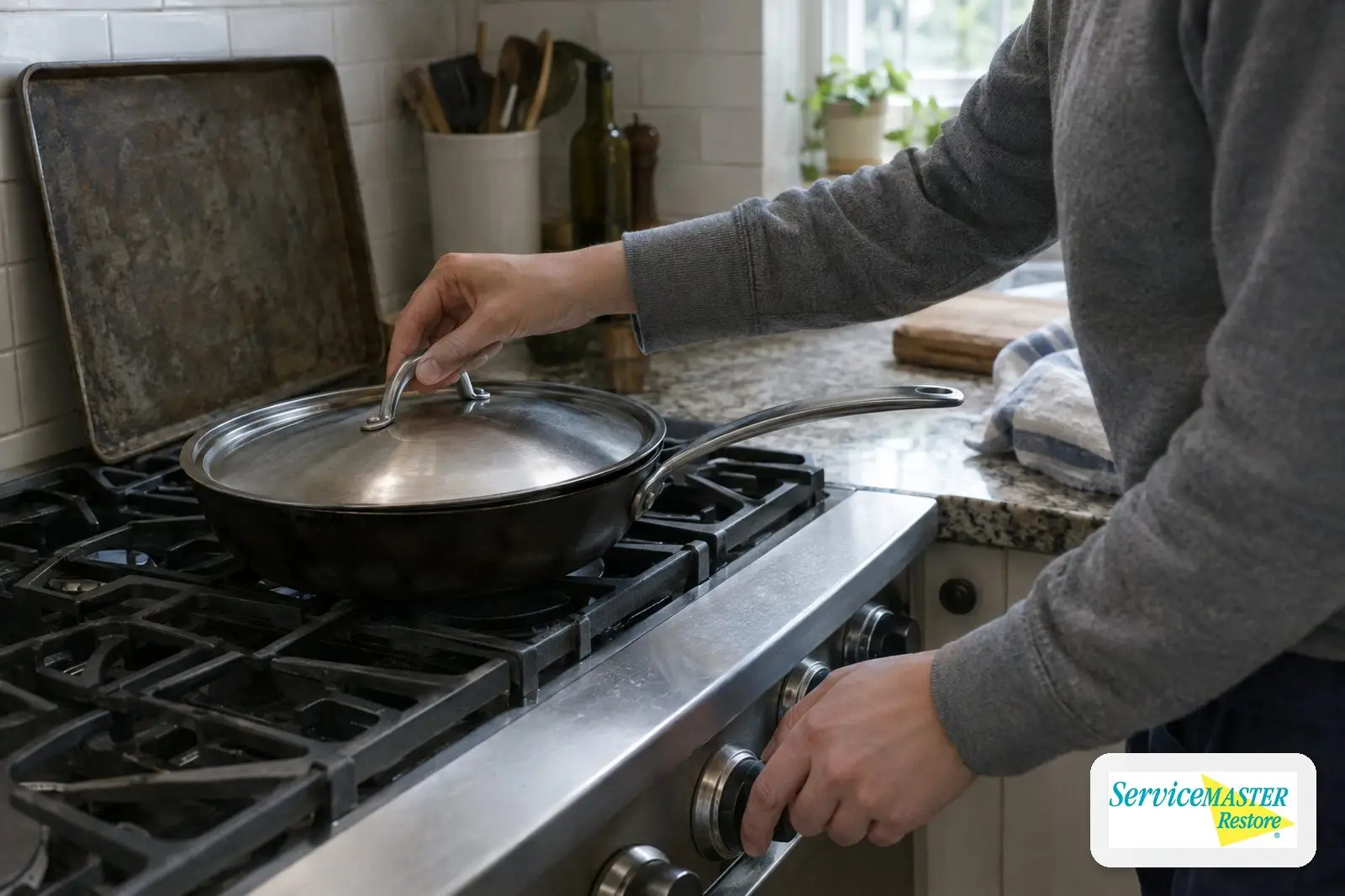
If a small grease fire starts on the stove, slide a lid over the pan and turn off the burner. Never use water. For an oven or microwave fire, turn off the heat and keep the door closed. If flames spread beyond the pan, or you have any doubt, get everyone out, close the door, and call 911 from outside.
Thanksgiving is the busiest day of the year for home cooking fires in the United States, and it isn’t close. The National Fire Protection Association (NFPA) estimates that 1,139 home cooking fires were reported to U.S. fire departments on Thanksgiving Day 2024, or 321 percent of the daily average. Christmas Day and Christmas Eve follow, each at nearly twice the daily average.
Whether you’re hosting in Naperville, Glen Ellyn, Darien or anywhere else in DuPage and Will County, here’s what causes kitchen fires, what to do in the first seconds, and how to handle the smoke, greasy soot and odor afterward.
Why kitchen fires are the most common home fire
Cooking is the leading cause of reported home fires and home fire injuries in the U.S. NFPA’s annual estimates for 2020 through 2024 show kitchen and cooking equipment involved in 48 percent of home structure fires, 35 percent of home fire injuries and 16 percent of home fire deaths. The same data shows:
- It usually starts with food. Two-thirds (66%) of home cooking fires begin when food or other cooking materials ignite.
- The stovetop is the main source. Ranges and cooktops account for 51% of incidents.
- Walking away is the biggest risk. Unattended equipment is a factor in about a quarter of home cooking fires and half of the related deaths.
NFPA’s full home cooking fires report (covering 2017 to 2021) found an average of 158,400 home cooking fires a year, with about $1.15 billion in direct property damage annually. Oil, fat and grease were the first items ignited in half of the fires that started with cooking materials, and fires peaked between 5:00 and 8:00 p.m. One finding stands out: more than half of non-fatal injuries happened when people tried to control the fire themselves.
How much of the home fire problem involves cooking?
Share of U.S. home fires, injuries and deaths involving kitchen and cooking equipment, annual estimates 2020 to 2024
48% of home structure fires
35% of home fire injuries
16% of home fire deaths
Bars drawn on a 0 to 100 percent scale. Source: NFPA Research, Cooking Fire Statistics.
What to do during a kitchen fire
Kitchen fires move fast, so the right move has to be automatic. NFPA, the U.S. Fire Administration (USFA) and the American Red Cross agree on the basics.
Grease or stovetop fire
Keep a lid next to the pan whenever you fry. If the oil catches, NFPA says to slide the lid over the pan and turn off the burner, then leave the cover on, because the fire could reignite if you lift it. The American Red Cross of Illinois and USFA note that a cookie sheet or baking sheet works too.
Never throw water on a grease fire. NFPA is blunt about this. The lid is your first tool, not the faucet. And if you see wisps of smoke or the oil smells, turn the burner off right away; smoke means the oil is already too hot.
Oven fire
Turn off the heat and keep the oven door closed. Opening it feeds the fire fresh air; a closed oven starves it. Afterward, have the fire department confirm nothing spread into the cabinets or wall.
Microwave fire
NFPA’s microwave safety tip sheet says to leave the door closed, turn the microwave off and unplug it. If the fire doesn’t go out, get outside and call the fire department.
When to get out and call 911
NFPA’s first line on cooking fires is “Just get out!” Close the door behind you to help contain the fire, and call 911 once you’re outside. USFA’s checklist for deciding whether to use a fire extinguisher says to use one only if every answer is yes: others are alerted, someone has called the fire department, the fire is small and contained to one object like a pan, you’re safe from the smoke, and you have a clear escape route. USFA adds that young children and older adults should not use extinguishers.
The first 30 seconds: a decision guide
Step 1. Is the fire still inside the pan, oven or microwave?
If it’s spreading to cabinets, walls or curtains, go straight to Step 4.
Step 2. Pan fire on the stovetop?
Slide a lid or baking sheet over it, turn off the burner, and leave it covered until cool. No water.
Step 3. Oven or microwave fire?
Turn it off and keep the door closed. Unplug the microwave if you can safely.
Step 4. Any doubt at all?
Get everyone out, close the kitchen door behind you, and call 911 from outside.
Sources: NFPA, USFA, American Red Cross (linked above).
Kitchen fire prevention checklist for the holidays
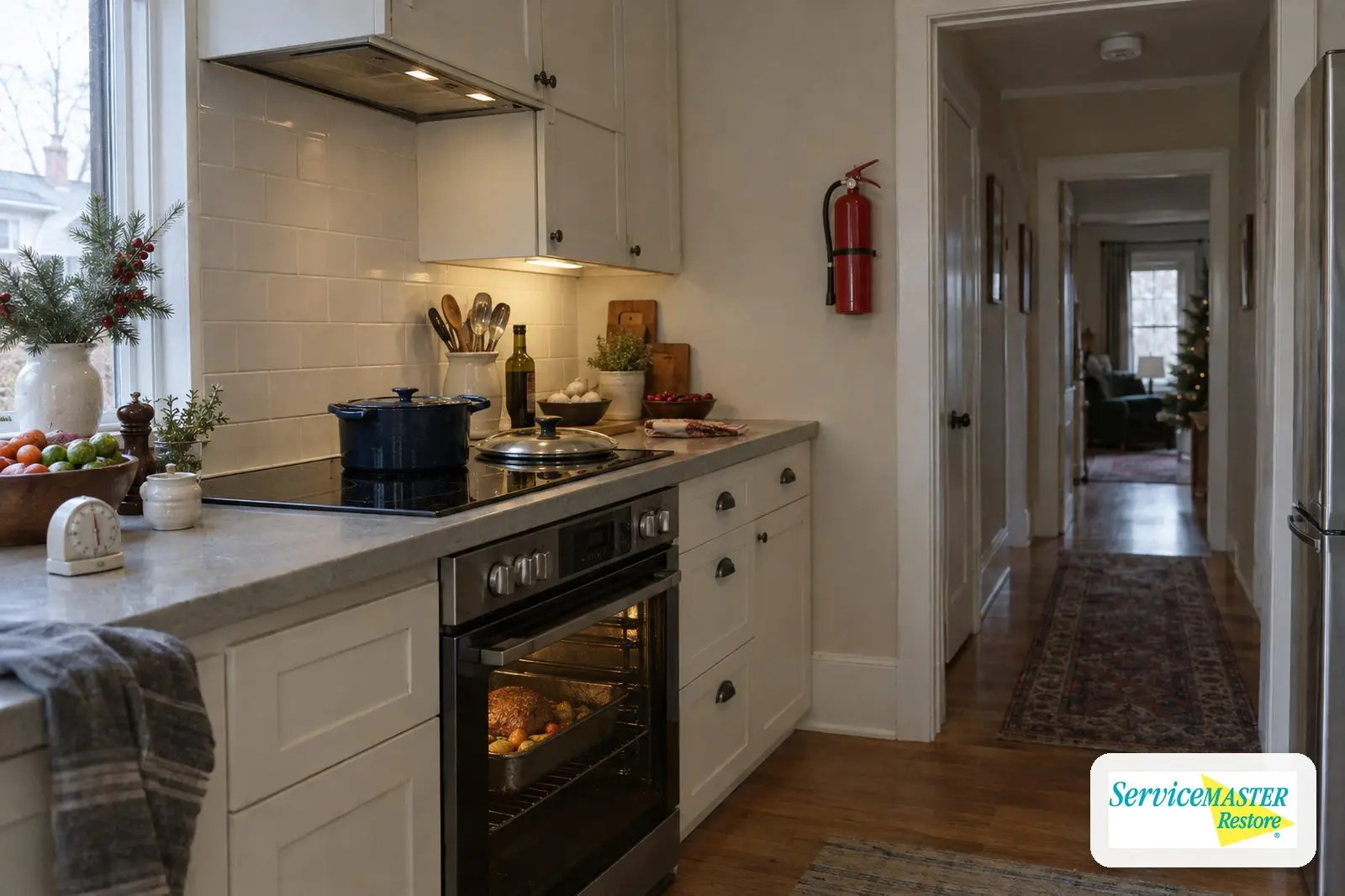
Holiday kitchens are where common sense slips. This checklist draws on NFPA, USFA and Red Cross guidance:
- Stay in the kitchen while frying, grilling, boiling or broiling. When simmering, baking or roasting, check regularly and use a timer.
- Turn the burner off if you leave the kitchen, even briefly.
- Keep a lid or baking sheet beside any pan with oil in it.
- Clear the stovetop zone of oven mitts, wooden utensils, packaging, towels and curtains, and turn pot handles toward the back.
- Keep kids and pets three feet from the stove, and avoid loose sleeves.
- Don’t cook drowsy or after drinking.
- Skip the oil turkey fryer. NFPA strongly discourages them and suggests buying a fried turkey or using an oil-free fryer.
- Test smoke alarms before guests arrive. The Red Cross recommends monthly tests and an escape plan everyone can complete in under two minutes.
- Keep a UL-listed extinguisher in the kitchen. USFA notes multipurpose “A-B-C” models cover most home fires.
After the fire: safety first
Even a fire that stayed in one pan can leave a mess. USFA’s recovery guide, After the Fire, covers the first steps:
- Don’t go back in until the fire department says it’s safe. Floors and walls may not be as sound as they look.
- Leave utilities alone. If firefighters shut off water, electricity or gas, don’t turn them back on yourself.
- Treat soot carefully. USFA warns that soot and dirty water may contain things that could make you sick.
- Secure the property if windows or doors were broken. An emergency board-up keeps weather and intruders out.
As for food, the USDA’s Food Safety and Inspection Service says saving food that’s been in a fire generally isn’t a good idea. Heat can make canned goods unsafe even when they look fine, and toxic fumes can get through cardboard, plastic wrap and even a refrigerator seal. Discard food exposed to smoke fumes or firefighting chemicals.
Smoke, soot and grease residue: why kitchen fires leave a different mess
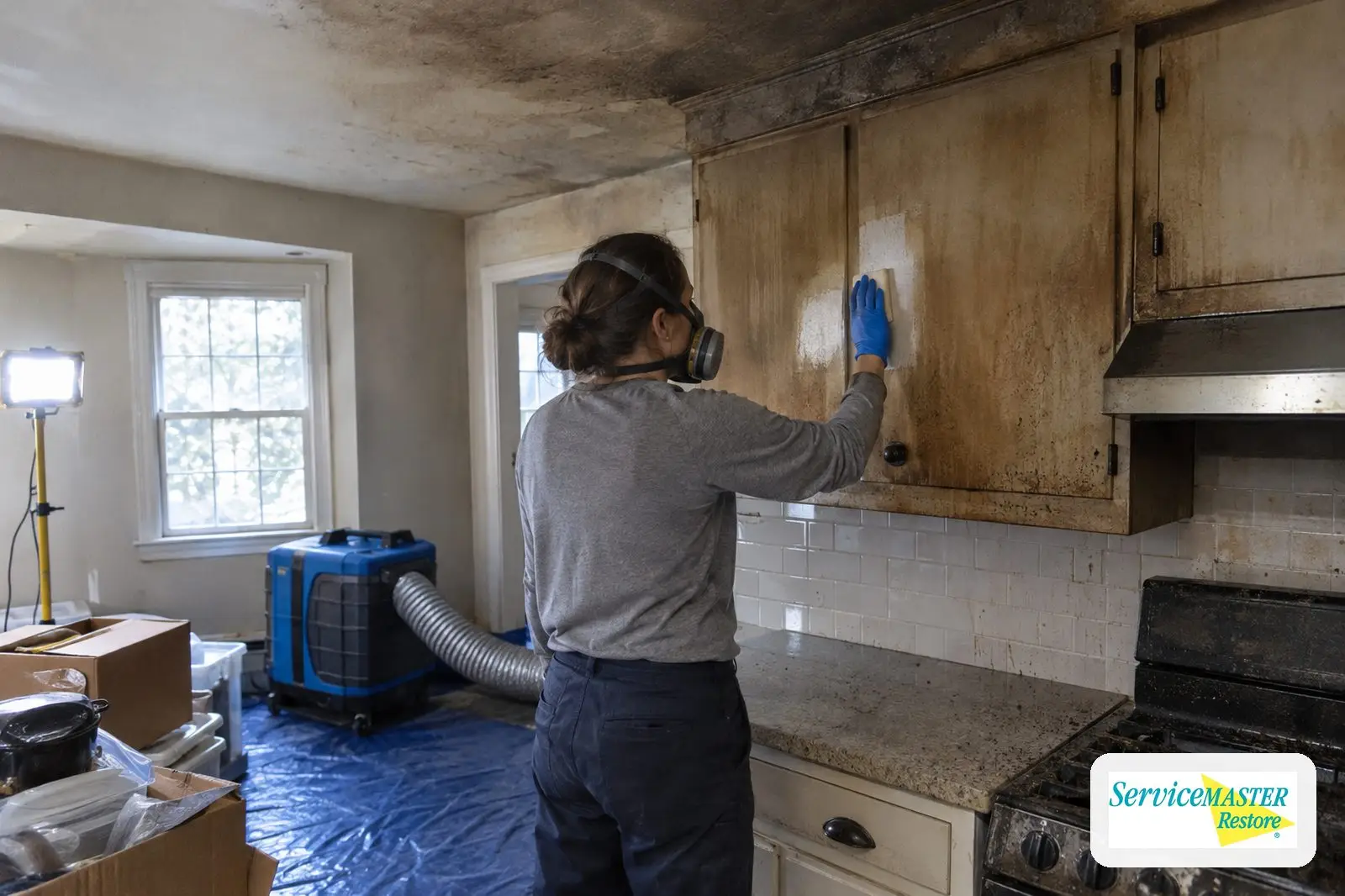
A kitchen fire rarely stays a kitchen problem. Smoke travels through doorways, up stairwells and into return vents, so a film can show up on bedroom walls on the far side of the house. Burned food and cooking oil tend to leave a sticky residue and a sharp odor, unlike the dry, powdery soot of a paper or wood fire. Our guide to the types of soot and smoke damage explains why each needs a different approach.
The trade now has a formal benchmark: the ANSI/IICRC S700 Standard for Professional Fire and Smoke Damage Restoration, which covers assessing fire residues and odors in buildings, systems and contents, then cleaning and deodorizing them. For a very light film in one room, you can ventilate, wear gloves and test a hidden spot first. If residue smears or spreads, stop; greasy soot pushed into paint and cabinet finishes turns a cleaning job into a repainting job. That’s when professional smoke and soot cleanup makes sense.
The odor that won’t leave
Smoke odor hides where you can’t wipe: inside cabinets, behind appliances, in insulation and in ductwork. If the furnace was running during the fire, it may have pulled smoke through the whole system. A smell that returns on a warm, humid day usually means the source is still there. See how to get smoke smell out of a house, or our odor removal and air quality treatment service for stubborn cases. If firefighters used hoses, wet drywall and cabinet bases also need proper water damage cleanup after firefighting.
Insurance documentation after a kitchen fire
The Insurance Information Institute (Triple-I) notes that a standard HO-3 homeowners policy lists fire and smoke among its covered perils, with limits and deductibles. Triple-I’s guidance on settling claims and USFA’s After the Fire line up on these steps:
- Call your insurer right away and ask what to do first.
- Get the fire incident report number from the fire department.
- Photograph or video the damage before cleaning, including smoke film in other rooms.
- Keep damaged items until the adjuster has seen them, and make an inventory for the adjuster.
- Prevent further damage and save every receipt, including board-up and, if you can’t stay home, hotel and meal costs. Triple-I says policies generally cover reasonable additional living expenses.
- Hold off on extensive permanent repairs until the adjuster has assessed the damage, and get written estimates.
We work with your insurance company and can help with the process; see our insurance claim assistance page.
This article is educational, not legal or insurance advice. Policies vary, so check your policy and ask your adjuster.
When a kitchen fire needs professional restoration
A pan fire that went out under a lid may only need cleaning and fresh air. Call a professional if you see soot or greasy film outside the kitchen, odor that returns after a few days of airing out, charred cabinets or walls, water or extinguisher residue, or an HVAC system that ran while smoke was in the air.
ServiceMaster Restoration Services has handled residential fire damage restoration across DuPage and Will County for over 20 years, with certified technicians available 24/7 for homes and businesses. Our fire damage services include soot cleanup, deodorization, drying and repairs, and we provide fire damage restoration in Glen Ellyn, Naperville and Darien from our Lisle headquarters. For a full walkthrough, read about the fire and smoke damage restoration process, or see our furnace puffback cleanup guide for another cold-weather soot problem.
Frequently Asked Questions
Can you put out a grease fire with water?
No. NFPA says never to throw water on a grease fire, because it can make burning oil spread and flare. Slide a lid or baking sheet over the pan, turn off the burner and leave it covered until the pan cools completely. If the fire doesn’t go out, get everyone out and call 911 from outside.
Should you open the oven door if there is a fire inside?
No. NFPA’s guidance for an oven fire is to turn off the heat and keep the door closed. Opening it lets in fresh air that can feed the flames while you’re standing right in front of it. Keep it shut until the fire is out, and if flames escape the oven, leave and call 911.
Is it safe to stay in the house after a small kitchen fire?
Only after the fire department says so. USFA advises against entering a fire-damaged home until firefighters confirm it’s safe, and warns that soot and dirty water may contain substances that could make you sick. Ventilate, keep children and pets away from soot, and throw out food exposed to heat or smoke.
Does homeowners insurance cover kitchen fire damage?
Often, yes. Triple-I lists fire and smoke among the perils covered by a standard HO-3 homeowners policy, though limits and deductibles apply and wording varies. Call your insurer promptly, photograph the damage, keep damaged items until the adjuster sees them, and save receipts for emergency repairs and extra living costs.
How do you get rid of the smoke smell after a kitchen fire?
Ventilate and remove the source first: burned food, scorched pans and soot-covered items. Wash hard surfaces gently after testing a hidden spot. If the smell keeps coming back, it’s likely trapped in cabinets, drywall, insulation or ductwork, and professional cleaning and deodorization, including the HVAC system, is usually what clears it.
Related guides and services
- Residential fire damage restoration
- Smoke and soot cleanup
- Odor removal and air quality treatment
- Water damage cleanup after firefighting
- Help with your fire insurance claim
- Types of soot and smoke damage explained
- How to get smoke smell out of a house
- Restaurant kitchen fire damage restoration
- All restoration guides
Dealing with smoke, soot or odor after a kitchen fire? Call ServiceMaster Restoration Services at (630) 241-1111, available 24/7 across DuPage and Will County, or contact us online.
Sources
- NFPA: Thanksgiving Fire Safety Information and Statistics
- NFPA: Cooking Safety and Cooking Fire Statistics (2020 to 2024)
- NFPA Research: Home Cooking Fires (Hall and McGree, August 2023)
- NFPA: Microwave Oven Safety Tip Sheet
- U.S. Fire Administration: Cooking Fire Safety
- U.S. Fire Administration: Choosing and Using Fire Extinguishers
- U.S. Fire Administration: After the Fire (FA-46)
- American Red Cross of Illinois: Have a Safe Thanksgiving, Cooking Safety Tips
- USDA Food Safety and Inspection Service: Fires and Food Safety
- Insurance Information Institute: Am I Covered?
- Insurance Information Institute: Settling Insurance Claims After a Disaster
- IICRC: ANSI/IICRC S700 Standard for Professional Fire and Smoke Damage Restoration