


What do professional cleaning services include for homes and businesses?
Professional cleaning services remove dust, soil and germs from homes and commercial buildings, either on a recurring schedule or as a one-time job. Residential plans focus on kitchens, bathrooms and living areas. Commercial plans follow a written scope for offices, stores and facilities. Most programs combine cleaning, sanitizing and targeted disinfecting.
ServiceMaster Restoration Services is headquartered in Lisle and has worked in homes and commercial buildings across DuPage & Will County for more than 20 years. This page explains how the two sides of professional cleaning differ, what the CDC means by cleaning, sanitizing and disinfecting, and how to decide how often your space actually needs it.
Residential vs. commercial cleaning: which one do you need?
The tasks overlap, but the way the work is planned is different. A home is cleaned around a family's routine. A commercial building is cleaned around occupancy, business hours and a written list of tasks that a facility manager can check.
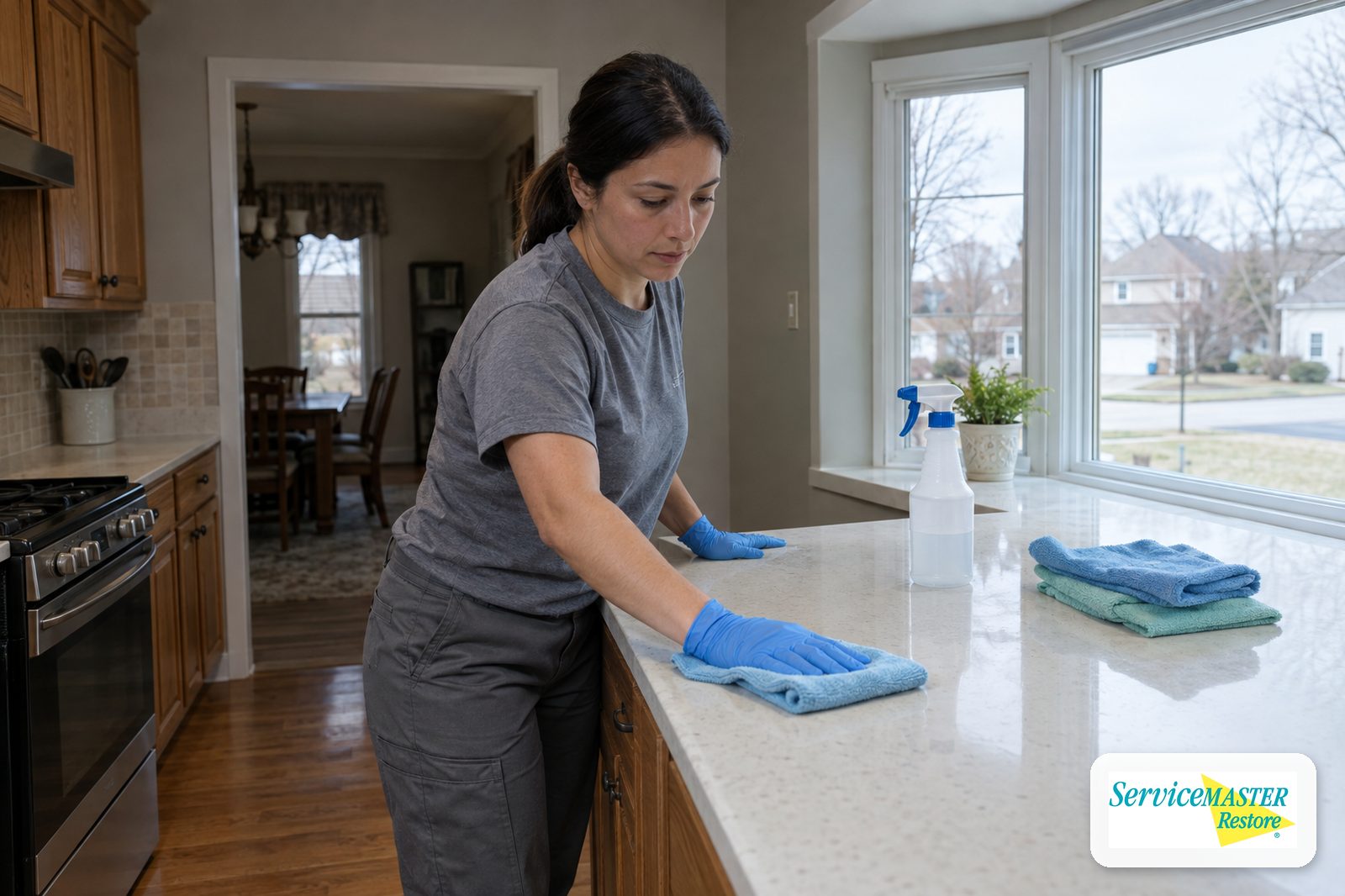
Residential cleaning
Home cleaning centers on the rooms that get the most use: kitchens, bathrooms, entryways and floors. Our residential cleaning services range from recurring visits to a top-to-bottom deep cleaning when a house needs a reset, and move-in and move-out cleaning when a property changes hands.
The scope is usually agreed room by room, with extra attention to anything a household cares about most, such as pet areas, a nursery or a finished basement.
Commercial cleaning
Businesses need consistency and documentation. Commercial cleaning services are built on a scope of work that lists each area, each task and how often it happens. Recurring janitorial maintenance covers the daily basics, while office cleaning and other specialized programs add the details a particular building needs. After a remodel or build-out, post-construction cleaning removes the fine dust that ordinary cleaning leaves behind.
What is the difference between cleaning, sanitizing and disinfecting?
These three words are often used as if they mean the same thing. They don't, and the difference decides which products are used, how long they stay on a surface and when each step is worth doing.
| Step | What it does | When it is typically used |
|---|---|---|
| Cleaning | Removes most germs, dirt and impurities from surfaces, usually with soap or detergent and water | Routinely, whenever surfaces are visibly dirty, and always before sanitizing or disinfecting |
| Sanitizing | Reduces germs to levels that public health codes or regulations consider safe | Food-contact surfaces and some nonporous items, such as certain toys |
| Disinfecting | Kills most germs on surfaces and objects, using a product applied for its full contact time | When someone is sick or at higher risk of getting sick, in addition to cleaning |
Source: CDC, When and How to Clean and Disinfect Your Home (2025)
Two practical rules come straight from that CDC guidance. First, clean before you disinfect, because dirt left on a surface gets in the way of the disinfectant. Second, a disinfectant only works if the surface stays wet for the contact time printed on the label. A quick spray-and-wipe often falls short of it.
CDC also advises never mixing cleaning products or chemicals with each other, keeping rooms ventilated while using them and storing them out of reach of children and pets.
How does professional cleaning support a healthier indoor environment?
Most of us spend far more time inside than out. According to the EPA's report on indoor air quality, Americans spend approximately 90 percent of their time indoors, where concentrations of some pollutants are often 2 to 5 times higher than typical outdoor levels.
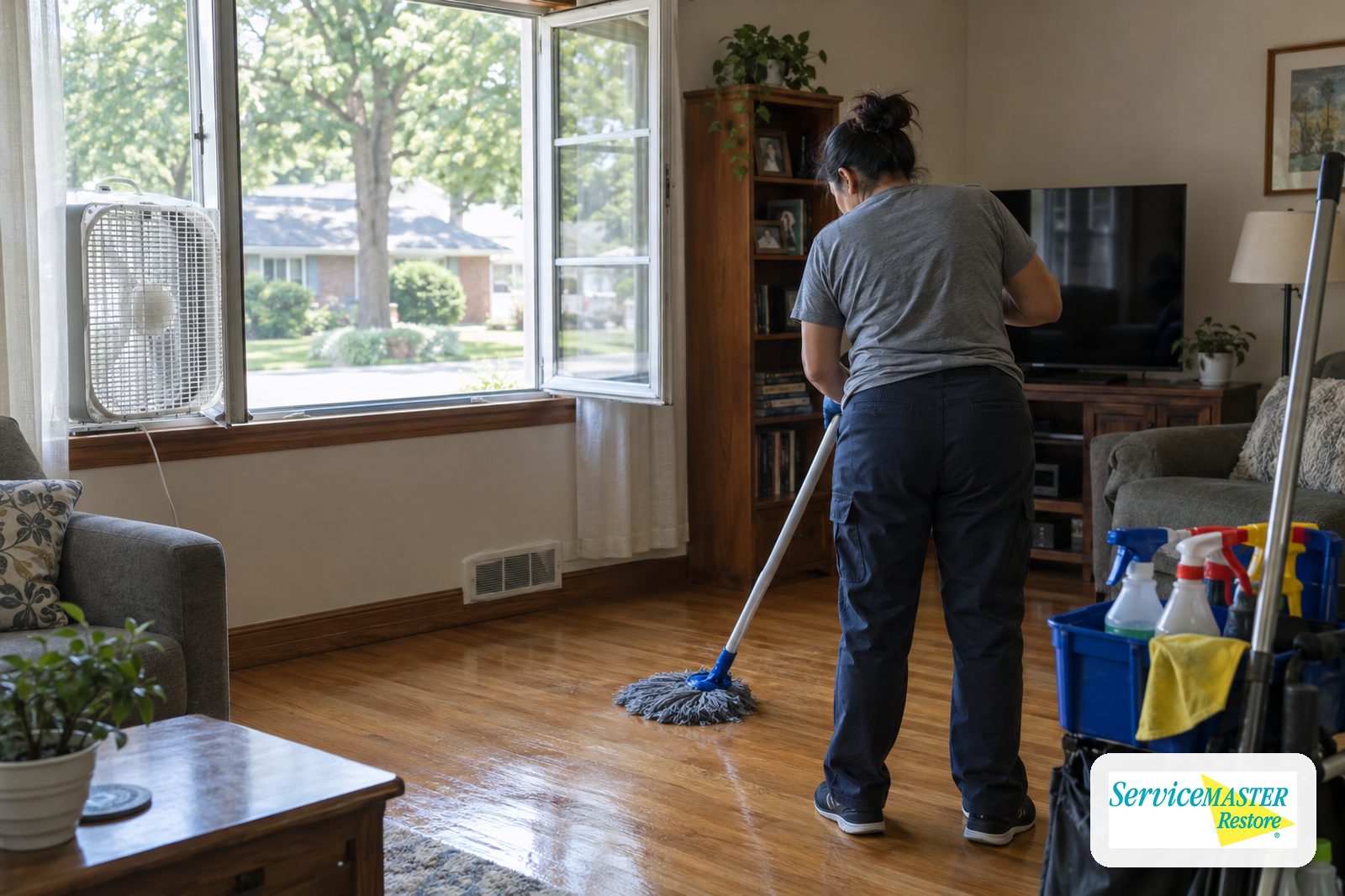
Cleaning products are part of the picture
Regular dust and soil removal helps, but the products themselves matter too. The EPA lists cleansers and disinfectants among household products that release volatile organic compounds (VOCs). Its guidance on VOCs and indoor air recommends increasing ventilation and following label instructions carefully when using them.
One way to choose lower-hazard products is the EPA's Safer Choice label. It is a voluntary program: EPA reviews every chemical ingredient in a labeled product, regardless of percentage, and the product must perform comparably to conventional ones. Ask any cleaning provider which products they use and whether a Safer Choice option fits your space.
Moisture control matters as much as cleaning. Dust and grime are easy to remove, but a damp basement or a slow leak can lead to mold growth that no wipe-down will fix. Our guide to mold signs and health risks explains when a cleaning problem is really a moisture problem.
How often should a home or business be cleaned?
There is no single right schedule. CDC suggests cleaning high-touch surfaces such as light switches, doorknobs and countertops regularly, and cleaning other surfaces when they are visibly dirty or as needed. In practice, frequency depends on a few factors:
- Traffic and occupancy. A busy office or store needs more frequent service than a two-person household.
- Who is in the space. Young children, older adults or someone who is sick are reasons to add disinfecting to routine cleaning.
- Pets and hobbies. Shedding, litter and workshop dust build up fast.
- Season. In Chicago-suburb winters, slush and road salt are tracked through entrances and onto floors, so entry areas often need more attention from November to March.
- Events. Renovations, moves, parties and seasonal resets usually call for a one-time deep clean on top of any routine plan.
What happens during a professional cleaning visit?
Whether the space is a three-bedroom house or a 20,000-square-foot office, most professional cleaning follows the same basic order of operations used across the industry:
- Walkthrough and scope. The technician confirms which rooms and tasks are included and notes any surfaces that need special products or care.
- Dry soil removal. Dusting works from high to low so debris falls onto floors that have not been cleaned yet.
- Wet cleaning. Counters, fixtures and hard surfaces are cleaned with detergent and water to remove the dirt that would otherwise block a disinfectant.
- Sanitizing or disinfecting. Where needed, a registered product is applied to high-touch and food-contact surfaces and left wet for its labeled contact time.
- Floors last. Vacuuming and mopping finish the job so nothing is tracked back onto clean surfaces.
- Final inspection. The space is checked against the agreed scope before the visit ends.
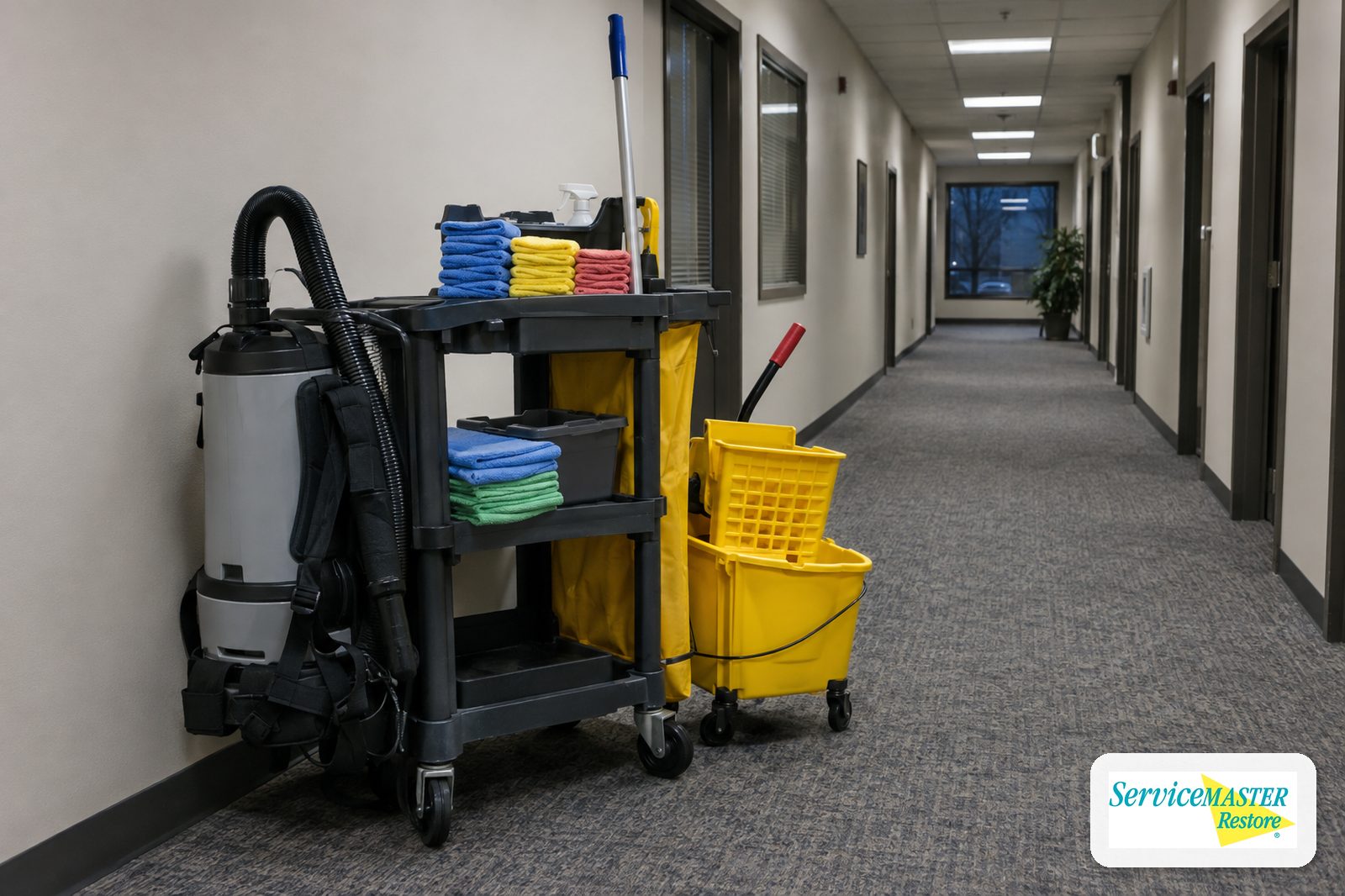
One-time or recurring?
Many clients start with a single deep clean to bring a space up to a baseline, then move to a lighter recurring schedule. Recurring visits cost less effort each time because buildup never gets the chance to set in.
Cleaning services near you in DuPage & Will County
From our Lisle office we serve homes and businesses throughout the western suburbs, including cleaning services in Naperville, Downers Grove, Bolingbrook and Lisle. Housing here ranges from older homes with original hardwood floors to newer builds with large finished basements, and business space ranges from small storefronts to multi-tenant office buildings, so every plan starts with a walkthrough rather than a one-size checklist.
Tell us about your space through our contact page, or call (630) 241-1111 to set up a walkthrough and a cleaning plan that fits your home or business.
Frequently asked questions
Is sanitizing the same as disinfecting?
No. CDC defines sanitizing as reducing germs to levels that public health codes or regulations consider safe, which is typical for food-contact surfaces. Disinfecting kills most germs on surfaces and objects and is usually reserved for high-touch surfaces or for times when someone in the home or building is sick. Both work better on a surface that has been cleaned first.
Do professional cleaners bring their own supplies and equipment?
Most professional cleaning services bring their own vacuums, cloths, mops and products, and recurring commercial contracts spell out who supplies consumables such as paper towels, soap and trash liners. If you prefer a specific product or have sensitivities, say so during the walkthrough so it can be written into your plan.
What does a disinfectant's contact time mean?
Contact time is how long a disinfectant must stay wet on a surface to kill the germs listed on its label. CDC and EPA both say the surface should remain wet for that entire time. Wiping a product off immediately after spraying it usually means the surface was cleaned but not fully disinfected.
Can I book a one-time cleaning instead of a recurring plan?
Yes. One-time cleanings are common before a move, after a remodel, ahead of a family event or as a seasonal reset. Many people start with a single deep clean to reach a clean baseline, then decide whether a lighter recurring schedule makes sense for their home or business.
Which areas do you serve for cleaning services?
Our cleaning services cover homes and businesses throughout DuPage & Will County from our headquarters at 924 Ogden Ave in Lisle, including Naperville, Downers Grove, Bolingbrook, Woodridge, Lombard and many nearby communities. Call (630) 241-1111 to confirm service at your address and schedule a walkthrough.
Sources
- Centers for Disease Control and Prevention (CDC): When and How to Clean and Disinfect Your Home
- U.S. Environmental Protection Agency (EPA): Report on the Environment: Indoor Air Quality
- U.S. EPA: Volatile Organic Compounds' Impact on Indoor Air Quality
- U.S. EPA: Learn About the Safer Choice Label