


What is included in a move-in or move-out cleaning?
A move-in or move-out cleaning is a detailed clean of an empty home. It covers inside every cabinet, drawer and closet, inside the oven, refrigerator and dishwasher, bathrooms top to bottom, baseboards, sills, light fixtures and floors. With furniture gone, every surface is reachable, so the goal is a home ready for a final walkthrough or a new household.
Who books move-out cleaning, and why?
The same service solves different problems depending on which side of the move you are on.
Tenants
Renters book move-out cleaning to return a unit in the condition the lease expects. Illinois Legal Aid Online explains that if a tenant leaves a property in disrepair, the landlord may use the deposit to clean the apartment, fix damage and replace broken parts. Photos of each clean room, taken on move-out day, give you a record if a question comes up later.
Landlords and property managers
Owners use it to turn a unit between tenants. A clean, documented unit makes it easier to separate normal wear from actual damage, and it shortens the time before new tenants move in.
Sellers
Empty houses photograph and show differently than furnished ones. Scuffed baseboards and dusty vent covers stand out once the furniture is gone, and many purchase agreements expect the home to be left broom-clean or better at closing.
Buyers and new tenants
A move-in clean lets you start fresh before your belongings arrive, when shelves, closets and the inside of cabinets are easy to reach. If you want handles, switches and faucets disinfected, the EPA advises following the label directions, including the contact time the surface must stay wet.
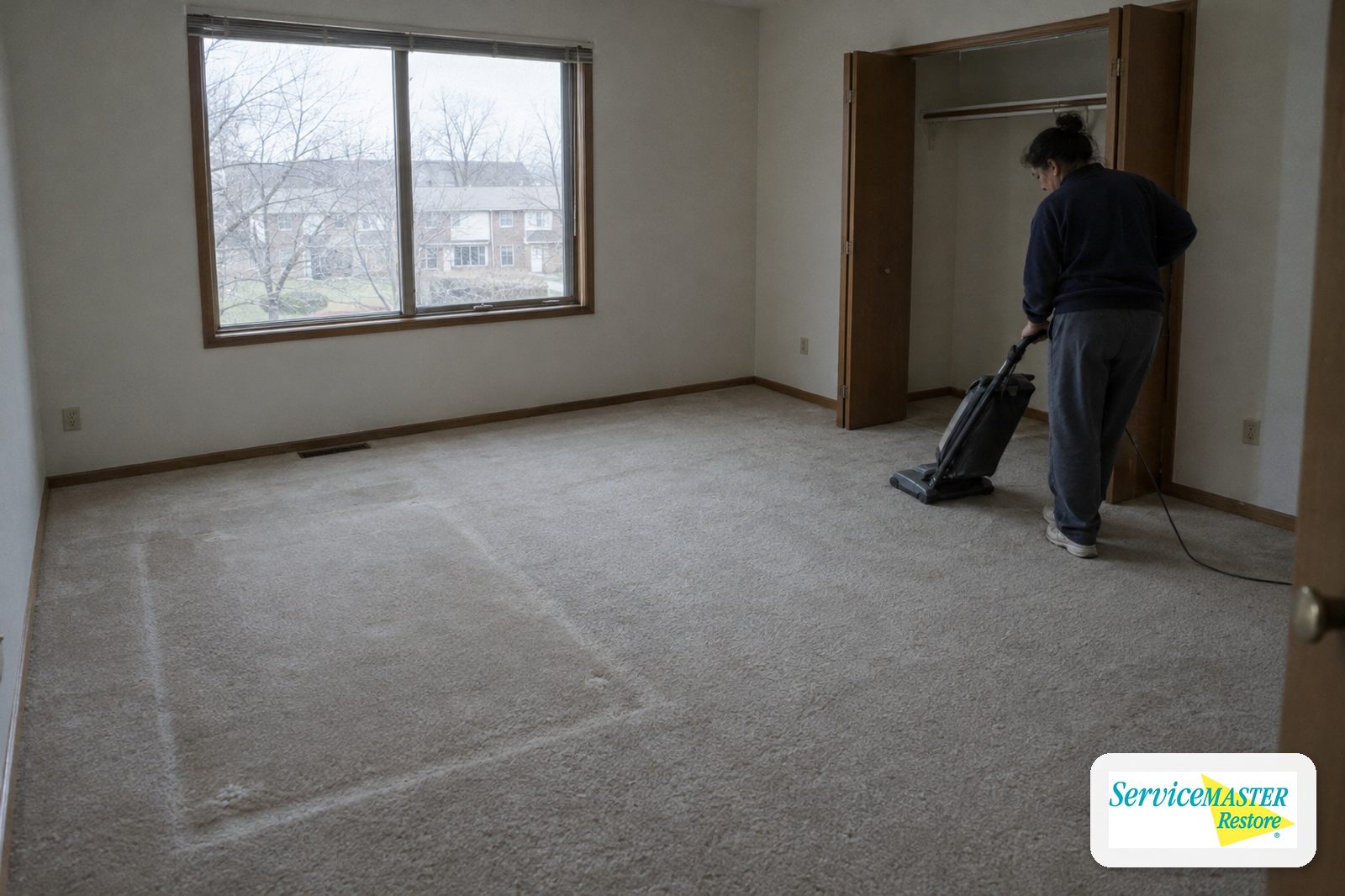
Empty rooms show everything
Furniture hides a lot. Once it is gone, you see the dust line where a dresser stood, the grime behind the refrigerator, and the marks along hallway walls where boxes rubbed on the way out.
That is why move-out cleaning goes further than a typical deep clean: there is nothing to work around, so nothing gets skipped.
What does Illinois law say about security deposits?
The Illinois Security Deposit Return Act (765 ILCS 710) sets the timeline a landlord must follow before keeping any part of a deposit for property damage. This is a plain-language summary for general education, not legal advice. Leases differ, and some municipalities have their own ordinances, so check your lease and local rules or talk to an attorney about your situation.
| Deadline | What the Act requires |
|---|---|
| Within 30 days | To withhold any amount for damage, the landlord must give the tenant an itemized statement of the damage and the estimated or actual cost of each repair, with paid receipts or copies attached. The 30 days run from move-out or the end of the right of possession, whichever is later. |
| Within 30 days of an estimate | If the statement gave estimated costs, the landlord must send the paid receipts or copies within 30 days of furnishing that statement. |
| Within 45 days | If no statement and receipts are provided as required, the landlord must return the full deposit within 45 days of the date the tenant vacated. |
| Lease-specified costs | A written lease may set cleaning or repair costs for specific items, but those costs must be for damage beyond normal wear and tear. |
| If the rules are broken | If a court finds the landlord refused to supply the statement, or supplied it in bad faith, and did not return the amount due, the landlord is liable for twice the deposit due plus court costs and reasonable attorney's fees. |
Source: Illinois General Assembly, Security Deposit Return Act, 765 ILCS 710/1 (as amended by P.A. 103-224, eff. 1-1-24). Summary only; read the statute for exact wording.
What this means in practice: a documented, thoroughly cleaned unit gives both sides a clear starting point when the itemized statement is prepared.
Move-out cleaning checklist by room
Kitchen
- Inside and outside of refrigerator, freezer, oven, microwave and dishwasher
- Inside every cabinet and drawer, including crumbs in corners and shelf liners removed if they are yours
- Range hood, backsplash, counters and sink
- Floor, including the space where the refrigerator and range sit if they can be moved safely
Bathrooms
- Toilet, tub, shower, tile and grout
- Inside the vanity, medicine cabinet and drawers
- Mirror, fixtures, exhaust fan cover and floor
Bedrooms, living areas and closets
- Closet shelves, rods and floors
- Baseboards, door frames, doors and switch plates
- Window sills and tracks, blinds and light fixtures
- Scuff marks spot-cleaned where the paint finish allows
- Carpets vacuumed and hard floors mopped, room by room toward the exit
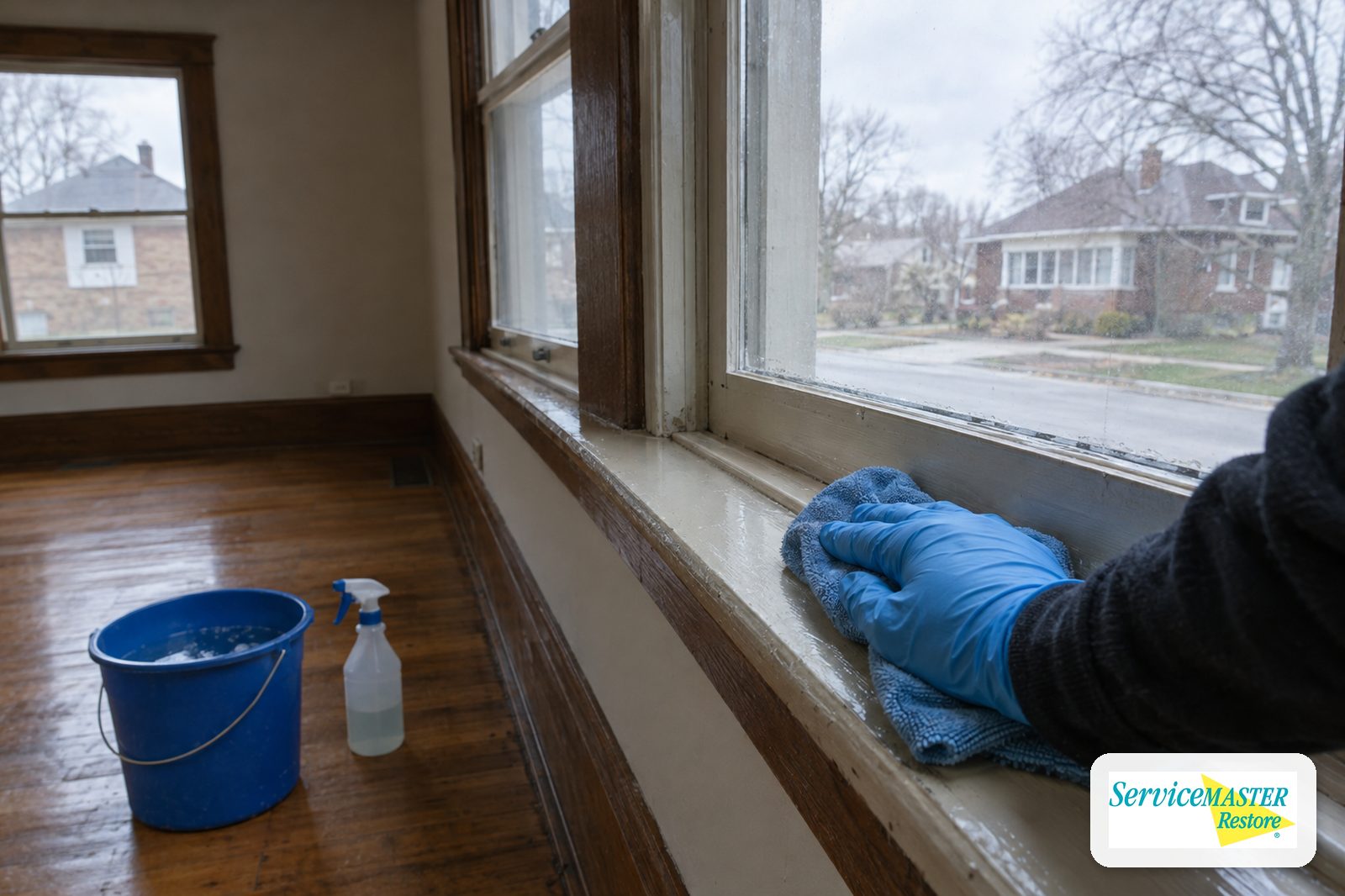
Moving into an older home
If the home was built before 1978, dust may contain lead from old paint. The EPA says dust from lead-based paint used before 1978 is the most common cause of lead exposure in the U.S., and recommends cleaning with a wet or damp cloth, sponge or mop to minimize dust.
For a move-in clean in an older house, damp-wiping sills, floors and closet shelves is a sensible approach. Dry sanding or scraping peeling paint is renovation work with its own rules, not cleaning.
How should cleaning be timed with movers?
Timing is where most move-out cleanings go wrong. Cleaning before the movers finish means tracked-in dirt and new scuffs. Cleaning on closing morning leaves no room for a missed spot. This sequence works for most moves:
- Confirm utilities. Water, power and hot water should stay on through the cleaning date, since appliance and bathroom cleaning depends on them.
- Movers go first. Schedule cleaning after the last box and piece of furniture are out, so every surface is open.
- Empty the refrigerator early. Unplug it only if the owner or lease allows, and prop doors open to prevent odor.
- Clean top to bottom. High surfaces and fixtures come first, then cabinets and appliances, then baseboards and floors.
- Work toward the exit. Floors are finished room by room toward the door so no one walks across clean areas.
- Document. Take date-stamped photos of every room, including inside appliances and cabinets.
- Final walkthrough. Walk the home with the landlord, agent or buyer if possible, while you can still fix anything noted.
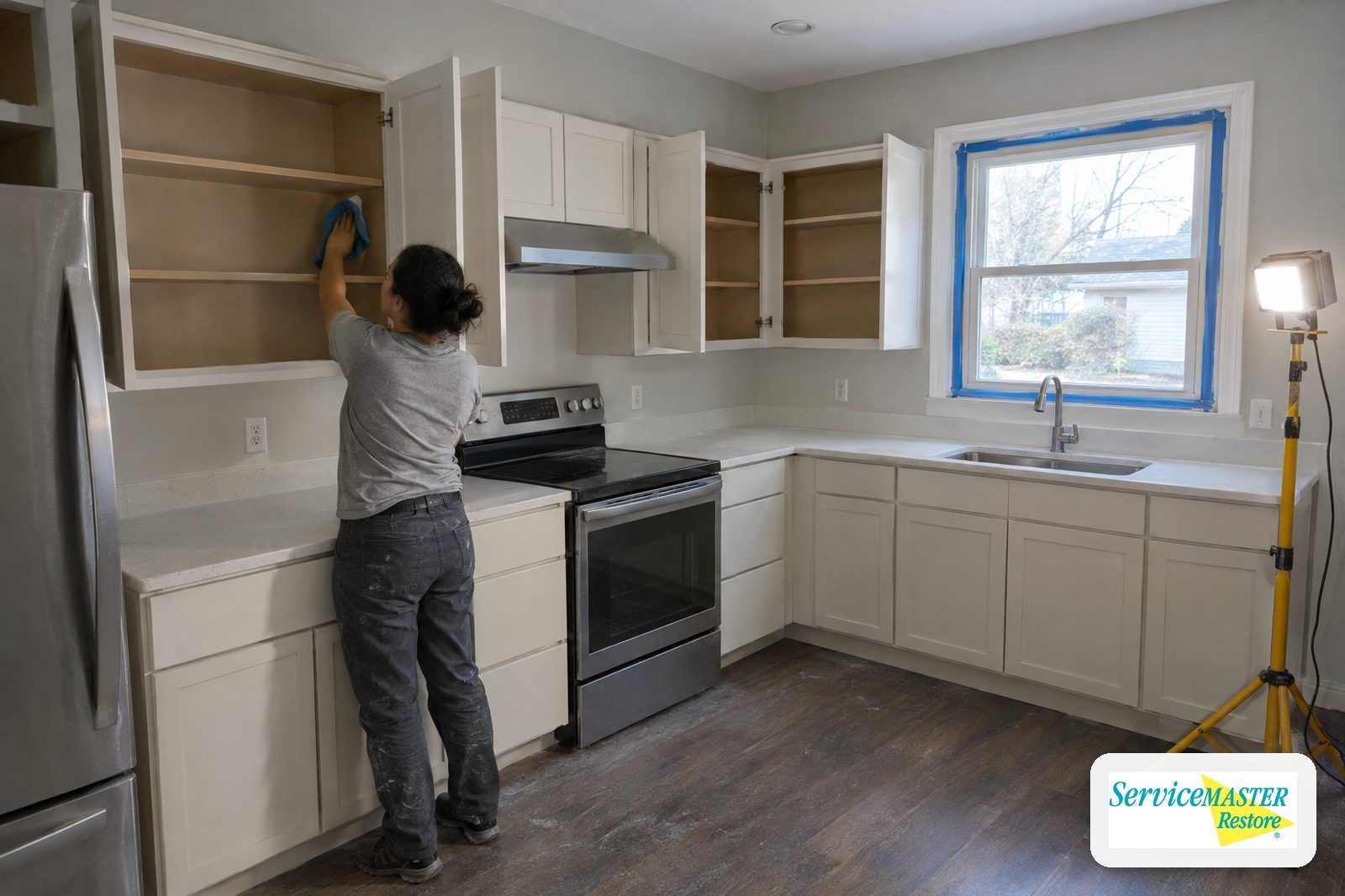
After a renovation or before a listing
Sellers who painted, refinished floors or updated a kitchen before listing often find a layer of fine dust in cabinets and on window sills. That dust keeps settling for days, so it calls for post-construction cleaning rather than a single pass.
Found mold in a closet or under a sink in a vacant unit? A home that sat closed up can develop growth. Our guide to black mold signs explains when it needs more than cleaning.
Move-in and move-out cleaning in DuPage and Will County
Summer moves in the Chicago suburbs mean doors propped open on humid days, and winter moves bring their own challenge: salt, slush and wet boots across empty floors for hours. Either way, cleaning after the movers leave works better than cleaning around them.
From our Lisle headquarters, we provide move cleaning as part of our residential cleaning services, including homes and rentals covered by our pages for cleaning services in Aurora, Warrenville, West Chicago, Villa Park and Lemont. Browse all options on the cleaning services overview.
Planning a move? Contact us or call (630) 241-1111 to schedule cleaning around your moving date.
Frequently asked questions
When should move-out cleaning be scheduled?
After the movers have taken the last load and before the final walkthrough or key handoff. Cleaning earlier means new scuffs and tracked-in dirt, while cleaning on the last morning leaves no time to fix a missed spot. Keep water, power and hot water on through the cleaning date.
Can a landlord charge for cleaning out of my security deposit in Illinois?
Illinois Legal Aid Online explains that a landlord may use the deposit to clean, fix damage and replace broken parts if a tenant leaves the property in disrepair, but normal wear and tear is not a lawful deduction. The landlord must follow the Security Deposit Return Act timelines. This is general information, not legal advice.
What should tenants photograph on move-out day?
Take date-stamped photos or video of every room after cleaning: floors, walls, baseboards, inside the oven, refrigerator, dishwasher, cabinets and closets, plus bathrooms and windows. Wide shots show overall condition and close-ups record specific areas. Keep them with your move-in photos and lease.
Is move-in cleaning necessary if the previous owner cleaned?
It is optional, but many new owners and tenants prefer it. Previous occupants often clean visible surfaces while skipping the inside of cabinets, appliance interiors, vent covers and closet shelves. Cleaning before your belongings arrive is the one time every surface is empty and easy to reach.
Do sellers need a move-out clean before closing?
Check your purchase agreement, because the expected condition at closing is set there and terms vary. Even when the contract only calls for broom-clean, a thorough clean helps the final walkthrough go smoothly, and it makes listing photos of empty rooms look cared for instead of neglected.
Sources
- Illinois General Assembly: Security Deposit Return Act, 765 ILCS 710
- Illinois Legal Aid Online: Security deposits (Guide)
- U.S. Environmental Protection Agency: Learn about Lead
- U.S. Environmental Protection Agency: What's the difference between products that disinfect, sanitize, and clean surfaces?