


What is post-construction cleaning?
Post-construction cleaning removes the fine dust, debris, adhesive and paint residue left after a remodel, addition or commercial build-out. It is usually done in three phases: a rough clean, a final clean and a touch-up clean. HEPA vacuuming and damp wiping capture construction dust instead of pushing it back into the air and HVAC system.
Construction dust is not ordinary household dust. It is finer, heavier in places and it settles for days after the tools are packed up. This section explains the phases of a post-construction clean, why the dust deserves respect, how it reaches ductwork and how home remodels differ from commercial build-outs.
What happens in the rough, final and touch-up phases?
Builders and cleaning contractors commonly divide the work into three passes, timed to the construction schedule:
- Rough clean. Done once major trades finish but before final fixtures and flooring touch-ups. Debris, scrap, packaging and the heaviest dust are removed so finish work starts on a clean shell.
- Final clean. Done after the last trade leaves. Every surface is HEPA-vacuumed and damp-wiped from top to bottom: ceilings and vents, light fixtures, walls, trim, doors, windows and tracks, cabinets inside and out, fixtures and appliances. Labels, stickers and overspray are removed, then floors are cleaned for their material.
- Touch-up clean. Done just before move-in or turnover, much like a move-in cleaning. Dust that settled after the final clean, plus marks left by punch-list repairs, is cleaned so the space is ready for occupants.
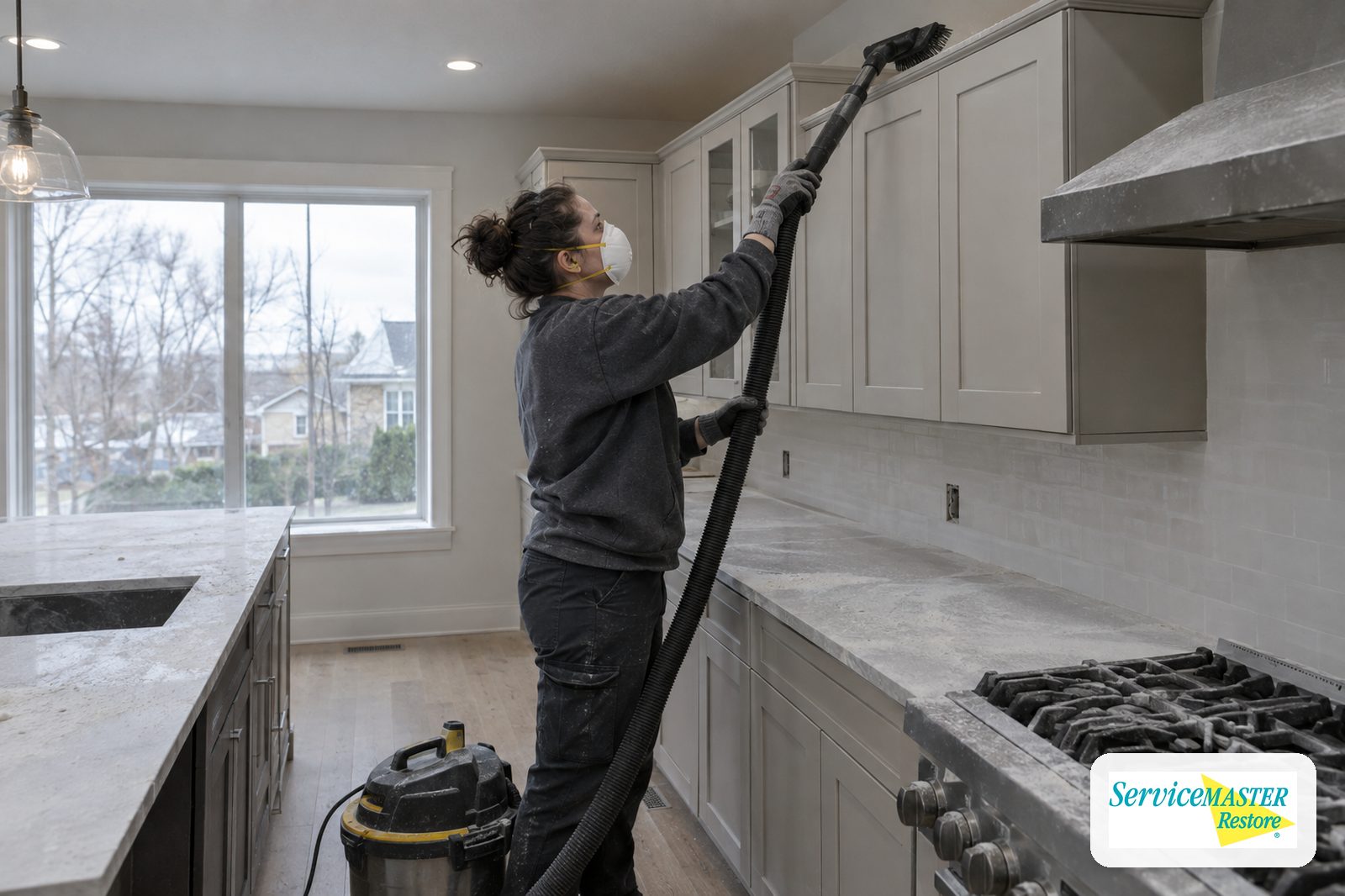
Why three passes instead of one?
Fine dust stays airborne and keeps settling for a while after work stops. A single clean done the day the drywall crew leaves usually needs repeating. Spacing the passes lets each one remove what the last one couldn't reach yet.
Why is construction dust a health concern?
Much of it comes from materials that contain crystalline silica. According to OSHA's crystalline silica overview, sand, stone, concrete and mortar contain crystalline silica, and respirable particles at least 100 times smaller than ordinary sand are created when those materials are cut, sawed, ground or drilled. OSHA lists silicosis, lung cancer, chronic obstructive pulmonary disease and kidney disease among the risks for workers who inhale it, and estimates about 2.3 million people in the U.S. are exposed at work.
OSHA's construction standard, 29 CFR 1926.1153, sets a permissible exposure limit of 50 micrograms per cubic meter of air as an 8-hour time-weighted average, with an action level of 25. Its housekeeping rules directly shape how construction dust should be cleaned:
| Method | What 29 CFR 1926.1153 says |
|---|---|
| Dry sweeping or dry brushing | Not allowed where it could contribute to silica exposure, unless wet sweeping, HEPA-filtered vacuuming or other low-exposure methods are not feasible |
| Wet sweeping | Named as a method that minimizes the likelihood of exposure |
| HEPA-filtered vacuuming | Named as a method that minimizes the likelihood of exposure; a HEPA filter is at least 99.97 percent efficient at removing 0.3-micrometer particles |
| Compressed air for clothing or surfaces | Not allowed where it could contribute to exposure, unless paired with ventilation that captures the dust cloud or no alternative is feasible |
Source: OSHA, 29 CFR 1926.1153 Respirable crystalline silica, paragraphs (b) and (f)
The standard applies to employers and their workers in construction. For anyone cleaning up after a project, the lesson is the same: capture dust, don't stir it. HEPA vacuums and damp methods do that; dry brooms and compressed air stir fine particles back into the air. That matters beyond the jobsite too: EPA's page on indoor particulate matter notes that small particles, less than 10 micrometers in diameter, can get deep into the lungs.
Why does construction dust get into the HVAC system?
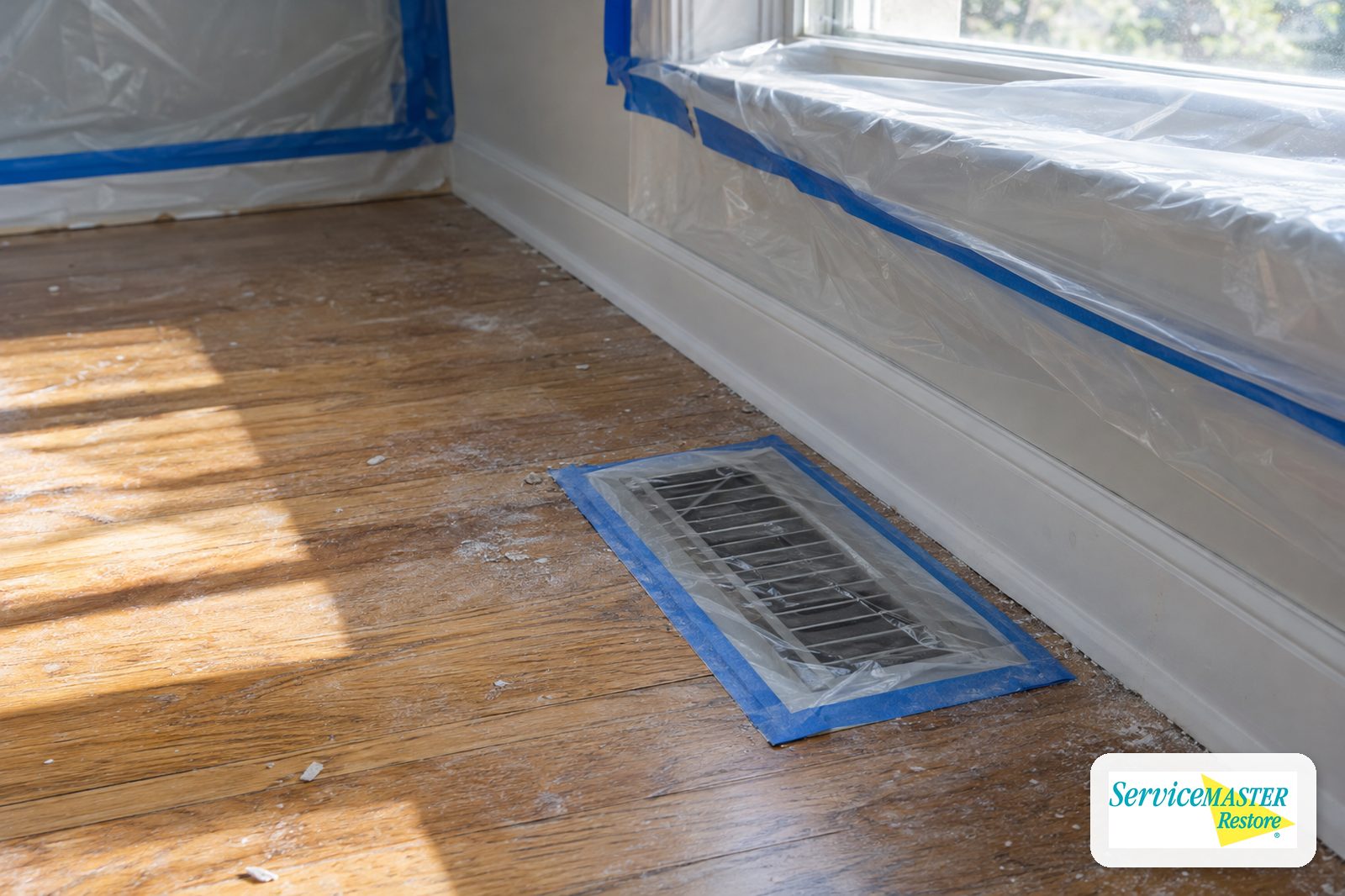
Registers are open doors for dust
Any running furnace or air handler pulls air, and dust, through return grilles and spreads it through the ducts to every room. That is why EPA's guidance on whether to have air ducts cleaned says to seal off supply and return registers during dusty construction or renovation work, and not to operate the heating and cooling system until after the dust is cleaned up.
After the project, EPA recommends using the highest-efficiency filter the system's manufacturer recommends and checking that no filters are missing and air can't bypass them through gaps. A filter changed at the end of the job is a cheap step that keeps leftover dust from circulating. EPA also notes that duct cleaning may be worth considering when ducts are clogged with excessive dust and debris, or particles are actually released from supply registers.
How do residential remodels and commercial build-outs differ?
Residential remodels
Home projects such as kitchens, baths and basement finishes are often done while the family lives in the house. Dust escapes containment along hallways and stairs, so the clean usually extends beyond the work area. Cabinets, appliances and new fixtures need material-safe products, since abrasive pads and strong solvents can damage finishes on day one.
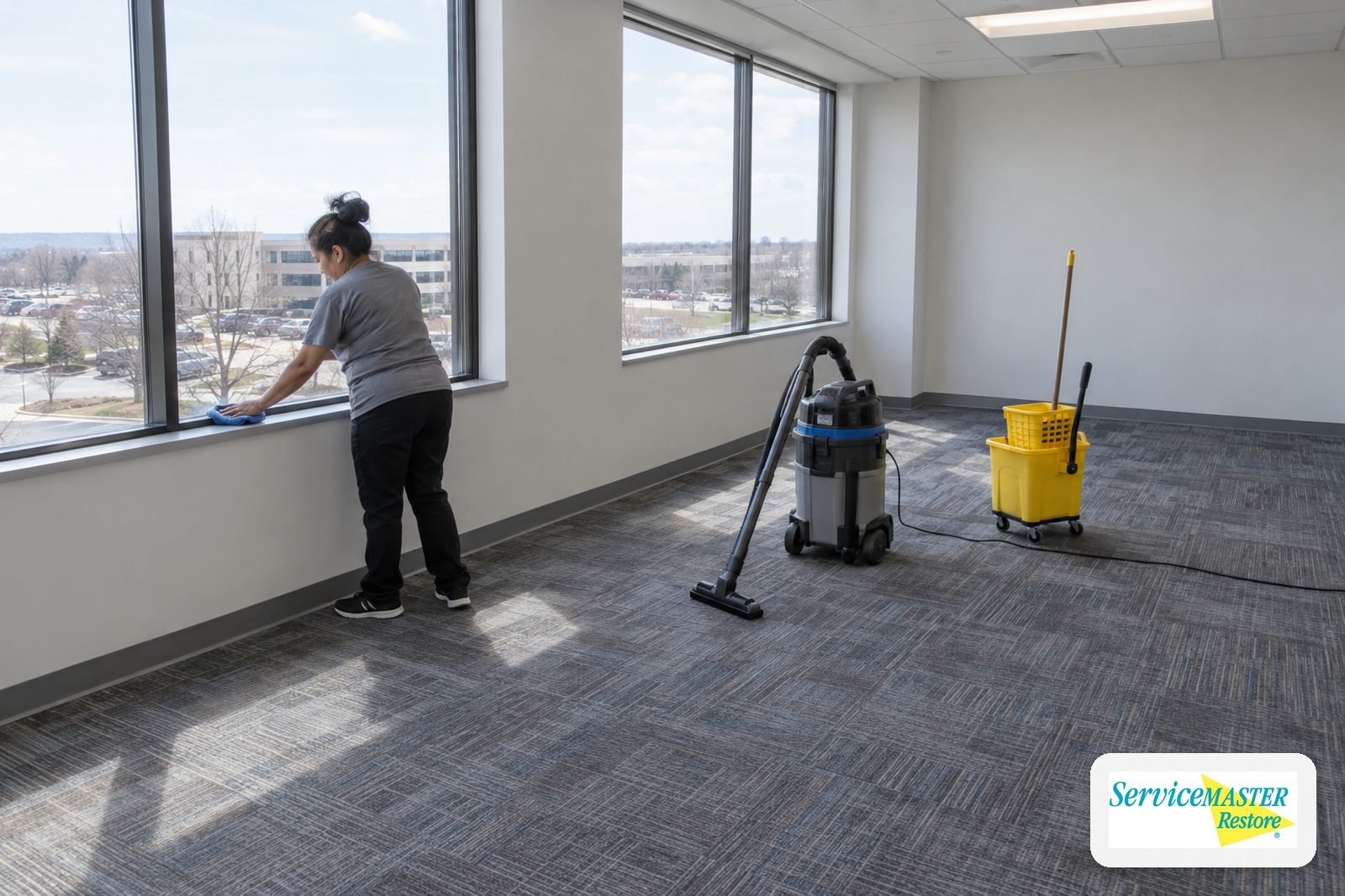
Commercial build-outs
Tenant improvements, office suites and retail fit-outs run on tight turnover dates. The clean is coordinated with the general contractor's punch list, often across multiple trades, and the final pass has to leave the space ready for furniture, inspections or opening day. Large spaces add high dusting, hard-floor scrubbing and carpet cleaning.
Post-construction cleaning is also the last step of many restoration projects. After water or fire damage, repairs and reconstruction are followed by a final clean, as our guide to the fire and smoke restoration process describes. If the work is part of an insurance claim, insurance claim assistance can help with documentation; policies vary, so check your policy for what it covers.
Post-construction cleaning in DuPage & Will County
From our Lisle headquarters we clean after remodels and build-outs across the area, from older homes in Hinsdale and Glen Ellyn to newer neighborhoods and commercial spaces in Naperville and post-construction cleaning in Plainfield. It is one of our cleaning services for both homeowners through our residential cleaning services and businesses through our commercial cleaning services. For an ongoing reset after the dust settles, our deep cleaning services are a natural next step.
Tell us about your project through our contact page, or call (630) 241-1111 to schedule your post-construction clean.
Frequently asked questions
When should post-construction cleaning be scheduled?
Plan it in phases: a rough clean once major trades finish, a final clean after the last trade leaves, and a touch-up clean just before move-in. Booking the final clean too early usually means repeating it, because fine dust keeps settling for a while after cutting and sanding stop.
Why not just sweep up construction dust?
Dry sweeping lifts fine particles back into the air. OSHA's construction silica standard does not allow dry sweeping or brushing where it could contribute to silica exposure unless wet sweeping, HEPA vacuuming or other low-exposure methods aren't feasible. HEPA vacuuming followed by damp wiping captures dust instead of spreading it.
Should I change my furnace filter after a remodel?
It is a sensible step. EPA recommends using the highest-efficiency filter your heating and cooling system's manufacturer recommends, changing filters when they clog and making sure air can't bypass the filter through gaps. EPA also advises not running the system during dusty work until the dust is cleaned up.
Do I need my air ducts cleaned after construction?
Not automatically. EPA says duct cleaning may be worth considering when ducts are clogged with excessive dust and debris or when particles are actually released into the home from supply registers. A light amount of dust in ducts is normal. Sealing registers during the work prevents most of the problem.
Is post-construction cleaning part of restoration after a fire or flood?
Often, yes. Once repairs and reconstruction finish after water or fire damage, the rebuilt area needs a final clean to remove construction dust before the space is used again. If the project is part of an insurance claim, check your policy for what it covers; policies vary.