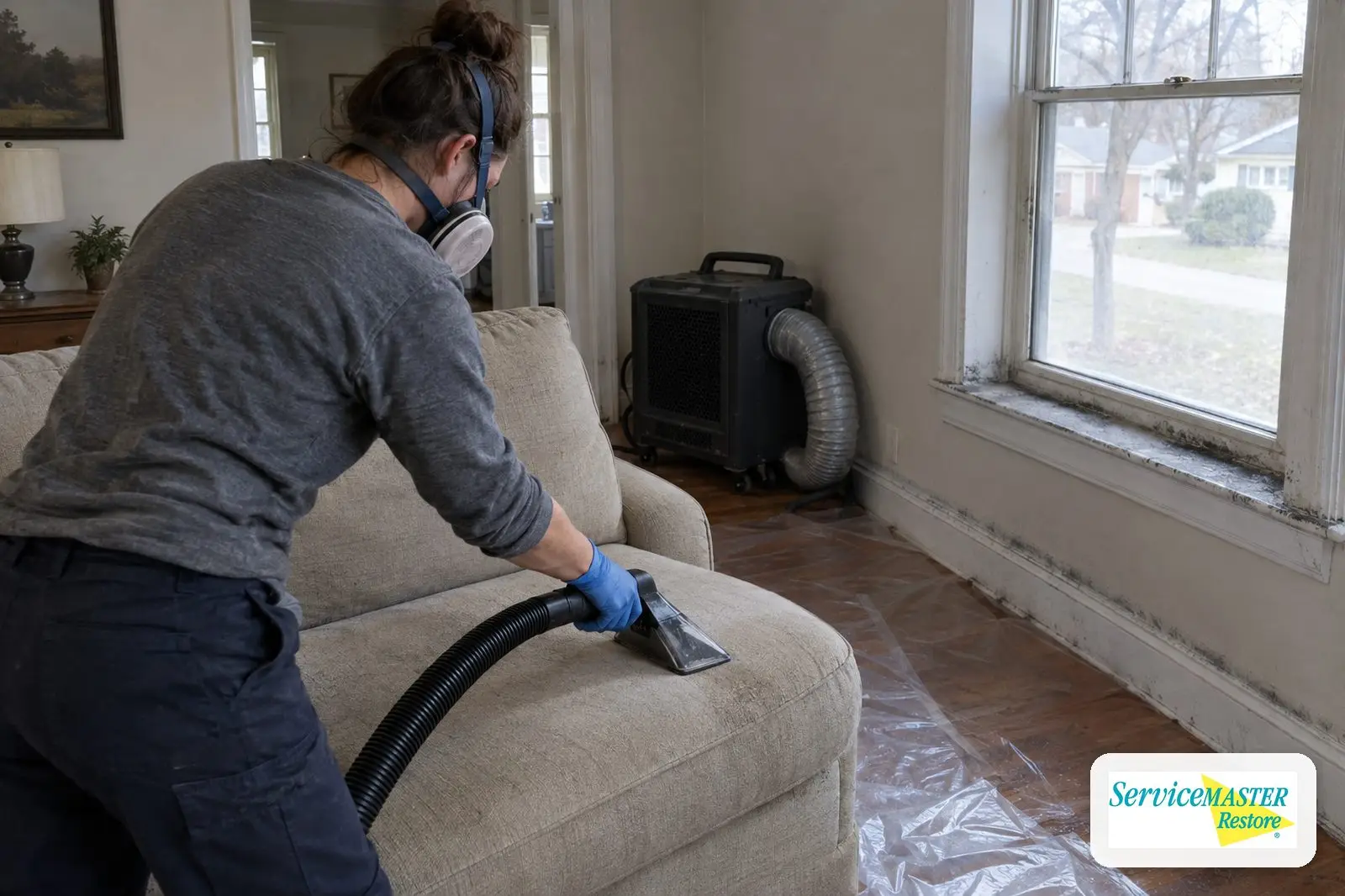
To get smoke smell out of a house, remove the residue that holds the odor instead of covering it. Air the home out, install a MERV 11 or higher furnace filter, wash hard surfaces and fabrics, and HEPA-vacuum carpets and upholstery. If the smell comes back, soot has reached porous materials or ductwork, and professional deodorization is the next step.
A stovetop flare-up or a fire next door can leave a smell that hangs on for weeks. Candles and open windows help for an afternoon, then the odor returns. Here’s why, and what actually works.
Why smoke smell lingers after the fire is out
Smoke is a mix of gases and fine particles. FEMA’s homeowner’s guide to residential smoke damage, written after Colorado’s 2021 Marshall Fire, explains that the gases are absorbed into porous materials while the particles settle as soot and ash. Soot particles are around 0.1 micrometer across, small enough to slip into places a dust rag never reaches.
That residue is what you smell, and it keeps releasing odor until it’s physically removed. Fresh air dilutes it for a while, but as Texas A&M AgriLife Extension puts it, ventilation does not remove the smell permanently. Removing the source is the only lasting fix.
Porous materials soak it up
Glass and tile hold residue on the surface, where it wipes away. Drywall paper, insulation, carpet and pad, upholstery, mattresses, curtains, clothing and unfinished wood absorb smoke gases and trap particles in their fibers. FEMA notes that soot and ash can make upholstery and clothing nearly impossible to clean. That’s why a sofa can smell long after the walls around it have been washed.
Your HVAC system spreads it room to room
With forced-air heating and cooling, return vents pull smoky air into the ducts and the blower pushes it back into every room. FEMA advises against running the air handler until the bulk of the soot is cleaned up, because it spreads particles and re-contaminates surfaces you’ve already cleaned. In Illinois, where windows stay shut much of the heating season, contaminated ducts can keep a whole house smelling of smoke.
Residue gets harder to remove with time
FEMA warns that fire residue left in place can permanently etch metal because of its high alkalinity or acidity, and it can stain finishes and deteriorate plastics. Early cleaning saves more of what you own.
What homeowners can safely do
Safety comes first. The American Red Cross advises staying out of a fire-damaged home until the fire department says it’s safe. While cleaning, FEMA recommends goggles, an N95 or P100 respirator, gloves, long sleeves and closed-toe shoes. For light odor with little visible soot, work in this order:
- Ventilate. Open windows and doors, unless the outdoor air is smoky. In winter, short bursts of cross-ventilation work.
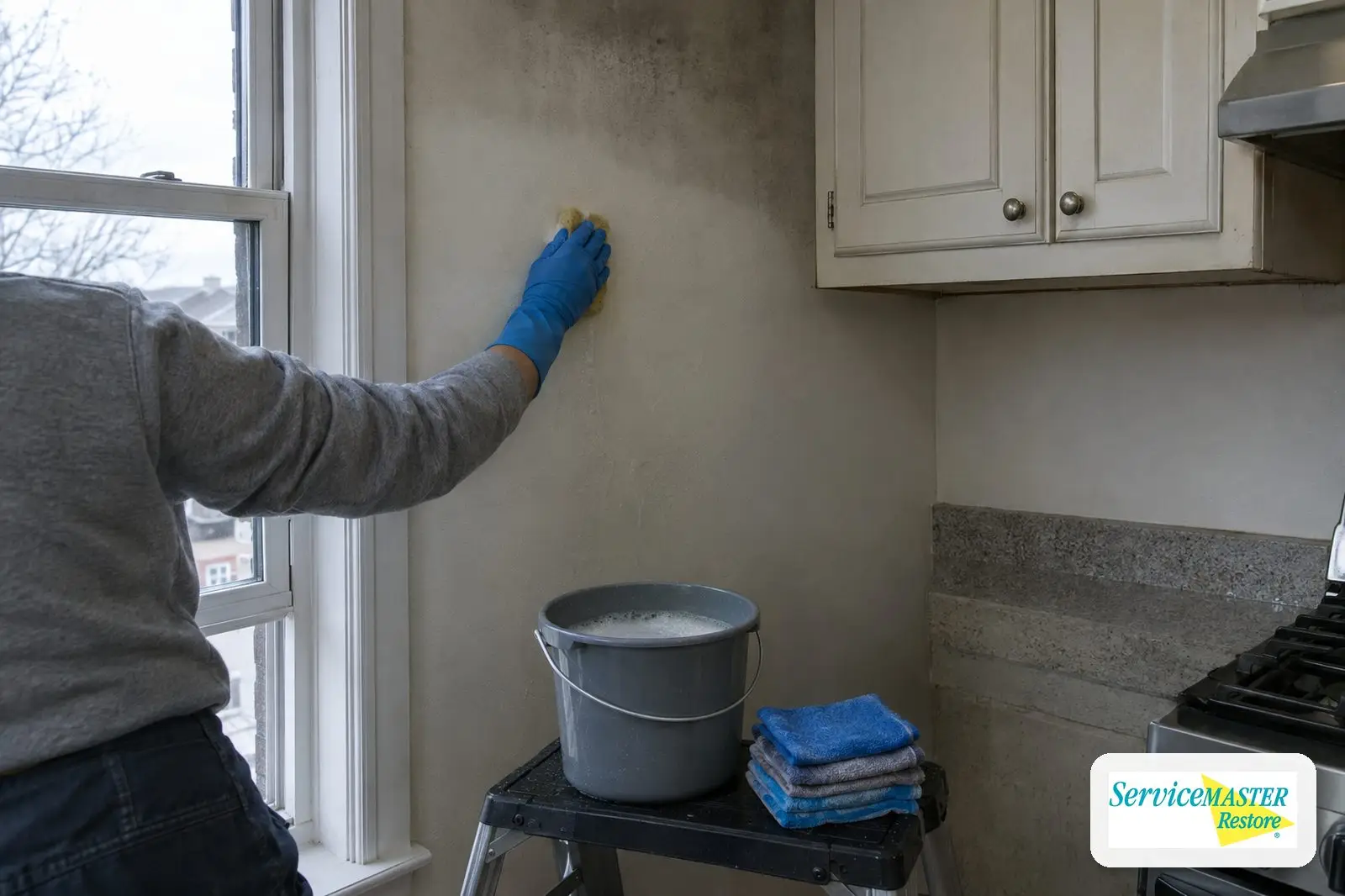
- Clean hard surfaces. Wipe walls, cabinets, furniture and floors with water and a mild detergent, testing a hidden spot first. The Red Cross suggests washing walls one small section at a time, rinsing right away, doing ceilings last, and not repainting until everything is completely dry.
- Wash fabrics. The Red Cross notes that tri-sodium phosphate (TSP) products can reduce odor in fabrics, but TSP is caustic, so read the label and test garments first. A gentler option it lists: a cold wash with your usual detergent plus one tablespoon of pure vanilla extract. Never combine cleaning products.
- HEPA-vacuum carpets and upholstery. FEMA recommends a HEPA-filtered vacuum for carpets, couches, mattresses and pet beds, often in several passes. A standard vacuum can blow fine soot back into the air.
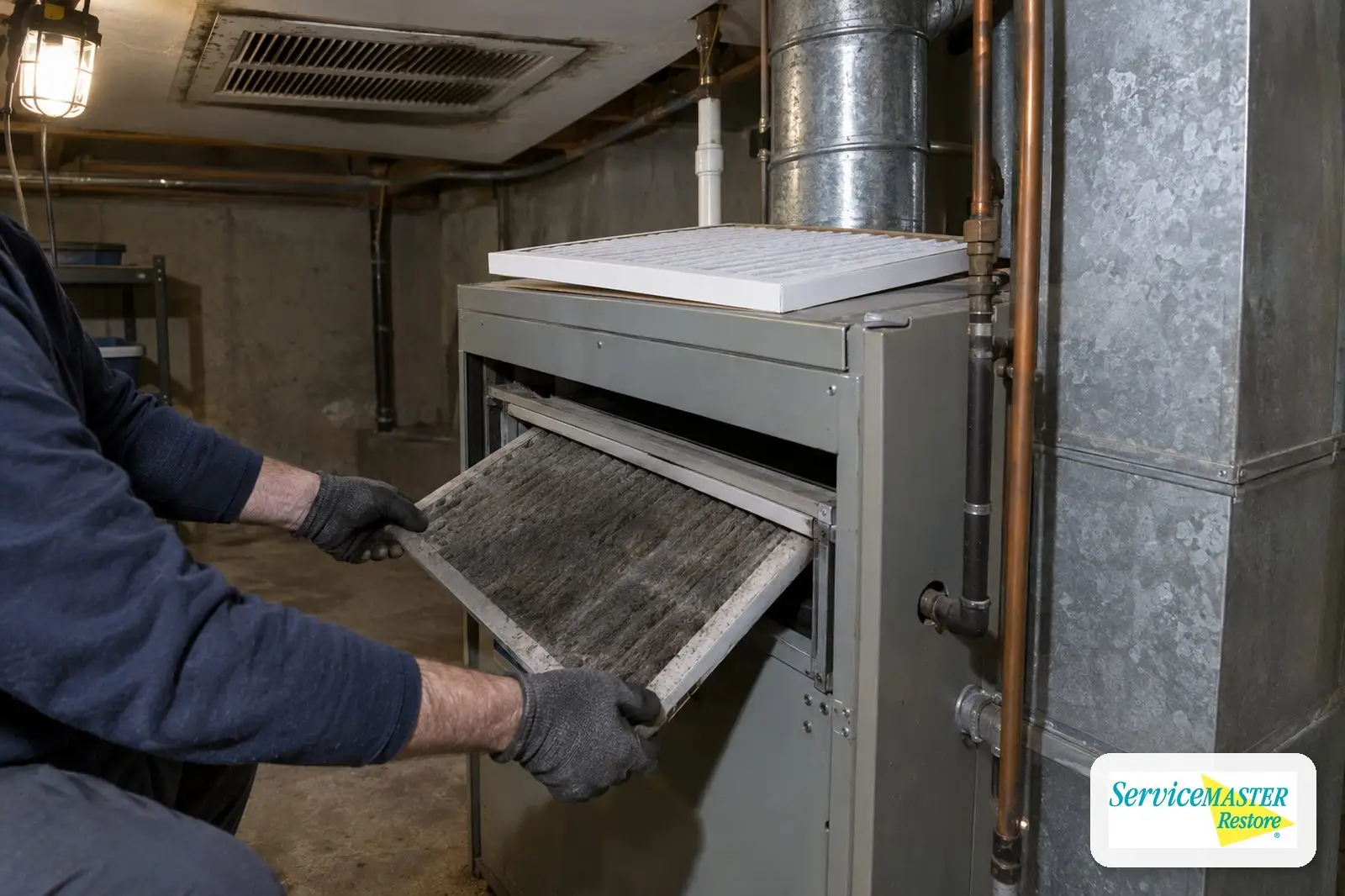
- Change the furnace filter. Once visible soot is gone, install a new MERV 11 or higher filter and run the fan in constant mode, per FEMA, with cheesecloth taped over the registers to catch loose particles. Guidance compiled by Texas A&M suggests changing filters when you first return and at least monthly for the first year.
- Absorb what remains. FEMA suggests activated charcoal bags or containers around the house to absorb lingering odor.
If the smell persists after these steps, FEMA says a deeper cleaning is most likely needed. Talk to your insurance company before going further.
Baking soda, vinegar and charcoal: helpful, but limited
Bowls of baking soda, white vinegar or activated charcoal left out for several days can soak up some airborne odor, and Texas A&M lists all three. Treat them as a finishing step. They work on the air, not on soot inside drywall, carpet pad or ductwork, so if the source remains, the odor keeps returning. The same publication cautions that once smoke has permeated carpets, draperies and furnishings, there may be little to do short of removing or replacing them.
Why masking sprays and candles fail
Air fresheners and scented candles layer a stronger smell over the smoke without removing anything. FEMA tells homeowners to avoid odor-masking products and perfume-based counteractants because they don’t eliminate smoke odor and can create new odors that are hard to identify.
How professionals remove smoke odor
The industry reference is the ANSI/IICRC S700 Standard for Professional Fire and Smoke Damage Restoration, which covers assessing fire residues and odors in a building, its HVAC system and its contents, plus methods for restoration cleaning and fire odor management. The IICRC’s Fire and Smoke Restoration Technician (FSRT) certification trains technicians in scoping, mitigation, cleaning, deodorization and documentation. The core idea: clean the source first, then treat what’s left.
Source removal and HEPA cleaning
Technicians remove soot from walls, ceilings, cabinets and contents with methods matched to each surface, while HEPA air filtration captures fine particles stirred up along the way. Our smoke and soot cleanup service follows that sequence, because no deodorizer can outwork residue still on the walls.
Thermal fogging
A thermal fogger heats a deodorizing solution into a very fine fog that can reach many of the gaps, cavities and fabrics smoke reached. Because it’s a chemical product, follow your contractor’s instructions about keeping people and pets out during and after treatment. For market context, LawnStarter’s 2026 guide reports thermal fogging at roughly $200 to $585 nationally (a third-party estimate, not our pricing).
Hydroxyl generators
Hydroxyl generators produce short-lived oxidizers that break apart odor molecules and VOCs in the air. According to Restoration & Remediation magazine, they can run in occupied spaces when properly sized and used per the manufacturer’s guidelines, and they’re safe around sensitive materials. The same article notes that post-fire spaces can carry VOC levels that aren’t safe to occupy without protective gear anyway.
Ozone: powerful, but for empty spaces only
The U.S. EPA describes ozone as a lung irritant. Even relatively low amounts can cause chest pain, coughing, shortness of breath and throat irritation, and it can worsen asthma. No federal agency has approved ozone generators for occupied spaces, and EPA says ozone at safe levels does little to remove most odors.
EPA does acknowledge that high ozone concentrations are sometimes used to decontaminate empty spaces after a fire, under tightly controlled conditions so no people or pets are exposed. Ozone can also damage plants, rubber, fabrics and artwork. Everyone should be out during treatment, and a rented ozone machine is not a safe shortcut while you’re living in the house.
HVAC and duct cleaning
FEMA recommends having ducts and the furnace professionally cleaned. If soot stays in the ducts, the blower can keep redistributing odor after the rest of the house looks clean. Our odor removal and air quality treatment and sanitization and deodorization services handle the air side once surfaces are done.
Smoke odor methods compared
| Method | What it actually does | People in the home? |
|---|---|---|
| Masking sprays, candles | Covers odor; can add new odors (FEMA) | Yes, but not recommended |
| Ventilation | Dilutes odor; doesn’t remove the source (Texas A&M) | Yes |
| Charcoal, baking soda | Absorbs some airborne odor (FEMA, Texas A&M) | Yes |
| Washing, HEPA vacuuming | Removes residue from surfaces and fabrics (FEMA, Red Cross) | Yes, with PPE |
| MERV 11+ filter, duct cleaning | Captures particles; removes soot from the air system (FEMA) | Yes |
| Hydroxyl generator | Oxidizes odor molecules and VOCs in the air (R&R) | Possible, per manufacturer guidance |
| Ozone generator | Strong oxidizer used to treat empty spaces (EPA) | No. Unoccupied only |
Sources: U.S. EPA; FEMA Homeowner’s Guide to Residential Smoke Damage (2025); American Red Cross; Texas A&M AgriLife Extension; Restoration & Remediation magazine. Full links below.
When smoke-damaged items can’t be saved
Based on Red Cross and FEMA guidance, plan on replacing:
- Food, drinks and medicine exposed to heat, smoke or soot, including opened pantry items. Unopened cans and sealed boxes can usually be wiped clean.
- Baby items and medical supplies such as pacifiers, bottles, and CPAP or oxygen masks and tubing. Ask your doctor about affected medications and equipment.
- Drywall and insulation soaked by fire hoses. The Red Cross says these can’t be dried out and keep their structural integrity or mold resistance. See water damage cleanup after firefighting.
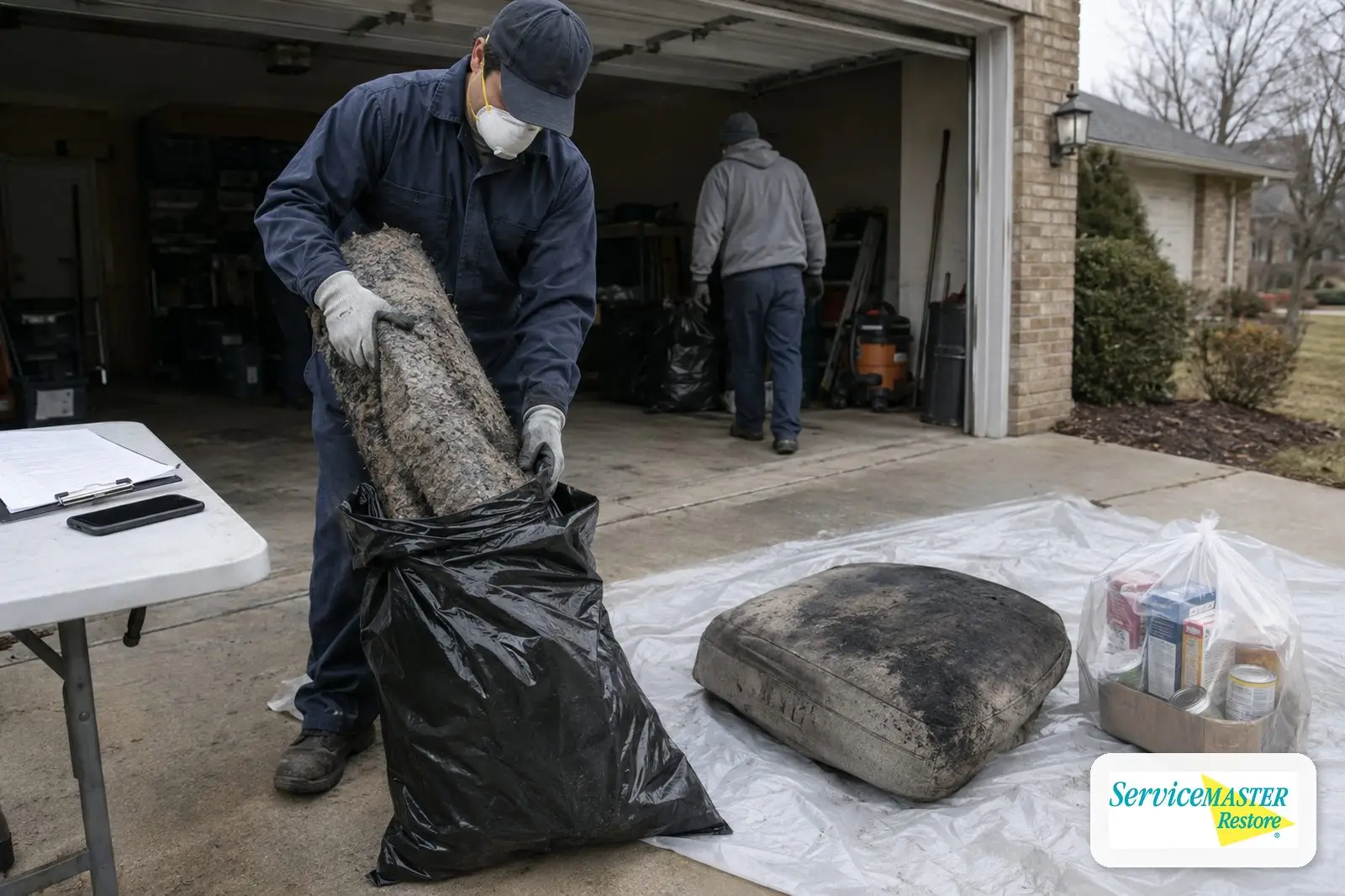
- Heavily permeated soft goods, like carpet pad, cushions or mattresses with odor deep in the fill.
For electronics, FEMA advises shutting them down and HEPA-vacuuming instead of wet-cleaning. Photograph anything before you discard it. The Illinois Department of Insurance advises not disposing of items you believe are a total loss until the insurer’s representative has examined them.
Insurance: is smoke odor removal covered?
Often, yes. The Insurance Information Institute lists smoke as a covered peril on standard homeowners policy forms, alongside fire. The Illinois Department of Insurance notes you may also be entitled to additional living expenses if you can’t stay in your home, and recommends getting your adjuster’s agreement before contracting for repairs. Limits, deductibles and exclusions vary, so read your policy and ask your adjuster.
Keep photos of each room, receipts for supplies and temporary lodging, and the names of everyone you speak with. We work with your insurance company through our insurance claim assistance service. Our fire and smoke damage restoration process guide explains what the full job involves.
This article is general educational information, not insurance, legal or medical advice. Policies vary; check your policy and talk to your adjuster.
Smoke odor help in DuPage and Will County
Smoke damage isn’t always from a big fire. A furnace puffback can coat a basement and the floors above it in fine soot, and the type of residue shapes the cleanup, as our guide to types of smoke damage explains. ServiceMaster Restoration Services has served DuPage and Will County for over 20 years from our base in Lisle. Our certified technicians handle residential fire damage restoration, including fire damage restoration in Homer Glen, smoke and fire cleanup in Darien and fire damage restoration in Naperville.
Frequently Asked Questions
How long does smoke smell last in a house?
There’s no fixed timeline. Light odor from a brief kitchen incident may clear fairly quickly once you ventilate, clean and change the furnace filter. When soot has settled into drywall, carpet, upholstery or ductwork, the smell can persist indefinitely because the residue keeps releasing odor. If it returns whenever the house is closed up, the source hasn’t been removed.
Does baking soda get rid of smoke smell?
Baking soda can absorb some lingering airborne odor, and extension guidance suggests leaving bowls of it in affected rooms for several days. It won’t remove soot from walls, fabrics or ducts, which is where the smell comes from. Use it as a finishing touch after washing, laundering, HEPA-vacuuming and replacing your furnace filter.
Is it safe to stay in a house that smells like smoke?
It depends on the damage. FEMA notes that smoke, soot and ash can cause respiratory irritation, shortness of breath and worsening of asthma. If you can see soot, wear an N95 or P100 respirator while cleaning and limit time in affected rooms. People with lung conditions should talk to their doctor. Never stay in a space while an ozone generator runs.
Do air purifiers help with smoke smell?
A HEPA air purifier captures fine smoke particles, and FEMA notes that running one after cleanup can further reduce contaminants. Units with an activated carbon filter may also absorb some odor. Avoid ozone generators sold as air cleaners: EPA calls ozone a lung irritant and says it does little to remove most odors at safe levels.
Does homeowners insurance cover smoke smell removal?
Many policies do. The Insurance Information Institute lists smoke as a covered peril on standard homeowners forms, and coverage can include cleaning, deodorization and replacing damaged belongings, subject to limits and deductibles. Some policies also pay additional living expenses while your home is uninhabitable. Document the damage and confirm details with your adjuster before major work begins.
Related guides and services
- Professional smoke and soot cleanup
- Odor removal and air quality treatment
- Sanitization and deodorization services
- Residential fire damage restoration
- Types of soot and smoke damage explained
- Furnace puffback soot cleanup
- What to do after a kitchen fire
- Fire and smoke restoration process and cost
- Help with your insurance claim
- All restoration guides
Still smelling smoke after cleaning? Call ServiceMaster Restoration Services at (630) 241-1111, available 24/7 for homes and businesses in DuPage and Will County, or contact us online.
Sources
- U.S. EPA: Ozone Generators that are Sold as Air Cleaners
- FEMA: Marshall Fire MAT Homeowner’s Guide to Risk Reduction and Remediation of Residential Smoke Damage (revised April 2025)
- American Red Cross: Cleaning Up After a Fire
- IICRC: ANSI/IICRC S700 Standard for Professional Fire and Smoke Damage Restoration
- IICRC: Fire and Smoke Restoration Technician (FSRT) certification
- Insurance Information Institute: Which disasters are covered by homeowners insurance?
- Illinois Department of Insurance: Disasters (consumer claim guidance)
- Texas A&M AgriLife Extension: How to Remove Smoke Smell from a Home
- Restoration & Remediation: Are Hydroxyl Generators Safe for Odor Removal?
- LawnStarter: Fire and Smoke Restoration Cost (updated July 2026, third-party estimates)