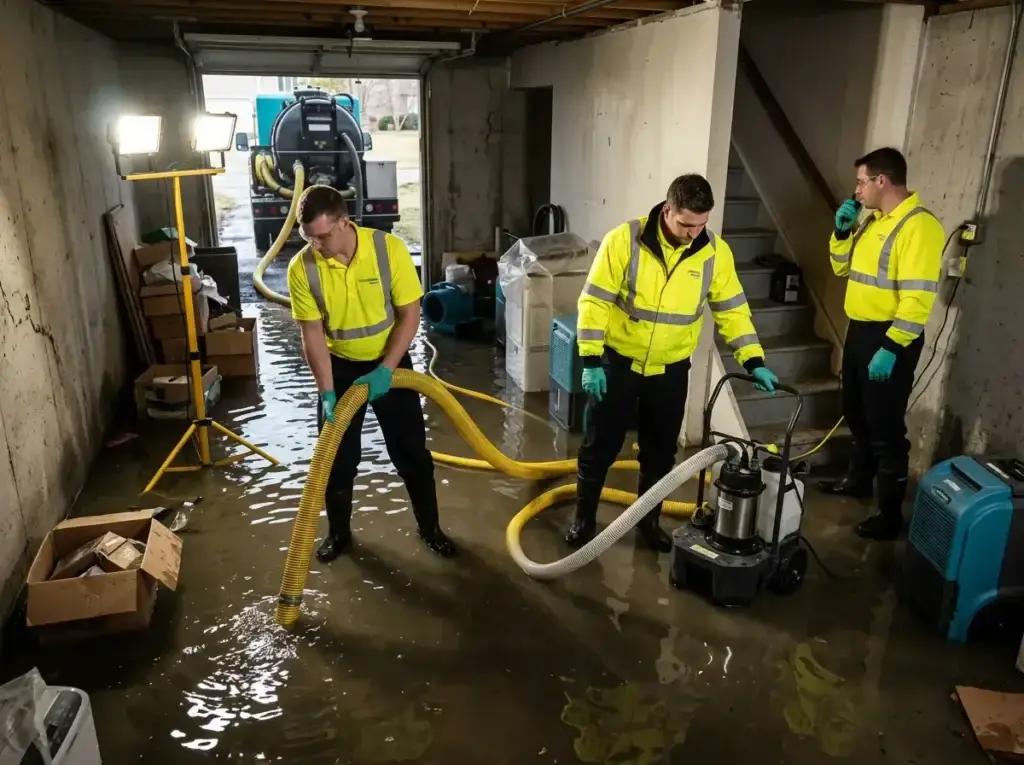


Why is there water damage after a fire, and how is it cleaned up?
Fire hoses and sprinkler systems put out fires with water, and much of that water soaks into floors, walls, insulation and basements. Mixed with soot, it becomes dirty water that has to be extracted and dried while residue cleanup is planned. EPA advises drying wet materials within 24 to 48 hours to help prevent mold growth.
Many owners are surprised that the water damage can be as extensive as the fire damage. That is normal. Water is how fires get put out, and it does not stop at the room that burned. Here is how post-fire water is handled differently from an ordinary leak.
Where does the water come from, hoses or sprinklers?
Both, and they behave very differently. Fire department hose lines are used to knock down a fire that is already growing, and that water runs down through floors, into wall cavities and toward the lowest level of the building. In homes with finished basements, the basement often ends up wetter than the room where the fire started.
Sprinklers are more targeted. The National Fire Protection Association explains that sprinkler systems are designed to operate only where fire is present, and its data show how few heads usually open.
How many sprinklers operate in a typical structure fire
Share of U.S. structure fires with operating sprinklers, by number of sprinklers that operated, 2020-2024
Source: National Fire Protection Association, U.S. Experience with Sprinklers (2020-2024 data)
The U.S. Fire Administration makes the same point for homes: if a house had a fire sprinkler system, its After the Fire guide says owners will find little damage from flames, heat, smoke and water. Sprinkler water still needs drying, but it is usually a smaller, more contained job than hose water.
Why must fire cleanup and water cleanup happen together?
Because each one makes the other worse if it waits. Wet soot is harder to remove than dry soot, and Alabama Cooperative Extension guidance warns that water drives soot deeper into surfaces. At the same time, wet drywall, insulation and wood cannot sit while soot cleaning is scheduled, because moisture leads to swelling, delamination and mold.
The U.S. EPA's Brief Guide to Mold, Moisture and Your Home says that if wet areas are dried within 24 to 48 hours after a leak or spill, in most cases mold will not grow. Firefighting water is no exception. The practical answer is one coordinated plan: extract and dry first, keep air movement from spreading residue, then clean soot from surfaces once they are dry. That residue work is covered on our smoke and soot cleanup page.
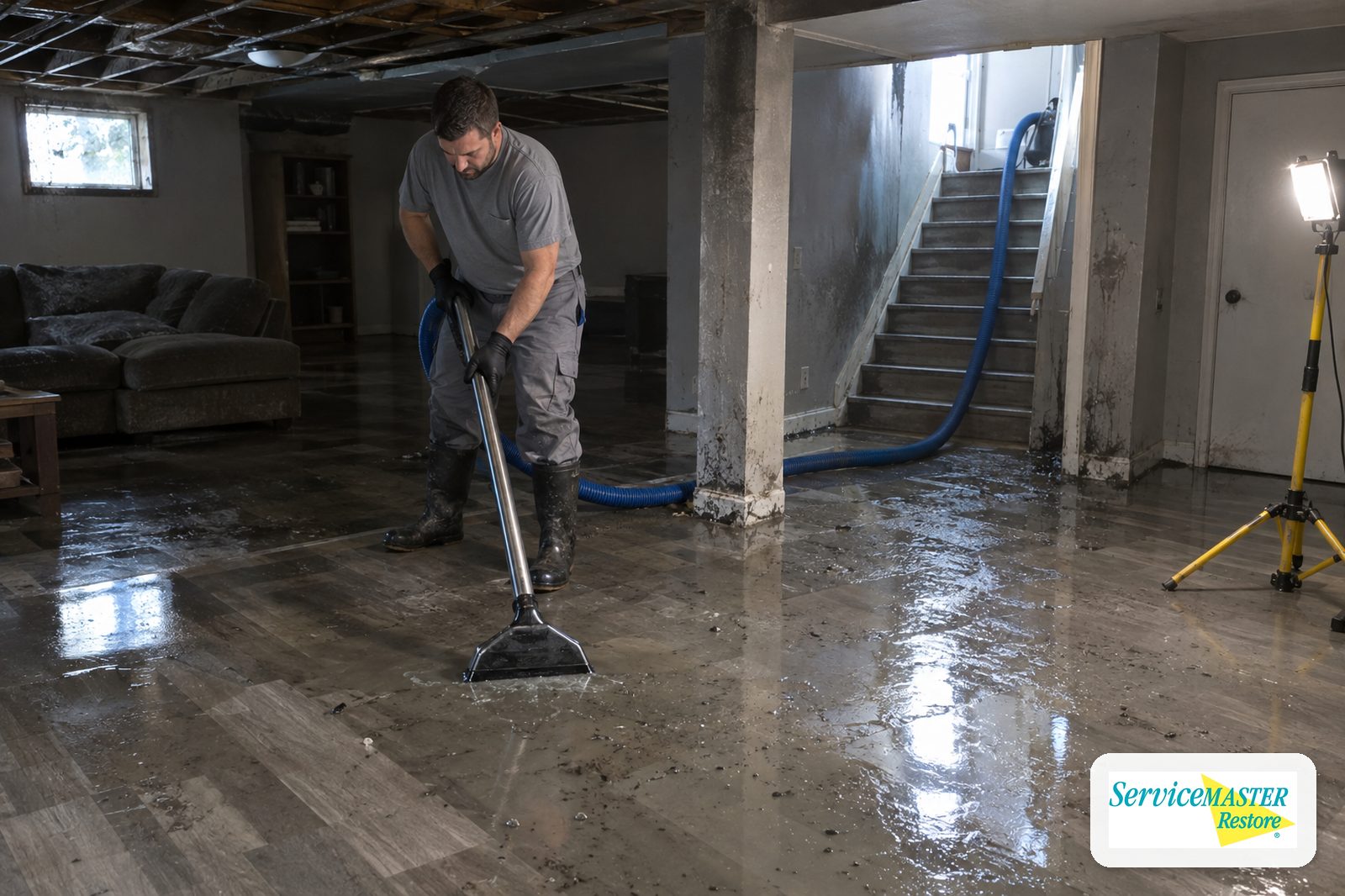
Extraction comes first
Standing water is pumped and extracted from floors, carpet and basements with truck-mounted or portable units. Getting bulk water out quickly shortens drying time and limits how far it wicks up walls. Our emergency water removal service handles this step, including water that has collected on lower levels.
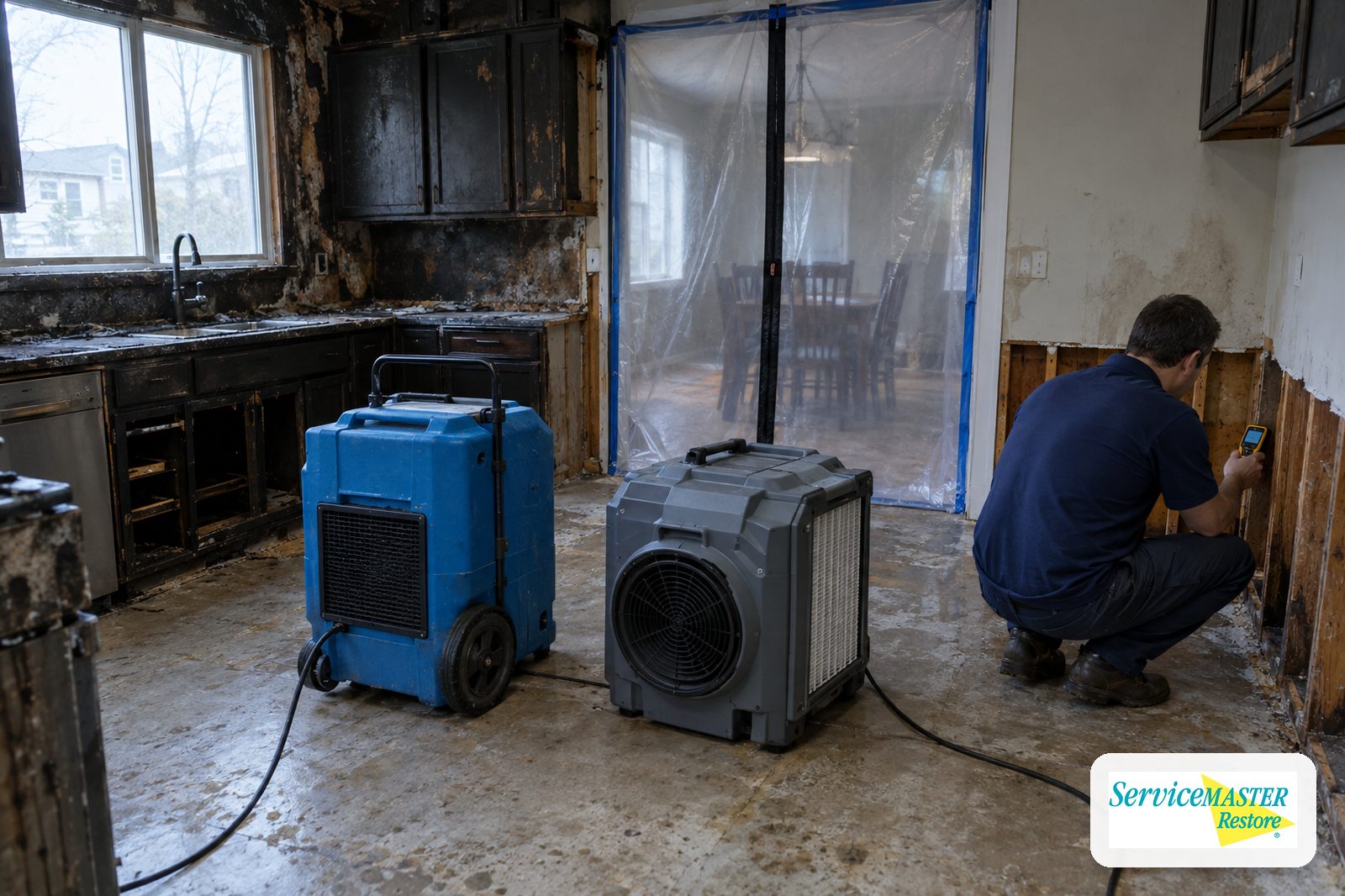
Drying without spreading soot
Ordinary water jobs use high-velocity air movers aimed at wet surfaces. After a fire, that same airflow can blow loose soot into clean rooms. Crews often HEPA-vacuum loose residue first, set up containment and run HEPA air scrubbers alongside dehumidifiers. Moisture meters track drying progress, as described on our structural drying and dehumidification page.
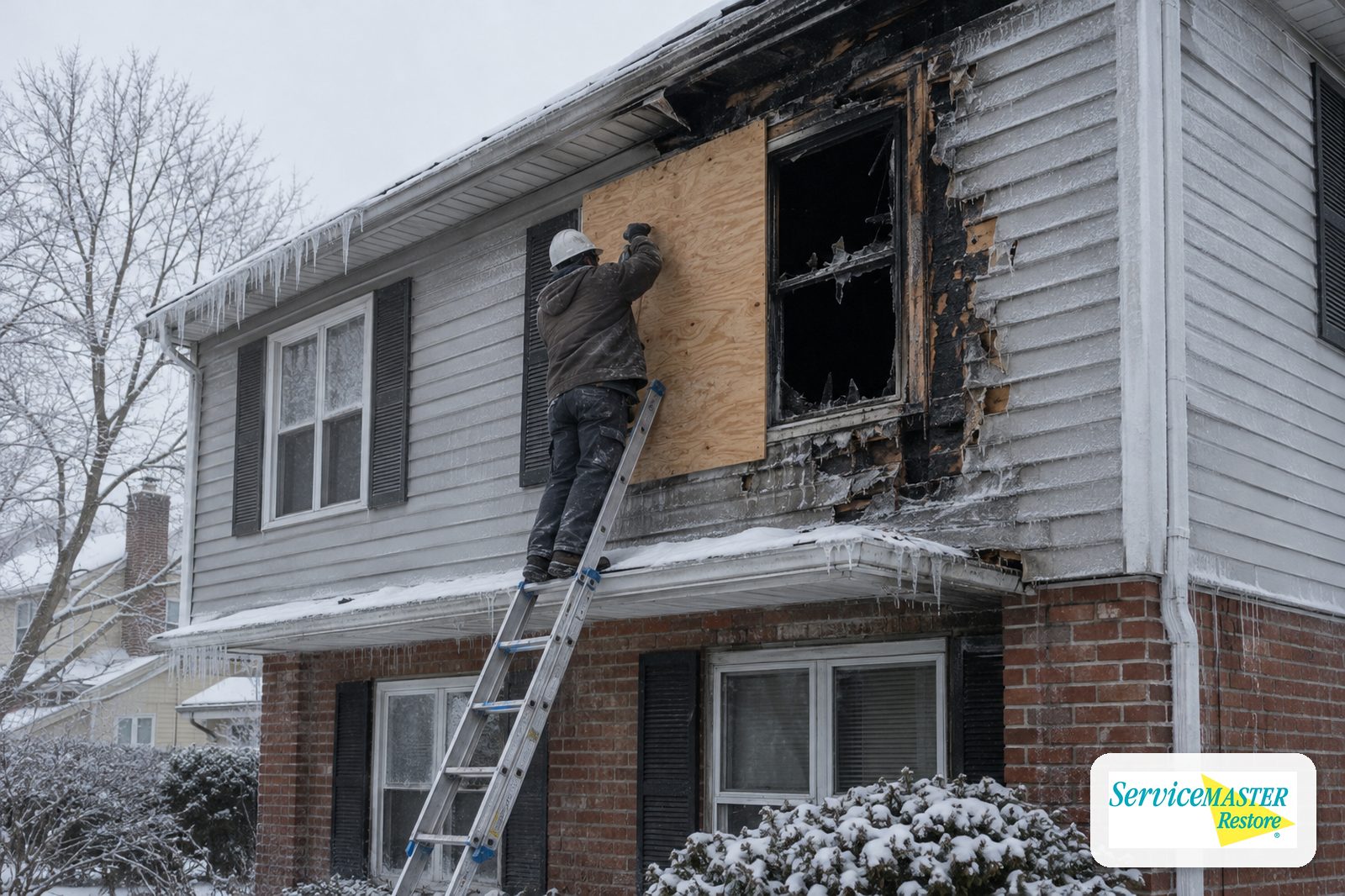
Winter fires in the Chicago suburbs
When a fire happens in January, firefighting water sits in a building with broken windows and roof openings. USFA notes that firefighters may break windows and cut holes in the roof to release smoke. Until those openings are boarded, wet materials and plumbing in an unheated structure can freeze, which makes extraction slower and can add burst-pipe damage.
Is the water left after a fire contaminated?
Treat it as dirty. USFA warns that the soot and dirty water left behind after a fire may contain things that could make you sick. The water damage standard, ANSI/IICRC S500, the Standard for Professional Water Damage Restoration (Fifth Edition, 2021), classifies water by its level of contamination, and evaluating that is part of the assessment.
In practice, porous materials soaked with soot-laden water, such as carpet pad, insulation and some drywall, are often removed rather than dried in place. Hard surfaces and framing are usually dried and then cleaned. Wear gloves, keep children and pets out, and do not use household fans until residue has been dealt with.
Contents need attention early too. Cardboard boxes in a wet basement soften and wick water into what they hold, and wood furniture legs can stain wet carpet. Photograph items where they sit before moving them, so the claim record shows what was affected and where.
What is the standard process for water cleanup after firefighting?
- Safety release. The fire department releases the building and confirms electricity and gas are safe or shut off, which matters even more with standing water.
- Secure openings. Windows and roof holes made during firefighting are boarded and tarped to stop new water and cold air.
- Moisture mapping. Meters and thermal imaging trace where water traveled, including wall cavities and lower floors.
- Extraction. Standing and absorbed water is removed from floors, carpets and basements.
- Remove unsalvageable materials. Soaked porous materials carrying soot are cut out and documented.
- Controlled drying. Dehumidifiers, air movers and HEPA filtration run together, with daily moisture readings.
- Clean and hand off. Once dry, surfaces move to soot cleaning, odor treatment and repairs.
Post-fire water cleanup in DuPage and Will County
We work from Lisle across both counties, including fire damage restoration in Lemont, Homer Glen and Warrenville. This service is part of our full fire damage restoration for homes and businesses. For why fires leave water behind and how the phases fit together, see our fire and smoke restoration process guide. Moisture logs and photos can support your claim through insurance claim assistance.
Certified technicians, 20+ years of experience and 24/7 response. Use our contact page or call (630) 241-1111 to start drying after a fire.
Frequently asked questions
Why is there so much water damage when only one room burned?
Water used to fight the fire does not stay in that room. It runs across floors, down wall cavities and through ceilings to lower levels, collecting in basements. Fire department hose streams are used to stop a fire that is already growing. Sprinkler systems are more targeted, and NFPA data show that in 76% of structure fires where sprinklers operated, only one did.
Do fire sprinklers cause more water damage than the fire would?
Generally no. NFPA reports that sprinklers operate only where fire is present, and in 97% of structure fires where they operated, five or fewer heads opened. The U.S. Fire Administration notes that homes with sprinkler systems typically show little damage from flames, heat, smoke and water. The water that is released still needs prompt drying.
How fast does firefighting water need to be dried?
As soon as the building is released. EPA's Brief Guide to Mold, Moisture and Your Home says that if wet areas are dried within 24 to 48 hours after a leak or spill, in most cases mold will not grow. After a fire, drying also has to be coordinated with soot control so airflow does not spread residue.
Can I run fans to dry my house after a fire?
It is better not to until loose soot has been removed. Fans and open-window drafts blow fine residue into rooms the smoke did not reach, which widens the cleanup. Restorers typically HEPA-vacuum residue, set up containment and run HEPA air scrubbers with dehumidifiers so drying and soot control happen together.
Which wet materials have to be removed after a fire?
It depends on how wet they are and how much soot-laden water they absorbed. Carpet pad, insulation and soaked drywall are often removed because they hold contaminated water and residue. Framing, subfloors and hard surfaces are usually dried in place and then cleaned. Removed items should be photographed and listed for your insurance claim first.
Sources
- National Fire Protection Association: U.S. Experience with Sprinklers
- U.S. Fire Administration (FEMA): After the Fire: Returning to Normal (FA-46)
- U.S. EPA: A Brief Guide to Mold, Moisture and Your Home
- IICRC: ANSI/IICRC S500 Standard for Professional Water Damage Restoration
- Alabama Cooperative Extension System: Cleaning After a Fire