
The main types of smoke damage are dry smoke from fast, hot fires; wet smoke from slow, smoldering fires; protein residue from burned food; and fuel-oil residue from furnace puffbacks. Each one leaves a different film, so each needs its own cleaning method. Use the wrong method and you can smear the residue or set the stain.
After a fire, most people look at the black marks and assume soot is soot. It isn’t. The residue on a living room ceiling after a candle fire behaves nothing like the greasy film from a burned pot on the stove, and neither looks like the dark spray an oil burner can push through every register in a house. Washington State’s Office of the Insurance Commissioner tells policyholders that “your adjuster will examine the type of smoke residue left behind” when sizing up a claim.
Below: the four residue types, why soot chemistry matters, what EPA and CDC say about breathing fine particles, which cleanup moves backfire, and what a professional crew does differently. ServiceMaster Restoration Services has handled fire and smoke work across DuPage and Will County for over 20 years from our headquarters in Lisle.
How smoke residue forms, and why the fire type matters
Soot is, in the words of the National Cancer Institute, “a byproduct of the incomplete burning of organic (carbon-containing) materials.” How much oxygen a fire gets, how hot it burns and what it is burning decide what lands on your walls. A fast fire in paper and wood throws off fine, dry particles. A smoldering couch cushion burns cooler and short on air, and its smoke condenses into something sticky. Kitchen fires add burned fats and proteins. A misfiring oil burner adds unburned fuel. One fire can produce more than one of these, so a single room may need two cleaning methods.
The professional reference here is the ANSI/IICRC S700 Standard for Professional Fire and Smoke Damage Restoration, first published in 2025. The IICRC says it describes “the principles, processes, and procedures for assessing the presence, intensity of impact” and boundaries of fire residues and odors in a building, its systems and its contents. Identify the residue and map where it went before cleaning starts.
The four types of smoke damage
Dry smoke residue (fast-burning fires)
Dry smoke comes from “fast-burning, high-temperature fires (e.g., paper or wood),” according to the Washington insurance regulator. The residue is powdery and comes off more easily than the other types. The catch is particle size: dry soot drifts into cracks, outlet boxes and electronics, and the same source warns it can damage electronics or wiring.
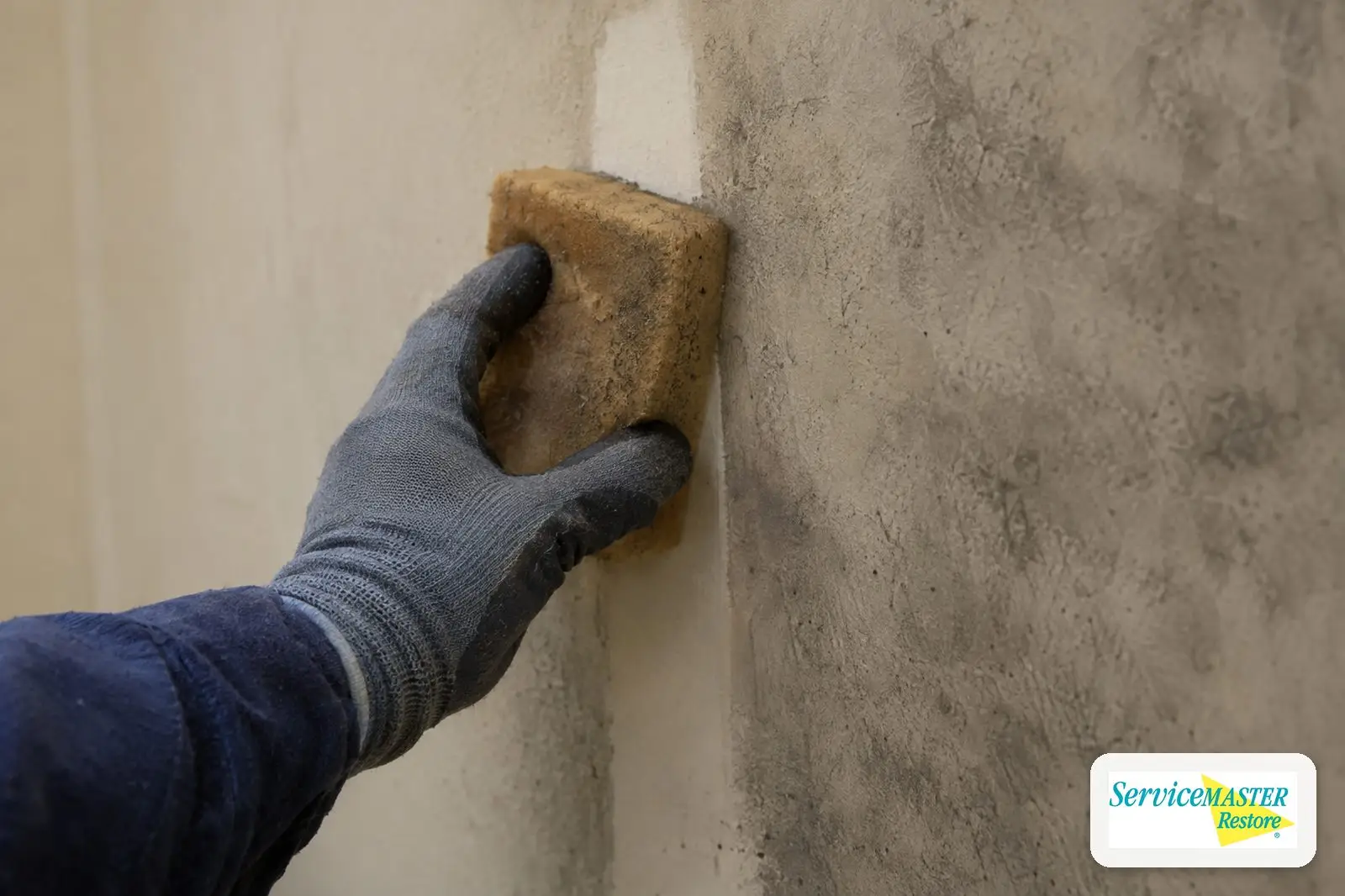
How it is cleaned: dry first. A HEPA vacuum takes the loose particles, then dry chemical sponges lift the remaining film before any liquid touches the surface.
Wet smoke residue (smoldering fires)
Wet smoke comes from “low-temperature, smoldering fires (e.g., plastics or rubber).” The regulator describes it as thick and sticky, says it smears easily, and notes that it often causes permanent staining and strong odors.
How it is cleaned: a dry sponge alone won’t cut it. Wet smoke usually needs cleaners made for oily residue, worked in small sections so the smear doesn’t travel. Where soot has soaked into drywall or wood, the regulator says it usually calls for professional deep cleaning, sealing, or complete replacement.
Protein residue (kitchen fires)
Protein residue “occurs from burnt food in the kitchen.” It can leave an “invisible or amber-colored film” that may permanently discolor varnished or painted surfaces, along with a very strong odor.
How it is cleaned: a degreasing wipe-down of every surface in the affected area, including cabinet interiors, plus odor treatment. See what to do after a kitchen fire, or, for businesses, restaurant kitchen fire damage restoration.
Fuel-oil residue (furnace puffbacks)
The regulator calls fuel or oil residue “a greasy, dark residue,” typically from furnace puffbacks, where a small explosion inside the heating system pushes residue through the vents and into the home. Because the ducts carry it, rooms far from the furnace can be coated. Our post on furnace puffback soot cleanup covers it in depth.
How it is cleaned: room-by-room removal of the greasy film plus HVAC and duct cleaning. United Policyholders, a nonprofit that advises insurance consumers, says the system “should not be turned on until the cleaning is complete” and should be tested and cleaned as the final step.
Smoke residue at a glance
Where each residue comes from, what it looks like, and how it is usually removed.
| Residue type | Typical source | Look and feel | Cleaning approach |
|---|---|---|---|
| Dry smoke | Fast, hot fires in paper or wood | Powdery; settles into cracks and electronics | HEPA vacuum and dry sponge first, mild detergent after |
| Wet smoke | Slow, smoldering fires in plastics or rubber | Thick, sticky, smears; strong odor | Cleaners for oily residue in small sections; seal or replace soaked materials |
| Protein | Burned food in a kitchen | Nearly invisible or amber film; very strong odor | Degreasing wipe-down of every surface plus odor treatment |
| Fuel oil | Furnace puffback pushed through the vents | Greasy, dark film, often in many rooms | Room cleaning plus HVAC and duct cleaning, system off until done |
Sources: Washington State Office of the Insurance Commissioner (residue types); United Policyholders Smoke Restoration Guide (dry removal, HVAC); IICRC S700 (assessment scope).
Acidic soot: why waiting makes cleanup harder
Soot isn’t chemically neutral. The IICRC’s consumer cleanup tips tell people to “use a mild alkaline cleaner to neutralize the acid in the soot.” That acidity, plus the oily binders in wet smoke and protein film, helps explain why the Washington regulator uses the word “permanent” for both wet-smoke staining and protein discoloration on painted and varnished finishes.
A note on timelines. Many restoration websites claim soot yellows plastics within minutes and etches glass within days. We looked for a standards body, government agency or peer-reviewed study backing those exact clocks and found none, so we won’t repeat them. What the sources do support: residue can cause lasting discoloration, and nothing improves by leaving it in place. Photograph it, keep people out of the worst rooms and get it assessed. Most fires also leave hose water behind, which needs its own plan; see water damage cleanup after firefighting.

Health considerations: what EPA and CDC say about fine particles
EPA defines PM2.5 as “fine inhalable particles, with diameters that are generally 2.5 micrometers and smaller,” and notes that an average human hair, about 70 micrometers across, is 30 times larger than the largest fine particle. Fires are among the sources EPA lists.
Particles that small can get deep into the lungs, and some may enter the bloodstream. EPA links particle exposure to aggravated asthma, decreased lung function, irregular heartbeat, nonfatal heart attacks, and premature death in people with heart or lung disease. CDC’s 2023 smoke advisory lists headache, eye irritation, trouble breathing, cough, wheezing, chest pain and fatigue as possible short-term symptoms. It names children, older adults and pregnant women as especially at risk, along with people who have asthma, COPD or heart disease, and points to N95 or P100 respirators in smoky conditions.
The soot itself deserves respect. The National Cancer Institute notes soot can contain carcinogens such as arsenic, cadmium and chromium, and the National Toxicology Program lists soots as known human carcinogens, based mainly on studies of chimney sweeps with long-term job exposure. That doesn’t mean one household fire causes cancer. It does mean soot cleanup isn’t ordinary dusting.
General information, not medical advice. If anyone in the home has symptoms, asthma, COPD or a heart condition, talk to a doctor before going back in or helping with cleanup.
What not to do after smoke damage
- Don’t wipe dry soot with a damp rag or household spray. United Policyholders says cleaning “should start with ‘dry removal’ of the smoke which is usually done with HEPA vacuums,” followed by a mild detergent wipe-down. Flip that order and a light gray film can become a dark streak worked into the paint texture.
- Don’t use plain water on greasy residue. Water doesn’t dissolve the oily films from wet smoke, protein or fuel oil. It mostly spreads them.
- Don’t run a regular vacuum or shop vac. Non-HEPA vacuums “will simply blow the smoke particles out the exhaust,” United Policyholders warns.
- Don’t turn on the furnace or air conditioning. The system can carry residue into rooms that were clean.
- Don’t throw things out before the adjuster sees them. The Washington regulator says to “Take photos and videos before you clean anything,” and “Don’t throw anything away until an adjuster has completed their inspection.”
- Don’t cover the smell with air fresheners. University of Tennessee Extension advises against odor-masking sprays. The odor comes from residue, so the residue has to go.
What professionals do differently
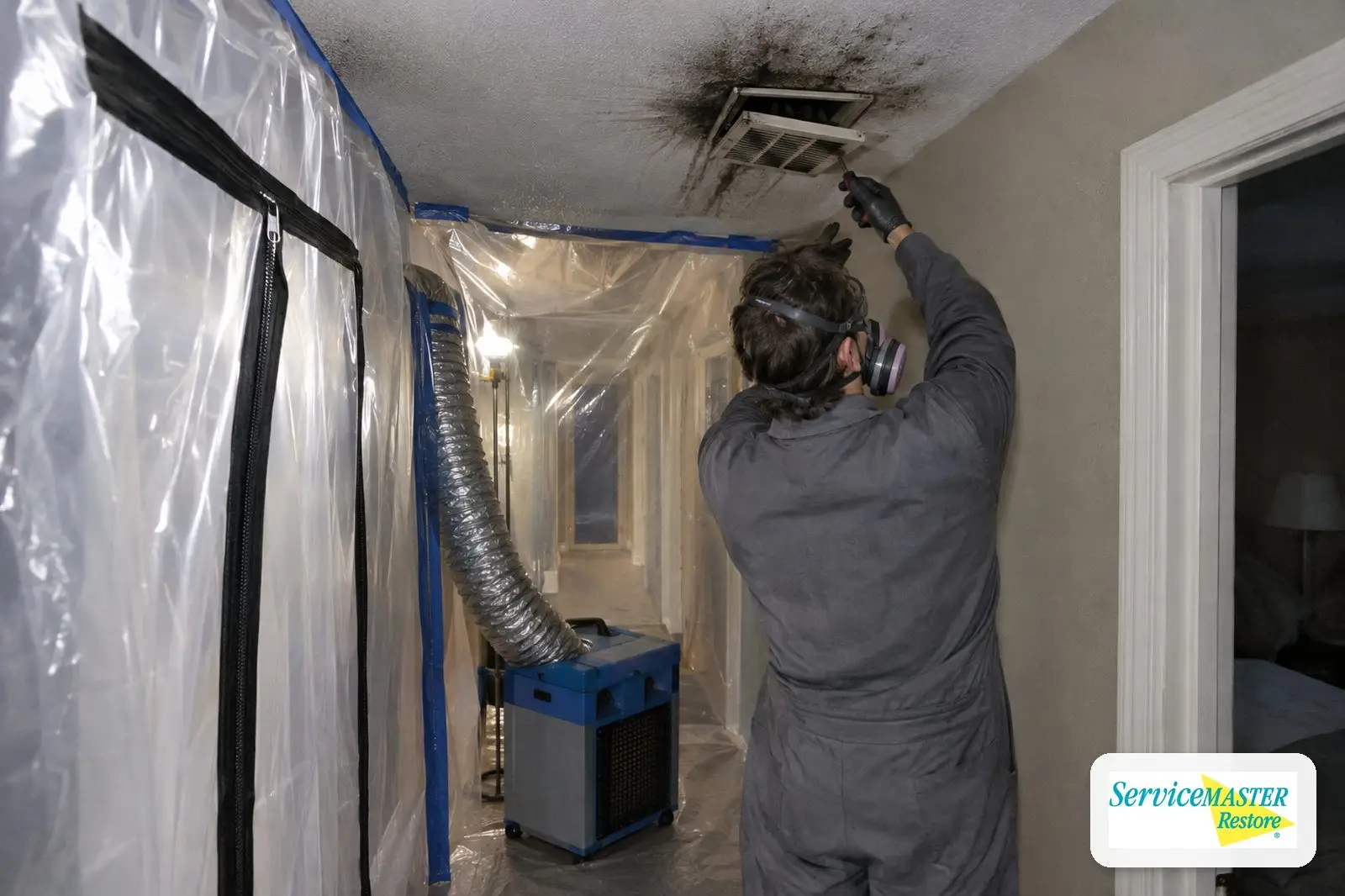
Professional smoke and soot cleanup follows the logic of the S700 standard: assess, contain, remove, verify.
- Assess and test. United Policyholders describes swab and tape-lift tests that show whether carbon, soot and ash are present on a surface, plus micro-vacuum samples from fabrics.
- Protect clean areas. Containment and HEPA air filtration keep particles from spreading during work.
- Remove residue dry first, then match the chemistry to the residue: mild alkaline cleaners for acidic soot, degreasers for protein and oil films, and a test spot before anything goes on a whole wall.
- Clean, seal or replace porous materials. United Policyholders notes you may need to seal and paint the worst areas if odor persists.
- Treat odor at the source, and the HVAC last. United Policyholders lists ozone, hydroxyl and thermal fogging as options, each with pros and cons. Our odor removal and air quality treatment page and our guide on how to get smoke smell out of a house go deeper.
- Document everything. Ask for a line-item estimate that spells out the cleaning planned for each room, as United Policyholders recommends.
The same guide suggests confirming that the company and lead technician are IICRC certified for fire and smoke restoration. Our certified technicians handle both homes and businesses. For houses, start with residential fire damage restoration. Offices, retail suites and warehouses add tenant and downtime concerns, which our commercial fire damage restoration services address. Locally, see fire damage restoration in Glen Ellyn, fire damage restoration in Darien and fire damage restoration in Naperville, or read the full fire and smoke damage restoration process.
Frequently Asked Questions
What are the 4 types of smoke damage?
The four commonly recognized types are dry smoke, wet smoke, protein residue and fuel-oil residue. Dry smoke comes from fast, hot fires in paper or wood and leaves a powder. Wet smoke comes from smoldering plastics or rubber and is sticky. Protein residue comes from burned food. Fuel-oil residue is a greasy, dark film, usually from a furnace puffback. One fire can leave more than one type.
Which type of smoke damage is the hardest to clean?
Wet smoke is a strong candidate. The Washington insurance regulator describes it as thick and sticky, says it smears easily, and notes it often causes permanent staining and strong odors. Fuel-oil residue is also demanding, because a puffback can carry greasy film through the ducts into many rooms. Both usually need specialized cleaners and sometimes sealing or replacement of porous materials.
Is it safe to breathe soot after a house fire?
Limit your exposure. EPA says fine particles can get deep into the lungs and some may reach the bloodstream, and it links particle exposure to asthma attacks and heart problems. CDC lists children, older adults, pregnant women and people with heart or lung disease as especially at risk. Ventilate, stay out of heavily affected rooms and wear an N95 if you must go in.
Can I clean smoke damage myself?
Light, dry soot on a small hard surface can sometimes be handled with a HEPA vacuum, a dry chemical sponge, gloves and an N95. Wet smoke, protein film, puffback residue, anything inside the HVAC system, or soot covering more than one room is different. The wrong method can set stains for good, so photograph everything and get an assessment first.
Does homeowners insurance cover smoke damage?
Often, when it comes from a sudden, accidental event. Washington’s insurance regulator says standard homeowner and renter policies typically cover sudden and accidental smoke damage but exclude things like long-term wear and tear. Policies vary, so check yours and ask your adjuster. Document damage before cleaning, keep damaged items until inspection, and see our insurance claim assistance page.
Insurance information here is educational only. Coverage depends on your policy wording; confirm details with your insurer or adjuster.
Related guides and services
- Professional smoke and soot cleanup
- Residential fire damage restoration for homes
- Commercial fire restoration for businesses
- Furnace puffback soot cleanup guide
- How to get smoke smell out of a house
- The fire and smoke restoration process explained
- Odor removal and air quality treatment
- Help with your fire insurance claim
- All restoration guides
- Contact ServiceMaster Restoration Services
Dealing with soot or smoke residue in DuPage or Will County? Call ServiceMaster Restoration Services at (630) 241-1111, 24/7, for residential and commercial smoke damage. Our certified technicians can also help with your insurance claim.
Sources
- Washington State Office of the Insurance Commissioner: Smoke damage and your homeowner or renter insurance
- IICRC: ANSI/IICRC S700 Standard for Professional Fire and Smoke Damage Restoration
- United Policyholders: Smoke Restoration Guide
- R&R Magazine: IICRC Offers Wildfire Damage Clean-Up Tips (2008)
- U.S. EPA: Particulate Matter (PM) Basics
- U.S. EPA: Health and Environmental Effects of Particulate Matter
- CDC Health Alert Network: Wildfire Smoke Exposure Poses Threat to At-Risk Populations (2023)
- National Cancer Institute: Soot
- National Toxicology Program: Report on Carcinogens, Soots
- University of Tennessee Extension: Smoke Removal and Fire Cleanup in the Home