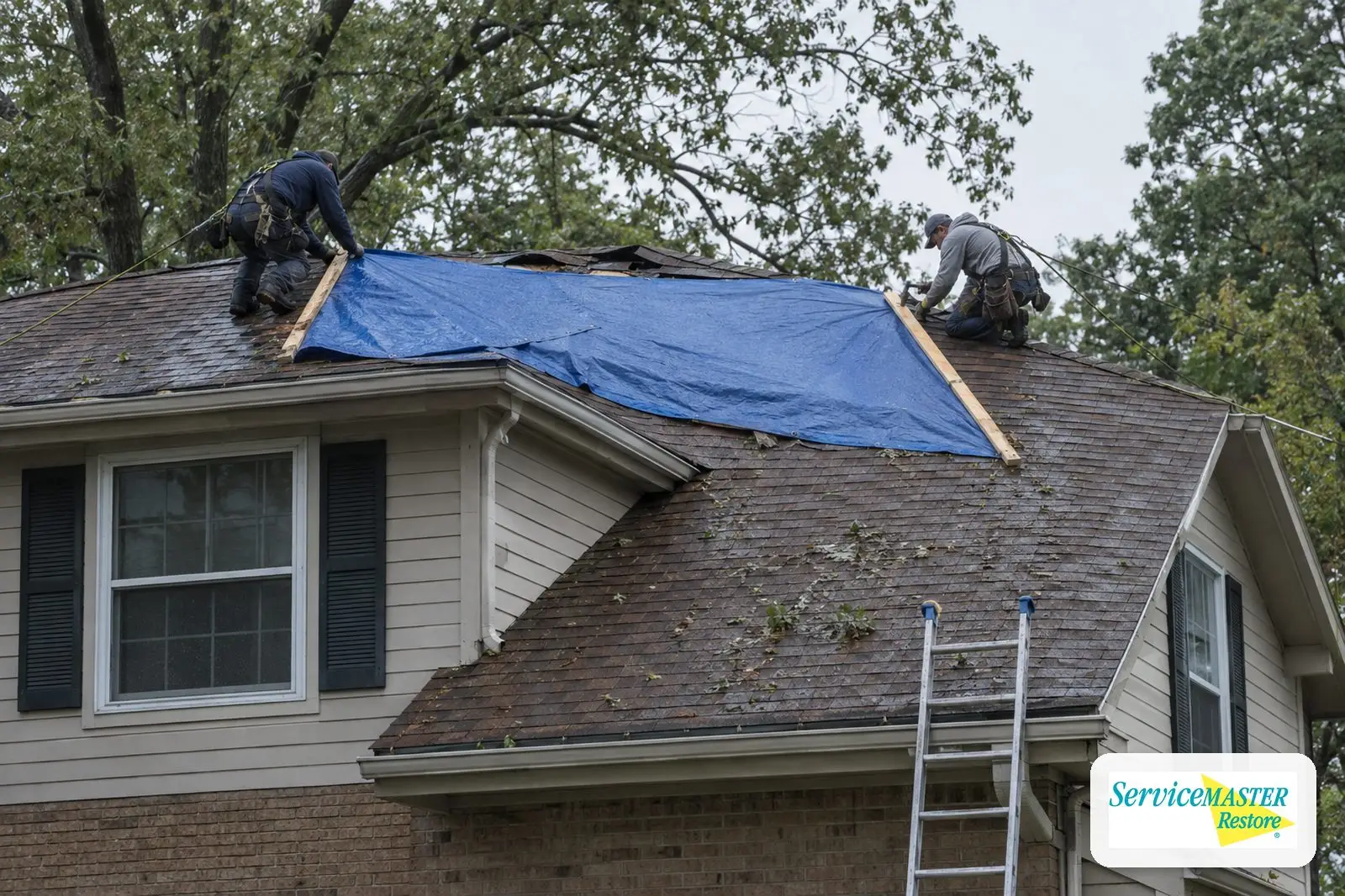
Emergency board-up and roof tarping are temporary repairs that close storm openings, such as a broken window or a torn roof, until permanent work begins. They keep rain, wind and intruders out, limit further damage, and are the kind of reasonable protective step insurers generally ask you to take. Policies vary, so confirm with your insurer.
When summer storms roll through Naperville, Hinsdale or Lockport, the damage rarely ends when the wind stops. Shingles peeled back by a gust, a skylight cracked by hail, a limb through a back window: each becomes a path for the next rain. Here is what to do after wind, hail or severe-storm damage in DuPage and Will County, in the order that keeps people safe and the damage from growing.
Safety first: what to check before you touch anything
Property can wait a few minutes. People can’t. Walk through these checks before anyone starts cleaning up.
Downed power lines and trees
Treat every fallen line as live. Ready.gov’s thunderstorm guidance is direct: “Watch for fallen power lines and trees. Report them immediately.” The National Weather Service gives the same instruction after tornadoes and tells people to contact local authorities if you see power lines down. Keep kids and pets inside until the utility has cleared it.
Structural risk
A tree on the roof, a sagging ceiling or a cracked foundation wall changes the plan. The CDC advises people not to go inside a home with obvious damage, like downed power lines, downed trees, or cracks in the walls or foundation, and to have a professional inspect the home for safety before going in. The NWS puts it in four words: stay out of damaged buildings.
Dress for debris
Storm cleanup means broken glass, nails and splintered wood. Ready.gov recommends thick-soled shoes, long pants, and work gloves. And please don’t climb a wet, storm-damaged roof to drape a tarp yourself; slick shingles, loose decking and gusts make it one of the riskiest jobs after a storm.
The first 24 hours after storm damage
A practical order of operations for a damaged home or business.
Right away
Get people safe and report hazards
Stay clear of downed lines and report them. Don’t go inside if you see foundation cracks, a tree on the structure or a sagging ceiling.
First hour
Photograph and video everything
Capture damage inside and out before you move, clean or cover anything.
Hours 1 to 4
Report the loss and call for temporary protection
Contact your insurer as soon as possible. Arrange board-up or roof tarping for any opening the weather can reach.
Hours 4 to 12
Close openings and protect contents
Board windows and doors, tarp the roof, move furniture out of drip zones or cover it. Keep every receipt.
Hours 12 to 24
Start drying and build your inventory
EPA says to dry water-damaged areas within 24 to 48 hours to prevent mold. List damaged items and keep them until the adjuster has seen them.
Hour windows are a practical guide, not a rule; the 24 to 48 hour drying window is from the U.S. EPA. Sources: Ready.gov, CDC, NWS, Triple-I, Illinois Department of Insurance, EPA.
What severe weather looks like in DuPage and Will County
The National Weather Service defines a severe thunderstorm as one capable of producing hail an inch or larger or wind gusts over 58 mph. Either is enough to lift shingles, crack siding and break glass.
The NWS Chicago office, whose forecast area covers northern Illinois including DuPage and Will counties, keeps a 75-year severe weather climatology. It says the severe weather season runs from April through September, with June and July the most active months. Its county records show a maximum measured gust of 82 mph in DuPage County (July 1, 2012) and 88 mph in Will County (June 29, 2011), according to the office’s hazard breakdown. As the chart shows, wind, not tornadoes, dominates the record.
Severe weather reports by type, NWS Chicago area, 1950 to 2024
Total certified reports: 8,881
Damaging wind: 5,974
Damaging hail: 2,106
Tornadoes: 801
Source: NWS Chicago, Hazard Breakdown (updated May 2025), covering parts of northern Illinois and northwestern Indiana. NWS notes counts have risen partly because reporting is easier today.
Why emergency board-up and roof tarping matter
They stop the second round of damage
The first storm breaks the opening. The next one, sometimes hours later, does the expensive part: rain through a torn roof soaks attic insulation, then ceiling drywall, then whatever sits below. The EPA says it is important to dry water-damaged areas and items within 24-48 hours to prevent mold growth. A tarp in place tonight keeps tomorrow’s rain out of that clock.
They secure the building
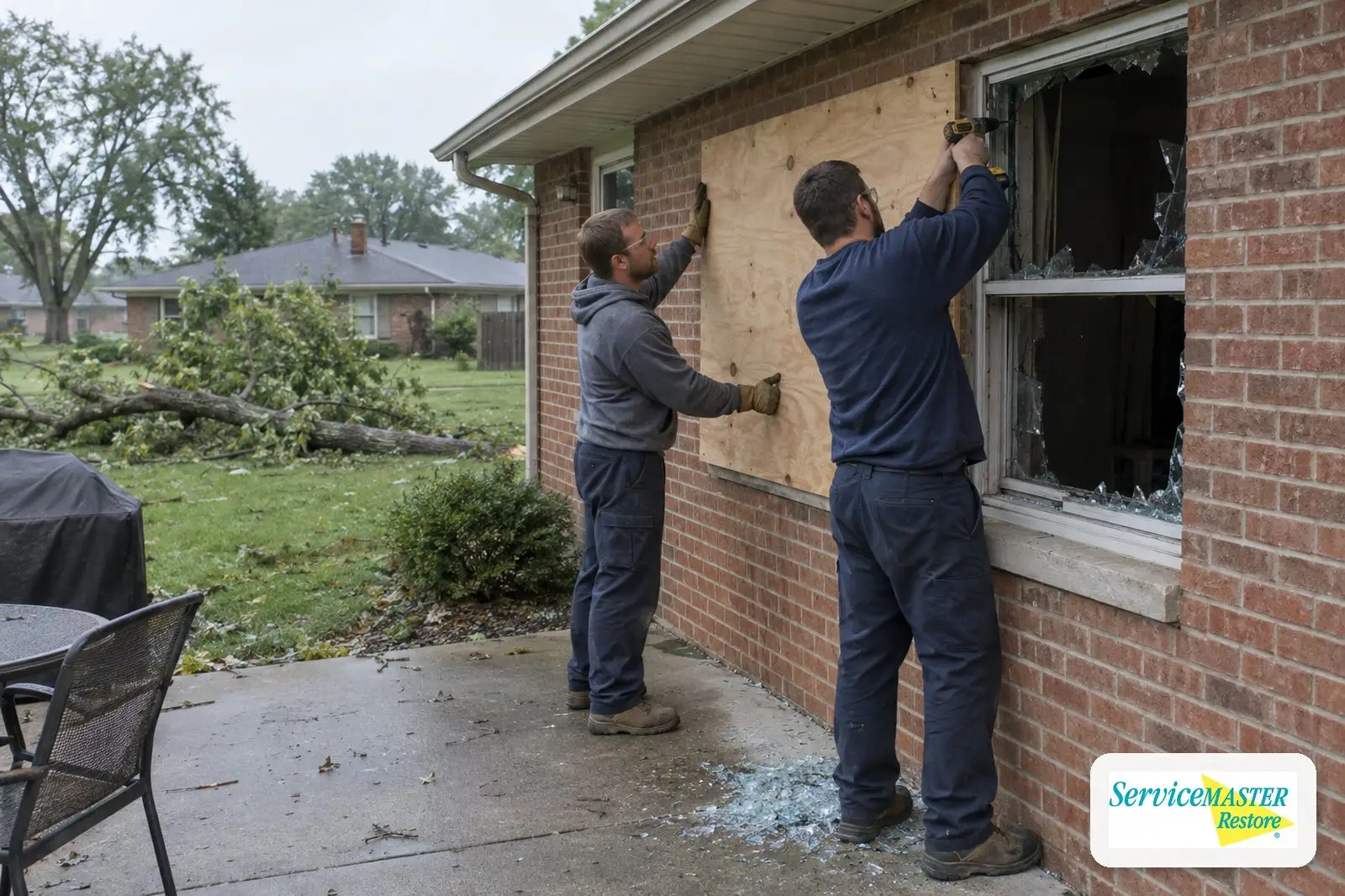
A smashed patio door or storefront window invites people and animals as well as weather. The Illinois Department of Insurance tells policyholders they should make all necessary temporary repairs, such as boarding up windows. Our emergency board-up and site securing service covers both homes and commercial properties.
Your policy likely expects it
The Insurance Information Institute (Triple-I) tells homeowners to photograph or videotape the damage, then take reasonable steps to protect your property from further damage, and to save receipts so you may be able to submit them for reimbursement. Triple-I also cautions that payments for temporary repairs are part of the total settlement. Temporary work should be sized to the problem, not oversold.
Policies vary. Ask your agent or adjuster how your coverage handles emergency repairs.
How temporary storm protection works
Boarding up windows and doors
Board-up starts with clearing loose glass from the frame. Plywood is cut to cover the full opening and fastened so wind can’t pry it loose. Doors that no longer latch get the same treatment. On a commercial strip in Downers Grove, that may mean a full storefront; on a ranch house in Woodridge, one bedroom window.
Tarping a damaged roof
A good roof tarp does two jobs: it covers the damaged section with plenty of overlap, and it sheds water downhill instead of channeling it under the edges. Heavy-duty tarps are commonly run up and over the ridge where possible and secured with wood strips fastened along the edges, so gusts don’t turn the tarp into a sail. Skylights and flashing torn loose by wind leak even when shingles look fine. See roof tarping and structural stabilization for what that work includes.
Stabilizing structural damage
When a tree lands on a roof or wall, the structure may be carrying loads it wasn’t built for, so shoring and careful removal come before any tarp. Permanent roof repair is a separate step: in Illinois, roofers must be licensed by the Illinois Department of Financial and Professional Regulation, according to the Illinois Attorney General.

Documenting storm damage for your insurance claim
A clean record makes the adjuster’s visit simpler. These steps draw on Triple-I and Illinois Department of Insurance guidance.
- Photograph before you repair. IDOI suggests taking photographs to show the way things looked before you began cleaning and making repairs. Include the roof from the ground, broken windows, ceilings and wet flooring.
- Report the loss early. IDOI advises contacting your insurance producer or company as soon as possible after a disaster. Write down your claim number and the adjuster’s contact details.
- Keep damaged items. IDOI says not to dispose of items you believe may be a complete loss until the company representative has examined them.
- Save every receipt. Tarps, plywood, hotel nights and emergency service invoices all go in one folder.
- Hold off on big permanent repairs. Triple-I advises against making extensive permanent repairs until the claims adjuster has assessed the damage.
- Watch the calendar. Triple-I notes that most policies require claims to be filed within one year from the date of the disaster, and that you can “reopen” a claim if you find other damage later.
If paperwork is the part you dread, our insurance claim assistance service means we work with your insurance company and help you through the claim. For a deeper look at coverage, read does homeowners insurance cover water damage in Illinois.
This article is general education, not legal or insurance advice. Coverage depends on your specific policy. Check your policy or ask your adjuster.
Be careful with storm chasers
The Illinois Attorney General warns residents to be wary of contractors who go door to door to offer repair services or “free” inspections. The office’s advice:
- Get written estimates from multiple contractors, and don’t be rushed into a deal.
- Never make full payment until the work is completed to your satisfaction, and never pay in cash.
- Public adjusters must be licensed by the Illinois Department of Insurance.
- The Home Repair and Remodeling Act requires written contracts for repair or remodeling work costing more than $1,000.
Our guide on how to choose a water damage restoration company lists more questions to ask before you sign.
When storm water intrusion becomes a restoration job
A few drops on a windowsill can be wiped up. These signs mean water has moved into the building’s materials:
- Ceiling stains that keep spreading, or drywall that bows or feels soft
- Wet attic insulation under a damaged section of roof
- Carpet and pad that stay soaked after surface water is gone
- A musty smell a day or two after the storm
- Water in the basement after heavy rain
How the water got in matters for coverage. Triple-I’s coverage chart lists windstorm or hail as a covered peril on standard homeowners forms, while flood damage is excluded under standard homeowners and renters policies. Rain through a wind-torn roof and water rising into a basement can be treated very differently, so ask your adjuster how your loss is classified.
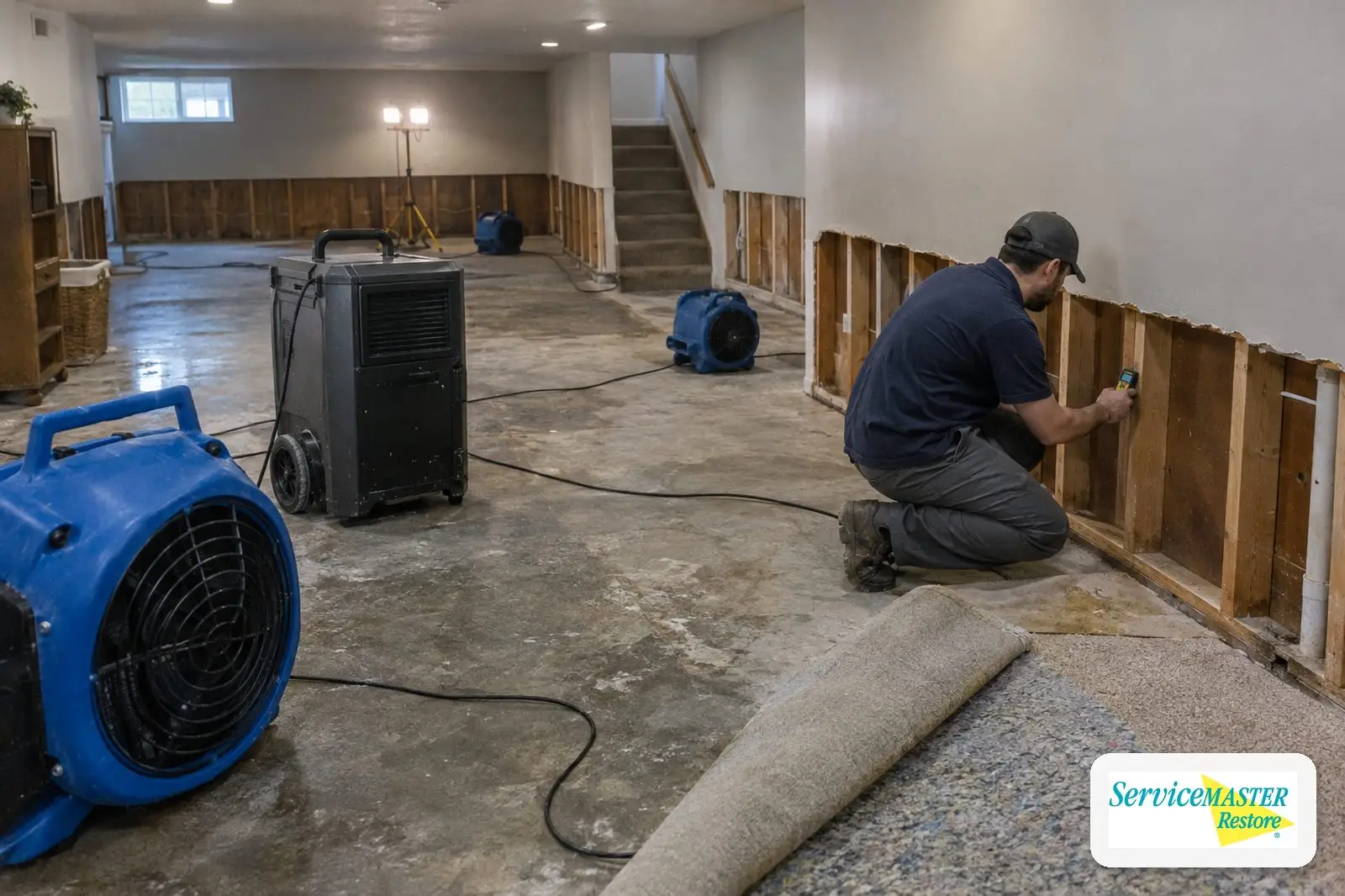
Once openings are closed, the work shifts to extraction and structural drying and dehumidification, where progress is tracked with moisture readings rather than by touch. Our flood and storm damage cleanup service handles that next stage. In eastern DuPage, that includes water damage restoration in Hinsdale and water damage restoration in Burr Ridge; in Will County, water damage restoration in Lockport. If storm water reached a finished basement, read our guide to basement flooding after heavy rain in DuPage. If materials stayed wet too long, mold remediation may come next.
How ServiceMaster Restoration Services helps after a storm
ServiceMaster Restoration Services is based in Lisle and has served homes and businesses across DuPage and Will County for over 20 years. Our certified technicians provide 24/7 emergency response for residential and commercial properties: board-up, roof tarping, water removal and drying. We work with your insurance company and help with the claim.
Frequently Asked Questions
Does homeowners insurance pay for emergency board-up and roof tarping?
In many cases, when the underlying damage is covered, but policies vary. Triple-I tells homeowners to take reasonable steps to protect property from further damage and to save receipts for possible reimbursement. It also notes that temporary repair payments are part of the total settlement, so keep the scope proportionate. Ask your adjuster how your policy treats emergency services before larger work begins.
Should I tarp my roof myself after a storm?
Only if you can do it without climbing onto a wet, damaged roof. Storm-damaged roofs can have loose decking, hidden holes and slick shingles, and wind makes a tarp hard to control. Photograph the damage first. If the roof needs someone on it, call a professional and keep the receipt.
How long can a tarp stay on a roof?
A tarp is a temporary fix meant to hold until the adjuster has inspected the damage and a licensed roofer can make permanent repairs. How long it lasts depends on the material, how it was secured and the weather. Check it after windy days for flapping edges or pooled water.
What should I do first after hail or wind damage to my house?
Make sure everyone is safe, stay away from downed power lines and report them, and don’t enter if you see structural cracks or a tree on the house. Then photograph the damage inside and out, call your insurer to report the loss, and arrange board-up or tarping for any opening. Keep receipts and don’t throw out damaged items yet.
Can I make permanent repairs before the insurance adjuster comes?
Temporary repairs, yes. Large permanent repairs, usually not yet. Triple-I advises against extensive permanent repairs until the claims adjuster has assessed the damage, and the Illinois Department of Insurance suggests getting your adjuster’s agreement before contracting for repairs. Document first, protect the property, then talk with your adjuster.
Related guides and services
- Emergency board-up and site securing
- Roof tarping and structural stabilization
- Flood and storm damage cleanup
- 24/7 emergency restoration response
- Structural drying and dehumidification
- Help with your insurance claim
- Water damage restoration in Hinsdale
- Basement flooding after heavy rain in DuPage
- Does homeowners insurance cover water damage in Illinois?
- All restoration guides
Storm opened up your roof or windows? Call (630) 241-1111, 24/7, for emergency board-up, roof tarping and water cleanup in DuPage and Will County, or contact us online.
Sources
- National Weather Service: Severe Thunderstorm Safety
- National Weather Service: What to Do After a Tornado
- NWS Chicago: Severe Weather Climatology
- NWS Chicago: Severe Weather Hazard Breakdown, 1950 to 2024
- Ready.gov: Thunderstorms and Lightning
- Ready.gov: Tornadoes
- CDC: Safety Guidelines, Returning Home After a Natural Disaster
- Insurance Information Institute: How to File a Homeowners Claim
- Insurance Information Institute: Settling Insurance Claims After a Disaster
- Insurance Information Institute: Which Disasters Are Covered by Homeowners Insurance?
- Illinois Department of Insurance: Disasters
- Illinois Attorney General: Warning on Storm-Related Repair Scams (2024)
- U.S. EPA: A Brief Guide to Mold, Moisture and Your Home