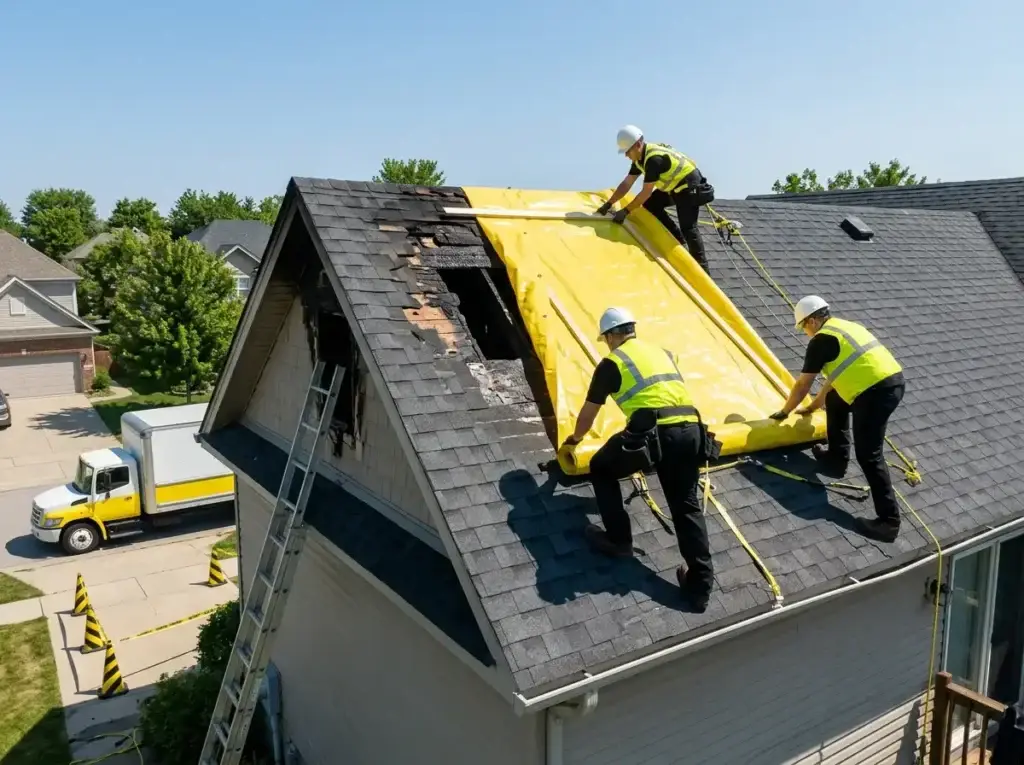


What is emergency roof tarping, and what does structural stabilization mean?
Emergency roof tarping covers a damaged roof with heavy polyethylene sheeting secured by battens so rain cannot reach the attic and ceilings below. Structural stabilization adds temporary supports, such as shoring posts and beams, where fire, a fallen tree or storm damage has weakened framing, until an engineer and contractor plan permanent repairs.
When does a roof need an emergency tarp?
Any opening that lets water reach the roof deck or attic qualifies. The most common causes we see are:
- Fire. Burned decking, plus ventilation holes cut during firefighting.
- Tree impact. A limb or trunk that punctures decking and cracks rafters or trusses.
- Wind. Shingles lifted or torn off, exposing underlayment that was never meant to be the last layer.
- Hail. Bruised or punctured shingles and broken skylights.
The National Weather Service defines a severe thunderstorm as one capable of producing hail an inch or larger or wind gusts over 58 mph, and notes that hail that size can damage roofs. You do not need a tornado to lose part of a roof. In the NWS Chicago forecast area, four in five damaging wind reports involve speeds below 70 mph.
Damaging wind reports by estimated or measured wind speed
Percent of reports, NWS Chicago forecast area (northern Illinois and northwest Indiana), 1950 to 2024
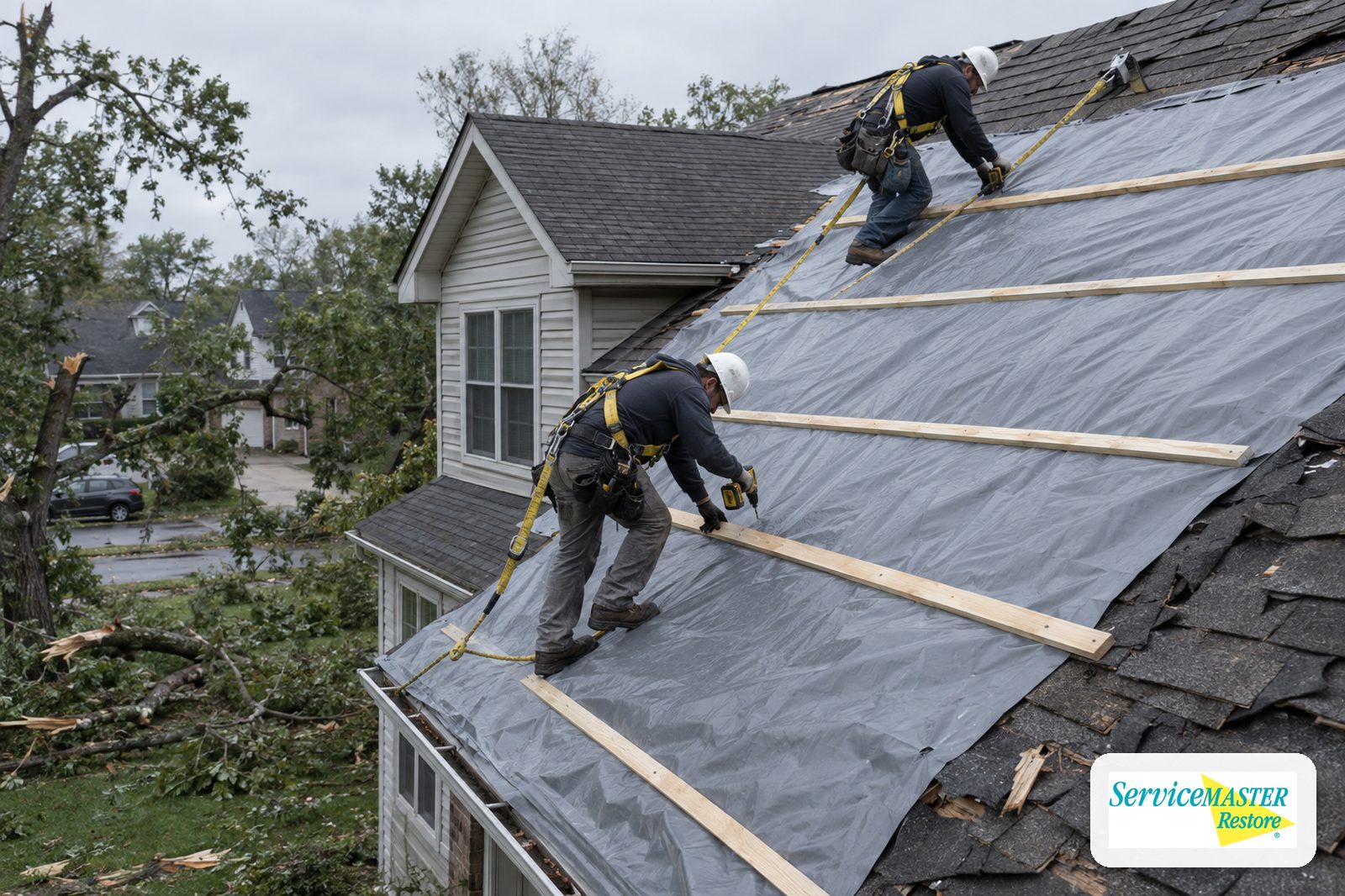
A tarp is a holding measure, not a repair
Polyethylene breaks down in sun and wind, and battens put new fastener holes in the decking. A tarp buys time for the adjuster's inspection, the drying work inside and a roofer's schedule. It should be checked after every storm until the permanent roof goes on.
How is a roof tarp installed correctly?
Crews adapt to each roof, but the industry-standard sequence is consistent:
- Assess from the ground and attic. Look for sagging, cracked rafters or burned decking before anyone steps on the roof. A roof that may not hold weight is worked from a lift or not at all.
- Set up fall protection. Anchors, harnesses or guardrails go in before work at the edge begins.
- Clear debris. Remove branches and loose shingles so nothing tears the sheeting or traps water.
- Size the sheeting. Use a tarp large enough to extend past the damage on every side and, where possible, over the ridge so water sheds over it rather than under it.
- Secure with battens. Wrap tarp edges around wood strips and screw them to the deck so wind cannot get underneath and loads spread evenly.
- Check inside. Confirm drips have stopped, then start drying wet insulation and drywall below.
- Monitor. Re-inspect after wind, heavy rain or snow until permanent roofing is installed.
What does OSHA require for emergency roof work?
Falls are one of the main reasons roof tarping is not a do-it-yourself job on a wet, damaged roof. The Occupational Safety and Health Administration's fall protection guidance says fall protection is required at six feet in the construction industry. The federal construction standard, 29 CFR 1926.501, requires employers to protect workers on surfaces with an unprotected edge 6 feet or more above a lower level with guardrails, safety nets or personal fall arrest systems.
For homeowners, the NWS advice after a storm is simpler: stay out of damaged buildings and contact local authorities if you see power lines down. Put buckets under drips, move valuables, and call for help.

Water that gets past the roof keeps moving
Rain through a roof opening soaks attic insulation first, then ceiling drywall, then whatever sits below. Once the tarp is on, structural drying and dehumidification removes the moisture already inside the assembly so it does not turn into a mold problem.
What is temporary shoring, and who decides what is safe?
Shoring transfers loads around a weakened member. Typical examples are adjustable steel posts under a cracked beam, or temporary walls built beneath a fire-damaged roof section so debris can be removed safely. It is a short-term measure designed to keep the structure from moving while the damage is evaluated.
Decisions about whether a structure is safe to enter, how much load a damaged truss can carry, or whether a section must come down belong to a qualified structural engineer and the local building official. The Illinois Department of Insurance notes that if your insurer's representative agrees a house is structurally unsafe, the company may hire a structural engineer to inspect it. The engineer's findings then shape the scope for repairs and reconstruction.
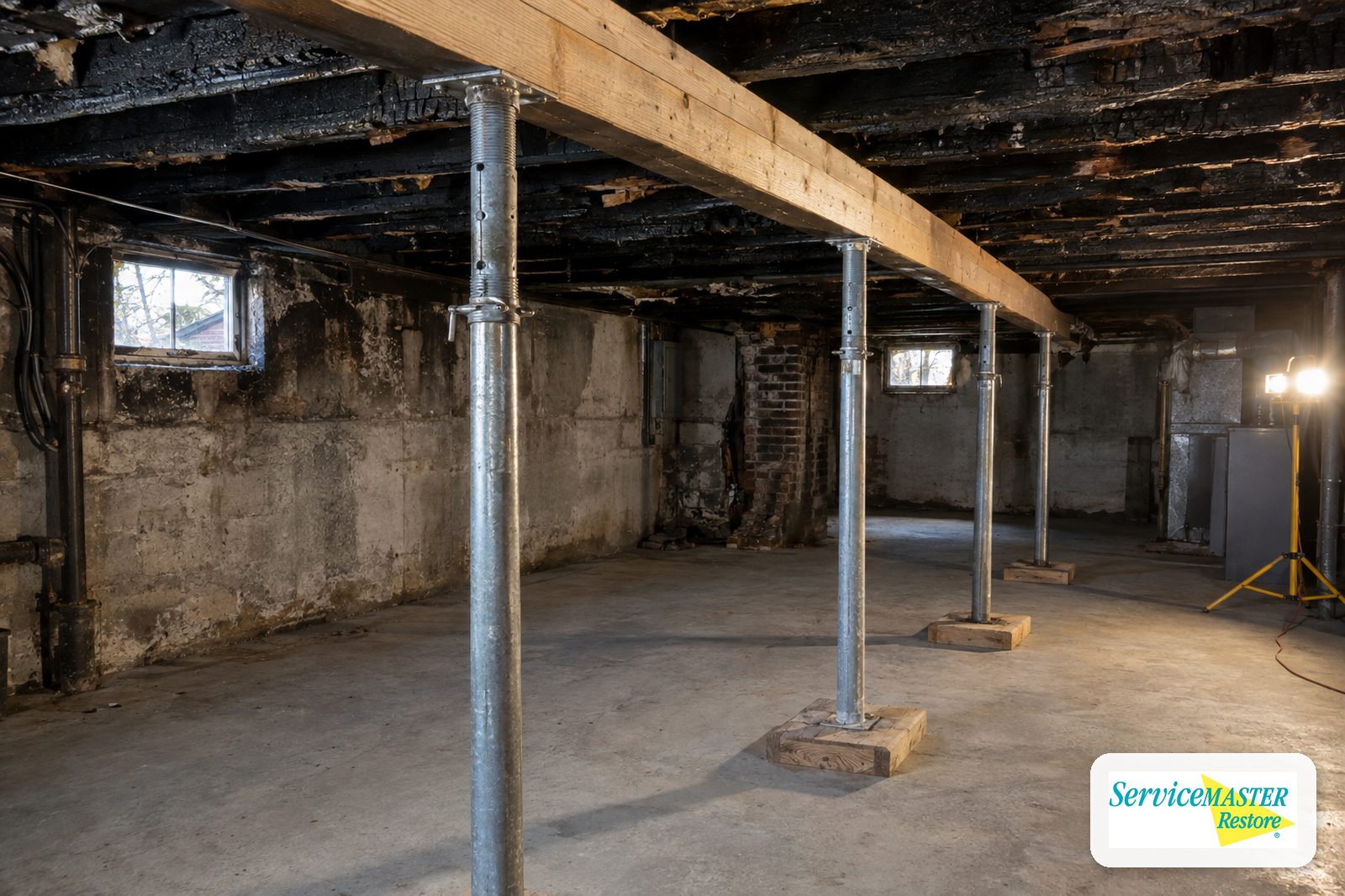
Temporary posts carry load; engineers set the plan
Adjustable steel posts on solid bearing can hold a sagging beam in place for weeks. Where they go, and how many, depends on the load path, which is why shoring layouts on serious damage come from an engineer rather than a rule of thumb.
Roof damage in DuPage and Will County: what to expect
NWS Chicago puts the local severe weather season at April through September, with damaging winds most frequent in June and July and damaging hail most frequent in May and June. The office's county records list maximum measured gusts of 82 mph in DuPage County and 88 mph in Will County.
Winter brings a different risk. Snow and ice can load a tarped roof and work at the batten fasteners, and ice dams form at eaves where heat escapes through damaged areas. Tarps that went on in October need checking after the first heavy snow.
From our Lisle base we respond across both counties, including Plainfield, Romeoville, Lockport and Homer Glen. Tarping is often paired with emergency board-up for broken windows, and it is the first step in both residential fire damage restoration and flood and storm damage cleanup. For storm safety and documentation tips, read our storm board-up and roof tarping guide. Our fire damage and insurance claim assistance pages explain what comes next.
Safety first: never climb onto a roof that is sagging, still smoldering, coated in ice or near a downed line. Photograph the damage from the ground, protect what you can inside, and wait for trained crews with fall protection.
Roof open to the weather? We are available 24/7. Contact us online or call (630) 241-1111.
Frequently asked questions
How long can an emergency roof tarp stay on?
A properly battened tarp is meant to last until permanent roofing is installed, which may be weeks while the claim is adjusted and a roofer is scheduled. Sun, wind and snow wear it down, so it should be checked after every storm and re-secured if edges lift or water appears inside.
Is roof tarping covered by homeowners insurance?
Policies commonly expect owners to take reasonable steps to prevent further damage, and the Illinois Department of Insurance lists patching holes in roofs among the temporary repairs to make as soon as possible. Whether the tarp is reimbursed depends on your policy and the cause of loss, so photograph the damage and keep every invoice.
Should I put a tarp on my own roof after a storm?
Usually not. A damaged, wet roof is a fall hazard, and OSHA requires employers to provide fall protection for construction work at six feet or more. Homeowners have no harness or anchor. Catch drips with buckets, move belongings, photograph the damage from the ground and leave the roof to a trained crew.
What happens when a tree falls on a house?
Get everyone out of the affected rooms, stay clear of downed lines and call the utility if wires are involved. Tree removal usually comes before tarping, because the weight may be the only thing holding a broken section in place. Damaged framing may need temporary shoring and an engineer's review before the roof is closed in.
When is a structural engineer needed after roof damage?
An engineer should look at cracked or burned rafters and trusses, sagging ridges, damaged bearing walls, or any case where someone questions whether the building is safe to enter. The Illinois Department of Insurance notes an insurer may hire a structural engineer when its representative agrees a house is structurally unsafe.
Sources
- National Weather Service: Severe Thunderstorm Safety
- National Weather Service Chicago: Severe Weather Hazard Breakdown, 1950 to 2024
- National Weather Service Chicago: Severe Weather Climatology
- Occupational Safety and Health Administration: Fall Protection
- Electronic Code of Federal Regulations: 29 CFR 1926.501, Duty to Have Fall Protection
- National Weather Service: What to Do After a Tornado
- Illinois Department of Insurance: Disasters: Temporary Repairs and Claim Tips