What should you do in the first hour after water, fire or storm damage?
Get people and pets safe, then stop the source if you can do it safely: shut off the water main, stay out of a fire-damaged building until the fire department clears it, and avoid wet electrical equipment and downed lines. Photograph the damage, call your restoration company and your insurer, and protect belongings from further harm.
A first-hour safety checklist that works for most emergencies
Every loss is different, but the order of priorities rarely changes. Work through this list before worrying about cleanup.
- People first. Get everyone out of rooms with sagging ceilings, smoke, standing water near outlets or gas odor. Call 911 for fire, injuries or a gas smell.
- Do not re-enter until it is cleared. After a fire, the U.S. Fire Administration says not to enter until the fire department says it is safe, and not to turn utilities back on yourself.
- Control electricity. Ready.gov warns not to touch electrical equipment if it is wet or you are standing in water, and to turn off power only if it is safe to do so.
- Stop the water. For a burst pipe or failed supply line, close the main shutoff valve. If the water is coming from outside, do not wade into a flooded basement.
- Document. Take photos and video of every affected area before moving anything.
- Protect what you can. Move valuables, documents and electronics out of the wet area. Put buckets under drips.
- Make the calls. Call your restoration company and your insurance company, and write down claim numbers and names.
First-hour priorities by type of emergency
Each kind of loss carries its own main hazard. This table pulls the official guidance into one place.
| Emergency | Do first | Avoid |
|---|---|---|
| Fire | Get out, call 911, wait for the fire department to say it is safe to enter | Turning utilities back on yourself; entering before release |
| Flooding or basement water | Turn off electricity only if safe; keep people out of the water | Touching wet electrical equipment; wading in floodwater, which can be contaminated or electrically charged |
| Storm or tornado damage | Wear long sleeves, long pants and sturdy shoes; report downed power lines | Entering damaged buildings |
| Power loss during cleanup | Run generators only outdoors, away from windows | Running a generator or other gas-powered machinery indoors |
| Any water damage | Start drying within 24 to 48 hours | Leaving wet materials to dry on their own |
Sources: U.S. Fire Administration, After the Fire (FA-46); Ready.gov, Floods; National Weather Service, After a Tornado; U.S. EPA, A Brief Guide to Mold, Moisture and Your Home.

Know where your main water shutoff is before you need it
In many Chicago-area homes the main valve sits where the water line enters the basement, often near the meter. Tag it and make sure every adult in the house can find it in the dark. A burst pipe can release a lot of water while someone hunts for the valve.
What should you tell the emergency dispatcher?
A clear first call helps the crew bring the right equipment the first time. Have these answers ready:
- Address and access: gate codes, lockbox, which door to use, where to park.
- What happened: burst pipe, sewer backup, roof leak, fire, tree impact or storm.
- Is it stopped? Whether the water is shut off or the fire department has released the scene.
- Power and gas status: on, off, or unknown.
- How long and how far: when it started, how many rooms or floors, and finished surfaces affected, such as carpet, hardwood or drywall.
- Who is there: occupants, tenants, pets, or anyone with special needs.
- Insurance: carrier and claim number if you already have one.
- Photos: whether you can text or email pictures of the source and the worst-affected room.

Photos now save questions later
Wide shots of each room, then close-ups of the source, water lines on walls and damaged items, give your adjuster and your restoration crew the same starting point. Take them before anything is moved or thrown out.
Why does speed matter so much?
Water does not stay where it lands. It wicks up drywall, soaks into wood floors and cabinet bases, and migrates under walls into rooms that looked dry. The EPA's guide to mold and moisture says it is important to dry water-damaged areas and items within 24 to 48 hours to prevent mold growth, and that if materials are dried in that window, in most cases mold will not grow.
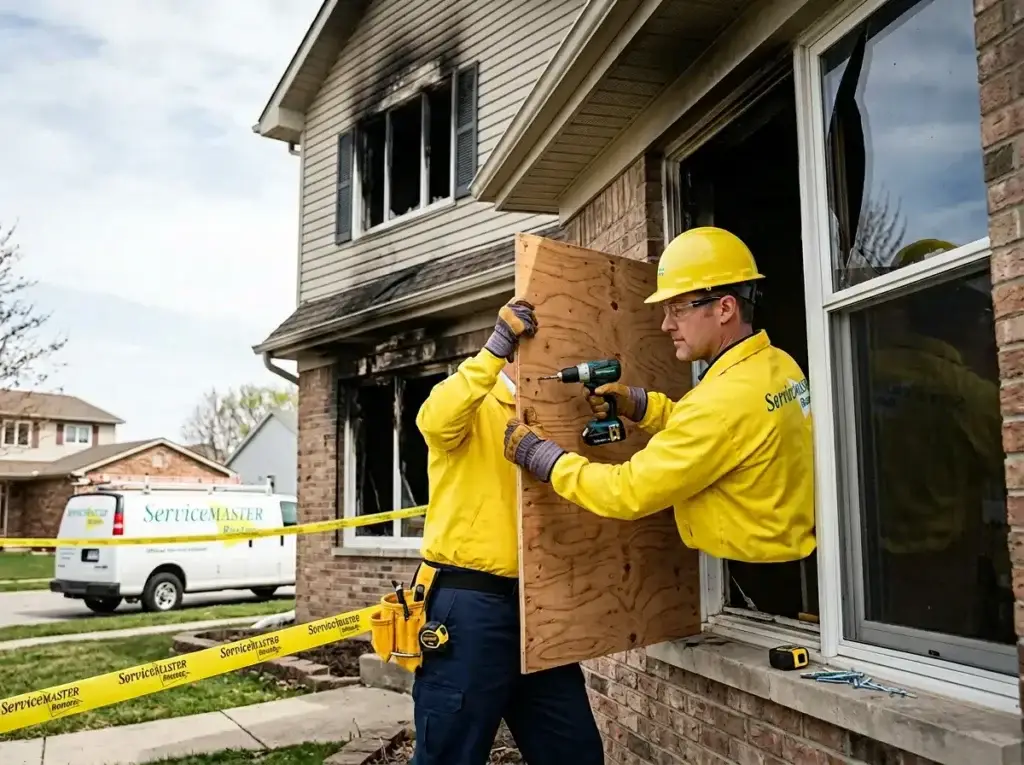
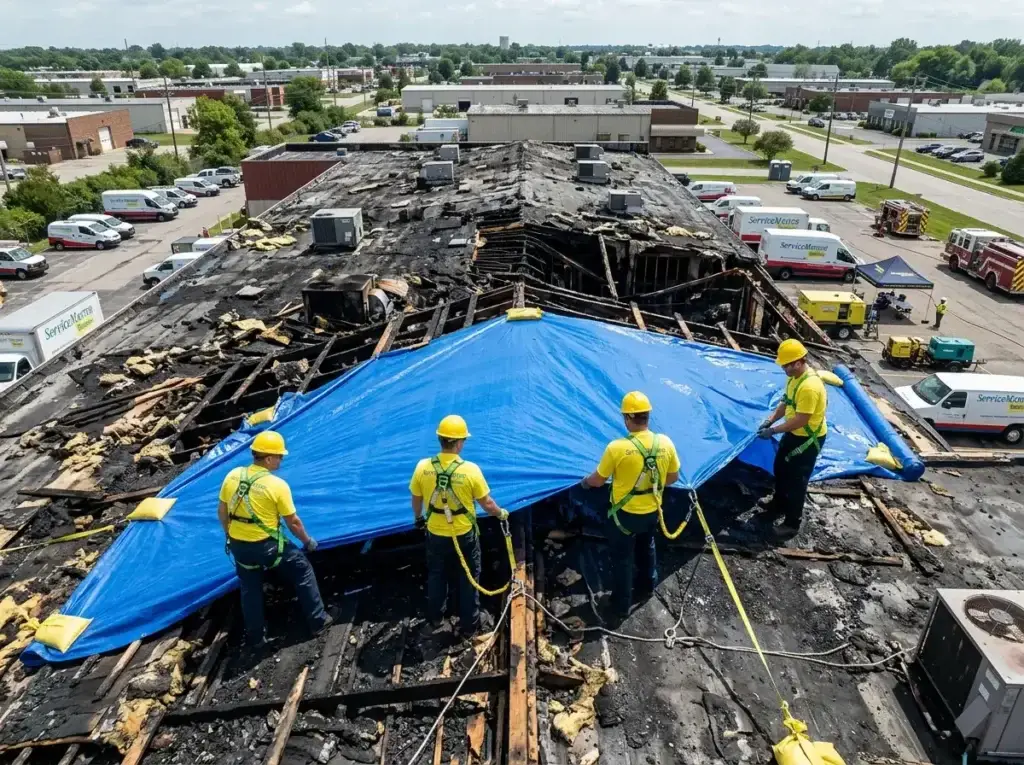
Restorers call what happens after that window secondary damage: swollen flooring, delaminated cabinets, odor and mold. Fire losses add soot residue and the water used to put the fire out. That is why the first visit focuses on emergency water removal, board-up and roof tarping before any rebuilding is discussed.
Water problems are common. The Insurance Information Institute estimates that about one in 60 insured homes has a property damage claim from water damage or freezing each year.

The first visit is about stabilizing, not rebuilding
Early work usually means extraction, air movers and dehumidifiers, moisture readings, and covering openings. Decisions about new flooring or cabinets come later, once the structure is dry and the adjuster has seen the damage.
Emergency response across DuPage and Will County
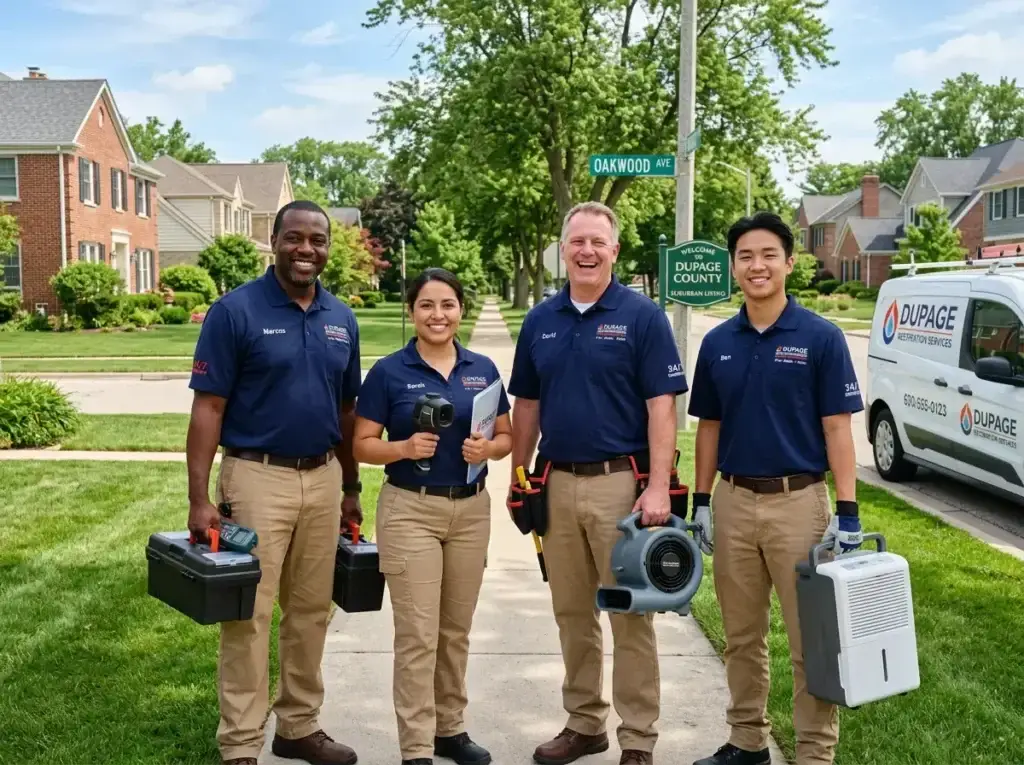
Our team is based in Lisle and is available 24/7 for homes and businesses. Winter brings frozen and burst pipes, summer storms bring roof leaks and basement flooding, and fires happen year-round. We respond across the area, including Naperville, Aurora, Bolingbrook and Lisle.
Businesses have extra first-hour tasks: account for employees, protect records and server rooms, and decide whether to close for the day. A written plan that names who calls the restoration company, the insurer and the landlord makes that hour calmer.
For homes, start with residential water damage restoration; for offices, stores and warehouses, see commercial water damage restoration. Fire emergencies are covered under fire damage, and our burst pipe first-hour guide walks through water emergencies in more detail. When it is time to file, our insurance claim assistance page explains the next steps.
We answer day and night. Contact us or call (630) 241-1111.
Frequently asked questions
Should I turn off the electricity after water damage?
Only if you can reach the panel without standing in water. Ready.gov warns not to touch electrical equipment that is wet or while standing in water, and to turn off power only if it is safe to do so. If the panel is in a flooded basement, stay out and ask the utility or an electrician to disconnect service.
Is it safe to stay in my house after a small fire?
Not until the fire department says so. The U.S. Fire Administration advises against entering a fire-damaged home until it is cleared, and firefighters may disconnect utilities that are unsafe; do not reconnect them yourself. Even a small fire can leave soot, smoke odor and damaged wiring, so plan to stay elsewhere until the home is checked.
Can I start cleaning up before the insurance adjuster comes?
You can, and generally should, take steps to stop further damage: extracting water, drying, board-up and tarping. Photograph everything first and keep receipts. Avoid throwing out damaged items or starting permanent repairs until the adjuster has seen them, and ask your insurer if you are unsure what to keep.
What counts as a restoration emergency?
Anything that is getting worse while you wait: active leaks, standing water, sewage backup, a roof or window open to the weather, fire or smoke damage, or a structure someone could enter. A small, contained spill you have already dried is usually not an emergency, but materials still wet after a day should be checked.
Do you handle emergencies on nights, weekends and holidays?
Yes. We are available 24/7, including nights, weekends and holidays, for water, fire and storm emergencies at homes and businesses across DuPage and Will County. Call (630) 241-1111 and describe what happened, whether the source is stopped, and which areas are affected so the right equipment is planned.
Sources
- U.S. Fire Administration (FEMA): After the Fire: Returning to Normal (FA-46)
- Ready.gov (FEMA): Floods
- National Weather Service: What to Do After a Tornado
- U.S. Environmental Protection Agency: A Brief Guide to Mold, Moisture and Your Home
- Insurance Information Institute: Facts + Statistics: Homeowners and Renters Insurance
- Insurance Information Institute: How to File a Homeowners Claim