


What is emergency board-up, and when does a property need it?
Emergency board-up is the temporary closing of broken windows, doors and wall openings with exterior-grade plywood and fasteners after a fire, storm, vehicle impact or break-in. It keeps out rain, wind, animals and intruders, protects what survived, and shows your insurer you took reasonable steps to prevent further damage.
Why do insurers expect you to secure the property right away?
Most homeowners and commercial policies ask you to limit further loss once damage happens. The Illinois Department of Insurance tells policyholders to make all necessary temporary repairs, such as boarding up windows and patching holes in walls or roofs, as soon as possible, even before the company representative has visited. It also reminds owners that it is their responsibility to mitigate against further damage.
The Insurance Information Institute gives the same order of operations in its guide to filing a homeowners claim: photograph or video the damage first, then take reasonable steps to protect the property, and save every receipt. Policies vary, so check yours or ask your agent how emergency work is handled. Our insurance claim assistance page explains the rest of the claim process.
The perils that most often break openings are also the most expensive ones. Wind and hail plus fire and lightning made up almost two-thirds of homeowners loss dollars in the latest national data.
Share of homeowners insurance losses by cause
Percent of incurred losses, United States, 2023
Source: Insurance Information Institute, Facts + Statistics: Homeowners and Renters Insurance (ISO/Verisk data, 2023). Liability and other non-property losses make up the remaining 2.7%.
What needs to be secured after a fire, storm or break-in?
The opening tells you the job, but the cause changes the priorities.
After a fire
Fighting a fire often leaves broken windows and ventilation holes cut in the roof. Once the fire department releases the scene, those openings let in weather and expose the contents to theft. The U.S. Fire Administration's After the Fire guide advises owners not to enter until the fire department says it is safe, to tell local police the home will be vacant, and notes you may need to board up windows and doors so no one can get in. Board-up is usually the first step of residential fire damage restoration, ahead of smoke and soot cleanup and water cleanup after firefighting.
After a storm
Wind-driven debris and hail break glass and patio doors; a fallen limb can open a wall. Openings in the roof are covered separately with roof tarping and structural stabilization.
After a break-in or vehicle impact
Here security comes first: a door that no longer latches or a storefront with missing glass invites a second entry the same night.
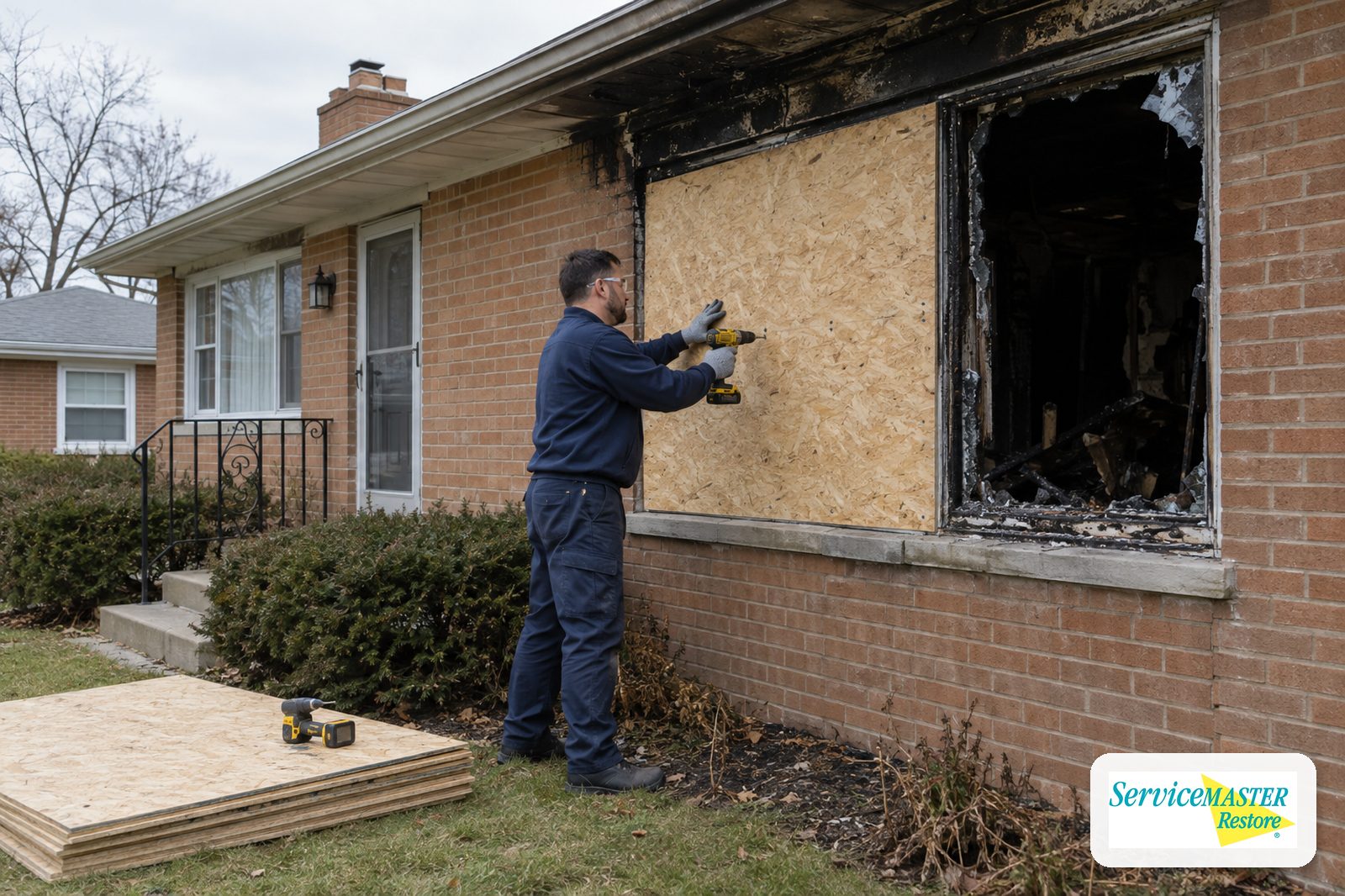
Board-up protects the evidence as well as the building
An insurance adjuster needs to see the damage as it was. Photos taken before boarding, plus a secured scene that nobody has picked through, make the claim easier to document. Avoid throwing out damaged items until the adjuster has seen them.
When does a site need temporary fencing?
Plywood closes openings. Fencing controls the whole site. It is worth considering when there is a debris pile, broken glass or a partly collapsed structure that a neighbor, child or passer-by could walk into, or when a commercial building will sit empty for weeks while the claim is settled.
Property owners can be responsible for injuries on their premises, so a perimeter is a reasonable precaution while the building is unsafe. Fencing panels also give crews a defined work area and keep dumpsters and equipment out of driveways and sidewalks. For businesses, our commercial fire damage restoration team plans fencing around deliveries, parking and fire lanes.
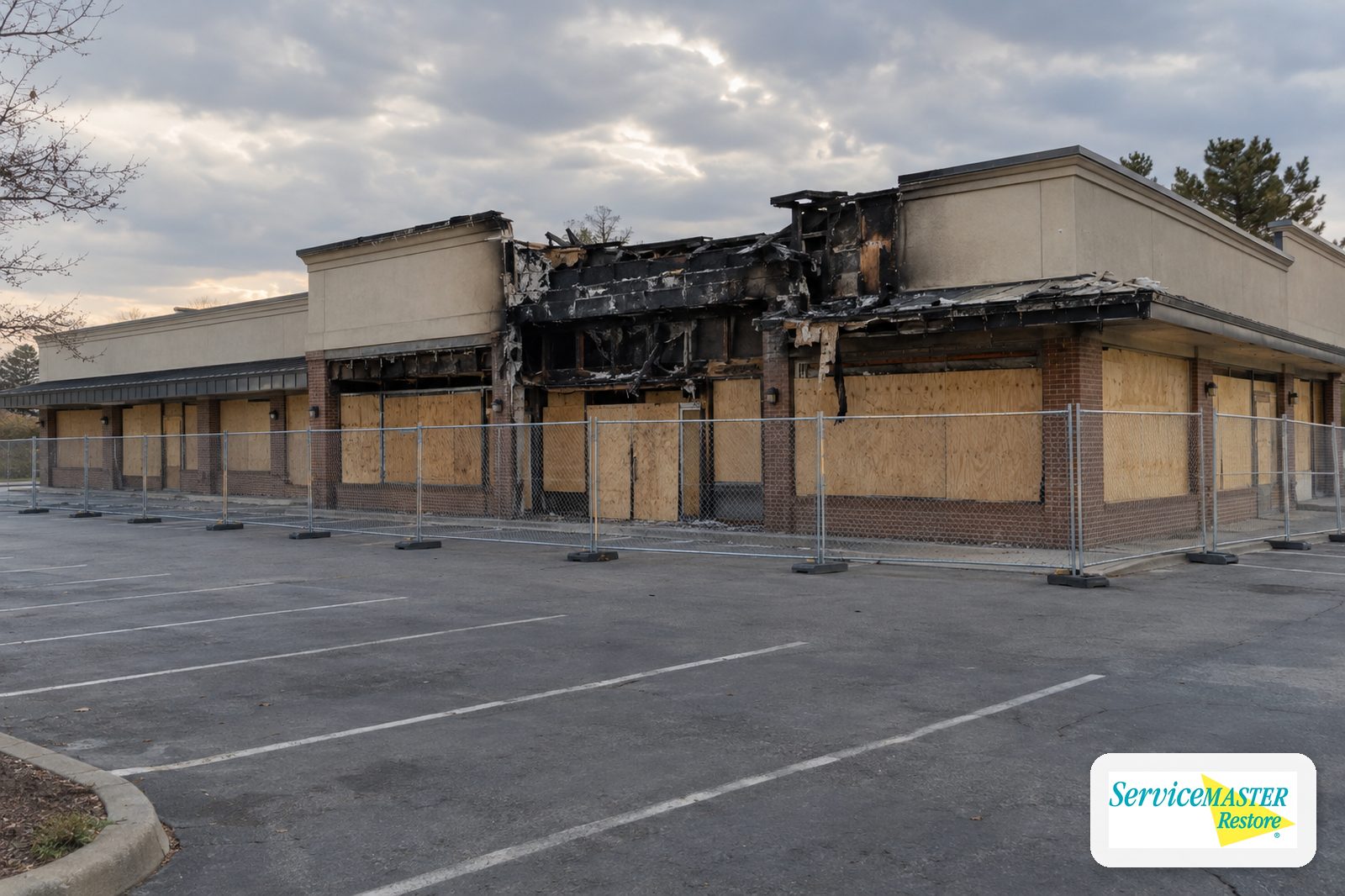
Fencing for vacant and commercial properties
Freestanding fence panels on weighted bases go up without digging, which matters when underground utilities have not been located. Panels are typically clamped together so a single section cannot be lifted out.
How does a professional board-up work, step by step?
Methods vary by building, but the industry-standard sequence looks like this:
- Safety release. Confirm the fire department or utility has cleared the structure and that gas and electrical hazards are controlled.
- Document first. Photograph every opening and the surrounding damage before anything is covered.
- Clear loose glass and debris. Remove shards that could fall later or cut the next person who opens the panel.
- Measure and cut. Cut exterior-grade plywood or OSB to overlap the opening so fasteners reach solid framing, not trim.
- Fasten and seal. Screw panels into framing, then seal edges against wind-driven rain where weather is expected.
- Keep one controlled entry. Fit a lockable access door so adjusters and crews can enter without removing panels.
- Re-check. Inspect panels after storms and before rebuild starts, then remove them as windows and doors are replaced.
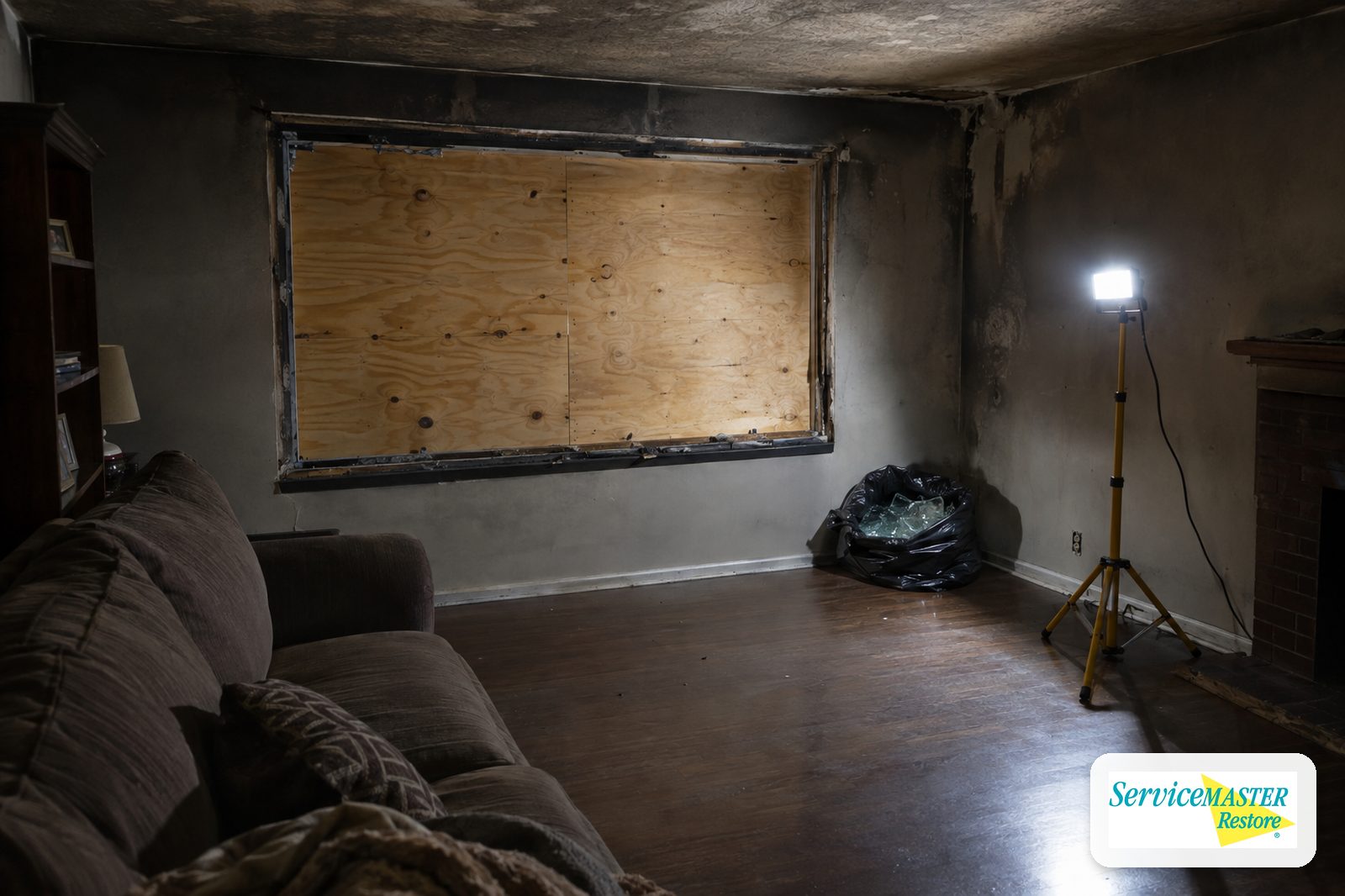
Inside or outside mounting?
Exterior mounting keeps rain off the frame and is harder to pry off. Interior mounting can protect historic trim or upper-floor windows that cannot be reached safely from a ladder. Either way, the panel should be screwed into framing rather than nailed into trim.
Board-up in DuPage and Will County homes and businesses
From our Lisle headquarters we see two peaks: summer thunderstorms that break glass and doors, and winter fires and vacant-house freezes. In winter, a boarded home that has lost heat can freeze its pipes, so board-up is often paired with draining or heating the plumbing.
Many neighborhoods in Naperville, Downers Grove and Bolingbrook include homes built before 1978. Under the emergency provision of the EPA lead Renovation, Repair and Painting rule, work immediately necessary to protect a property is exempt from some lead-safe requirements, but not from cleaning, cleaning verification and recordkeeping. Once the emergency portion is done, the remaining work falls under the full rule.
We secure properties across the area, including Naperville, Downers Grove and Bolingbrook, as part of our wider fire damage services. Our storm board-up and roof tarping guide covers storm safety, and owners can read what to do after a business fire.
Insurance caution: the Insurance Information Institute notes that payments for temporary repairs are part of the total settlement. Keep temporary work sized to the problem, and hold off on permanent repairs until your adjuster has assessed the damage.
Need an opening closed tonight? We are available 24/7. Contact us online or call (630) 241-1111.
Frequently asked questions
How soon should a broken window or door be boarded up after damage?
As soon as it is safe. The Illinois Department of Insurance tells policyholders to make necessary temporary repairs, such as boarding up windows, as soon as possible, even before the insurance company representative visits. Photograph the damage first, wait for the fire department to release a fire scene, and keep receipts for any materials or labor.
Does homeowners insurance pay for emergency board-up?
Many policies treat reasonable steps to prevent further damage as part of the claim, but coverage depends on your policy and the cause of loss. The Insurance Information Institute advises saving receipts for temporary repairs and notes those payments count toward the total settlement. Ask your agent or adjuster, or check the Illinois Department of Insurance consumer pages.
Can I board up my own windows after a storm?
Often, yes, for a ground-floor window you can reach safely. Photograph the damage, wear gloves and eye protection, remove loose glass, and screw exterior-grade plywood into the framing. Leave upper-story openings, damaged walls and anything near downed power lines to professionals, and keep receipts so the cost can be submitted with your claim.
How long can plywood stay on a damaged building?
Board-up is temporary protection, so panels usually stay until windows, doors and framing are replaced during reconstruction. That can be weeks on a larger claim. Panels should be checked after storms, resealed if water gets behind them, and fitted with one lockable access door so adjusters and contractors can enter without removing them.
Do I need temporary fencing around a fire-damaged property?
Fencing makes sense when there is a debris pile, broken glass, an open foundation or an unstable structure someone could wander into, or when a building will sit vacant during the claim. It keeps the public out of a hazardous area and gives crews a defined work zone. Plywood alone secures openings but not the yard around them.
Sources
- Illinois Department of Insurance: Disasters: Temporary Repairs and Claim Tips
- Insurance Information Institute: How to File a Homeowners Claim
- Insurance Information Institute: Settling Insurance Claims After a Disaster
- Insurance Information Institute: Facts + Statistics: Homeowners and Renters Insurance
- U.S. Fire Administration (FEMA): After the Fire: Returning to Normal (FA-46)
- U.S. Environmental Protection Agency: Post-Disaster Renovations and Lead-Based Paint