


What does professional mold remediation involve?
Mold remediation means removing mold growth and the materials it has damaged, cleaning the surfaces that remain, and fixing the moisture that let it grow. EPA warns that if you clean up mold but don't fix the water problem, the mold will most likely come back. Containment, protective equipment and a final check keep spores from spreading.
Mold spores float through indoor and outdoor air all the time. They only become a building problem when they land on something that stays wet. So every project starts with two questions: where is the growth, and where is the water coming from?
Mold removal vs. mold remediation: what's the difference?
"Mold removal" sounds like the goal is zero mold. That isn't possible. EPA's A Brief Guide to Mold, Moisture and Your Home says it is impossible to get rid of all mold and mold spores indoors, because some spores will always be in the air and in house dust. Remediation sets a realistic target. Remove the growth, clean settled spores back to normal levels, and dry the building so the spores left behind have nothing to grow on.
The difference matters when you compare bids. A quote that only mentions spraying or "killing" mold leaves out the part that keeps it from returning. EPA notes that dead mold can still cause allergic reactions, so it has to be physically removed, not just treated. Our guide to mold removal vs. mold remediation explains what to look for in a written scope of work.

Why porous materials often have to go
EPA explains that mold can grow into the empty spaces and crevices of absorbent materials such as ceiling tile, carpet and drywall, which makes complete cleaning difficult or impossible. Hard surfaces like metal, glass and sealed wood can usually be cleaned and kept. Sorting one from the other is the core of the safe mold removal phase.
How does the IICRC S520 standard classify mold contamination?
The industry's procedural standard is ANSI/IICRC S520, the Standard for Professional Mold Remediation. The fourth edition was published in 2024, and it covers inspection, worker safety, structural and HVAC remediation, contents, and post-remediation verification. S520 describes indoor spaces in three "Conditions." The goal of a project is to bring affected areas back to Condition 1.
| Condition | How S520 describes it | Typical response |
|---|---|---|
| Condition 1: normal fungal ecology | May have settled spores, fungal fragments or traces of growth at levels that reflect a normal, similar indoor environment | The target after remediation; no added work |
| Condition 2: settled spores | Mainly contaminated with settled spores spread directly or indirectly from a Condition 3 area; may have traces of growth | Detailed cleaning of nearby rooms, surfaces and contents |
| Condition 3: actual growth | Contaminated with actual mold growth and its spores; growth may be active or dormant, visible or hidden | The source area, isolated and worked inside containment |
Source: Healthy Building Science, summary of IICRC S520 Condition definitions; current edition per IICRC (2024)
When is a mold problem too big to handle yourself?
EPA uses size as the first filter. If the moldy area is less than about 10 square feet, roughly a 3-foot by 3-foot patch, EPA says most people can handle it themselves. Past 10 square feet, or after a lot of water damage, EPA points to its guide Mold Remediation in Schools and Commercial Buildings, which it says applies to other building types too.
Size isn't the only trigger. EPA recommends a professional when the damage came from sewage or other contaminated water, when the heating and cooling system may be contaminated, or when someone has health concerns. It also warns against running an HVAC system you suspect is moldy, because it could spread mold through the building. For realistic timelines by job size, read how long mold remediation takes.
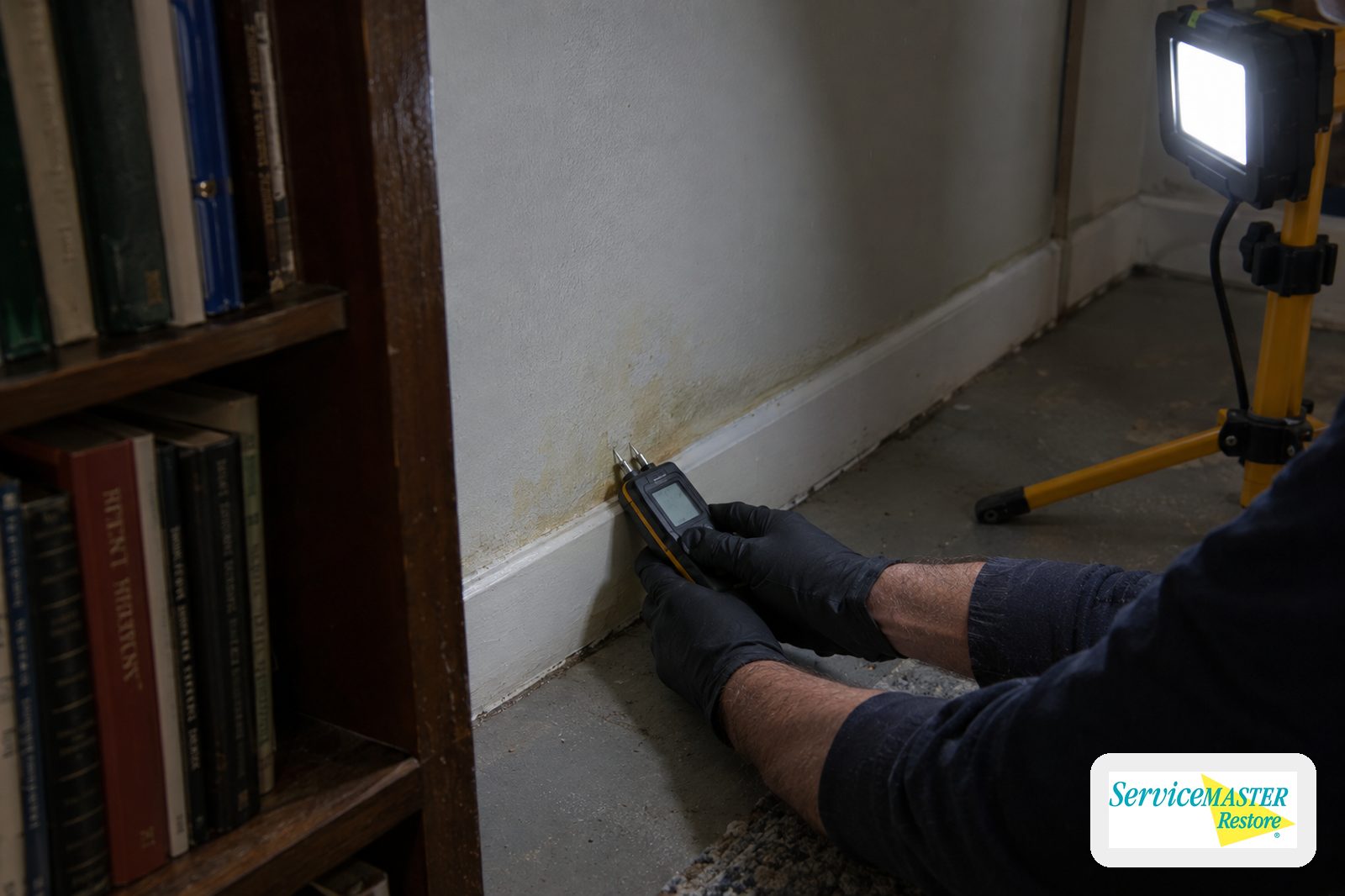
Finding the hidden part of the problem
EPA lists the back of drywall, the top of ceiling tiles, the underside of carpet and pad, and wall cavities around leaking pipes as common hiding places. A mold inspection and assessment uses moisture readings and careful, limited opening of materials to measure the real size of the job before it is priced.
Can mold make you sick? What EPA and Illinois health officials say
Online health claims about mold run hot, so stick to the agencies. EPA says touching or inhaling mold or spores may cause allergic reactions in sensitive people, such as sneezing, runny nose, red eyes and skin rash, and that mold can trigger asthma attacks in people with asthma who are allergic to it. Mold can also irritate the eyes, skin, nose, throat and lungs of people without allergies.
The Illinois Department of Public Health adds that people with weakened immune systems have a higher risk of infection from certain Aspergillus molds. If anyone in the building has symptoms, talk with a health professional. Our article on black mold health risks and warning signs separates fact from rumor.
How does the remediation process work, step by step?
Every project is scoped to the building, but the industry sequence drawn from EPA guidance and IICRC S520 generally runs like this:
- Assess and plan. Measure the affected area, note which materials are damaged and find the moisture source. EPA says the plan should cover fixing the water problem, protective equipment and containment.
- Contain the work area. Seal the zone with polyethylene sheeting and hold it under negative pressure so spores don't drift into clean rooms. See containment and HEPA air filtration.
- Protect the people. EPA's minimum protective equipment for disturbing mold is an N-95 respirator, gloves and eye protection, with more protection on larger jobs.
- Remove and clean. Discard porous materials that can't be cleaned, double-bag debris in 6-mil plastic, and scrub hard surfaces with detergent and water.
- HEPA vacuum the area. EPA recommends HEPA vacuums for final cleanup once materials are dry and contaminated materials are out.
- Fix, dry and verify. EPA says the job isn't finished until the moisture problem is fixed and no visible mold, mold-damaged materials or moldy odors remain.
Residential or commercial: which service fits your building?
Homes and commercial buildings follow the same principles but differ in scale and logistics. In a house, most mold traces back to basements, bathrooms, attics and plumbing leaks, which our residential mold remediation page covers in detail. Offices, schools, restaurants and apartment buildings add occupants, larger HVAC systems and downtime to the plan. That is the focus of commercial mold remediation.

Mold remediation across DuPage and Will County
From our Lisle headquarters, our certified technicians handle mold in homes and businesses across DuPage and Will County. Finished basements, warm and humid summers and freeze-thaw winters make moisture control a year-round job here. Local pages cover mold remediation in Naperville, mold remediation in Lockport and mold remediation in Homer Glen.
Insurance note: Mold is generally treated as a maintenance issue and excluded by standard homeowners policies unless it results directly from a covered peril such as a burst pipe, according to the Insurance Information Institute. Policies vary, so check yours or contact the Illinois Department of Insurance. Our insurance claim assistance helps you document the damage; we don't act as a public adjuster.
Seeing or smelling mold? Request an inspection online or call (630) 241-1111 to reach our team 24/7.
Frequently asked questions
Does painting over mold solve the problem?
No. EPA advises against painting or caulking moldy surfaces. The mold should be cleaned off and the surface dried before any painting, and EPA notes that paint applied over moldy surfaces is likely to peel. Painting also hides the stain without fixing the moisture that caused it, so growth can continue underneath and show up again later.
Does Illinois require mold remediation companies to register with the state?
Illinois passed the Mold Remediation Registration Act (Public Act 103-0893), which directs the Illinois Department of Public Health to create a registration program. IDPH states the requirements will not take effect until pending rules are adopted, and until then remediation professionals are not required to register. IDPH suggests looking for third-party certifications such as IICRC, ACAC or NORMI credentials.
Is black mold more dangerous than other mold?
Color isn't a reliable guide. EPA's mold course explains that "black mold" is not a species or a specific kind of mold, and molds come in many colors, including white. Any indoor mold growth should be cleaned up and its moisture source fixed. If someone in the home has health symptoms, EPA recommends talking with a health professional.
Can mold come back after remediation?
Yes, if the moisture problem isn't solved. EPA states that if you clean up mold but don't fix the water problem, the mold problem will most likely return. Some mold spores always remain in indoor air and dust, and they start growing again whenever a surface stays wet. Leak repair, drainage and humidity control are what make a remediation last.
What affects the cost of mold remediation?
The biggest factors are the size of the affected area, the materials involved, how hard the area is to reach, whether the HVAC system is affected and how much containment the job needs. EPA's guidance scales containment and protective equipment with the size of the contaminated area. Our Illinois mold remediation cost guide covers published price ranges and what drives them.
Sources
- U.S. EPA: A Brief Guide to Mold, Moisture and Your Home
- U.S. EPA: Mold Remediation in Schools and Commercial Buildings, Chapter 3
- IICRC: ANSI/IICRC S520 Standard for Professional Mold Remediation
- Healthy Building Science: Indoor Environmental Assessments: The 3 Cs (Class, Condition, Category)
- Illinois Department of Public Health: Mold Frequently Asked Questions
- Insurance Information Institute (Triple-I): Protecting your home from mold
- U.S. EPA: Mold Course Chapter 1
- Illinois Department of Public Health: Mold Remediation Registration Information