
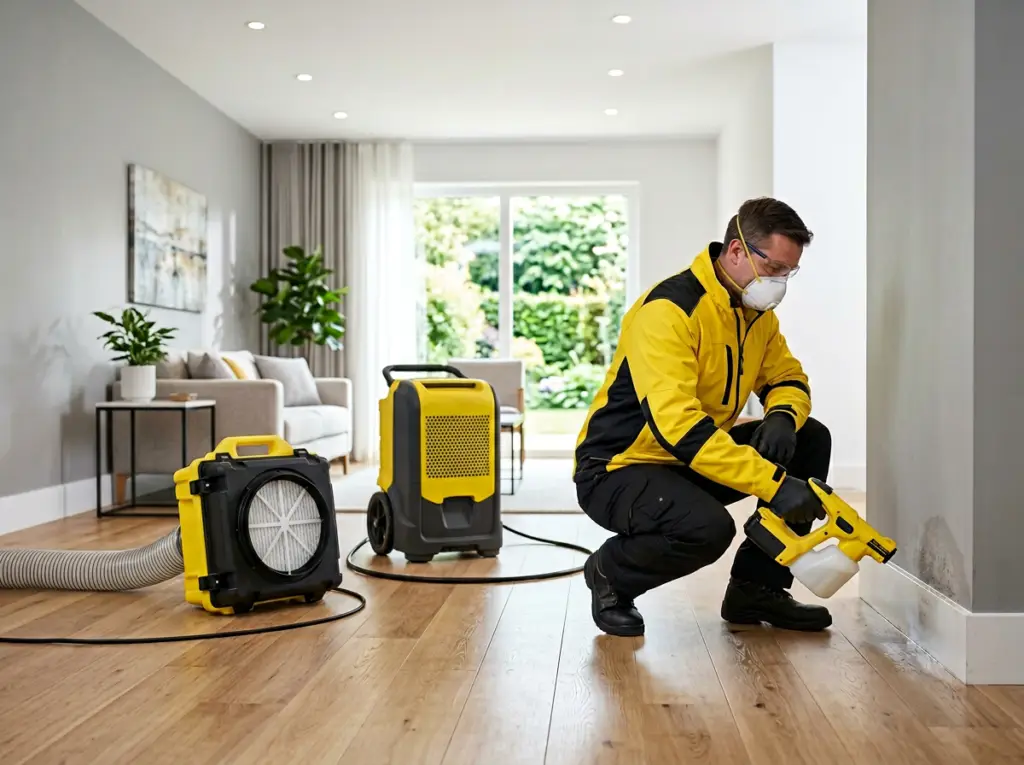

What happens during a mold inspection and assessment?
A mold inspection finds where mold is growing, how far it has spread and what moisture is feeding it. It relies mainly on a visual survey, moisture meters and building history, not lab tests. EPA says that when mold is visible, sampling is usually unnecessary. The result should be a written scope that guides containment, removal and repairs.
The assessment answers three questions before any money goes into removal: how big is the affected area, which materials are damaged, and why are they wet? Get those right and the rest of the project follows. Get them wrong and you either tear out too much or leave hidden growth behind.
Mold inspection vs. mold testing: do you need both?
Usually not. EPA's page on mold testing or sampling says that in most cases, if visible mold growth is present, sampling is unnecessary. It also explains why: no EPA or other federal limits exist for mold or mold spores, so a sample can't show whether a building "passes" a federal standard.
The Illinois Department of Public Health goes further. It does not recommend mold testing in general, noting that if you can see or smell mold, testing is usually not needed, and that testing cannot determine whether health effects will occur. What you need is the moisture source found, the mold cleaned and damaged materials removed. If you're weighing the health side, see our guide to black mold health risks and signs.
Reading moisture, not just mold
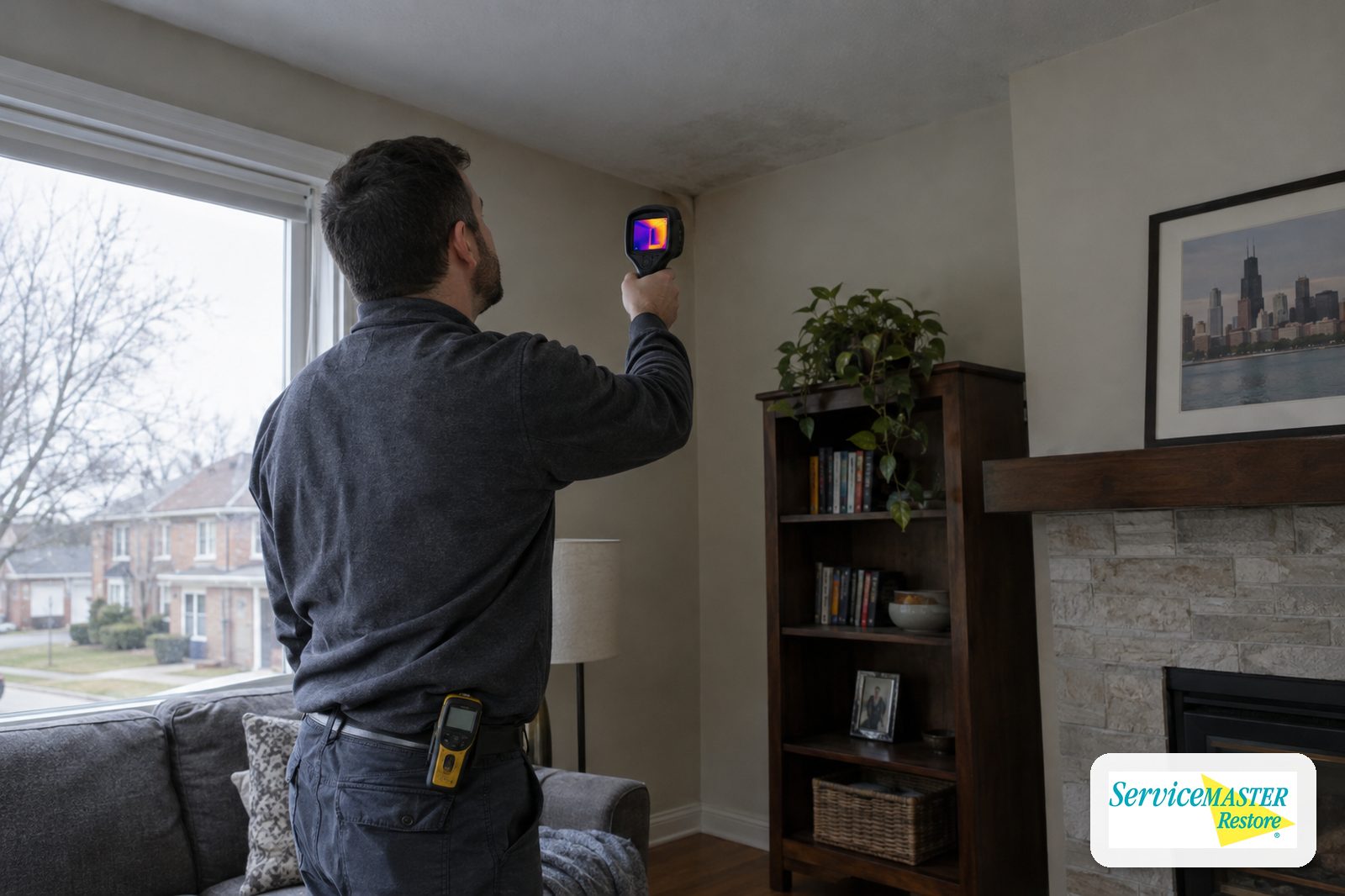
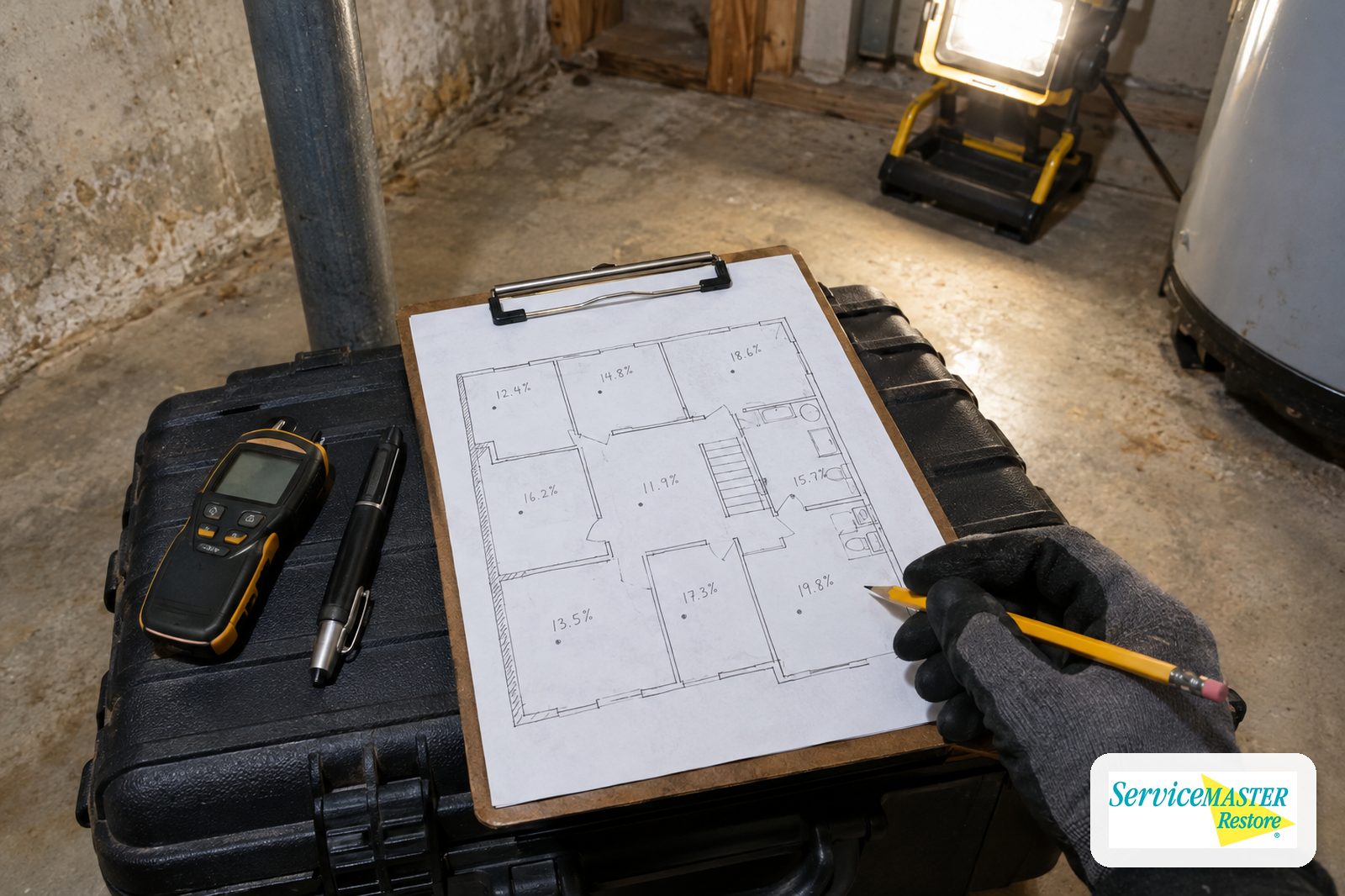
Pin and pinless moisture meters measure water in drywall, wood, carpet, brick and concrete, and EPA notes they can also track drying progress. Infrared cameras show surface temperature differences that often point to damp areas, but a cool spot is only a lead until a meter confirms it. Plotting those readings on a floor plan is called moisture mapping.
How do moisture mapping and infrared cameras find hidden mold?
Mold needs water, so following the water is the most reliable way to find growth you can't see. EPA lists common hidden locations: the back of drywall, wallpaper and paneling, the top of ceiling tiles, the underside of carpet and pad, pipe chases with leaking or condensing pipes, and roof materials above ceiling tiles. A musty odor with no visible source is another clue.
When readings say a cavity is wet, the next step may be a small inspection opening. EPA cautions that investigating hidden mold can disturb it; peeling back wallpaper over mold, for example, can release a massive amount of spores. That's why limited openings are made with protective equipment and, on larger suspected areas, inside containment. If hidden mold turns up, EPA says the remediation plan should be revised to match the full affected area.
When does air or surface sampling make sense?
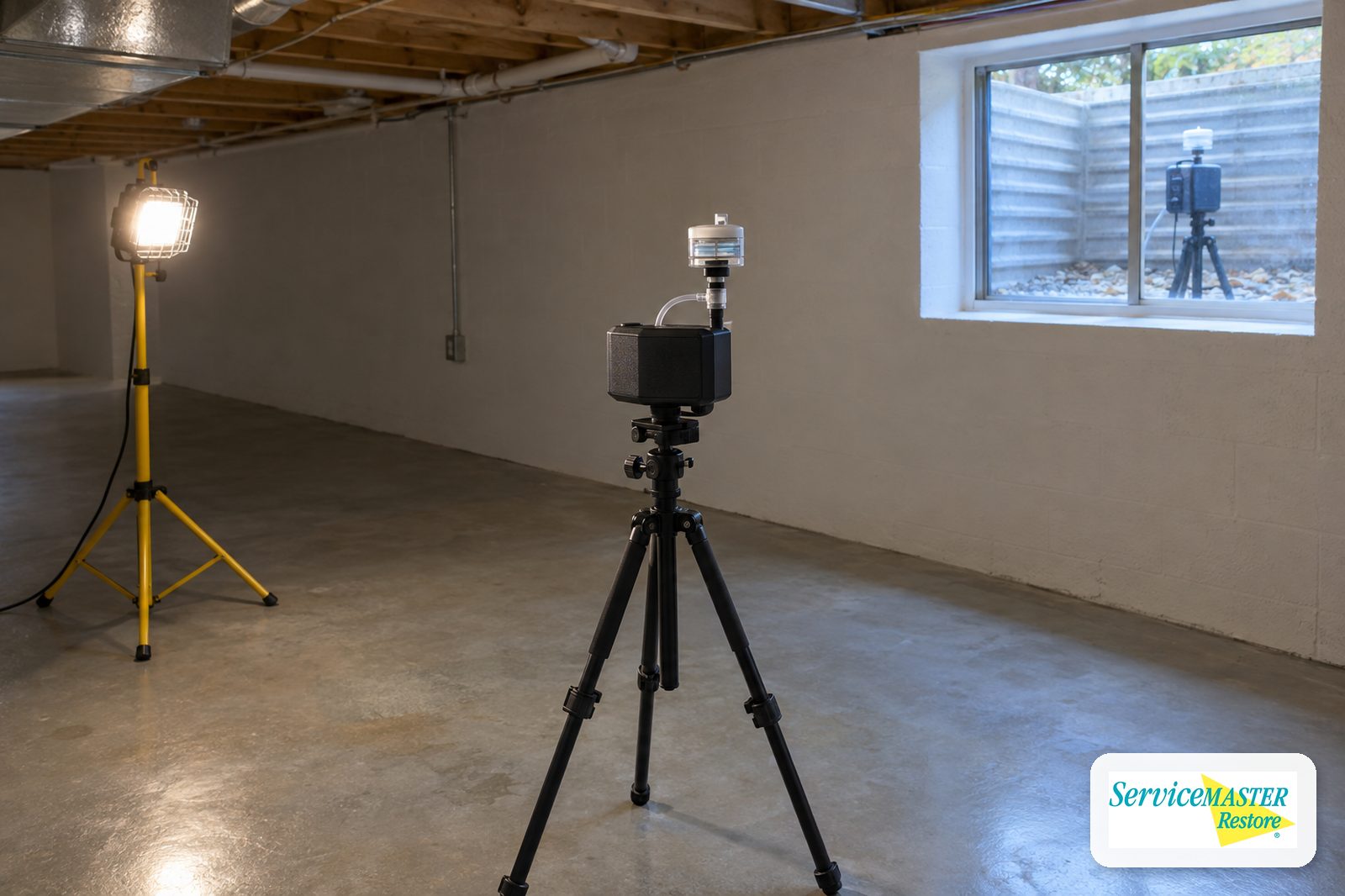
EPA's guidance for schools and commercial buildings lists specific cases where sampling can help: when litigation is involved, when the source of contamination is unclear, and when health concerns are a problem. Surface sampling can also show whether an area has been adequately cleaned. EPA says sampling should start with a plan and a theory to prove or disprove, and analysis should follow methods from the American Industrial Hygiene Association (AIHA) or similar professional bodies.
Labs accredited under the AIHA Environmental Microbiology Laboratory Accreditation Program (EMLAP) analyze air spore-trap samples, surface tape lifts, swabs and wipes, and bulk materials, and must take part in approved proficiency testing.
| Method | What it shows | Limits noted by EPA or IDPH |
|---|---|---|
| Visual inspection and history | Visible growth, staining, odors, past leaks | Hidden mold needs follow-up |
| Moisture meters and mapping | Wet materials and how far water spread | Shows moisture, not mold itself |
| Air sampling | Spore types and counts at that moment | A snapshot; needs an outdoor comparison; hard to interpret without experience |
| Surface or bulk sampling | Whether a material or surface carries mold | No federal limits to judge results against |
| Post-remediation verification | Whether cleanup met its goals | Indoor results should resemble local outdoor air |
Source: U.S. EPA, Mold Remediation in Schools and Commercial Buildings, Chapter 3 (Equipment and Sampling); Illinois Department of Public Health, Mold FAQs
Common sampling pitfalls
EPA lists the mistakes inexperienced samplers make: too few samples, inconsistent methods, contaminated samples, no outdoor control sample, and paying for samples that don't answer a real question. If a sampling plan can't take enough samples to answer the question, EPA says it is better not to sample at all.
What is clearance testing after remediation?
Clearance testing, which the industry calls post-remediation verification, confirms that cleanup met its goals before walls are closed up. The ANSI/IICRC S520 standard has dedicated sections on post-remediation verification and on the Indoor Environmental Professional who often performs it. EPA's checklist covers the basics: the moisture problem is fixed, no visible mold, mold-damaged materials or moldy odors remain, and, if samples are taken, indoor mold types and levels resemble outdoor air.
- Interview and history. Ask about leaks, floods, odors, symptoms and recent remodeling, the same questions EPA lists before remediation.
- Visual survey. Walk every affected and adjacent space, including attics, crawl spaces and mechanical rooms.
- Moisture mapping. Take meter readings and record them on a floor plan to define wet areas.
- Limited investigation. Open small inspection points where readings point to hidden growth, using PPE.
- Sampling, only if it answers a question. Follow a written plan with outdoor controls and an accredited lab.
- Written scope. Document affected square footage, materials to remove, containment level and the moisture repair needed.
Who can assess mold in Illinois?
IDPH states plainly that it does not license individuals to perform mold assessments or testing. It points consumers to the AIHA consultant listing and to the American Council for Accredited Certification for credentialed professionals. Separately, Illinois has passed a Mold Remediation Registration Act, but IDPH says remediators aren't required to register until its pending rules are adopted. For typical costs of inspection and remediation, see our Illinois mold remediation cost guide.
Mold inspections across DuPage and Will County
Our certified technicians, based in Lisle, assess homes and commercial properties throughout the area, including mold remediation in Lombard, Westmont, Darien and Plainfield. An assessment leads into safe mold removal and moisture control, under our residential and commercial services and the main mold remediation page.
Notice a musty smell or a stain that keeps spreading? Schedule an assessment or call (630) 241-1111, 24/7.
Frequently asked questions
How do I know when mold remediation is finished?
EPA's checklist says the water or moisture problem must be completely fixed, and no visible mold, mold-damaged materials or moldy odors should remain. A revisit shortly after should show no new water damage or growth, and people should be able to reoccupy the space without health complaints. If samples were taken, indoor mold types and levels should be similar to outdoor air.
Can a home mold test kit tell me if my house is safe?
Not really. EPA notes that no federal limits exist for mold or mold spores, so there is no number a result can be compared against. The Illinois Department of Public Health adds that no standards exist to judge acceptable amounts of mold and that testing cannot determine whether health effects will occur. Finding and fixing the moisture is the more useful step.
Why is an outdoor air sample taken during a mold inspection?
Indoor air always contains some mold spores, so indoor results only make sense next to outdoor ones. EPA lists omitting outdoor control samples as a common sampling pitfall, and says that after remediation the types and concentrations of mold indoors should be similar to what is found in the local outdoor air at the same time.
Does a mold inspection require cutting into walls?
Not always. Moisture meters and thermal imaging can narrow down where water is without damage. When readings point to a wet cavity, a small inspection opening may be needed to confirm growth. EPA cautions that disturbing hidden mold can release spores, for example when peeling wallpaper, so openings should be made carefully with protective equipment.
Should the mold assessor be independent from the remediation contractor?
Many owners, insurers and attorneys prefer independent verification for larger or disputed jobs, because it separates the person checking the work from the company that did it. The IICRC S520 standard recognizes the role of an Indoor Environmental Professional, and IDPH points consumers to AIHA and ACAC listings to find credentialed consultants. For small, simple jobs, a visual check against EPA criteria is often enough.
Sources
- U.S. EPA: Mold Testing or Sampling
- Illinois Department of Public Health: Mold Frequently Asked Questions
- U.S. EPA: Mold Remediation in Schools and Commercial Buildings, Chapter 3
- AIHA Laboratory Accreditation Programs, LLC: Environmental Microbiology Laboratory Accreditation Program (EMLAP)
- IICRC: ANSI/IICRC S520 Standard for Professional Mold Remediation
- U.S. EPA: A Brief Guide to Mold, Moisture and Your Home
- Illinois Department of Public Health: Mold Remediation Registration Information