
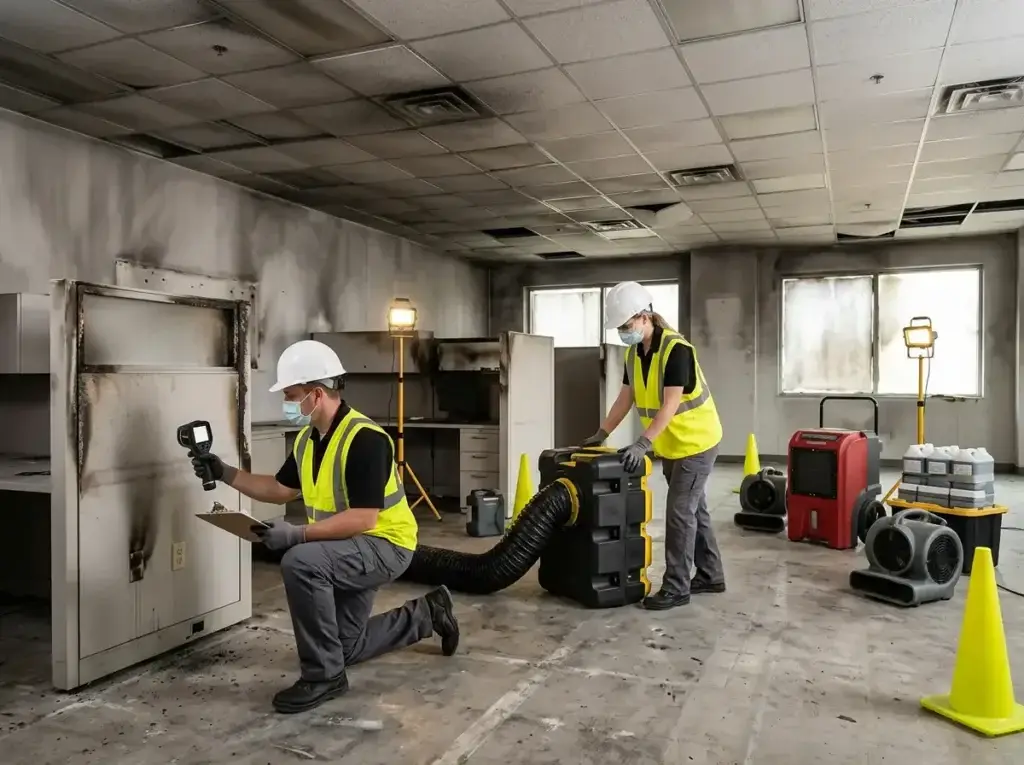

How is mold removed safely?
Safe mold removal means taking out moldy porous materials, cleaning hard surfaces with detergent and water, HEPA vacuuming the area and sealing debris in plastic before it leaves the work zone, all while workers wear respirators, gloves and eye protection. EPA's goal is removal, not just killing mold, because dead mold can still cause allergic reactions.
Removal is the step where spores are most likely to get airborne. EPA lists the actions that stir mold up: breaking apart moldy wallboard, opening wall cavities, stripping wallpaper, and even using fans to dry things. Every safeguard in this phase exists to keep that release inside the work area and out of people's lungs.
What protective equipment does mold removal require?
EPA's guide Mold Remediation in Schools and Commercial Buildings sets three levels of respiratory protection:
- Minimum: an N-95 respirator for small areas. It covers the nose and mouth and filters 95% of airborne particulates.
- Limited: a half-face or full-face air-purifying respirator with HEPA cartridges. EPA notes half-face models don't protect the eyes, and HEPA filters don't remove vapors or gases.
- Full: a full-face powered air-purifying respirator, recommended when high levels of dust or spores, or long, intense exposures, are expected.
Gloves should reach mid-forearm. EPA recommends natural rubber, neoprene, nitrile, polyurethane or PVC when strong cleaners are used. Goggles must keep out dust; vented safety glasses aren't acceptable. On medium and large jobs, disposable coveralls keep mold off clothing. EPA adds that anyone using half-face or full-face respirators must be trained, medically cleared and fit-tested under an OSHA respiratory protection program.
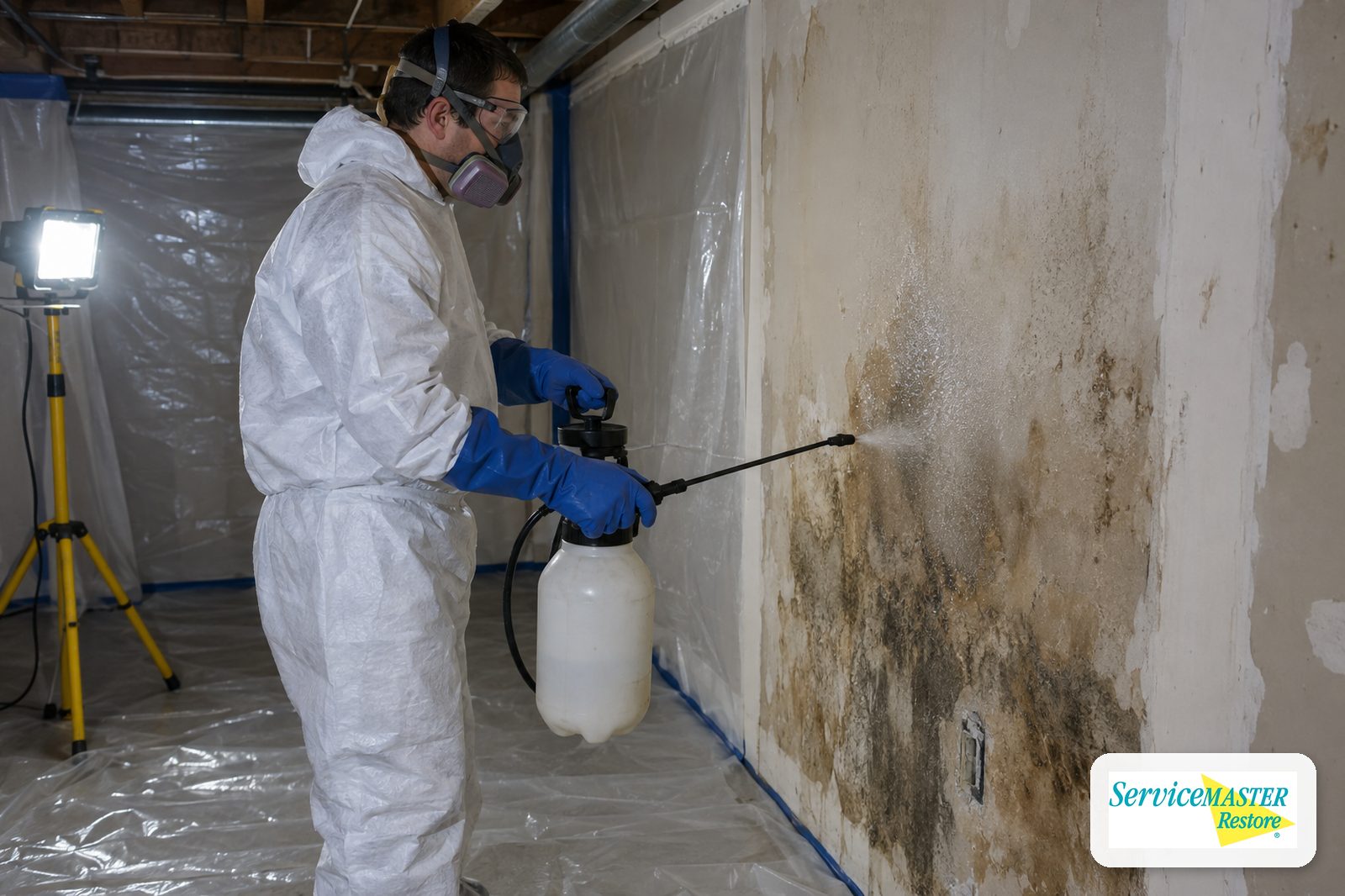
Mist first, then cut
The Illinois Department of Public Health recommends misting moldy materials with water before removal to keep dust down, and avoiding dry scraping, sanding or hammering on moldy drywall. Clean, scored cuts let a panel come out in pieces that fit straight into a bag, rather than crumbling across the floor.
Which materials can be cleaned and which must go?
The material decides the method. Mold can generally be wiped or scrubbed off nonporous surfaces like metal, glass and hard plastic. Porous materials such as drywall, ceiling tile, insulation and carpet that are wet and moldy may have to be discarded, because mold grows into their crevices and can be difficult or impossible to remove completely. EPA's commercial guide groups the work into four methods.
| Method | What it is | Key cautions from EPA |
|---|---|---|
| 1. Wet vacuum | Removes standing water from floors, carpet and hard surfaces | Only while materials are still wet; not for porous materials like gypsum board; clean and dry the tanks and hoses afterward |
| 2. Damp wipe | Wipe or scrub nonporous surfaces with water, or water and detergent | Dry surfaces quickly; follow product label directions |
| 3. HEPA vacuum | Final cleanup after materials are dried and contaminated materials removed; also settled dust outside the work area | Filter must seat properly; wear PPE when changing filters; bag filters and contents |
| 4. Discard | Remove unsalvageable materials and seal them in plastic bags | Double-bag in 6-mil polyethylene before leaving containment |
Source: U.S. EPA, Mold Remediation in Schools and Commercial Buildings, Chapter 3: Cleanup Methods
Why isn't bleach recommended for mold removal?
Because killing mold isn't the same as removing it. EPA's Brief Guide to Mold, Moisture and Your Home says chlorine bleach and other biocides are not recommended as a routine practice during mold cleanup, though professional judgment may call for them in some cases, such as when people with weakened immune systems are present. Dead mold can still cause allergic reactions, so it has to be physically removed either way.
Bleach also does little for porous materials, where growth sits below the surface; those materials usually need to be cut out. If any disinfectant is used, EPA says to ventilate the area, and never mix chlorine bleach with cleaners or detergents that contain ammonia, which can produce toxic fumes.
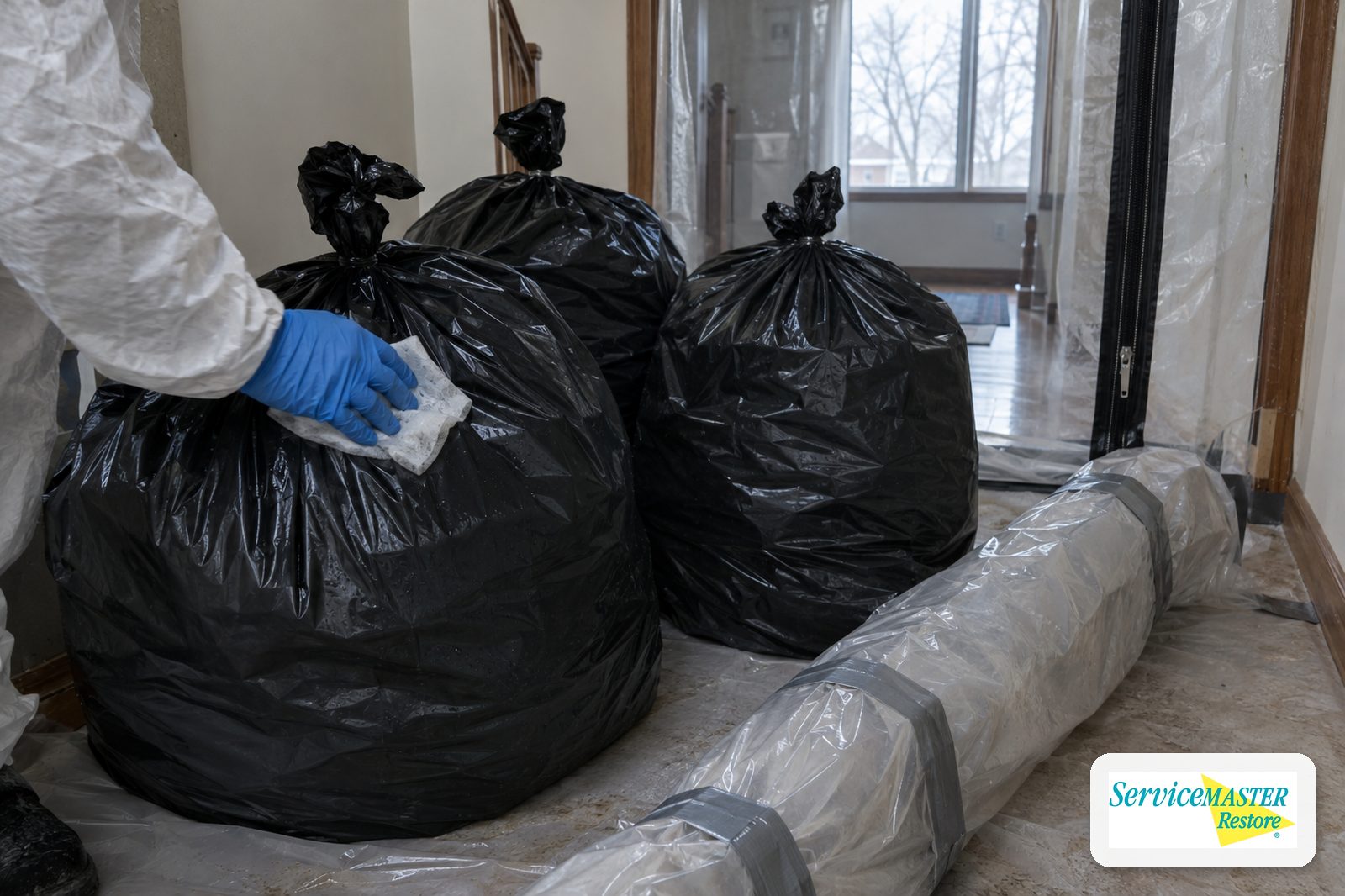
Bagging and disposal
EPA says unsalvageable moldy materials should be double-bagged in 6-mil polyethylene and can then usually be discarded as ordinary construction waste. Large items with heavy growth get wrapped in sheeting and taped before they leave containment. IDPH adds a final step: wipe the outside of each bag clean before it is carried through the house.
- Set up containment first. Removal begins only after the area is sealed and under negative pressure. See containment and HEPA air filtration.
- Suit up. Respirator, gloves, goggles and coveralls matched to the job size under EPA guidance.
- Mist and remove porous materials. Cut out moldy drywall, insulation and carpet in manageable pieces and bag them at the point of removal.
- Clean what stays. Scrub nonporous surfaces with detergent and water, then dry them thoroughly.
- HEPA vacuum. Vacuum every surface in the work area once materials are dry and debris is out.
- Bag, wipe and remove waste. Double-bag, wipe bag exteriors, and carry waste out by the shortest route.
- Hand off to cleaning. Detailed surface cleaning and odor work follow in sanitization and deodorization.
Can you remove a small patch of mold yourself?
For areas under about 10 square feet, EPA says most people can handle the job. The Illinois Department of Public Health lists the precautions: fix the moisture source, wear an N95 respirator, gloves and unvented goggles, turn off the heating and cooling system and seal vents, mist before removing materials, double-bag debris, and HEPA vacuum then wet-clean before you stop. Anything larger, or anything caused by sewage, belongs with a professional. Our guide to mold removal vs. mold remediation explains why scope matters, and how long mold remediation takes covers timing.
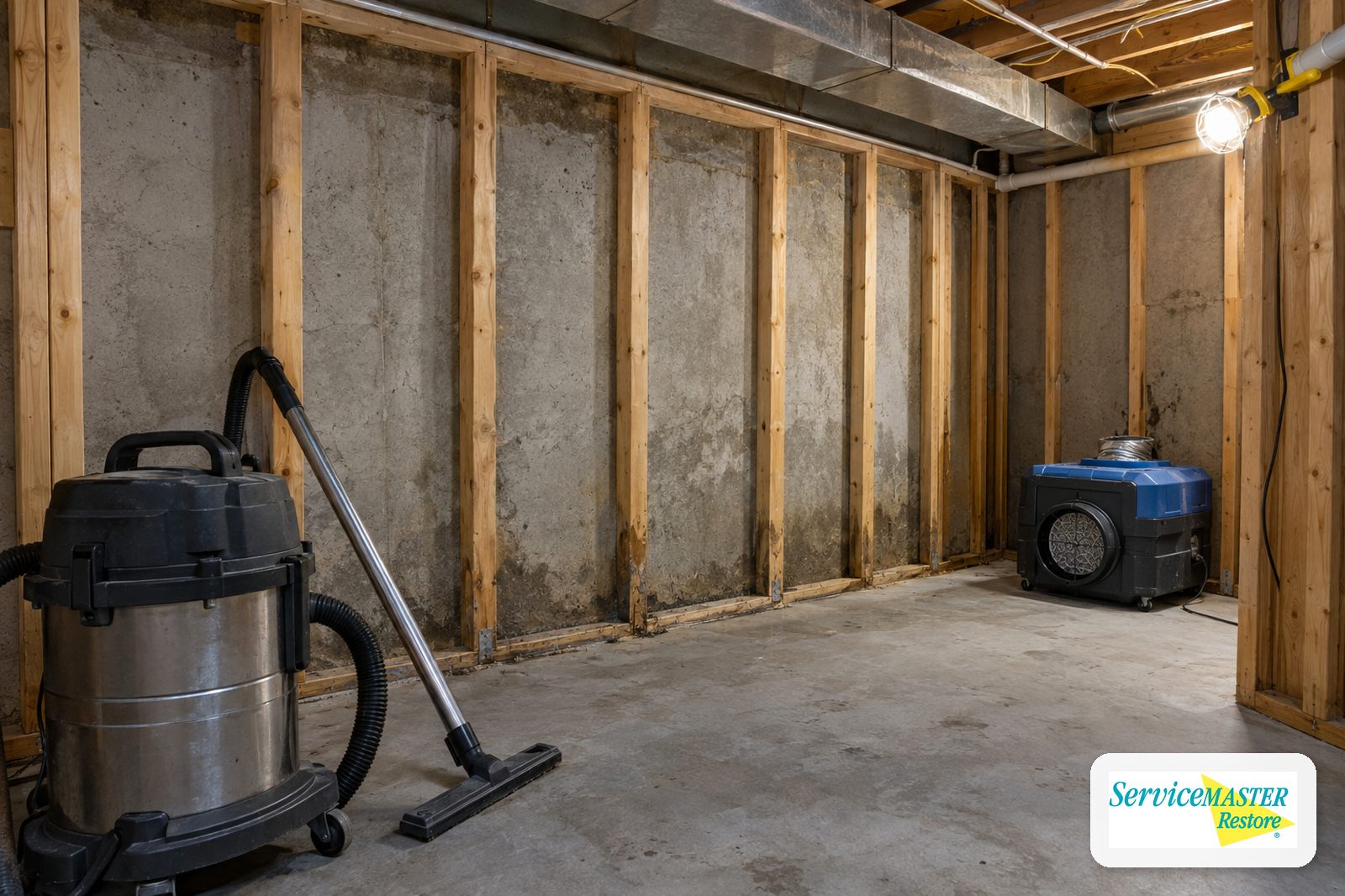
Mold removal in DuPage and Will County
Our certified technicians work from Lisle across both counties, including mold remediation in Villa Park, Clarendon Hills, Lemont and Warrenville. Removal is one phase of residential and commercial projects; see the full sequence on our mold remediation page.
Need mold taken out safely? Contact our team or call (630) 241-1111, 24/7.
Frequently asked questions
Is a paper dust mask enough protection for mold cleanup?
A basic dust mask is not the same as an N-95 respirator. EPA recommends at least an N-95 for small mold cleanups, plus long gloves and goggles without vent holes. The respirator must fit properly, so follow the maker's instructions. EPA notes that OSHA requires fit testing when respirators are used in a workplace, and larger jobs call for half-face or full-face respirators with HEPA cartridges.
Can moldy drywall go out with regular construction debris?
In most cases, yes, once it is packaged correctly. EPA says moldy building materials that can't be salvaged should be double-bagged in 6-mil polyethylene and can then usually be discarded as ordinary construction waste. Bagging inside the work area before removal keeps spores from spreading through the building on the way out. Large items should be wrapped in sheeting and taped.
Why do remediators spray water on mold before removing it?
Misting keeps dust down. The Illinois Department of Public Health recommends minimizing dust and debris by misting surfaces with water when removing moldy drywall, carpet and other materials. Dry material crumbles and sheds spores when it is cut or broken, while damp material tends to hold together and can be bagged right at the point of removal.
Should I scrape or sand mold off surfaces myself?
No. The Illinois Department of Public Health advises against dry scraping or sanding surfaces contaminated with mold, and against using hammers to remove moldy drywall, because those actions throw dust and spores into the air. Scrub hard surfaces with soap or detergent and water, dry them completely, and discard porous materials that can't be cleaned.
Can moldy furniture and belongings be saved?
Hard, nonporous items can usually be cleaned and dried. Absorbent items such as upholstered pieces, mattresses or cardboard may have to be discarded if mold has grown into them. EPA notes that mold can leave staining and cosmetic damage even after cleaning, and suggests consulting a restoration or conservation specialist for items that are valuable or have sentimental value.
Sources
- U.S. EPA: Mold Remediation in Schools and Commercial Buildings, Chapter 3
- U.S. EPA: A Brief Guide to Mold, Moisture and Your Home
- Illinois Department of Public Health: Mold Frequently Asked Questions