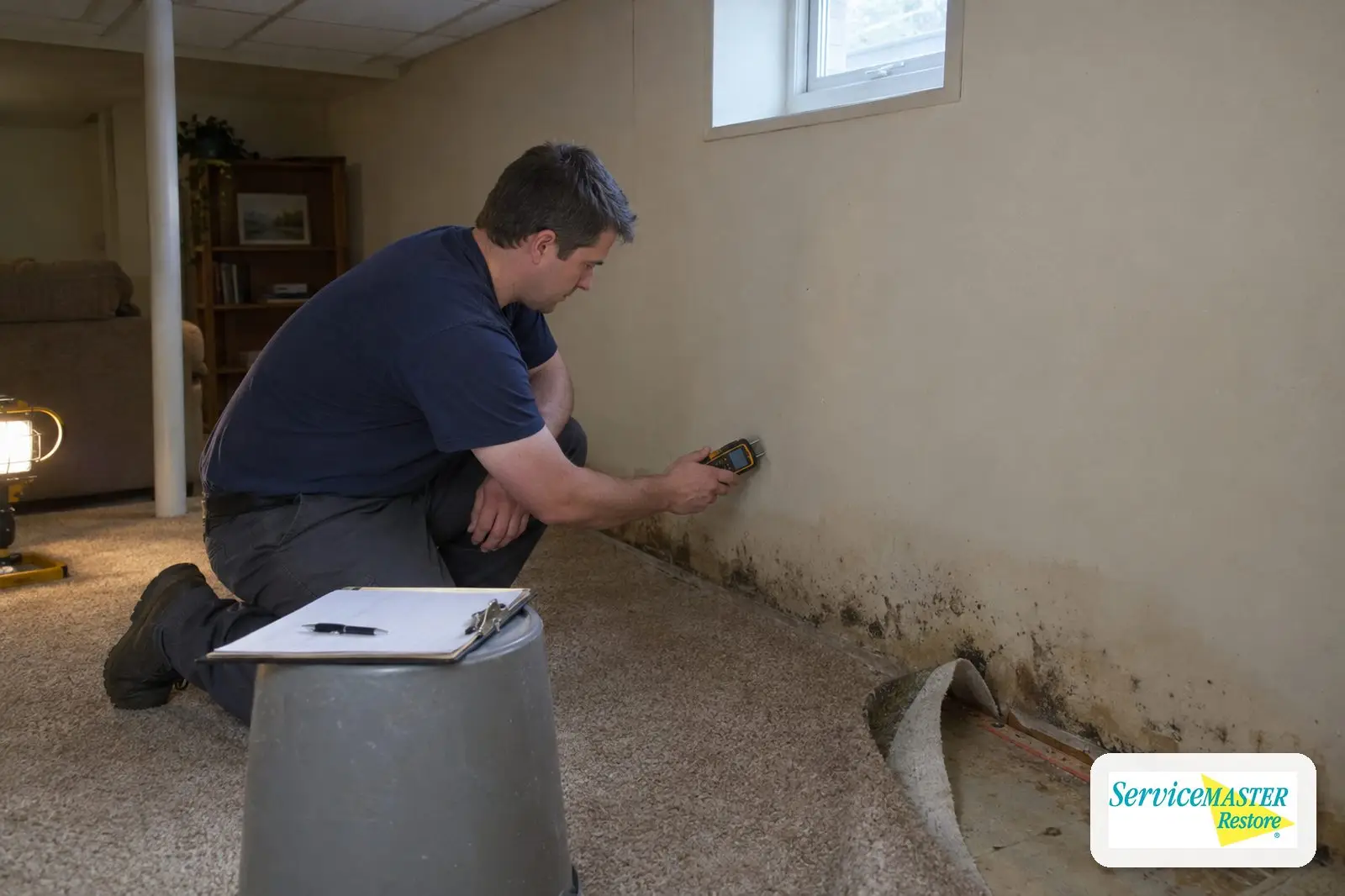
Mold remediation time depends on how much mold there is and why it grew. The EPA groups jobs as under 10 square feet, 10 to 100, and over 100. A small patch is often a single cleanup. Larger jobs add containment, removal, drying and verification, and can run into weeks when hidden mold, ductwork or soaked framing are involved.
Educational only, not medical, legal or insurance advice. Policies vary, so check your policy or ask your adjuster.
“How long will this take?” usually comes right after “how bad is it?” You may be planning around kids, work, a tenant or a closing date. Nobody can give you a reliable number over the phone, because the schedule depends on things no one can see yet: how far growth goes behind the wall, whether the leak is still active, and how long the structure needs to dry. What we can do is show how the work is staged and which parts tend to stretch a job out.
If you are still deciding whether you need a professional, read the difference between mold removal and mold remediation. If budget is the bigger worry, see what mold remediation costs in Illinois. This article stays on the clock.
Why no one publishes a standard mold remediation timeline
There is no federal stopwatch for mold work. The EPA sorts jobs by affected area and tells remediators to use professional judgment for each situation, and it notes that its size categories are not based on health effects (EPA, Table 2). The industry’s ANSI/IICRC S520, now in its 2024 fourth edition, is a procedural standard covering inspection, structural and HVAC remediation, contents and post-remediation verification. It describes how the work should be done, not how many days it takes.
In DuPage and Will County, the specifics usually involve basements. Finished lower levels, sump pumps, humid summers and freeze-thaw winters mean much of the mold we see in Naperville, Lisle, Lockport and Homer Glen sits behind drywall or under carpet, where its true size only shows once the wall is opened.
Mold remediation timelines by job size
The most useful way to think about duration is the EPA’s three size categories, from its guide Mold Remediation in Schools and Commercial Buildings, which the EPA tells homeowners to ask contractors to follow (EPA, A Brief Guide to Mold, Moisture and Your Home). As the area grows, so does the setup and the material that has to come out.
Small: less than 10 square feet
Roughly a 3-by-3-foot patch. The EPA says that in most cases you can handle this yourself, scrubbing hard surfaces with detergent and water and drying them completely. Table 2 requires no containment and minimum protection of an N-95 respirator, gloves and goggles. Small jobs are quick because there is little setup. They only stay small, though, if the moisture source is fixed.
Medium: 10 to 100 square feet
A section of wall, the back of a cabinet run, a closet. Table 2 calls for limited containment and limited or full protective equipment, by professional judgment, with the enclosure kept under negative pressure (EPA, Chapter 3). Building containment, running HEPA air filtration, removing drywall or carpet, then drying and cleaning, is what turns a wipe-down into a multi-step project.
Large: more than 100 square feet
Whole basements, attics, crawlspaces or growth spread across rooms. The EPA recommends full containment with double layers of polyethylene, and this category also covers smaller jobs where exposure could be significant. Every phase scales up: more demolition, more waste, more structure to dry, a more involved verification, and usually reconstruction afterward.
EPA mold job sizes and what each one requires
More area means more setup, removal and drying, which is where the time goes.
| Size category | Containment | Protective equipment | What drives the schedule |
|---|---|---|---|
| Small under 10 sq ft | None required | Minimum: N-95 respirator, gloves, goggles | Cleaning, complete drying, fixing the moisture source |
| Medium 10 to 100 sq ft | Limited, under negative pressure | Limited or full, by professional judgment | Containment setup, material removal, drying, cleaning |
| Large over 100 sq ft | Full, with double polyethylene barriers | Full | Every phase scales up; reconstruction often follows |
Source: EPA, Mold Remediation in Schools and Commercial Buildings, Table 2 and Chapter 3. The EPA publishes no durations for these categories.
What each phase of mold remediation involves
The EPA’s key steps and the S520 topics fall into a predictable order. Some phases are fixed; others depend on what the crew finds.
1. Assessment and inspection
The EPA says to assess the size of the problem and the damaged materials before planning, and to identify the water source. A mold inspection and assessment means a walk-through, moisture readings and, where useful, sampling. When growth is visible, the EPA says sampling is usually unnecessary (EPA, Mold Testing or Sampling), so waiting on a lab you do not need adds time without changing the plan.
2. Containment and air filtration
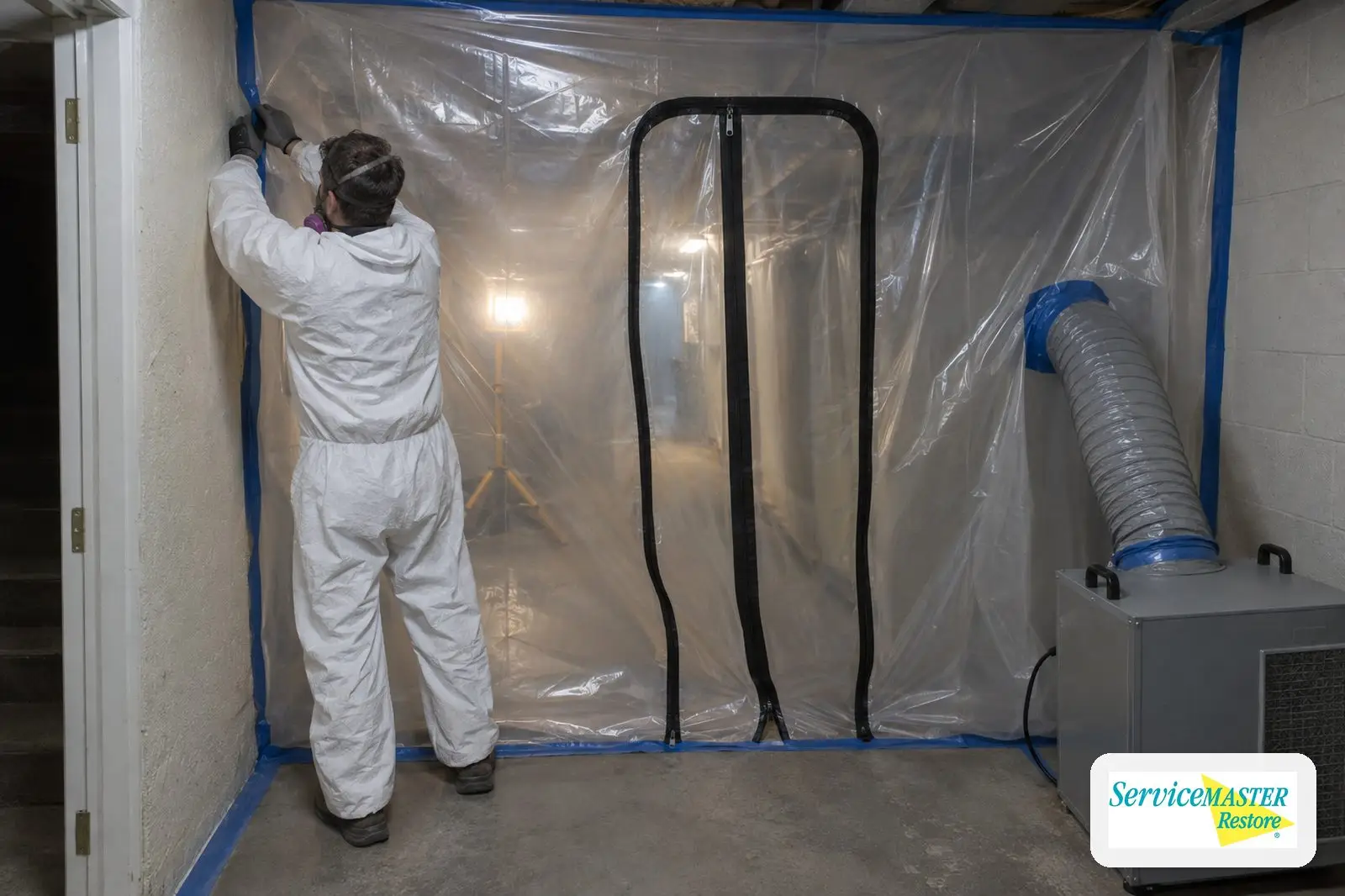
Before anything is disturbed, the area is sealed with polyethylene and kept under negative pressure so spores stay out of clean rooms. Our containment and HEPA air filtration page explains the setup, which stays up until the end.
3. Removing mold-damaged materials
Hard surfaces are wiped or scrubbed with water and detergent. Porous materials that cannot be saved, such as moldy drywall, carpet or insulation, are double-bagged before leaving containment. This is where hidden mold turns up, so it is also where estimates most often change.
4. Fixing the moisture source and drying
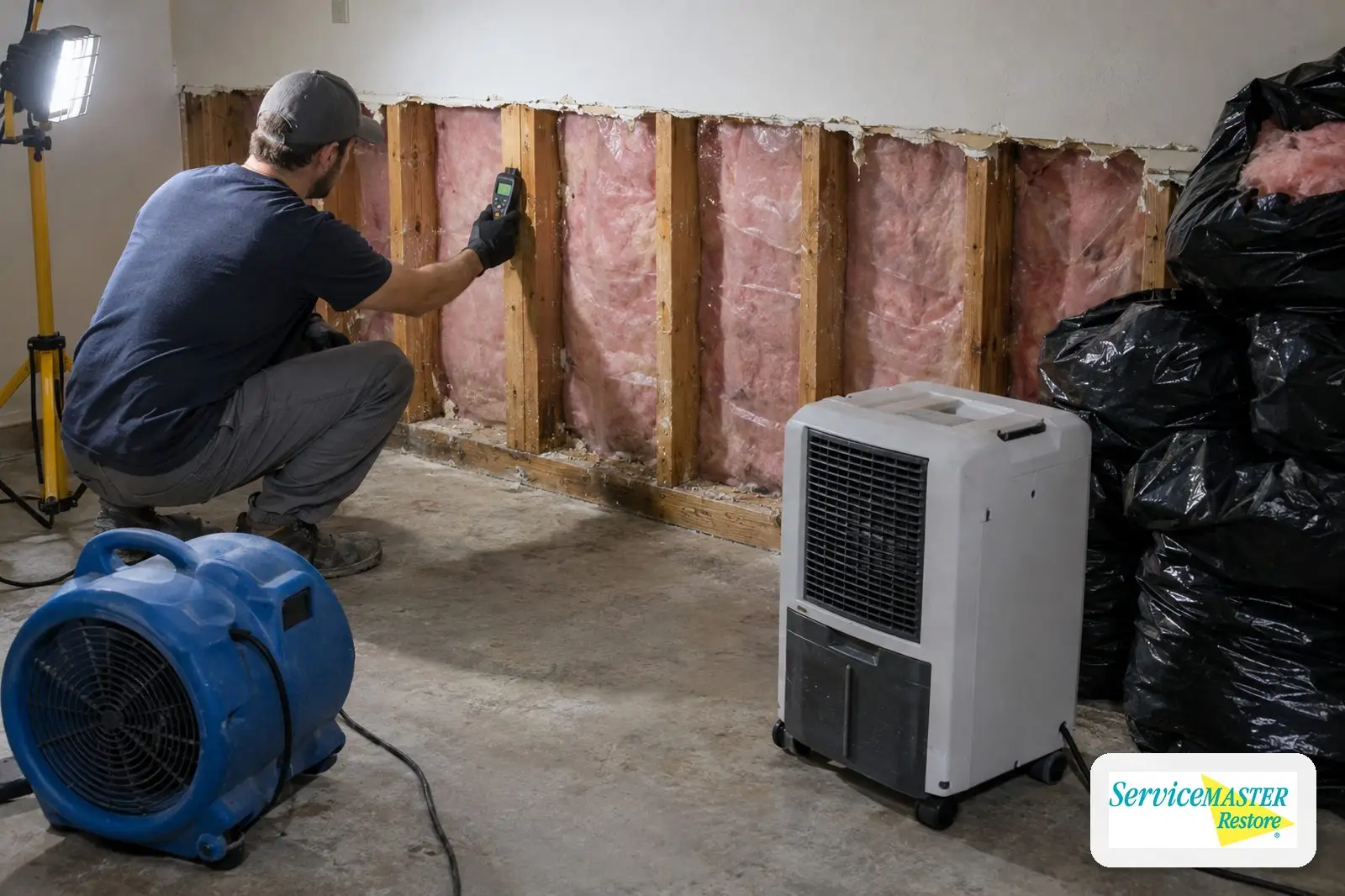
“The key to mold control is moisture control,” the EPA says; if the leak or humidity problem is not corrected, mold is likely to return. Remaining framing and subfloor then need structural drying and dehumidification. This is the least predictable phase. After serious water exposure, NDSU Extension says wood should be below 15% moisture content before it is covered and that it may take weeks to dry enough to close a wall. A moisture meter, not the calendar, decides when it is done.
5. HEPA vacuuming and final cleaning
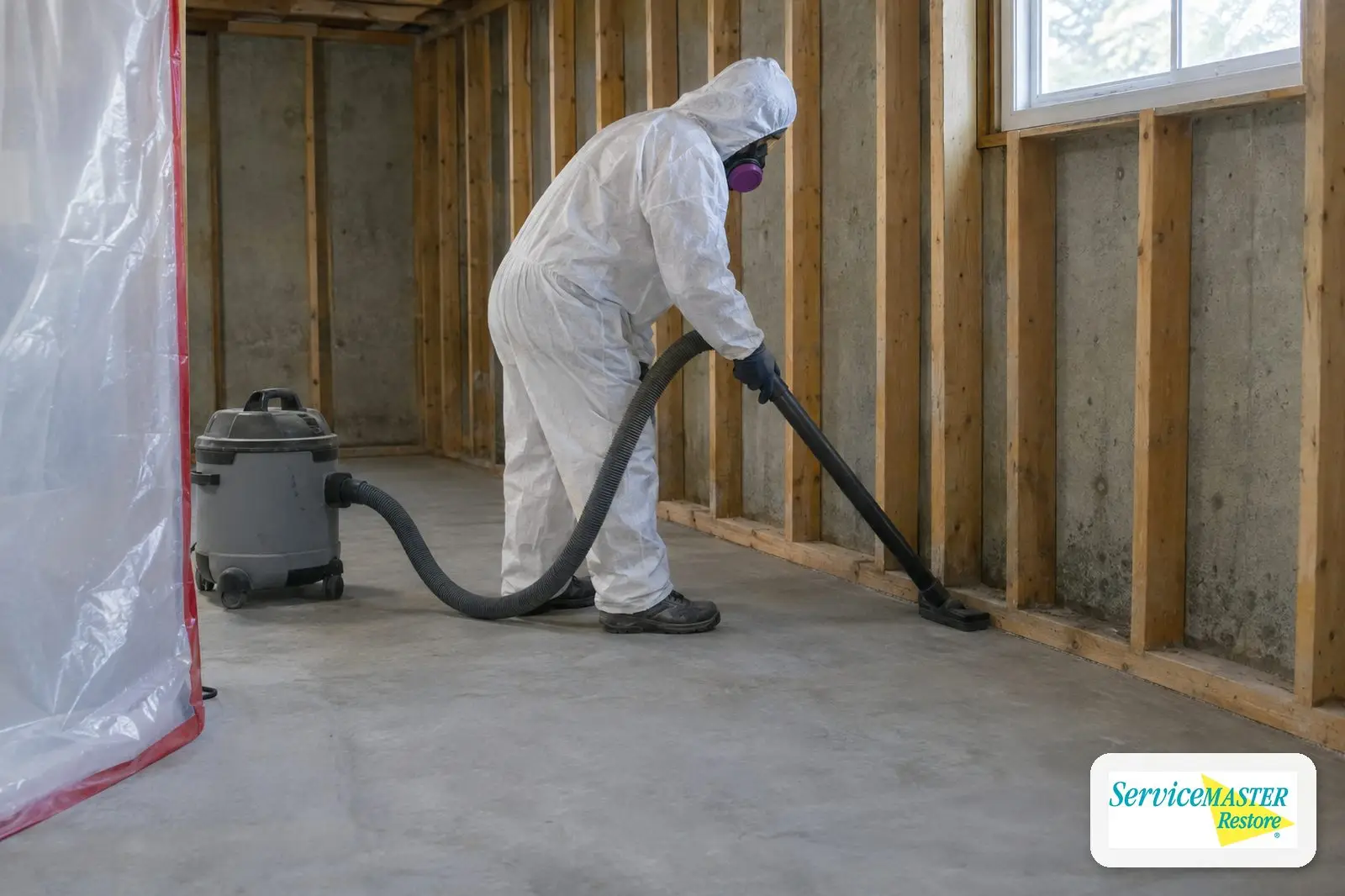
The EPA recommends HEPA vacuums for final cleanup “after materials have been thoroughly dried and contaminated materials removed.” A drying delay pushes this step back too.
6. Post-remediation verification
Verification is a named S520 component. The EPA’s test for being finished: the moisture problem is fixed, no visible mold, damaged material or moldy odor remains, and people can occupy the space without health complaints. If sampling is done, indoor results should resemble outdoor air. When lab samples are part of clearance, add the lab’s turnaround.
The mold remediation phase sequence
Order of work only. No durations are shown because neither the EPA nor the IICRC S520 sets them.
Phase 1: Assess
Measure the area, note materials, find the moisture source. Paced by access and whether sampling is needed.
Phase 2: Contain
Seal the area, set negative pressure and HEPA filtration. Paced by job size and layout.
Phase 3: Remove
Clean salvageable surfaces; bag and remove moldy porous materials. Paced by hidden growth.
Phase 4: Fix and dry
Correct the moisture source; dry framing to target readings. Paced by meter readings and other trades.
Phase 5: Final clean
HEPA vacuum the dried area. Paced by drying.
Phase 6: Verify, then rebuild
Visual and moisture checks, any sampling, then repairs. Paced by lab turnaround and repair scope.
Sources: EPA, Chapter 3; ANSI/IICRC S520; NDSU Extension.
What makes a mold remediation job take longer
- Hidden mold. The EPA lists the back of drywall, wallpaper, paneling, ceiling tile tops and the underside of carpet as common hiding spots, and says the plan should be revised for the total area once hidden mold is found.
- HVAC involvement. The EPA says not to run an HVAC system you know or suspect is contaminated, since it can spread mold. Ductwork adds its own assessment and cleaning.
- Moisture source repair. If the fix needs a plumber, roofer or exterior grading, their schedule becomes part of yours.
- Slow drying. Closing a wall early can trap moisture and invite mold back.
- Materials replacement. Drywall, flooring and trim go back as a separate phase of repairs and reconstruction.
- Lab turnaround on clearance samples, and insurance steps such as documentation and adjuster visits.
Can you stay home during mold remediation?
Often, yes, if the job is small or contained away from rooms you use. The EPA says a plan may include temporary relocation, weighing the size and type of the affected area, reported health effects, debris risk and disruption, and suggests scheduling work when occupants are less likely to be affected.
The CDC notes that people with asthma or mold allergies may have severe reactions, and that people with weakened immune systems or chronic lung disease may develop lung infections from mold (CDC). If that describes anyone at home, or containment blocks a kitchen, bathroom or the only stairway, talk with your doctor and crew about staying elsewhere. Our guide to black mold health risks and signs covers symptoms.
How to speed up mold remediation without cutting corners
- Stop the water. The EPA advises drying water-damaged areas within 24 to 48 hours to prevent mold growth. Our first-hour burst pipe guide walks through it.
- Turn off forced air if you suspect the HVAC system is involved.
- Leave the growth alone. Tearing out moldy drywall without containment can spread spores and enlarge the job.
- Skip unnecessary testing when mold is plainly visible.
- Clear the work area of furniture and stored boxes before the crew arrives.
- Call your insurer early and photograph everything first. Our insurance claim assistance team can help.
- Line up repair trades so the rebuild can start once verification passes.
ServiceMaster Restoration Services has served DuPage and Will County for over 20 years, with certified technicians handling residential mold remediation and commercial mold remediation. Whether you need mold remediation in Lockport, mold remediation in Homer Glen or elsewhere near our Lisle office, our mold remediation team is available 24/7 to talk through your situation.
Frequently Asked Questions
How long does it take to remove mold from a house?
It depends on area and cause. Under EPA guidance, a patch under about 10 square feet is usually a homeowner-sized cleanup, 10 to 100 square feet calls for containment, and over 100 square feet calls for full containment. Larger jobs add removal, drying and verification, and drying soaked framing alone may take weeks. An on-site assessment is the only way to get a real estimate.
Can I stay in my house during mold remediation?
Often, especially for small, well-contained jobs away from living spaces. The EPA says a plan may include temporary relocation, weighing the size of the area, reported health effects and disruption. The CDC notes that people with asthma, mold allergies, weakened immune systems or chronic lung disease are more vulnerable, so those households should talk with a doctor first.
How long after mold remediation can I go back in?
There is no fixed waiting period. The work area should stay contained until verification is complete. Under EPA guidance, that means the moisture problem is fixed, no visible mold, damaged materials or moldy odor remain, and the space can be occupied without health complaints. If samples are taken, results should resemble outdoor air.
How long does mold testing take?
The on-site inspection is usually the shorter piece. If air or surface samples are collected, the timeline includes shipping and lab analysis, which varies by lab and service level, so ask your inspector first. The EPA notes that sampling is usually unnecessary when mold is visible, and that analysis should follow methods recommended by groups such as AIHA.
How fast should water damage be dried to prevent mold?
The EPA advises drying water-damaged areas and items within 24 to 48 hours to prevent mold growth. That window is why a fast response to a burst pipe, sump failure or roof leak matters. Drywall, carpet pad and insulation that stay damp past it are the materials most likely to be cut out and replaced.
Related guides and services
- Professional mold remediation in DuPage and Will County
- Mold inspection and assessment
- Containment and HEPA air filtration
- Structural drying and dehumidification
- How much mold remediation costs in Illinois
- Mold removal vs. mold remediation explained
- Basement flooding after heavy rain in DuPage
- All restoration guides
- Contact our Lisle office
Found mold, or a leak that could turn into it? Call (630) 241-1111, 24/7, for residential and commercial mold remediation across DuPage and Will County. We work with your insurance and can help with the claim.
Sources
- U.S. EPA, Mold Remediation in Schools and Commercial Buildings Guide: Chapter 3
- U.S. EPA, Mold Remediation in Schools and Commercial Buildings Guide: Chapter 5 (Table 2)
- U.S. EPA, A Brief Guide to Mold, Moisture and Your Home
- U.S. EPA, Mold Testing or Sampling
- IICRC, ANSI/IICRC S520 Standard for Professional Mold Remediation
- Centers for Disease Control and Prevention, Mold
- NDSU Extension, Flood Recovery: Dry Out Before Rebuilding