Short answer: Five common examples, drawn from OSHA's definition of regulated waste: liquid or semi-liquid blood or other potentially infectious materials; items that would release blood if compressed, such as soaked carpet or towels; items caked with dried blood; contaminated sharps such as needles and broken glass; and pathological or microbiological waste.
"Biohazardous waste," "medical waste," "regulated waste" and "infectious waste" get used almost interchangeably, and the exact meaning depends on who is regulating it. For cleanup in homes and businesses, the clearest federal definition comes from OSHA, which calls this material "regulated waste." It is built around blood and other potentially infectious materials, the body fluids and tissues that can carry germs such as hepatitis B, hepatitis C and HIV.
Five examples, from OSHA's definition
OSHA's Bloodborne Pathogens standard, 29 CFR 1910.1030, defines regulated waste in five parts. Each one is an example of biohazardous waste.
| Category | What OSHA's definition covers | Where it shows up outside a hospital |
|---|---|---|
| 1. Liquid or semi-liquid blood or other potentially infectious materials | Pooled or wet blood and certain body fluids | An injury, assault or suicide scene; fluids at an unattended death |
| 2. Items that would release blood if compressed | Contaminated items holding liquid or semi-liquid blood or fluids | Soaked towels, bedding, carpet, carpet pad, mattresses, upholstered furniture |
| 3. Items caked with dried blood | Items with dried blood or fluids that could release it during handling | Clothing, rugs, drywall or wood trim with dried blood |
| 4. Contaminated sharps | Any contaminated object that can penetrate the skin, including needles, scalpels and broken glass | Used needles in a rental unit, a hoarding cleanup or a public restroom; broken glass at an injury scene |
| 5. Pathological and microbiological wastes | Human tissue and lab-type waste containing blood or other potentially infectious materials | Tissue at a trauma or death scene |
The "other potentially infectious materials" in that definition is a specific list. It includes fluids such as semen, vaginal secretions and several internal body fluids, "any body fluid that is visibly contaminated with blood," and all body fluids when they cannot be told apart. Urine, feces and vomit without visible blood are not on it, which we explain in our answer to whether pee is considered a biohazard.
Where biohazardous waste turns up in homes and businesses
Most of this waste is created in hospitals and clinics, but cleanup crews meet it in ordinary places:
- Rental and resale properties where a tenant left used needles behind.
- Injury scenes after a fall, accident or assault, with blood on flooring, walls and furniture.
- Unattended deaths, where fluids soak into flooring, subfloor and drywall.
- Hoarding situations that may include used sharps or blood-contaminated items among other belongings.
- Businesses such as gyms, offices, stores and restaurants after an injury on site.
OSHA's bloodborne pathogens overview notes that workers in many occupations, including housekeeping staff in some industries, may be at risk of exposure. That is why employers whose staff could encounter this material need an exposure control plan, training and protective equipment.
Who regulates disposal
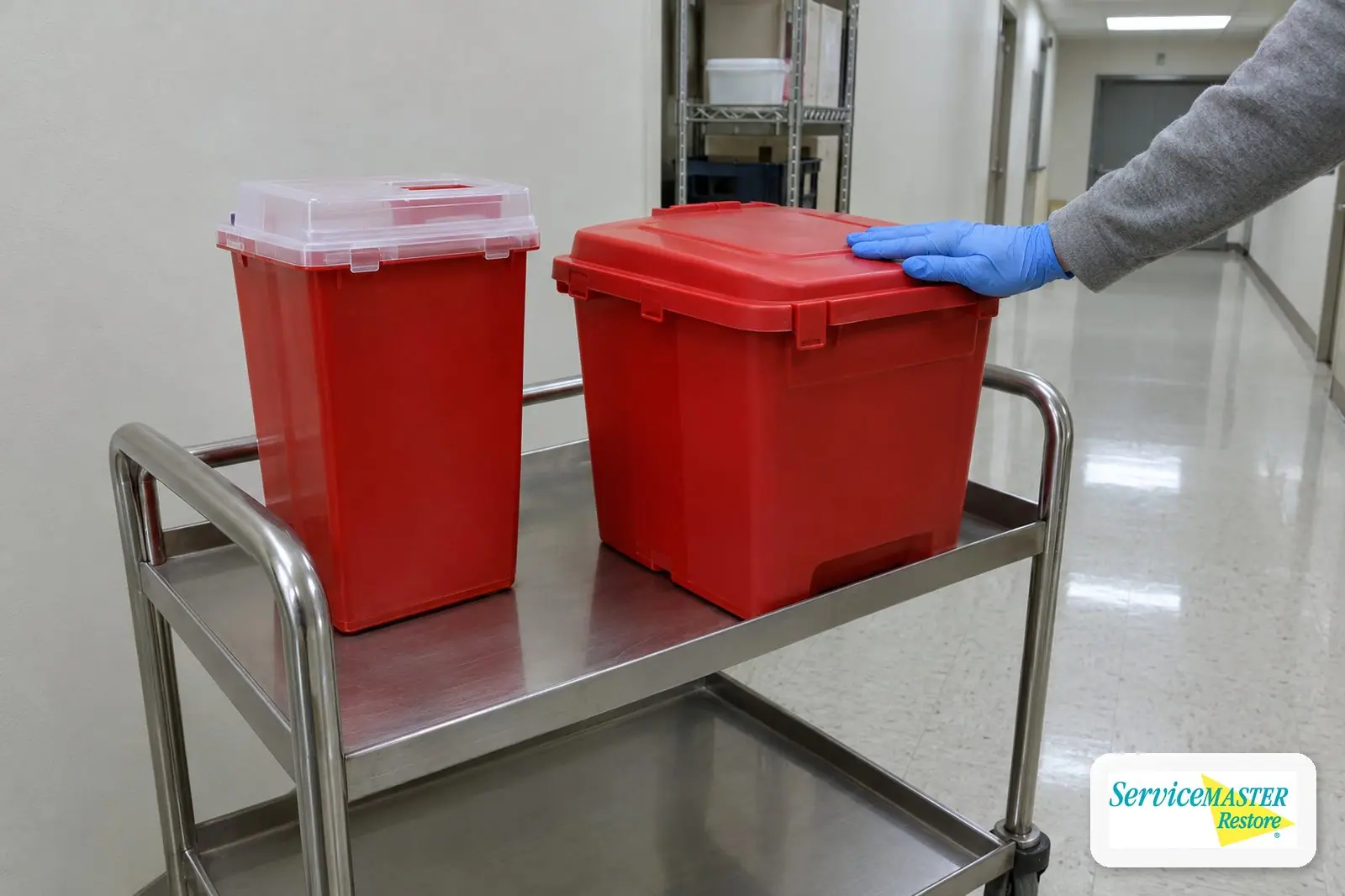
OSHA sets the handling rules: regulated waste goes in closable containers built to prevent leaks, labeled with the biohazard symbol or placed in red bags or containers, and sharps go in closable, puncture-resistant, leakproof containers. OSHA then requires disposal "in accordance with applicable regulations" of the federal government, states and local governments.
The disposal rules themselves are mostly state rules. EPA's medical waste page says medical waste "is primarily regulated by state environmental and health departments," and that EPA has not had specific authority over medical waste since the Medical Waste Tracking Act of 1988 expired in 1991.
In Illinois, the Illinois EPA regulates potentially infectious medical waste, which it defines as waste generated in connection with the diagnosis, treatment or immunization of people or animals, related research, or the production or testing of biologicals. The agency's page states that this category does not include medical waste generated in a household, and that this waste must be treated to eliminate its infectious potential before it can go to a landfill.
For needles used at home, the FDA's guidance on getting rid of used needles and other sharps says to place them in a sharps disposal container immediately after use, not to reuse those containers, and to follow your community's rules for disposing of full ones.
How professionals package and remove it
On a cleanup job, waste is sorted as it comes out. Sharps go straight into rigid sharps containers. Soaked and caked materials, along with contaminated protective gear, go into red or labeled bags, usually inside rigid lidded boxes. Large items such as carpet or a mattress are wrapped or cut down inside the work area so nothing drips or sheds on the way out of the building. The sealed containers then go to a disposal facility that accepts that waste, under the applicable state and local rules. It is fair to ask any company you hire how and where its waste is disposed of.
What not to do yourself
- Do not pick up needles or broken glass with bare hands, and do not try to recap a needle.
- Do not put loose sharps in household trash or recycling, where they can injure family members and sanitation workers.
- Do not bag blood-soaked carpet, mattresses or towels into household trash. Compressing them in a bag or truck can release fluids.
- Do not scrub or vacuum dried blood with household equipment, which can spread contamination.
- Do not mix cleaning chemicals to make a stronger disinfectant.
- Do not throw out damaged belongings before they are documented if you plan to file an insurance claim.
If you find a single needle in your home, a sharps container and your community's disposal rules are usually enough, as long as you avoid touching it with bare hands. If you find many sharps, significant blood or fluids that have soaked into flooring or furniture, that is a job for trained technicians with the right protective equipment and a proper disposal path.
When to call a professional
Our biohazard cleanup, trauma and crime scene cleanup and hazardous waste disposal services cover removal, cleaning, disinfection and disposal for homes and businesses across DuPage and Will County. For questions about cost and insurance, see our guide to biohazard and trauma cleanup and who pays. ServiceMaster Restoration Services in Lisle has more than 20 years of experience and can help with your insurance claim. Call (630) 241-1111, 24/7.
More questions
Is biohazardous waste the same as hazardous waste?
No. Biohazardous waste is about infectious material such as blood, body fluids and contaminated sharps. Hazardous waste usually refers to chemical waste, such as certain solvents, paints and pesticides, which is regulated under different rules.
Is a used bandage biohazardous waste?
Usually not. Under OSHA's definition, an item counts as regulated waste when it would release liquid or semi-liquid blood if compressed, or is caked with dried blood that could come off during handling. A bandage with a few spots of blood generally does not meet that bar, and Illinois excludes medical waste generated in a household from its infectious medical waste rules.
What color are biohazard bags?
OSHA requires regulated waste containers to carry a fluorescent orange or orange-red biohazard label, and allows red bags or red containers to be used in place of labels. That is why biohazard bags and sharps containers are usually red.
Can a property manager hire someone to remove needles left in a unit?
Yes. A professional cleanup company can search the unit, remove sharps and other contaminated items into proper containers, clean and disinfect the area, and handle disposal. Staff who are not trained under an exposure control plan should not handle sharps.