
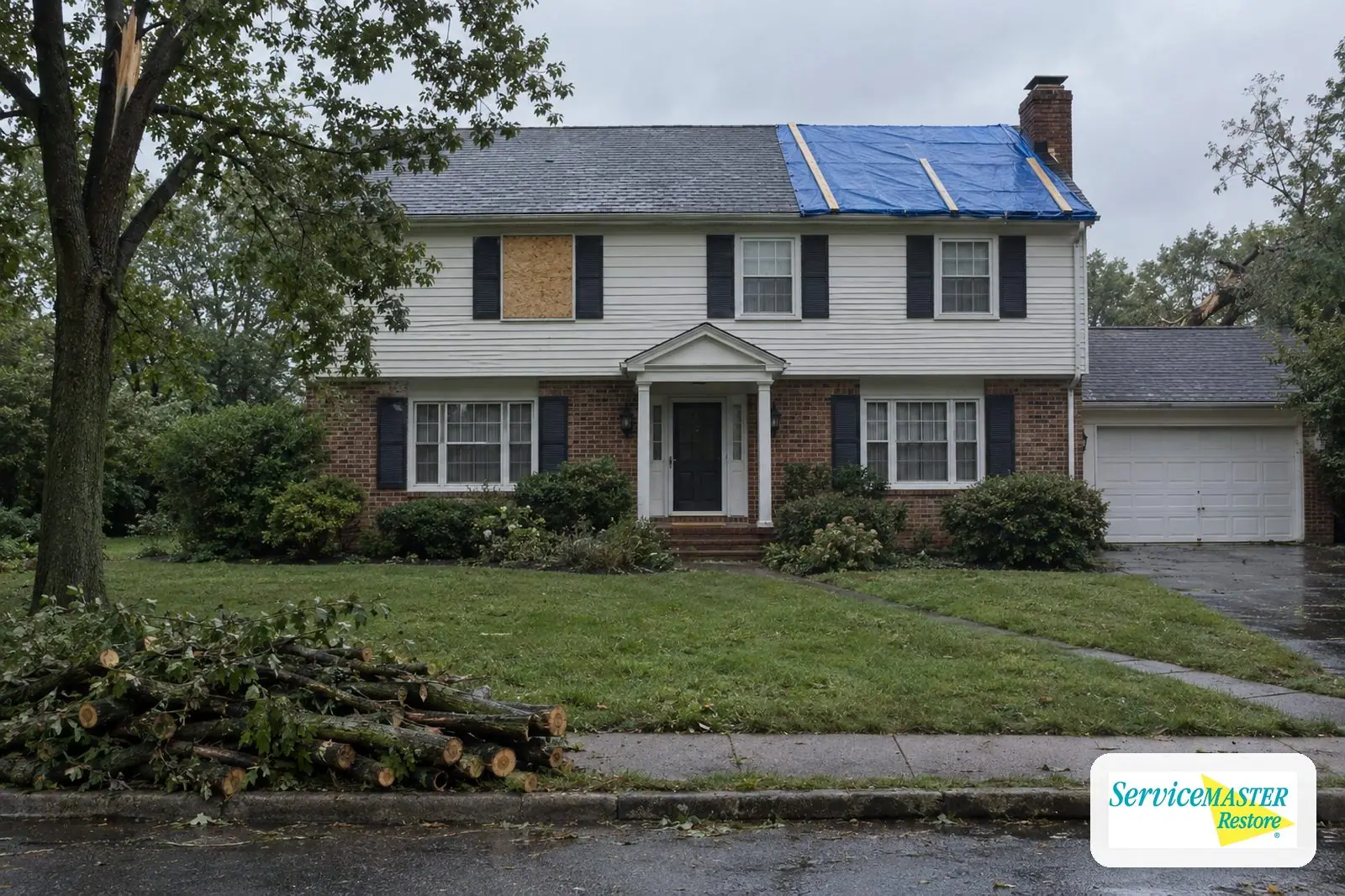
Storm Damage Restoration Services
in DuPage & Will County
When wind, hail or a falling limb opens a roof, wall or window, rain keeps getting in until the opening is covered. Our team secures storm-damaged homes and businesses across DuPage and Will County with emergency board-up and roof tarping, then removes water, dries the structure and handles cleanup and repairs.
- 24/7 emergency response
- IICRC-certified technicians
- Help with insurance claims
- Residential & commercial
Residential and Commercial Storm Damage Restoration
Storm damage is rarely one problem. A torn roof lets rain into the attic, wet insulation soaks the ceiling below, and a broken window leaves the house open to the next storm and to anyone passing by. Each of those needs a different fix, in the right order, and your insurer will expect you to stop the damage from getting worse while the claim is open.
We handle the whole sequence for houses, condos and commercial buildings: emergency board-up, roof tarping and temporary shoring, water removal, structural drying, debris cleanup and repairs and reconstruction. For businesses, that also means working around operating hours and keeping the documentation your carrier and landlord will ask for. Our IICRC-certified technicians are on call 24/7.
What We Do After a Storm
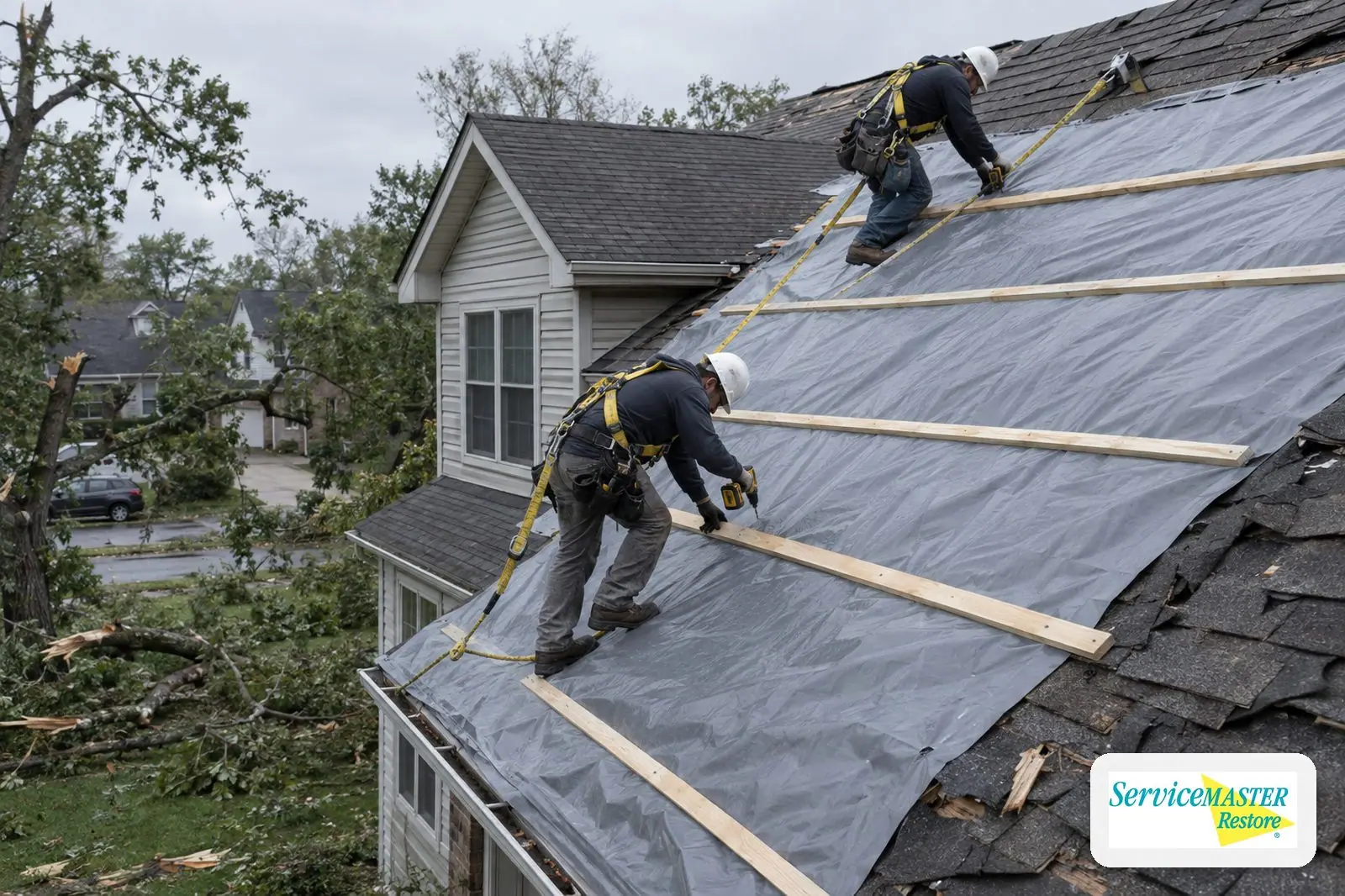
Roof Tarping & Board-Up
We cover damaged roof sections and board broken windows and doors so rain, wind and trespassers stay out while the claim and repairs are arranged.
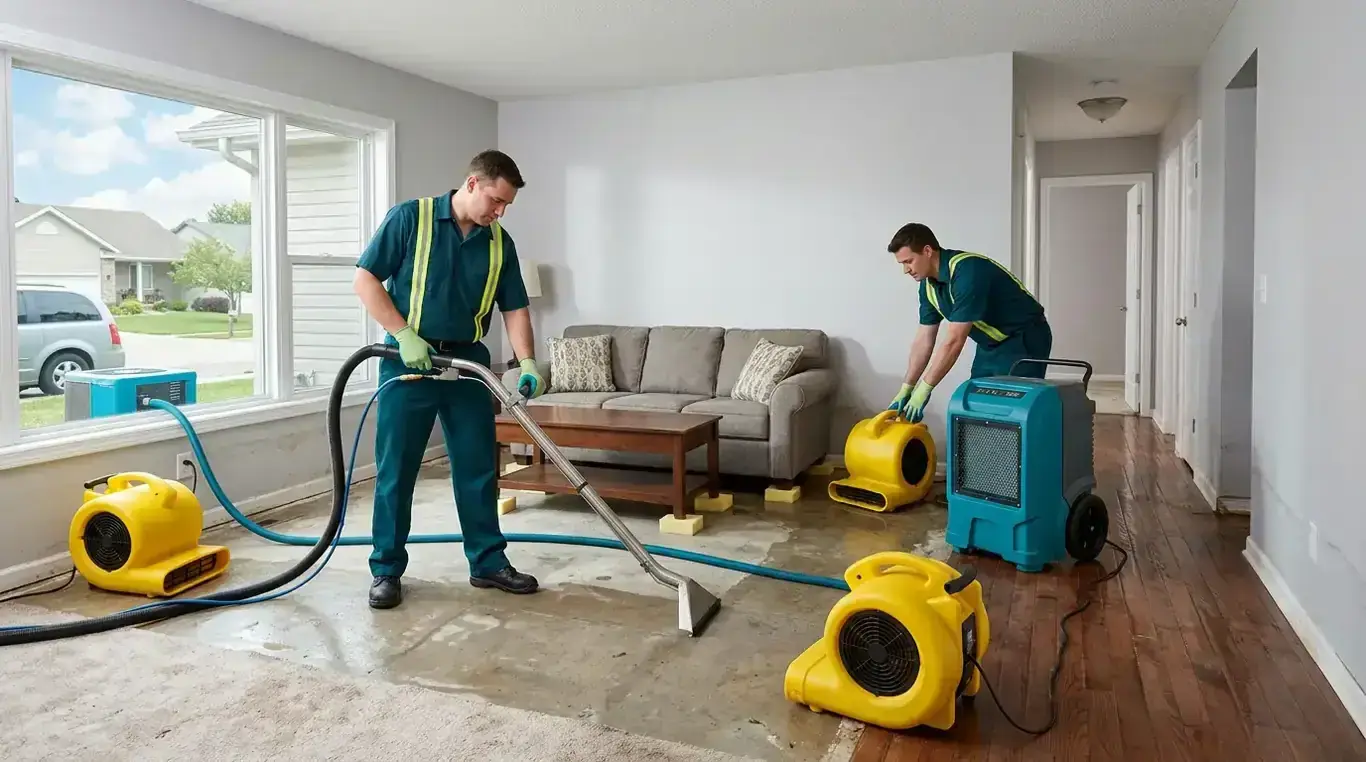
Water Removal & Drying
Rain that came through the roof or walls is extracted, wet materials are opened up where needed, and air movers and dehumidifiers dry the structure.
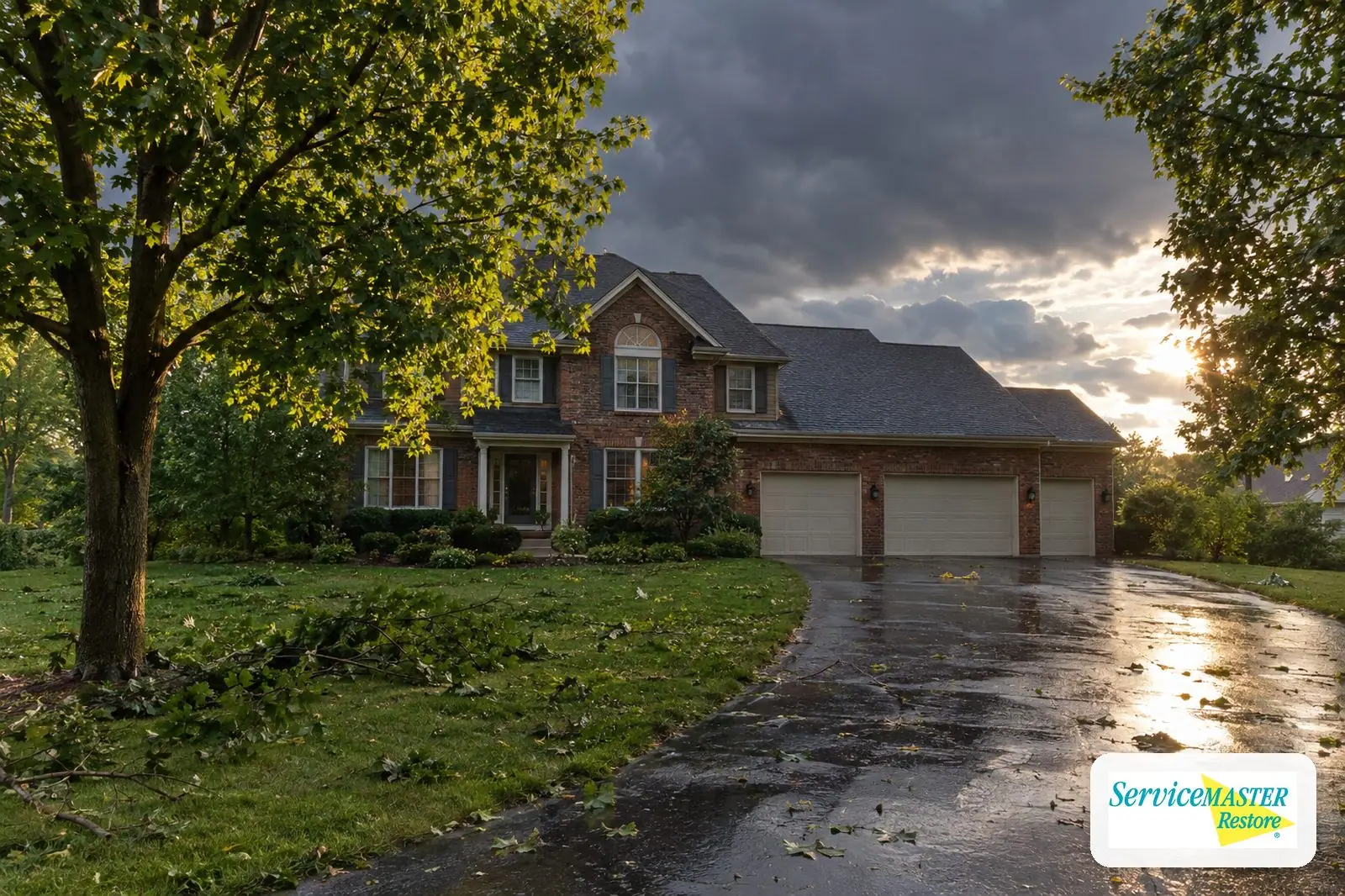
Cleanup & Rebuild
Storm debris is cleared from inside the building, damaged materials are removed and documented, and interiors are repaired so the property can be used again.
Our Storm Damage Restoration Process
24/7 Emergency Call
Call any hour. We ask what happened, whether anyone is hurt and whether power lines are down, then send a crew.
Safety Check & Documentation
We check for structural, electrical and contamination hazards and photograph every opening and wet area for your insurer.
Board-Up & Roof Tarping
Broken windows and doors are boarded and damaged roof sections are tarped to stop more rain from getting in.
Water Extraction
Standing water is removed, and soaked materials that cannot be dried in place are taken out and listed.
Drying & Dehumidification
Air movers and dehumidifiers dry walls, floors and framing, with moisture readings taken until materials reach their drying goal.
Repairs & Reconstruction
Once the structure is dry, damaged drywall, flooring and finishes are repaired so the space is ready to use again.
What should you do first after storm damage?
Keep everyone away from downed power lines, stay out of the building until it is safe to enter, and photograph the damage before anything is moved. Then cover the openings so rain stops getting in and call your insurer. The Illinois Department of Insurance asks policyholders to make temporary repairs that prevent further damage and to keep every receipt.
Storm losses get worse with every rain while a roof, window or wall is open. A tarp or a sheet of plywood in the first day can be the difference between one wet ceiling and a whole floor of wet drywall, insulation and flooring. That is why board-up and tarping come first in our process, ahead of drying and repairs.
How severe do storms get in DuPage and Will County?
The National Weather Service calls a thunderstorm severe when it can produce hail an inch or larger or wind gusts over 58 mph. Either one can tear shingles, break windows and drop limbs onto a roof, and every few years a storm here does far more.
Late on June 20, 2021, an EF-3 tornado with estimated peak winds of 140 mph tracked 17.6 miles from Naperville through Woodridge, Darien and Burr Ridge into Willow Springs. The NWS Chicago office counted more than 900 damaged structures, at least 300 of them with significant damage or destroyed, along with at least 11 injuries and thousands of downed trees.
Structures damaged by the June 20, 2021 EF-3 tornado
Naperville, Woodridge, Darien, Burr Ridge and Willow Springs
Source: National Weather Service Chicago event summary
A year earlier, the August 10, 2020 derecho swept across northern Illinois. NWS Chicago confirmed 15 tornadoes in its area that day, including EF-1 tornadoes in Wheaton and in Lombard and Villa Park, and logged wind damage across DuPage and Will counties.
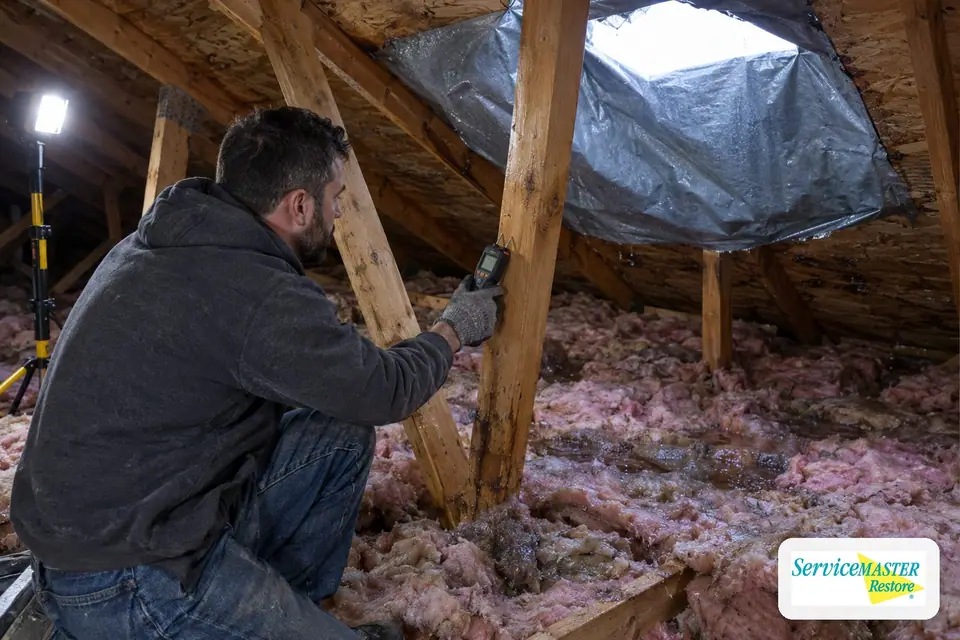
Where the water goes once the roof is open
Wind-driven rain rarely stays where it entered. It soaks attic insulation, pools on top of ceiling drywall until the drywall sags, and wicks down inside wall cavities where it cannot be seen. Hail damage to shingles is not always obvious from the ground, so a leak may only show up with the next rain.
The EPA advises drying water-damaged areas within 24 to 48 hours to prevent mold growth. We measure moisture behind the surface, open wet cavities where needed and run structural drying until readings show the materials are dry, which keeps a storm claim from turning into a mold remediation job.
Winter storms and ice dams
Storm damage is not only a summer problem. University of Minnesota Extension describes an ice dam as a ridge of ice at the roof edge that blocks melting snow from draining, caused mainly by heat escaping from the house. Water backed up behind it can leak into walls, ceilings and insulation, which is the same interior drying and repair work as a summer roof leak.
Does insurance cover storm damage?
Usually, for wind and hail. The Insurance Information Institute lists windstorm and hail among the perils a standard homeowners policy covers, while flood damage is excluded and needs separate flood insurance. FEMA notes that NFIP flood policies generally have a 30-day waiting period before they take effect, so a policy bought when a storm is in the forecast will not help with that storm. Rain that comes in through a roof or window opened by wind is normally storm damage; water rising from the ground or a creek is flood. Our flood and storm cleanup page explains that difference in more detail.
The Illinois Department of Insurance tells policyholders to photograph damage before cleaning up, make the temporary repairs needed to prevent further damage, keep receipts for that work, and hold on to damaged items until the adjuster has seen them. We photograph and log every opening, wet area and removed material so that record exists from the first visit. Policies differ, so check yours, and see our insurance claim guide for how the process usually runs.
How do you avoid storm-chaser contractors in Illinois?
After big storms, out-of-area crews go door to door. The Illinois Attorney General warns residents about these storm chasers, reminds them that roofers must be licensed by the Illinois Department of Financial and Professional Regulation and public adjusters by the Department of Insurance, and advises against paying in cash or through peer-to-peer apps. Illinois law adds several protections:
- Written contract. Home repair work over $1,000 requires a signed written contract that states the total cost and the contractor's business name and address (815 ILCS 513/15).
- Consumer-rights pamphlet. The contractor must give you the "Home Repair: Know Your Consumer Rights" pamphlet before you sign (815 ILCS 513/20).
- No deductible deals. A contractor may not promise to pay or rebate any part of your insurance deductible (815 ILCS 513/18).
- No contractor-adjusters. The same section bars contractors from representing you on the claim or filing it for you; they can give you an estimate and talk with your insurer's adjuster.
- A way out. If a contract is to be paid from insurance, you can cancel it in writing before midnight on the earlier of the fifth business day after the insurer tells you in writing that the loss is not covered, or the thirtieth business day after the insurer receives your proof of loss.
For permanent roof replacement, ask for the roofer's state license. The IDFPR roofing brochure says Illinois roofing license numbers start with 104- and should appear on the contract.
Commercial storm damage restoration
For a business, the cost of a storm is measured in closed days as much as in drywall. Commercial storm damage restoration starts with the same steps, securing the building, stopping water and drying the structure, but is planned around keeping as much of the operation running as possible. That can mean sealing off damaged areas so other floors or suites stay open, protecting inventory and equipment, and phasing work so the most important spaces come back first.
Keep a record of when operations stopped and restarted, and ask your agent whether your policy includes business income coverage. We keep photo and moisture records for your carrier and property manager. See damage mitigation for businesses, commercial water damage restoration and our guide to business continuity after water or fire damage.
Who to call for each part of storm damage
A storm job often involves several trades, and knowing who does what saves time:
- Downed power lines or a gas smell: the utility and 911 first, before anyone goes near the building.
- Trees on the house: a tree service removes the tree; we can tarp and board the opening once it is clear.
- Openings, water and drying: us, for board-up, roof tarping and temporary shoring, water removal and drying.
- Permanent roof replacement: a roofer with an Illinois roofing license.
- Interior repairs: us again, for drywall, flooring and finishes through repairs and reconstruction.
Storm damage near you? We serve homes and businesses in Naperville, Woodridge, Darien, Burr Ridge, Wheaton, Lombard, Villa Park and the rest of DuPage and Will County. If water is coming in now, call 24/7 at (630) 241-1111.
Frequently asked questions
Does homeowners insurance cover storm damage?
Wind and hail damage is usually covered: the Insurance Information Institute lists windstorm and hail among the perils a standard homeowners policy covers. Flood is excluded and needs a separate flood policy. Rain that enters through a roof or window opened by wind is usually treated as storm damage. Policies vary, so check yours.
How soon should storm damage be covered up?
As soon as it is safe. The Illinois Department of Insurance asks policyholders to make temporary repairs that prevent further damage, photograph the damage before cleaning up and keep receipts. Each rain that gets through an open roof or window adds to the damage, and to what you may have to explain to your insurer.
Can a contractor pay my insurance deductible?
No. Illinois' Home Repair and Remodeling Act (815 ILCS 513/18) bars contractors from promising to pay or rebate any part of an insurance deductible. An offer like that is a warning sign.
How do I check a roofer's license in Illinois?
Roofers are licensed by the Illinois Department of Financial and Professional Regulation. IDFPR's brochure says the license number starts with 104- and should appear on the contract, and the Attorney General recommends confirming the license before you sign.
What makes a thunderstorm severe?
The National Weather Service calls a thunderstorm severe when it can produce hail one inch or larger or wind gusts over 58 mph.
Do you handle storm damage for businesses?
Yes. We provide commercial storm damage restoration for offices, retail spaces and other commercial buildings across DuPage and Will County: board-up, roof tarping, water removal, drying and repairs, planned to keep as much of the business open as possible.
Sources
- National Weather Service: Severe Thunderstorm Safety
- National Weather Service Chicago: June 20-21, 2021: Late Night Tornadoes and Wind Damage, Including an EF-3 Tornado From Naperville to Willow Springs
- National Weather Service Chicago: August 10, 2020: Corn Belt Derecho
- Insurance Information Institute (Triple-I): Which disasters are covered by homeowners insurance?
- FEMA FloodSmart: Flood Insurance 101
- Illinois Department of Insurance: Disasters
- Illinois General Assembly: Home Repair and Remodeling Act, 815 ILCS 513/15
- Illinois General Assembly: Home Repair and Remodeling Act, 815 ILCS 513/18
- Illinois General Assembly: Home Repair and Remodeling Act, 815 ILCS 513/20
- Illinois Department of Financial and Professional Regulation: Find a Licensed Roofer
- Illinois Attorney General: Consumer alert: storm-related repair scams
- ComEd: Tornado safety: what you should know
- Ready.gov (U.S. Department of Homeland Security): Recovering from Disaster
- CDC: Carbon Monoxide Poisoning Basics
- U.S. EPA: A Brief Guide to Mold, Moisture and Your Home
- University of Minnesota Extension: Dealing with and preventing ice dams
Storm and flood guides
Plain-English answers from our restoration team, fact-checked against weather-service, insurance and safety sources.
- Storm Damage in the Chicago Suburbs: Board-Up and Roof Tarping Guide
Storm safety, why emergency board-up and roof tarping matter, and how to document damage for a claim.
- Flood & Storm Damage Cleanup
Why floodwater is Category 3, how to stay safe and what flood insurance covers.
- Basement Flooding After Heavy Rain: Emergency Steps + Why DuPage Basements Flood
Emergency steps for a flooded basement and why local basements flood.
- Insurance Claim Assistance
How property damage claims work in Illinois: documenting, mitigation, adjusters and estimates.
Free quote · 24/7 response
Get a Free Quote
Contact our team today for prompt assistance with your restoration needs across DuPage & Will County.
- (630) 241-1111
- Open 24 hours, 7 days a week
- 924 Ogden Ave, Lisle, IL 60532
- info@svmallservices.com

24/7 EMERGENCY RESPONSE
Storm damage at your home or business?
Call now for board-up, roof tarping and water removal anywhere in DuPage and Will County.