Short answer: There is no fixed number. A small spill on hard surfaces is a short job; a scene where fluids soaked into carpet, subfloor or drywall, or that went undiscovered for days, takes much longer because materials must be removed, disinfected, disposed of as regulated waste and rebuilt. A reliable estimate comes only after an on-site assessment.
When you are dealing with a death, a serious injury or contamination in your home or business, wanting to know when it will be over is natural. You may need to plan a funeral, prepare a unit for a new tenant or reopen a store. The honest answer is that biohazard cleanup has no standard turnaround. Each job is sized by what happened, how long it went unnoticed and how far the contamination traveled. Here is what drives the timeline, so the estimate you receive makes sense.
What drives the timeline
| Factor | Why it changes the schedule |
|---|---|
| Type of incident | A contained injury on a hard floor is a very different job from an unattended death, a long-term hoarding situation or a contaminated crawl space. |
| Time before discovery | The longer fluids sit, the further they spread and soak in, and the stronger the odor becomes. |
| How far fluids traveled | Blood and other fluids can run under baseboards, through carpet into the pad and subfloor, and into the bottom of drywall. |
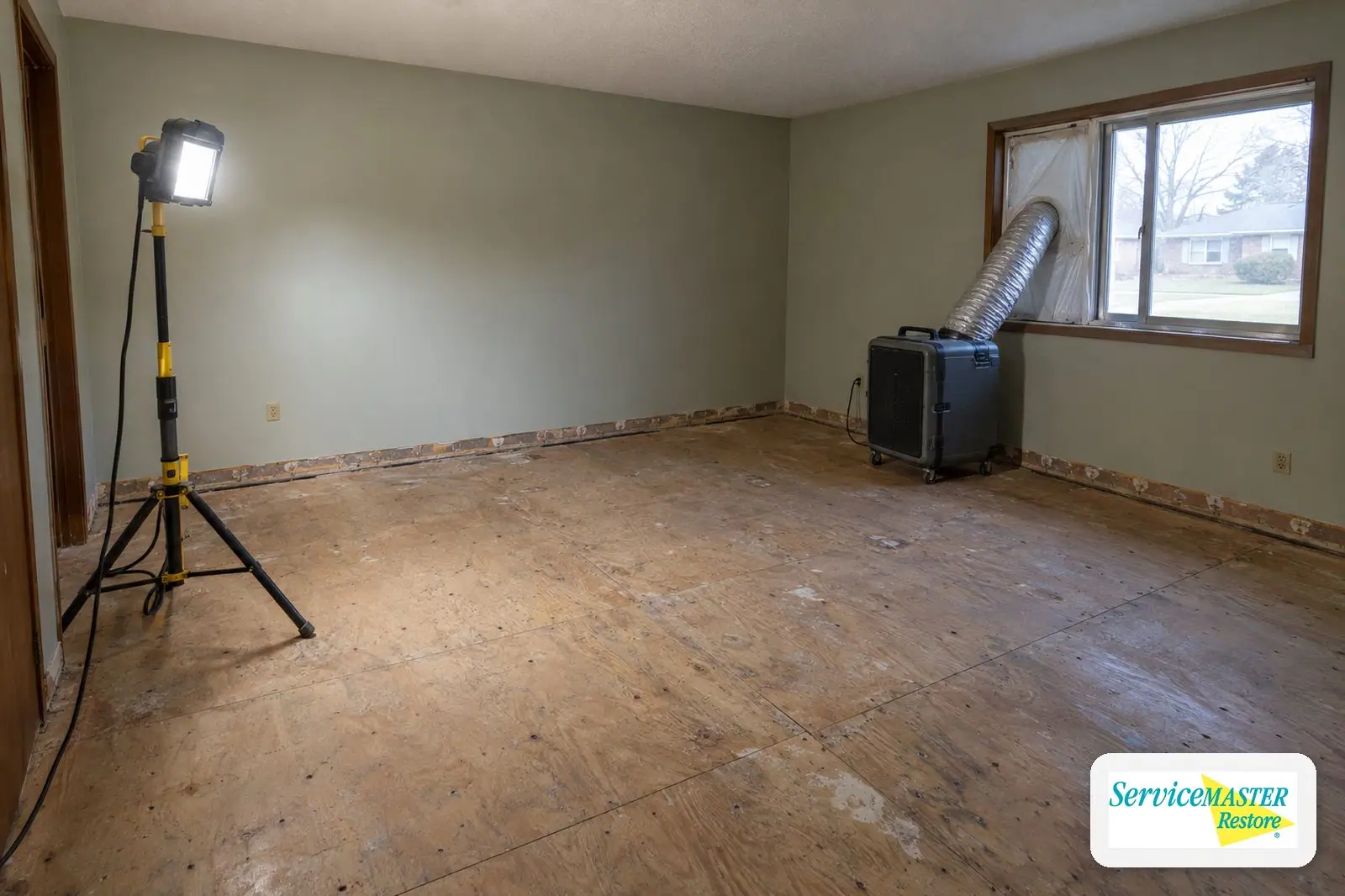
| Materials that must come out | Removing carpet, pad, subfloor, drywall, cabinets or furniture adds removal, cleaning and drying time. |
| Odor | Odor that has moved into the structure or the heating and cooling system takes added treatment after the visible cleanup is done. |
| Size and access | Multiple rooms, a multi-unit building or tight access all lengthen the work. |
| Approvals and rebuild | Insurance approvals and the repairs that follow cleanup run on their own schedules. |
The sequence, step by step
Every reputable biohazard job follows roughly the same order. Each step has to be finished before the next starts, which is why rushing one usually backfires.
- Release of the scene. If police or the coroner were involved, cleanup cannot begin until they have finished their work and released the property.
- Assessment. A technician walks the site, finds every affected area, including what has soaked below the surface, and writes a scope of work.
- Containment and protective equipment. OSHA's Bloodborne Pathogens standard governs work with blood and other potentially infectious materials. As OSHA's bloodborne pathogens overview explains, employers must have an exposure control plan with protective measures, training and hepatitis B vaccination for workers at risk. The work area is sealed off and technicians wear protective gear.
- Removal. Gross contamination is cleaned up, and porous materials that absorbed fluids are cut out and bagged.
- Cleaning and disinfection. Remaining surfaces are cleaned and then disinfected. EPA's list of selected EPA-registered disinfectants includes products registered as effective against HIV, hepatitis B and hepatitis C. EPA notes that "the surface should be visibly wet for the entire contact time" stated on the label, so this step cannot be hurried.
- Disposal. Contaminated material is packed in labeled or red, leak-resistant containers and disposed of as regulated waste. OSHA requires that disposal follow applicable federal, state and local rules.
- Odor control. Remaining odor is treated once the source materials are gone.
- Verification. The area is inspected to confirm cleaning and disinfection are complete before it is turned over.
- Repairs. Subfloor, drywall, flooring and paint are replaced. This is often a separate phase, sometimes handled by a different contractor.
Why porous materials add the most time
Hard, sealed surfaces such as tile, sealed concrete and metal can usually be cleaned and disinfected in place. Porous materials are different. Carpet pad, plywood subfloor, the bottom edge of drywall and upholstered furniture absorb fluids, and disinfectant cannot reliably reach everything that soaked in. Those materials usually have to be removed, which means more cutting, more bagging and more disposal. The surfaces underneath then have to be cleaned, disinfected and dried before any rebuild. A spill that reached the subfloor can turn a short visit into a much longer project.
What families can do while they wait
The days right after a death or traumatic event are hard enough. A few steps protect your health and keep options open:
- Keep the door to the affected area closed and keep children and pets out.
- If odor is spreading, ask the cleanup company whether to turn off the heating or cooling system until they arrive.
- Call your insurance company to open a claim. Coverage varies by policy, so check yours or ask the Illinois Department of Insurance.
- Write down items you want to keep, such as photos, documents and keepsakes, so technicians know what to look for.
- Gather what you need from unaffected rooms only.
And what not to do:
- Do not clean blood or other body fluids yourself. Bloodborne pathogens such as hepatitis B, hepatitis C and HIV can cause disease, which is why workers who handle this material are trained and protected.
- Do not throw away damaged belongings before they are documented for insurance.
- Do not try to cover odor with air fresheners or household cleaners. Odor means source material remains.
- Do not pick up needles or broken glass.
Our guide to unattended death cleanup and what families should know walks through the first days in order, and our article on biohazard and trauma cleanup costs and who pays covers insurance and payment.
Why a responsible company will not promise a time over the phone
Until someone has seen how far fluids traveled and what is under the flooring, any timeline is a guess. A careful company gives you an estimate after an on-site assessment, explains what could change it, and updates you if removal reveals more damage. Be wary of anyone who promises a fixed number of hours sight unseen.
When you get an estimate, ask what it includes: removal, disinfection, disposal, odor treatment and repairs. Ask whether rebuilding is part of the same scope or a separate phase, and how you will be told if opening the floor or walls changes the plan. Clear answers to those questions matter more than a quick number.
When to call
ServiceMaster Restoration Services in Lisle provides biohazard cleanup, trauma and crime scene cleanup and unattended death and decomposition cleanup for homes and businesses in DuPage and Will County. We have more than 20 years of experience and can help with the insurance claim. Call (630) 241-1111, 24/7, and we will explain the next steps.
More questions
Can we stay in the home during biohazard cleanup?
Sometimes. If the affected area is limited and can be sealed off, people may be able to stay in other parts of the home. Many families choose to stay elsewhere, especially after an unattended death. The assessment is the right time to ask what is practical for your situation.
Do we need to be there while the cleanup happens?
Not usually. Someone needs to provide access and approve the scope of work. Technicians can contact you about personal items they find, and you can do a walkthrough once the area has been cleaned and verified.
Does waiting for insurance approval delay the cleanup?
It can delay repairs, but it should not leave contamination sitting for long. Many policies cover sudden and accidental events, but coverage varies. Talk with your insurer early, keep records of everything, and contact the Illinois Department of Insurance if you have questions about your claim.
Will the odor be gone when the cleanup is finished?
The goal is to remove the odor at its source. If the smell lingers, some source material may remain, or odor may have reached ductwork or other areas. Let the company know so they can investigate rather than mask it.