Sewage Backup Cleanup
in DuPage & Will County
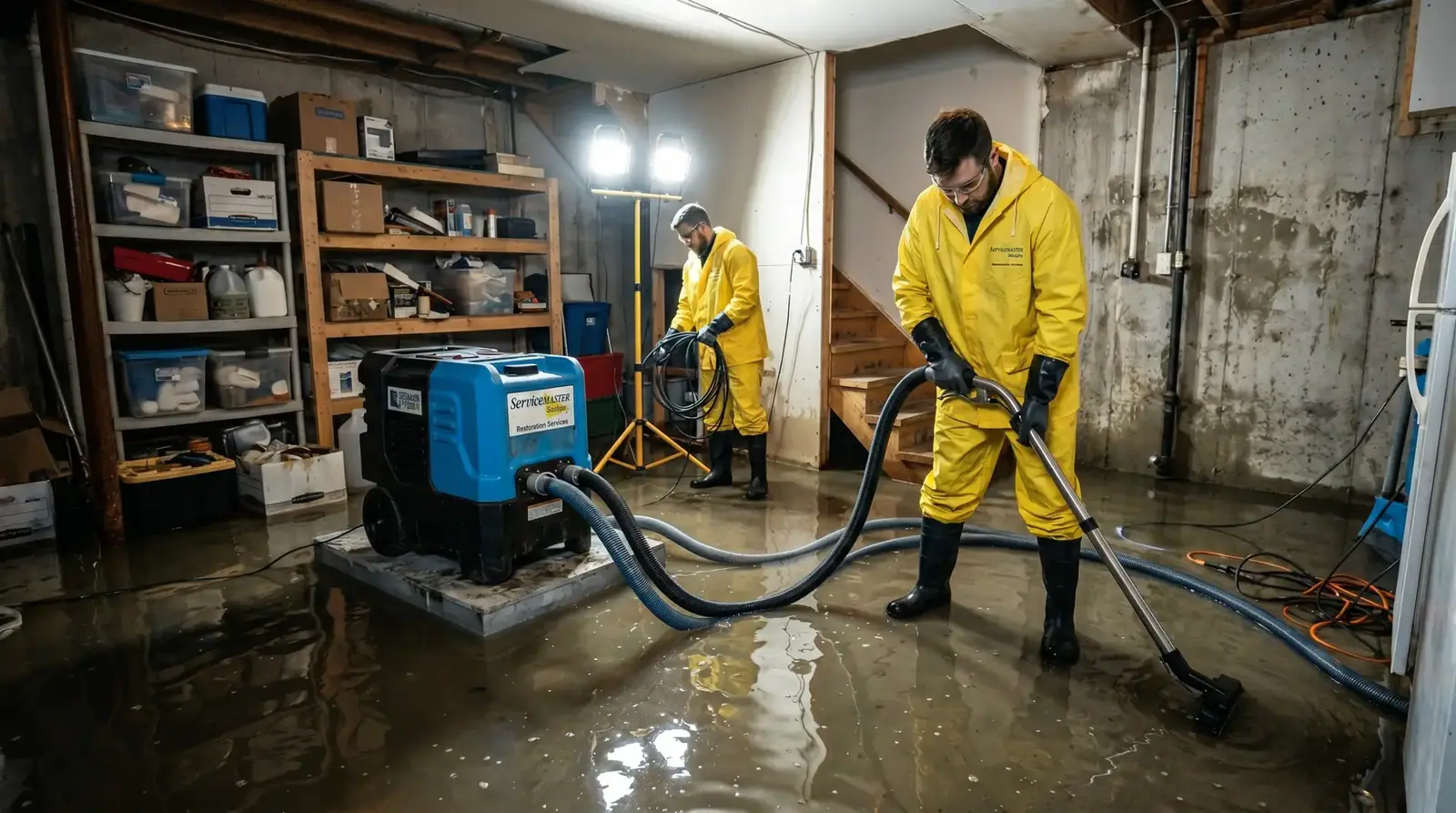
A sewage backup puts the most contaminated kind of water into your basement or building. Our crews contain the area, extract the sewage, remove what cannot be saved, clean and disinfect, and dry the structure so it is safe to use again.
- 24/7 emergency response
- IICRC-certified technicians
- Help with insurance claims
- Residential & commercial
Sewage Cleanup That Treats Category 3 Water Correctly
Water that comes up through a floor drain, toilet or basement shower after a sewer backup is not the same as water from a burst supply line. It carries bacteria and viruses, it soaks into anything porous, and wiping it up with household cleaners does not make a basement safe.
Our IICRC-certified technicians handle sewage the way the industry standard calls for: protective equipment, containment, extraction, removal of contaminated porous materials, cleaning and disinfection, then structural drying and deodorization. We document each step for your insurer and, once the area is clean and dry, handle repairs and reconstruction. Clearing or repairing the sewer line itself is plumbing work, so call a plumber for the blockage and us for the cleanup.
What Our Sewage Cleanup Covers
Sewage Extraction
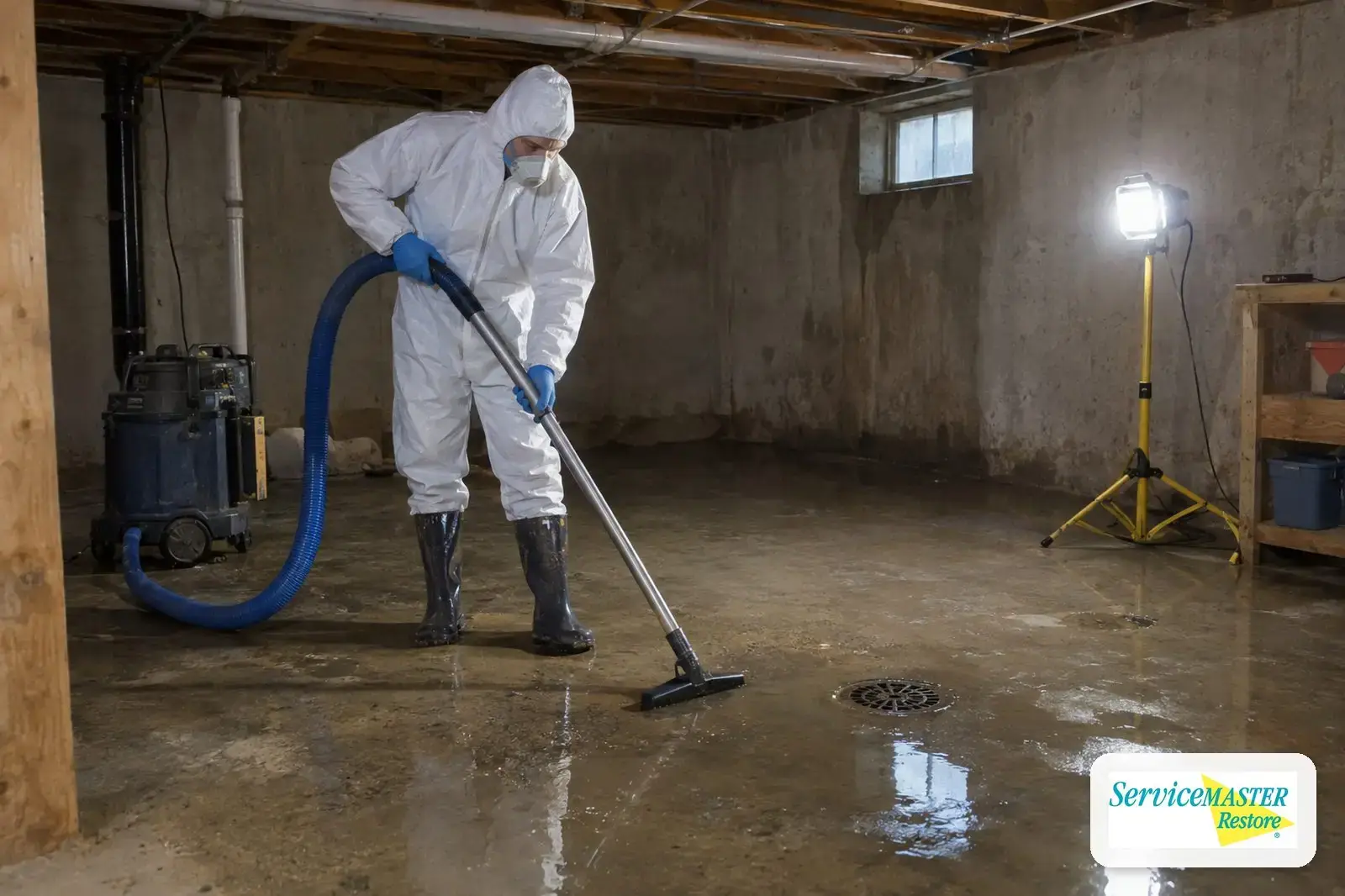
Crews in protective gear pump out and extract sewage and contaminated water, keeping it contained to the affected area.
Removal of Soaked Materials
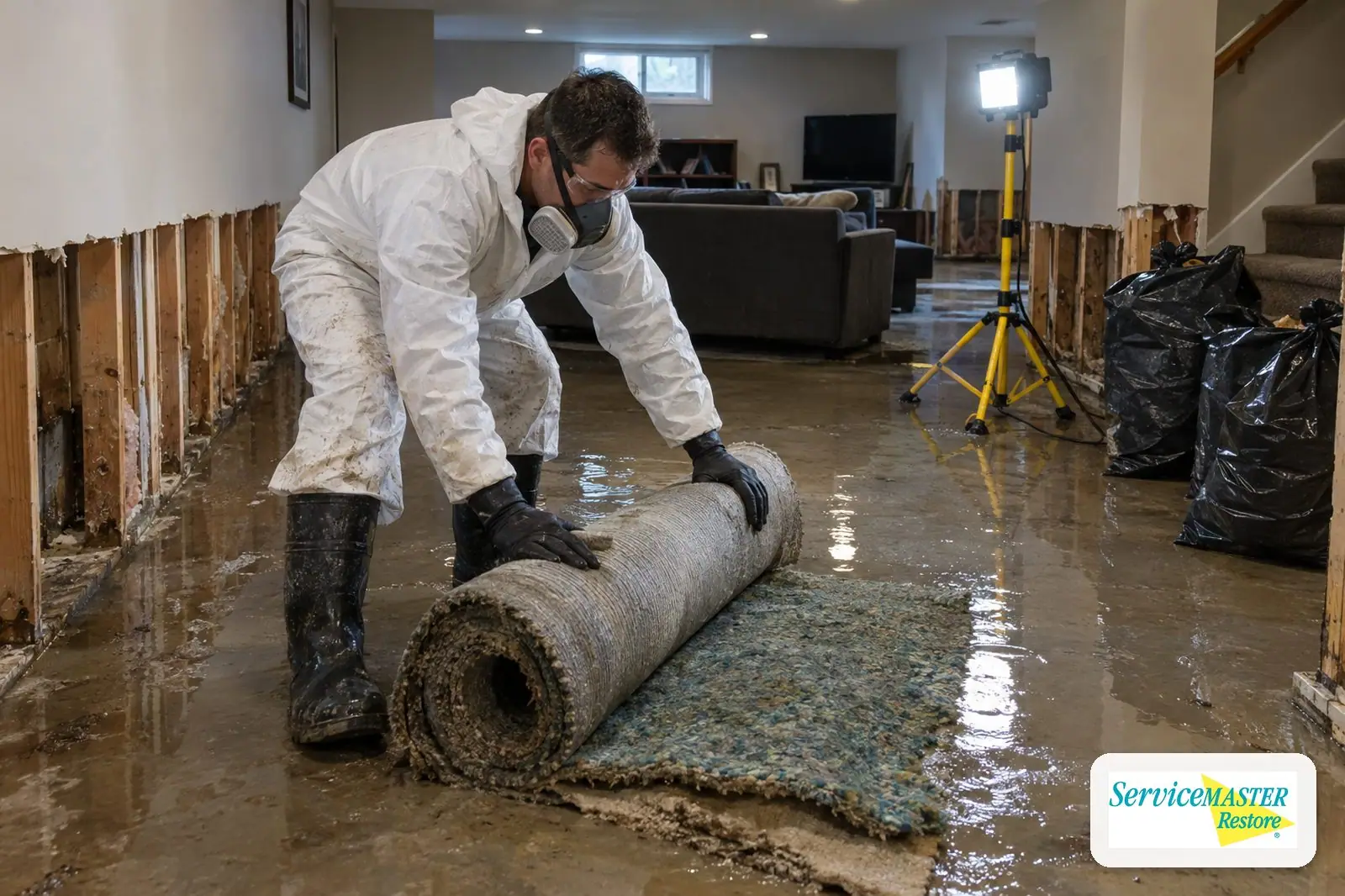
Carpet, pad, drywall, insulation and other porous materials that sewage has soaked are bagged, removed and documented.
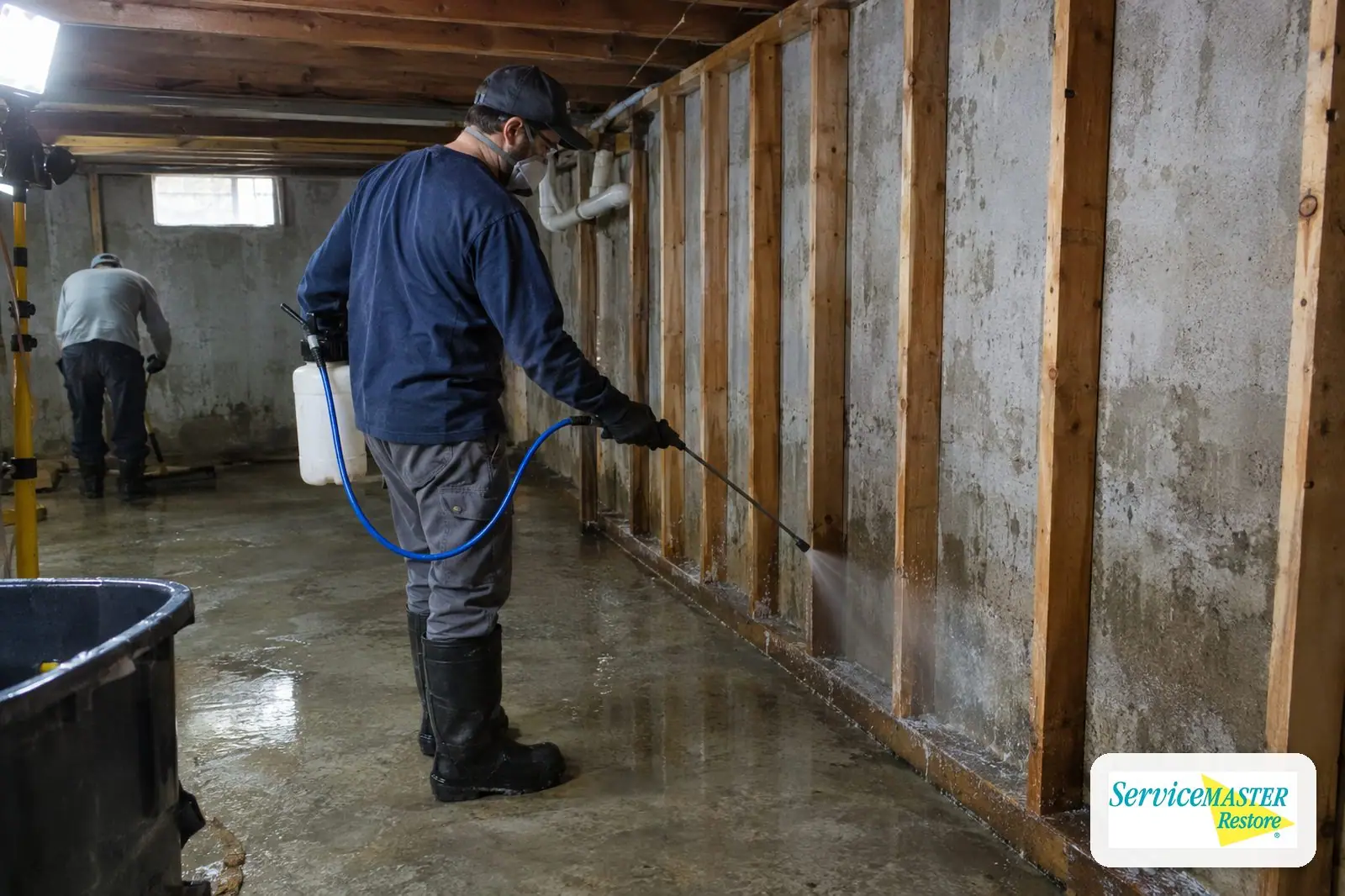
Cleaning & Disinfection
Remaining surfaces are cleaned and treated with disinfectants, then the area is dried and deodorized.
Our Sewage Backup Cleanup Process
24/7 Emergency Call
Call any hour. We ask where the water came up, how far it spread and whether anyone has been in contact with it.
Safety & Containment
We check electrical hazards, set up containment and wear protective equipment so contamination stays in the work area.
Sewage Extraction
Sewage and contaminated water are extracted and disposed of, and solids are removed from floors and drains.
Contaminated Material Removal
Porous materials the sewage reached are cut out, bagged and listed with photos for your insurance claim.
Cleaning & Disinfection
Hard surfaces and framing are cleaned and disinfected before any drying equipment is turned on.
Drying, Odor Control & Repairs
The structure is dried and deodorized, then removed materials are replaced so the space can be used again.
What should you do when sewage backs up into your basement?
Keep everyone, especially children and pets, out of the area, and stop running water, flushing toilets or using appliances so more water does not go down the drains. If water is near outlets or appliances, do not wade in. Then call your municipality, your insurer and a restoration company. Sewage is Category 3 water and needs protective equipment and disinfection, not a mop and household cleaner.
The IICRC S500 standard defines Category 3 water as grossly contaminated: it can contain pathogenic, toxigenic or other harmful agents that cause significant reactions if people touch or swallow it. A sewage backup from a floor drain or toilet is the textbook example, so it is handled differently from a leak in a clean supply line.
Why does sewage back up in DuPage and Will County homes?
Most backups start in the pipe between the house and the street. The City of Naperville calls tree and shrub roots the number one cause of its sanitary sewer backups: roots find small cracks, then grow until they block the line. Grease poured down a kitchen drain cools and hardens inside the pipe, and FEMA warns that wipes, sanitary products and too much toilet paper block laterals too.
Heavy rain is the other cause. Naperville explains that intense storms can push stormwater into the sanitary sewer until the system exceeds its capacity and surcharges, which drives sewage back up through service laterals and floor drains. FEMA adds that most municipalities in Cook County rely on combined sewers that carry sewage and stormwater in the same pipes, which makes basement backups more likely in those older systems. Our guide to basement water damage covers the other ways water gets into a lower level.
Who is responsible: you or the town?
Usually the property owner, for the line on their side. Naperville says homeowners are responsible for maintaining the sanitary service line and connections from the house to the main sewer, while the City handles backups caused by structural defects or total blockages in the main within the right-of-way. Naperville asks residents to notify the City before calling a plumber whenever a sanitary backup comes up through a floor drain, so the Water Utility can check the main line at no cost. Other towns and sanitary districts split responsibility in similar ways, so call yours first.
What does professional sewage cleanup involve?
Done properly, sewage cleanup follows the same order on every job, from a basement floor drain backup in a single-family home to a backup in a restaurant or office building:
- Protect people and the rest of the building. Crews wear protective equipment, and the work area is contained so contamination is not tracked through the house.
- Extract the sewage. Standing sewage and solids are pumped and extracted, and floor drains are cleared of debris.
- Remove contaminated porous materials. The CDC says to remove and discard drywall and insulation contaminated with sewage, and to throw away anything that cannot be cleaned and dried quickly, such as carpet and carpet padding.
- Clean and disinfect. Concrete, framing and other hard surfaces are cleaned first, then treated with a disinfectant used according to its label.
- Dry the structure. FEMA notes that mold can form within 48 hours, so drying and dehumidification start as soon as surfaces are clean.
- Deodorize and rebuild. Lingering odor is treated at its source, then removed drywall, flooring and trim are replaced through repairs and reconstruction.
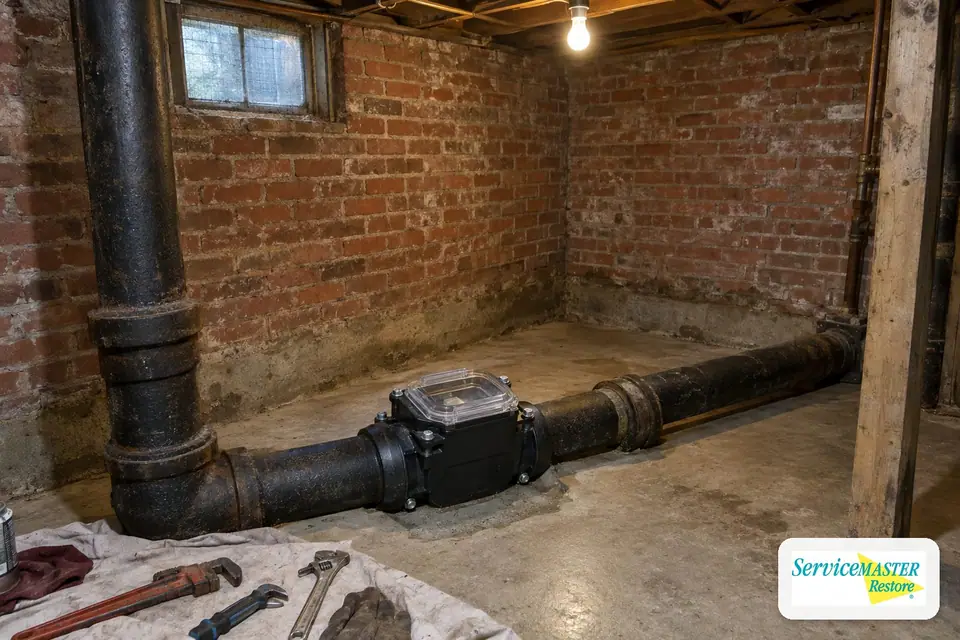
How to prevent the next backup
The two common fixes are a backwater valve and an overhead sewer. FEMA's guide says a backwater valve is part of your sewer lateral, so it is your property and the municipality will not maintain it; some valves need a plumber to inspect them every couple of years. When a valve is closed during heavy rain, avoid flushing toilets or running sinks, showers, the washer and the dishwasher, because that water has nowhere to go except back into the house.
An overhead sewer routes basement drains to an ejector pump that lifts waste up and out, and FEMA notes that the system should be inspected periodically and the ejector pump maintained regularly. The Village of Glen Ellyn notes that a backflow valve can help prevent backups but does not offer the same level of protection as an overhead sewer. Day to day, keep grease out of the sink and wipes out of the toilet.
Local programs that help pay for backup prevention
Several towns we serve share the cost of overhead sewers or backflow devices for owners who have had backups. Terms change, and most programs require approval before any work starts, so confirm the details with your municipality before you hire a plumber.
Maximum reimbursement for backup prevention, by program
Dollars, as published by each municipality or district in October 2026. Programs differ in what they cover and who qualifies.
Sources: program pages linked below. Naperville pays a percentage with no stated cap.
- Naperville: the Sanitary Sewer Backflow Prevention Device Reimbursement Program reimburses 75% of the approved cost of a backflow device for City wastewater customers whose backup was caused by a sanitary sewer surcharged by intense rainfall. Owners must apply and be approved before work begins and collect three written quotes. Start with the Water Service Center at 630-420-6137.
- Wheaton: the Residential Sewer Backup Prevention Program reimburses 75% of the cost of rerouting basement-level sanitary drains to an ejector pump, up to $8,000. Call Public Works at 630-260-2110 first.
- Elmhurst: cost-sharing programs cover 50% of an overhead sewer up to $5,000, or 50% of a check valve system up to $3,000.
- Lombard: the Overhead Sewer Reimbursement Program reimburses 75% of the cost, up to $5,000, for homeowners with chronic backups.
- Glen Ellyn: the sewer cost-share program reimburses 50% of an overhead sewer conversion, up to $5,000, and also funds backflow valves.
- Darien: under the expanded overhead sewer program, DuPage County pays the first $2,000 and 50% of the remaining cost up to $7,500, and the City adds up to $5,000 more, for a combined maximum of $12,500.
- Downers Grove: the Downers Grove Sanitary District pays half the cost of an overhead sewer or backflow prevention devices, up to $3,000, for residents who have had backup problems.
- Lisle: the Village's overhead sewer cost-share program splits the first $5,000 of an overhead sewer or other backup prevention device 50-50, up to $2,500.
Does insurance cover sewage backup?
Not unless you added the coverage. The Insurance Information Institute says sewer backups are not covered under a typical homeowners policy and must be bought as a separate product or as an endorsement. Flood insurance depends on the cause: FloodSmart says an NFIP policy would cover water damage from a sewer that backed up during a heavy rainstorm, but not a backup caused by clogged pipes. Check the limit on any backup endorsement before work starts.
Either way, the Illinois Department of Insurance asks policyholders to photograph damage before cleaning up and keep receipts. We photograph and list every item and material removed so the record is ready for your adjuster. Our insurance claim guide explains how the rest of the process usually runs.
Sewage backup near you? We clean up basements and commercial spaces in Naperville, Downers Grove, Wheaton, Lisle, Darien, Elmhurst, Lombard, Glen Ellyn and the rest of DuPage and Will County. Call 24/7 at (630) 241-1111.
Frequently asked questions
Is sewage backup cleanup covered by homeowners insurance?
Usually not, unless you added it. The Insurance Information Institute says sewer backups are not covered under a typical homeowners policy and must be bought as a separate product or an endorsement. NFIP flood insurance can cover a backup caused by heavy-rain flooding, but not one caused by clogged pipes.
Can I clean up a sewage backup myself?
A very small backup on bare concrete can be cleaned by an owner with the right gear: the CDC recommends rubber boots, rubber gloves and goggles, and keeping children and pets away. Once sewage has reached drywall, insulation, carpet or padding, the CDC says those materials should be removed and discarded, and that job needs containment, disinfection and drying.
Who is responsible for a sewer backup, me or the city?
Usually the owner, for the line on their side. Naperville, for example, makes homeowners responsible for the service line from the house to the main, while the City handles defects and total blockages in the main within the right-of-way. Call your municipality first; Naperville asks residents to notify the City before calling a plumber.
Does Naperville help pay for a backflow device?
Yes. Naperville's Sanitary Sewer Backflow Prevention Device Reimbursement Program reimburses 75% of the approved cost for City wastewater customers whose backup was caused by a sanitary sewer surcharged by intense rainfall. You must apply and be approved before work starts. Call the Water Service Center at 630-420-6137.
Is sewage Category 3 water?
Yes. The IICRC S500 standard defines Category 3 water as grossly contaminated, able to contain pathogenic, toxigenic or other harmful agents, and sewage is the standard example.
What should I not do during a sewage backup?
Don't keep using water: FEMA advises against flushing toilets or running sinks, showers, the washer and the dishwasher when the sewer is overloaded. Don't wade into water near outlets or appliances; keep the power off at the main breaker until an electrician has checked it.
Sources
- IICRC: Category of Water Damage and Weather-related Events (S500 Consensus Body Position Statement, 2026)
- CDC: Guidelines for Cleaning Safely After a Disaster
- FEMA: Urban Flooding: Guidance for Homeowners and Renters
- Insurance Information Institute (Triple-I): Which disasters are covered by homeowners insurance?
- FEMA FloodSmart: What's covered by flood insurance
- Illinois Department of Insurance: Disasters
- City of Naperville: Sanitary Sewer Backups
- City of Naperville: Sanitary Sewer Backflow Prevention Device Reimbursement Program
- City of Wheaton: Residential Sewer Backup Prevention Program
- City of Elmhurst: Cost-Sharing Programs
- Village of Lombard: Grants: Overhead Sewer
- Village of Glen Ellyn: Sewer Cost Share Programs
- City of Darien: Expanded Overhead Sanitary Sewer Reimbursement Program
- Downers Grove Sanitary District: 2026 Newsletter
- Village of Lisle: Overhead Sewer Cost Share Program
Sewage and basement water guides
Plain-English answers from our restoration team, fact-checked against public-health, insurance and municipal sources.
- Sewage Backup Cleanup: Health Hazards, Cost, and the Right Way to Handle Category 3 Water
The health risks, safe first steps, the pro cleanup process, cost and Illinois insurance rules.
- Basement Water Damage
Causes, sewer backup and flood coverage, what finished materials can be saved and how to prevent a repeat.
- Basement Flooding After Heavy Rain: Emergency Steps + Why DuPage Basements Flood
Emergency steps for a flooded basement and why local basements flood.
- Insurance Claim Assistance
How property damage claims work in Illinois: documenting, mitigation, adjusters and estimates.
Free quote · 24/7 response
Get a Free Quote
Contact our team today for prompt assistance with your restoration needs across DuPage & Will County.
- (630) 241-1111
- Open 24 hours, 7 days a week
- 924 Ogden Ave, Lisle, IL 60532
- info@svmallservices.com

24/7 EMERGENCY RESPONSE
Sewage in your basement or building?
Call now for sewage extraction, cleanup and disinfection anywhere in DuPage and Will County.