Short answer: Yes, in most cases. Standard homeowners policies list fire and smoke as covered perils, so accidental fire damage to your house, detached structures and belongings is usually covered, along with extra living costs if you have to move out. Limits, deductibles and exclusions, such as vacancy clauses, still apply, so check your own policy.
Fire is the loss homeowners insurance was built around, and it is one of the few areas where the general answer is a clear yes. The useful questions come next: which parts of the policy pay for what, how much, and what could shrink the payment. This page covers the coverage itself. For the claim process step by step, see our guide to insurance claims for fire damage and the process.
Fire and smoke are named perils
The Insurance Information Institute (Triple-I) lists “fire or lightning” and “smoke” as covered perils on every standard homeowners policy form it describes, from the most basic to the broadest. In general that includes accidental fires from everyday causes such as cooking, heating equipment, electrical faults and candles. Smoke coverage matters because a small fire can leave soot and odor throughout a home even when the flames stayed in one room.
What each part of the policy pays for
A homeowners policy is really several coverages bundled together. Triple-I’s overview of what standard homeowners insurance covers describes them this way:
| Coverage | What it pays for after a fire | Typical limit, per Triple-I |
|---|---|---|
| Dwelling | Repairing or rebuilding the house itself | The dwelling limit on your declarations page |
| Other structures | Detached garage, shed, gazebo | Generally about 10 percent of the dwelling limit |
| Personal property | Furniture, clothing, electronics and other belongings | Generally 50 to 70 percent of the dwelling limit |
| Additional living expenses (ALE) | Hotel bills, restaurant meals and other costs above your usual living expenses while you cannot live at home | Has its own limit; some policies also set a time limit |
| Liability | Lawsuits for bodily injury or property damage you or family members cause | The liability limit on your policy |
Triple-I also notes that valuables such as jewelry and art usually carry dollar limits for theft. Ask your agent whether any special limits apply to valuables in a fire as well, and whether you have scheduled items listed separately.
How the payment is calculated
Two policy details shape the check more than anything else. The first is whether your coverage pays replacement cost or actual cash value. The NAIC explains that replacement cost coverage pays to repair or replace damaged property with materials of like kind and quality, while actual cash value coverage pays based on the property’s value after age and wear and tear (depreciation), and often does not pay enough to fully replace it. Your policy may treat the house and the contents differently, so look at both lines.
The second is whether your limits keep up with what it would cost to rebuild today. If the dwelling limit is lower than current rebuilding costs, the policy pays only up to that limit. Your deductible comes off the top either way.
Costs that are easy to forget
Fire claims tend to focus on the burned room. When you go over the scope with your adjuster, ask specifically whether these are included:
- Soot and odor cleaning in rooms the fire never reached, including closets and cabinet interiors.
- Cleaning or replacing HVAC filters, ductwork and the air handler if smoke went through the system.
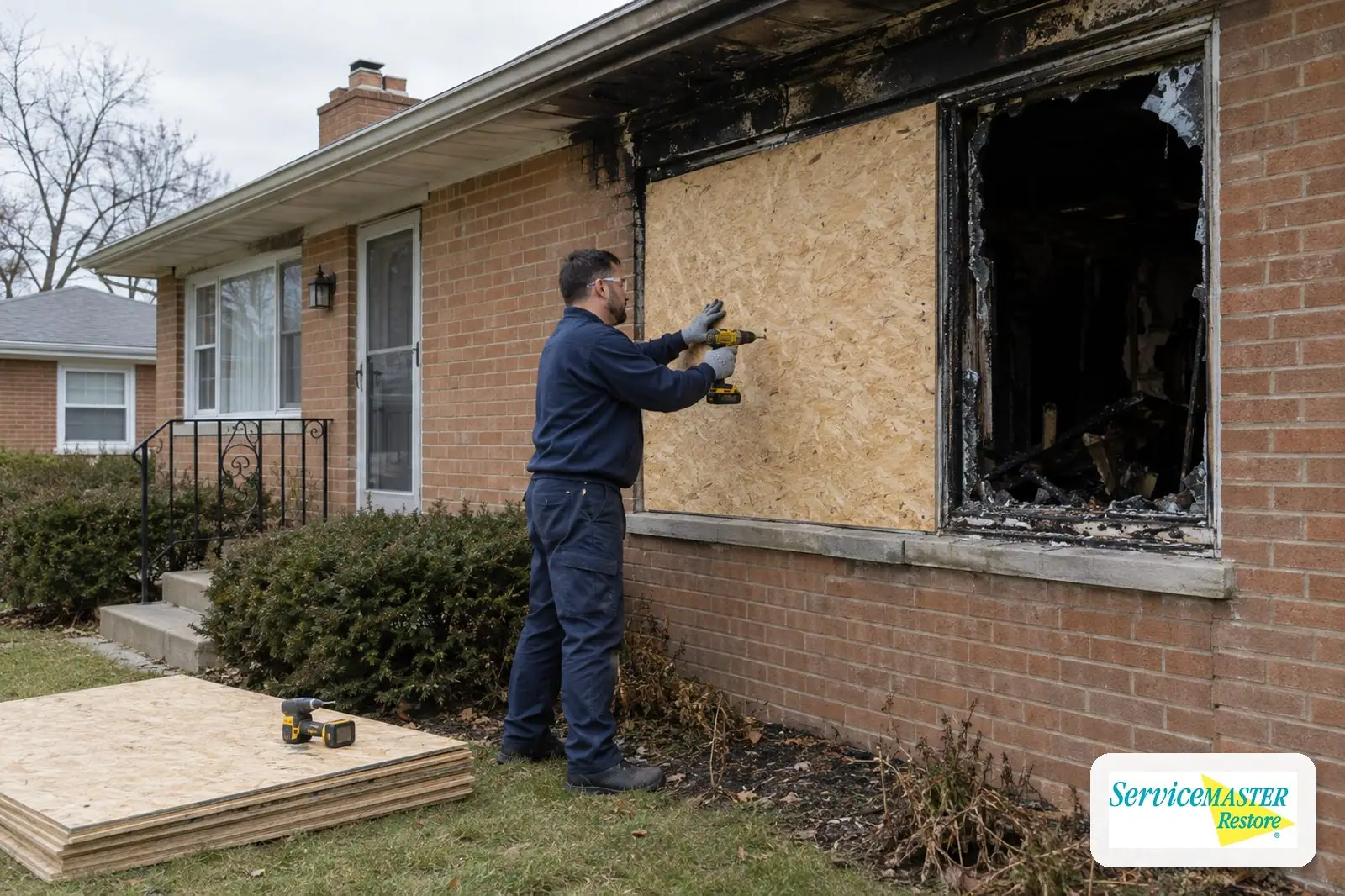
- Emergency board-up, roof tarping and temporary fencing.
- Water extraction and drying from firefighting.
- Contents pack-out, cleaning and storage.
- Debris removal and haul-away.
- Spoiled food and replaced medicine.
Whether each is covered depends on your policy, but none will be paid if nobody asks. Photos, receipts and a written scope from your restorer make that conversation easier.
Why a fire claim can be reduced or denied
Every policy has conditions and exclusions. Read yours for these in particular:
- Vacancy. Triple-I explains that a standard policy’s vacancy clause can limit or exclude coverage if the property is unoccupied for typically 30 to 60 consecutive days. If the home was empty, read exactly how your policy treats that.
- Intentional loss. Look for language excluding damage the insured caused on purpose.
- Maintenance. Triple-I notes that policies will not cover damage due to lack of maintenance, which can come up when a fire is traced to a long-neglected hazard.
- Late notice or missing documentation. The NAIC notes that reporting deadlines vary by state, and claims depend on what you can show.
- Policy type. Rental properties, vacant homes and homes under renovation may need different coverage than a standard owner-occupied policy.
First steps that protect the claim
- Wait for the all-clear. Ready.gov says to check with the fire department that your home is safe to enter, and not to reconnect utilities yourself.
- Call your insurer right away. The NAIC recommends prompt notice and photos and videos of the damage.
- Protect the property. Triple-I’s claim guidance says to photograph the damage, then take reasonable steps to protect the property from further damage, such as boarding openings and tarping the roof. Save receipts; you may be reimbursed.
- Inventory before discarding. Ready.gov advises not throwing away damaged goods until you have made an inventory, and Triple-I suggests keeping damaged items until the adjuster has visited, if possible.
- Track living costs. If you have to stay elsewhere, keep records and receipts. Triple-I says you will need them to prove additional living expenses.
- Take your time on repair decisions. The NAIC advises not feeling rushed to agree to repairs you are not comfortable with and suggests having your contractor meet with you and the adjuster.
After a fire, be wary of anyone who knocks on your door offering to handle everything. The FTC advises confirming a contractor’s license and insurance, getting a written contract, walking away from anyone who wants cash up front, and never making the final payment until the work is done and you are satisfied.
If you disagree with the insurer
Ask the adjuster to explain any denial or reduction in writing and to point to the policy language. In Illinois, the Department of Insurance provides consumer guides on homeowners coverage, public adjusters and home inventories, along with instructions for filing a complaint. This page is general information, not legal advice, and policies vary. Your policy wording and your insurer have the final word on coverage.
Getting the damage restored
ServiceMaster Restoration Services provides 24/7 residential fire damage restoration across DuPage and Will County. Our IICRC-certified technicians secure the property, document the damage room by room, and clean, deodorize and rebuild, and our team offers insurance claim assistance so your adjuster has what they need. Our fire and smoke restoration process guide shows what to expect. Call (630) 241-1111.
More questions
Is smoke damage covered if the fire was not in my house?
Possibly. Smoke is a named peril on standard forms, so report it and let the adjuster assess it. Document soot and odor in each affected room, including inside closets and on HVAC registers, before cleaning.
Does homeowners insurance cover a kitchen fire?
An accidental cooking fire is generally treated like any other accidental fire, subject to your deductible and limits. Our guide to kitchen fires covers what to do in the first hours afterward.
Can I choose my own restoration company?
Ask your insurer whether your policy requires a particular vendor. The NAIC suggests having your contractor meet with you and the adjuster, which helps both sides agree on the scope before work starts. Read any authorization or payment form carefully before you sign it.
Does insurance pay for smoke odor removal?
If the fire is a covered loss, cleaning and deodorizing the damage it caused is generally part of the claim. The scope, such as which rooms, contents and HVAC components are included, is agreed with the adjuster, so document odor and soot thoroughly.
Sources
- Which disasters are covered by homeowners insurance? (Triple-I)
- What is covered by standard homeowners insurance? (Triple-I)
- What's the difference between actual cash value and replacement cost coverage? (NAIC)
- When no one's home: understanding the role of vacancy insurance (Triple-I)
- Home Fires (Ready.gov)
- What You Need to Know When Filing a Homeowners Claim (NAIC)
- How to file a homeowners claim (Triple-I)
- How To Avoid Scams After Weather Emergencies and Natural Disasters (FTC)
- Homeowners & Renters Insurance (Illinois Department of Insurance)