Short answer: Only after the fire department says your home is safe to enter, and only if utilities work safely, smoke and carbon monoxide alarms function, and soot and odor are limited to a small area. Children, older adults, pregnant women and people with heart or lung conditions may be better off elsewhere until cleanup is done.
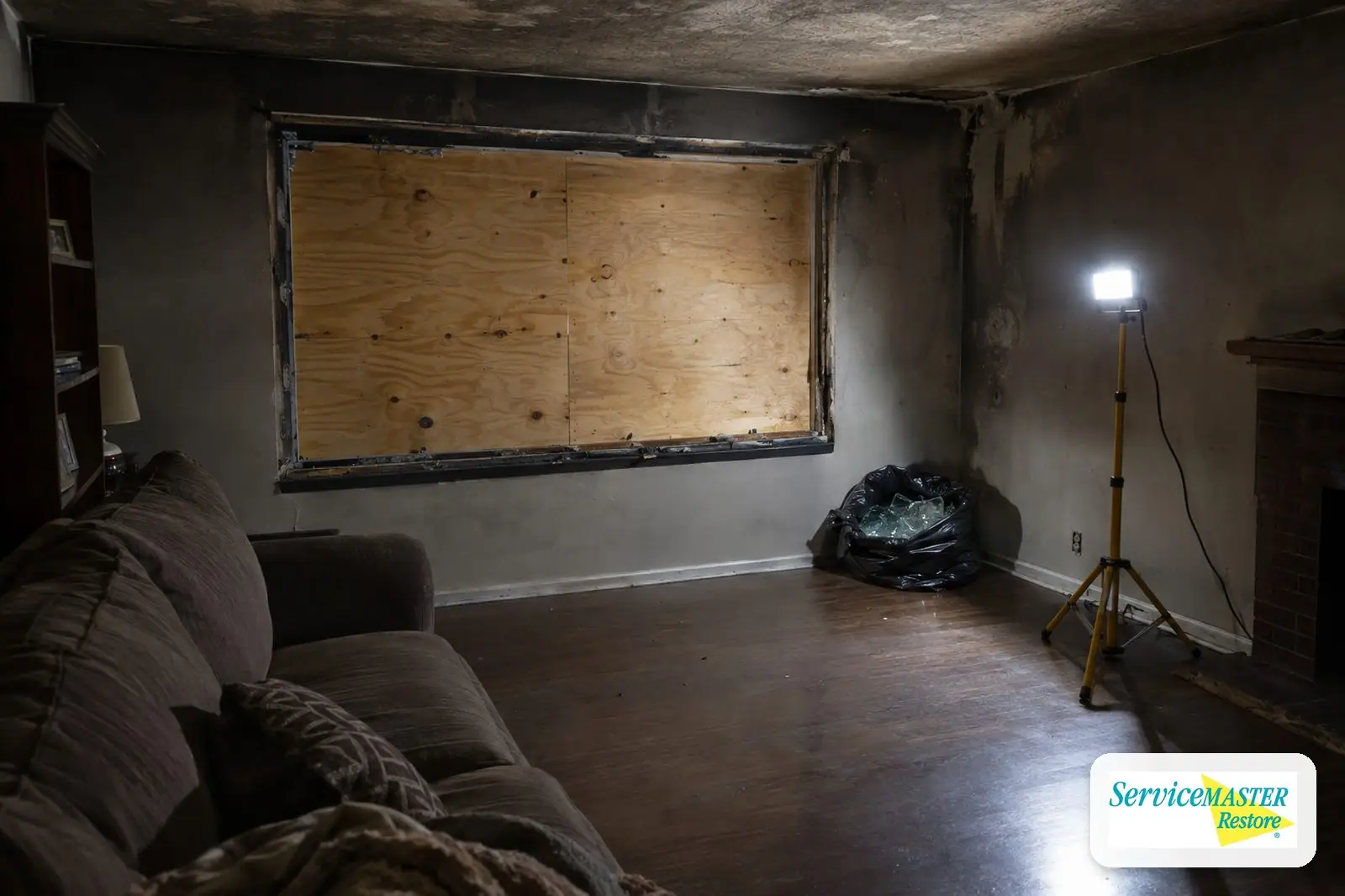
A stovetop flare-up, a dryer fire caught early, a smoking outlet: many house fires are put out quickly and stay in one room. The house is still standing and the lights may still work, so it is natural to want to stay. Whether that is a good idea depends on a short list of checks, starting with one that is not yours to make.
The first gate: the fire department’s all-clear
Ready.gov is clear on this: check with the fire department to make sure your residence is safe to enter, and do not attempt to reconnect utilities yourself. Firefighters look for heat and smoldering material inside walls, ceilings and appliances that you cannot see, and they may shut off gas or electricity as a precaution. If they did, the utility or a licensed professional should restore it after the damaged equipment or wiring has been checked.
If the fire department tells you not to stay, do not stay, even for one night.
Even a small fire leaves residue
Smoke travels well beyond the flames. It moves through hallways and up stairwells, gets pulled into return-air vents, and leaves a film of soot on walls, ceilings, fabrics and the inside of cabinets. The EPA notes that ash and soot can irritate the eyes, nose, skin and respiratory tract, and that ash from burned structures generally contains more harmful chemicals than ash from forest fires.
Who lives with you matters. The EPA says people with heart or lung disease, older adults and pregnant women should not take part in ash cleanup, and that children should stay away from ash until the area is cleaned. Its indoor air guidance on smoke identifies children, older adults and people with heart or lung disease as especially at risk from smoke particles. If anyone in your household falls into one of those groups, lean toward staying elsewhere until the home has been cleaned. If anyone has symptoms after the fire, talk to a doctor.
Checklist before you sleep there
| Check | Reasonable to stay if | Consider staying elsewhere if |
|---|---|---|
| Fire department clearance | You have been told the home is safe to occupy | You have not been cleared, or were told to stay out |
| Utilities | Power, heat and water work normally and were not shut off | Any utility was shut off, or there is a burning or electrical smell |
| Alarms | Smoke and carbon monoxide alarms test and work | Alarms were damaged, removed or will not test |
| Soot | A white cloth wiped on walls in other rooms comes away clean | The cloth picks up gray or black residue outside the fire room |
| HVAC | The system was off during the fire | It was running, or vents show soot; keep it off until checked |
| Water | Little or no water was used to put the fire out | Floors, walls or ceilings got wet and are not drying |
| Odor | Faint and fading with ventilation | Strong, or comes back when windows close |
| Security | Doors and windows close and lock | Openings need to be boarded up |
Working alarms matter more than usual right after a fire. Ready.gov notes that a working smoke alarm significantly increases your chances of surviving a deadly home fire, and the CDC describes carbon monoxide as an odorless, colorless gas, so a damaged furnace or water heater flue is something you would not notice without a CO alarm. If firefighting water soaked drywall or insulation, the EPA’s 24 to 48 hour drying guideline applies here too.
Keep the HVAC off until it is checked
A forced-air system is the fastest way to spread a one-room problem through the whole house. If it was running during the fire, soot is probably in the return ducts, the filter and the blower. Leave it off, replace the filter before restarting, and have the system inspected and cleaned if you see residue at the registers. The EPA’s smoke guidance recommends a high-efficiency filter, such as MERV 13, once the system is back in use.
If you do stay: make the house as safe as you can
- Close off the fire room and keep children and pets out of it.
- Sleep in the rooms farthest from the fire area, with windows open for fresh air when weather allows.
- Do not dry sweep, dust or vacuum soot with an ordinary vacuum. The EPA recommends damp cleaning and HEPA vacuums for ash and soot.
- Run a portable HEPA air cleaner that does not produce ozone in the bedrooms, as the EPA’s smoke guidance suggests.
- Test smoke and carbon monoxide alarms before bed, and replace any that were in the fire room.
- Leave damaged appliances unplugged until they are checked.
If symptoms such as coughing, headaches or eye irritation get worse while you are home, that is a sign to leave and to talk to a doctor.
If the home is not livable: additional living expenses
Staying elsewhere does not have to come out of your pocket. Triple-I explains that additional living expenses coverage pays the additional costs of living away from home if you cannot live there due to damage, including hotel bills, restaurant meals and other costs over and above your usual living expenses. It also notes that ALE has limits, and some policies set a time limit. Its claim guidance adds that you will need records and receipts to prove these costs, so keep every one. Call your insurer before booking anything long term so you know what is covered.
What cleanup looks like, and when to call
For a small fire, professional cleanup often means cleaning soot from the fire room and anywhere smoke traveled, cleaning or replacing HVAC filters and ducts, treating odor, and drying anything firefighting water reached. Our kitchen fire guide covers the most common small-fire scenario, and our fire and smoke restoration process guide explains each step.
ServiceMaster Restoration Services provides 24/7 smoke and soot cleanup and residential fire damage restoration across DuPage and Will County. Our IICRC-certified technicians can assess how far residue traveled and help you decide what needs to happen before your family moves back in, and we help with the insurance claim. Call (630) 241-1111.
More questions
How long after a small fire can I move back in?
There is no fixed timeline. A contained fire with little smoke spread may mean a few days of cleaning; soot in the HVAC system, water damage or structural repairs take longer. Your fire department, your restorer and your adjuster will each shape the timeline.
Can I clean up soot myself after a small kitchen fire?
For a light film in a small area, possibly, with an N95 or P100 respirator, gloves and damp cleaning rather than dry wiping. Greasy kitchen residue smears easily and spreads, so test a small spot first. Our guide to soot types explains the differences.
Do I need to report a small fire to my insurer?
Consider it. Smoke and soot often reach farther than they appear to, and the NAIC notes that reporting deadlines vary by state. Ask your agent how a claim would work against your deductible before deciding.
Is it safe to cook in the kitchen after a stovetop fire?
Not until the range, hood, outlets and wiring have been checked and cleaned. Heat can damage appliance wiring and controls, and greasy soot inside the hood and cabinets can keep releasing odor or catch again.