Short answer: Throw away food, drinks and medicine exposed to heat, smoke, soot or firefighting chemicals, including refrigerated food reached by fumes. It is also wise to replace cosmetics, toothbrushes and baby bottles. Before you discard anything, photograph and list it for your insurer. Hard items and many fabrics can often be professionally cleaned.
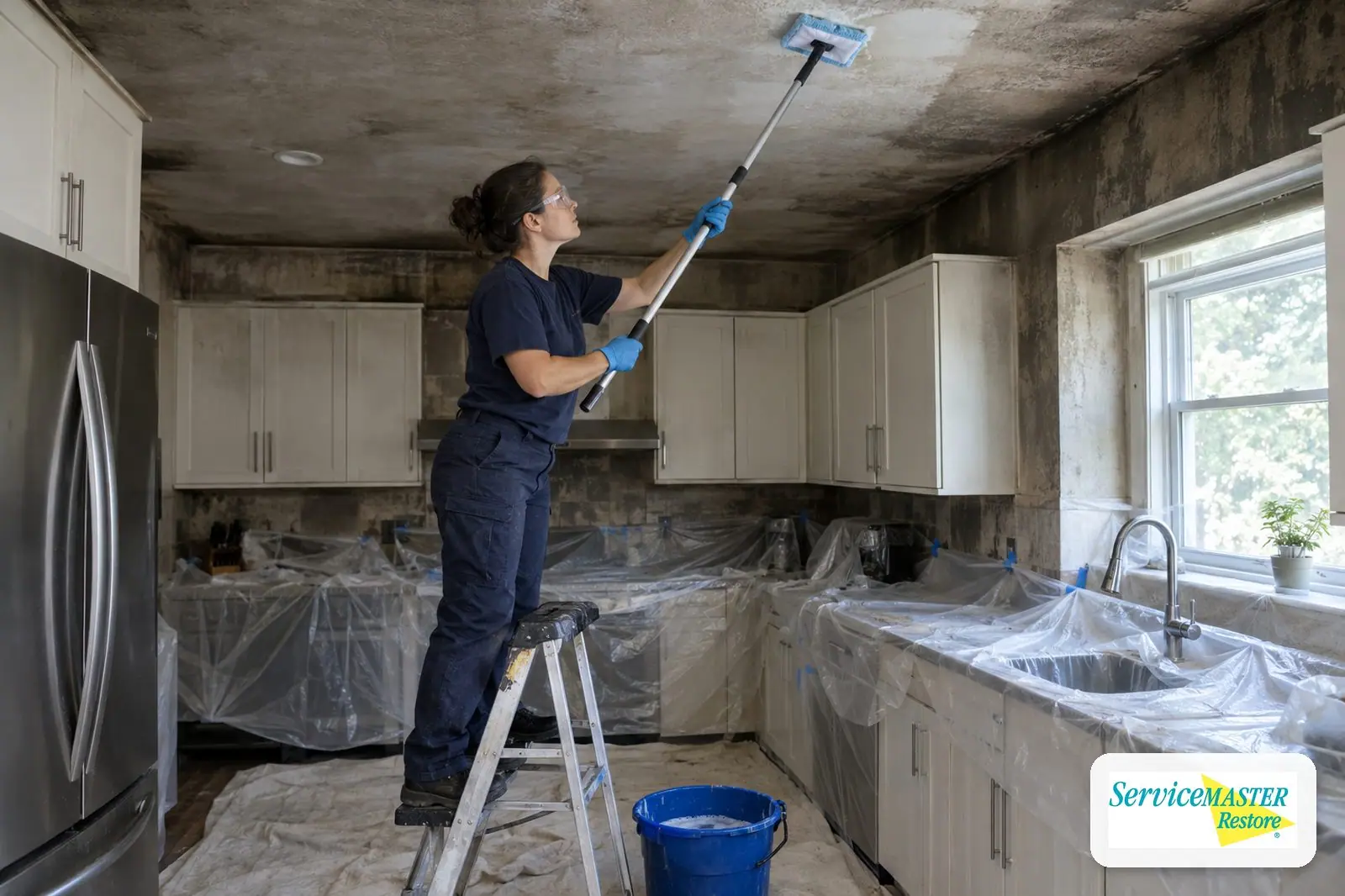
After a fire, the urge to clear out the mess is strong. Hold off for a day. What you throw away in the first 48 hours can affect both your family’s health and your insurance claim, and some things that look ruined can be cleaned while some that look fine should not be kept.
Inventory before you discard anything
Your claim depends on what you can document. Ready.gov advises conducting an inventory of damaged property and says not to throw away any damaged goods until after you make it. Triple-I adds that, if possible, you should avoid throwing out damaged items until the adjuster has visited, and the NAIC recommends photos, videos and a list of everything damaged.
- Photograph each room from several angles before anything is moved, then close-ups of individual items.
- Capture brand names, model and serial numbers, and labels on clothing and electronics.
- Keep a running list with a description, approximate age and where you bought each item.
- Set damaged items aside in a garage or one room rather than putting them at the curb.
- Food cannot wait for an adjuster. Photograph it, list it, then throw it out.
Always throw away: food, drinks and medicine
Food is the clearest call. The Minnesota Department of Health explains that heat can make jars and cans split and crack, that produce and other food exposed to smoke and fumes must be discarded, and that firefighting chemicals are very poisonous and cannot be safely washed off food. It also warns that refrigerator seals are not airtight, so food inside can be tainted by fumes, and that food in permeable packaging such as cardboard and plastic wrap should be thrown away. Never taste food to decide. As the department puts it, if in doubt, throw it out.
Medicine goes too. The FDA says high temperatures from a fire can reduce or destroy the effectiveness of medicines and recommends replacing any that may have been overheated. The FDA makes a narrow exception for medicine needed to treat a life-threatening condition when no replacement is readily available, and says to replace it as soon as possible. Your pharmacist or doctor can help with emergency refills.
What usually goes, what can often be saved
| Item | Usual outcome | Notes |
|---|---|---|
| Food and drinks, including the refrigerator and freezer | Discard | Heat, fumes and firefighting chemicals can contaminate them |
| Canned and jarred food near heat | Discard | Heat can split or crack containers |
| Prescription and over-the-counter medicine | Replace | Call your pharmacist about critical medications |
| Cosmetics, toiletries, toothbrushes | Usually replaced | They touch your mouth, skin and eyes and are hard to verify clean |
| Baby bottles, nipples, pacifiers, teething toys | Usually replaced | Low cost to replace, no room for doubt |
| Melted, charred or warped plastics | Usually discarded | Heat damage is not reversible |
| Glass, metal, ceramics, hard furniture | Often cleanable | Soot removal and deodorizing |
| Clothing, bedding, curtains | Often cleanable if not burned | Specialized cleaning; results vary |
| Upholstered furniture and mattresses | Case by case | Heavy smoke or soaking water often means replacement |
| Electronics and appliances | Do not power on; have them evaluated | Soot and water can damage circuits |
| Documents and photos | Do not discard; set aside | Specialists can sometimes recover them |
Pots and pans can usually stay. Clemson Cooperative Extension notes that cookware exposed to firefighting chemicals can be decontaminated by washing in soap and hot water, followed by a soak in a dilute bleach solution.
What may be saved with professional cleaning
Many belongings that look hopeless can be cleaned, but no one can promise results before testing. Soot type matters: dry, powdery soot from fast, hot fires behaves differently from the sticky, smeary residue of a slow, smoldering fire or a kitchen grease fire. Our guide on getting smoke smell out of a house explains why odor sits in porous materials. Professional crews inventory contents as they pack them, clean what can be cleaned, and give you a list of what could not be restored for your claim. Our smoke and soot cleanup service covers both the structure and its contents.
For important papers, the U.S. Fire Administration’s After the Fire guide covers replacing documents and valuing property, along with salvage tips.
Do not forget the water damage
Firefighting puts a lot of water into a house, often far from the flames. Carpet and pad, boxes in closets, books, and anything stored on the floor can be soaked while looking only smoky. The EPA says water-damaged items should be dried within 24 to 48 hours to prevent mold, so wet belongings need to be moved out, dried or set aside quickly. Photograph them first. Wet cardboard, paper goods and particleboard furniture rarely recover; solid wood and metal often can be dried.
Handle these with extra care
- Aerosol cans, propane cylinders, paint and solvents that sat near heat can be damaged or unstable. Do not puncture or burn them; ask your local waste hauler or municipality how to dispose of them.
- Batteries and battery-powered devices exposed to heat or water should be kept apart from flammable materials until they can be recycled properly.
- Firearms and ammunition exposed to fire should be inspected by a qualified professional before use.
- Heirlooms, artwork and photos should be set aside for specialist evaluation, even if they look ruined.
Do not run electronics or the HVAC until checked
Ready.gov says not to reconnect utilities yourself. The same caution applies to anything you plug in. Electronics that sat in heat, soot or water can short out or spread residue when powered on. A furnace or air conditioner that runs before its ducts and coils are cleaned can blow soot into rooms the fire never reached. Leave both off until a professional has looked at them.
When to call a professional
If soot spread beyond one room, firefighting water soaked floors or walls, or you are not sure what is salvageable, get help before you sort. ServiceMaster Restoration Services provides 24/7 residential fire damage restoration across DuPage and Will County, including contents cleaning and documentation for your insurer. Our step-by-step fire and smoke restoration guide shows what the full process looks like. Call (630) 241-1111.
More questions
Can smoke-damaged clothes be saved?
Often, if they are not burned or melted. Keep heavily sooted clothing separate, avoid shaking it indoors, and ask about professional cleaning before running it through a home washer, which can spread residue to other loads.
Should I throw away my mattress after a house fire?
It depends on how much smoke and water reached it. A mattress soaked by firefighting water or heavily smoked is usually replaced, while one with light odor may respond to cleaning. Photograph it and list it before deciding either way.
Who pays to replace what I throw away?
If the fire is a covered loss, personal property coverage generally pays for damaged belongings up to your policy limits, after the deductible. That is why the inventory comes first. Our answer on whether fire damage is covered by homeowners insurance explains the parts of the policy.
How long do I have to finish my inventory?
Deadlines depend on your policy and your state. Ask your adjuster when the contents list is due and whether you can submit it in stages. Start right away, while you still remember what was in each room.
What about food in the freezer if the fire was in another room?
Inspect it before deciding. Refrigerator and freezer seals are not airtight, so smoke can reach food even in a room the fire did not touch. Discard anything with smoke odor, off flavors or signs of smoke damage, and anything held without power long enough to thaw.
Sources
- Home Fires (Ready.gov)
- How to file a homeowners claim (Triple-I)
- What You Need to Know When Filing a Homeowners Claim (NAIC)
- Food Safety in Emergencies: Fires (Minnesota Department of Health)
- Safe Drug Use After a Natural Disaster (FDA)
- Food Safety After a Fire (Clemson Cooperative Extension, HGIC)
- After a Fire (U.S. Fire Administration)
- A Brief Guide to Mold, Moisture and Your Home (EPA)