Short answer: A restoration company’s job is to stop damage from getting worse and return a property to its pre-loss condition after fire, water, storm or mold damage. That includes emergency board-up and tarping, water removal, soot and smoke cleaning, odor control, contents handling, drying and repairs, plus the documentation your insurer will ask for.
Most people meet a restoration company on one of the worst days they have had in their home. A fire is out, the fire trucks are leaving, and someone, often the insurance company, mentions calling a restoration company. It is fair to wonder how that differs from hiring a contractor or a cleaning service. The short version: a restorer is built to work fast in a damaged building, stabilize it, clean and dry what can be saved, and document every step for the claim.
Mitigation, restoration and reconstruction
The work falls into three phases, and the words matter because insurers use them.
| Phase | Goal | Examples after a fire | When |
|---|---|---|---|
| Mitigation | Stop the damage from spreading or getting worse | Board-up, roof tarping, water extraction, drying, air scrubbing | Immediately |
| Restoration | Clean and deodorize what can be saved | Soot removal, odor treatment, contents cleaning, HVAC cleaning | Once the building is stable |
| Reconstruction | Rebuild what could not be saved | Framing, drywall, insulation, flooring, cabinets, paint | After the scope is agreed with the adjuster |
Insurers expect the first phase to happen quickly. Triple-I’s claim guidance tells homeowners to photograph the damage, then take reasonable steps to protect the property from further damage, and to save receipts for reimbursement. The NAIC advises notifying your insurer right away. Mitigation is how those reasonable steps get done, and the restorer’s photos and records are what show the insurer they happened.
Speed also matters for the building itself. After a fire, much of the damage comes from water, and the EPA says water-damaged areas and items should be dried within 24 to 48 hours to prevent mold growth. Soot is easier to remove before it has sat on surfaces for days, and a home that is boarded and tarped the same day keeps out rain, snow and intruders.
What the work looks like after a fire
- Safety and assessment. After the fire department clears the building, technicians walk it, photograph each room and note how far smoke and water traveled. Ready.gov reminds homeowners not to reconnect utilities themselves, and restorers coordinate with utilities and electricians rather than powering systems back on.
- Securing the property. Broken windows and doors are boarded and damaged roofs tarped to keep out weather and intruders. Our emergency board-up and site securing service handles this.
- Water removal. Firefighting leaves a lot of water behind. It is extracted and the structure dried, which is the focus of our water damage cleanup after firefighting work.
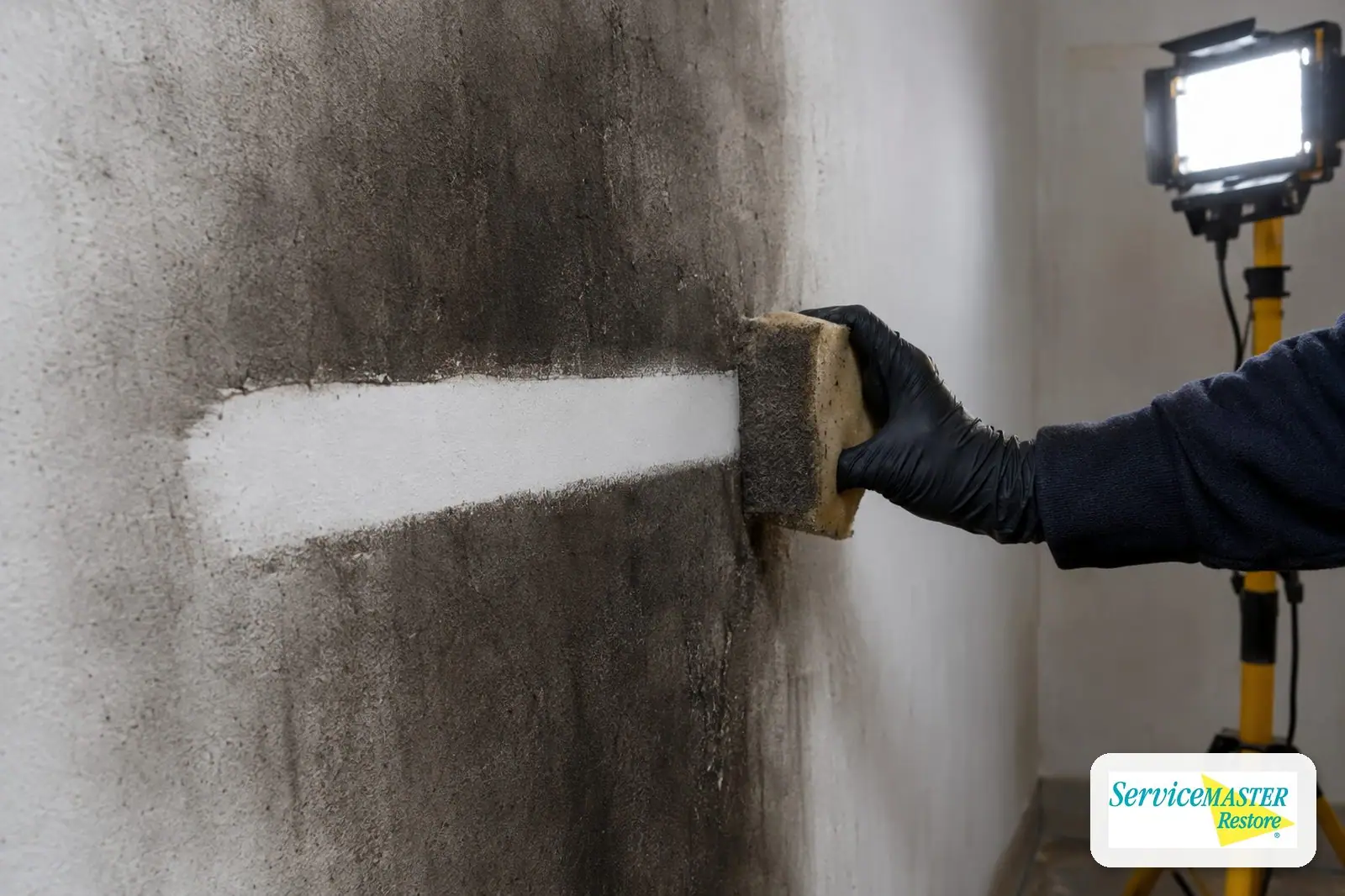
- Soot and smoke cleaning. Loose soot is removed with HEPA vacuums and dry sponges before wet cleaning, so it is not smeared deeper into surfaces.
- Odor control. Odor is removed at the source by cleaning, sealing or replacing affected materials, then treated in the air.
- Contents. Belongings are inventoried, packed out if needed, cleaned and stored, with a list of what could not be restored for your claim.
- Repairs. Damaged materials are rebuilt to match, once the scope is agreed.
Our step-by-step guide to fire and smoke restoration goes deeper into each stage and what drives the cost.
The standards restoration crews work to
Restoration has its own industry standards, published as ANSI/IICRC standards and developed by IICRC consensus bodies:
- The ANSI/IICRC S500 standard for professional water damage restoration describes procedures and precautions for residential, commercial and institutional buildings, including drying technology.
- The ANSI/IICRC S520 standard covers professional mold remediation.
- The ANSI/IICRC S700 standard, first published in 2025, covers professional fire and smoke damage restoration, from evaluating residues and odors to restoration cleaning and odor management.
Worker safety rules apply too. OSHA explains that respirators protect workers against harmful dusts, gases and vapors, which is why you see crews in respirators while soot and ash are being disturbed.
How a restorer differs from a contractor or a cleaner
A general contractor builds and repairs; most are not set up to dry a structure, remove soot or treat odor, and few run emergency crews around the clock. A cleaning service cleans finished, undamaged spaces; it does not have containment, HEPA air filtration or moisture-mapping equipment. A restoration company sits between the two. Many, including ours, also handle repairs and reconstruction, so one team carries the job from emergency to finished room.
Questions to ask before you hire
- Do you answer and dispatch around the clock, including weekends and holidays?
- Are your technicians IICRC-certified in the type of damage I have?
- Can you show proof of license and insurance?
- Will I get a written scope before work starts, and how are changes approved?
- How do you document the damage and share it with my adjuster?
- How are my belongings inventoried, cleaned and stored, and how do I get the list?
- Do you handle the rebuild, or will I need a separate contractor?
Clear, specific answers to these questions are a better guide than a quick price or a promise of speed.
Your choice of company, and working with the adjuster
You are the customer. The NAIC advises not feeling rushed or pushed to agree to repairs you are not comfortable with, and suggests having your contractor meet with you and the adjuster. The FTC recommends confirming a contractor’s license and insurance, getting a written contract, walking away from anyone who wants cash up front, and holding the final payment until the work is done and you are satisfied. Read any authorization or payment form before you sign it.
A good restorer works alongside the adjuster: documenting the damage, writing a scope that lines up with it, and explaining changes as they come up. If you want a shorter overview of the same idea, our earlier post on how disaster restoration saves your property covers the basics.
When to call
Call as soon as the fire department clears the building, or as soon as water, smoke or storm damage is found. ServiceMaster Restoration Services has served homes and businesses in DuPage and Will County for more than 20 years, with IICRC-certified technicians, 24/7 emergency response for residential fire damage restoration and commercial losses, and help with your insurance claim. Call (630) 241-1111.
More questions
Do I need a restoration company for a small fire or leak?
Not always. A small, clean-water spill that you dry within a day, or a puff of smoke that airs out, may not need one. Call when water has reached walls, ceilings or insulation, soot has spread beyond one room, or odor will not fade.
Does my insurance pay the restoration company directly?
It depends on your insurer and your claim. Depending on the situation, checks may be issued to you, jointly to you and your mortgage lender, or to a contractor you authorize. Ask your adjuster how payments will be issued, and read any payment authorization before signing.
How long does restoration take after a fire?
It depends on the size of the fire, how far smoke and water traveled, how many contents need cleaning, and how much rebuilding is needed. Your restorer should give you a written scope and update you as the adjuster approves each part.
Do restoration companies handle water and mold too?
Most do. Water damage and mold remediation have their own IICRC standards, S500 and S520, and the same drying and containment skills apply after fires, storms, burst pipes and floods. Ask which types of damage a company is certified and equipped for.
Will a restoration company deal with my insurance company for me?
A restorer can document the damage, share photos and moisture records, and meet with your adjuster. The policy, the claim decisions and the final sign-off stay between you and your insurer.
Sources
- How to file a homeowners claim (Triple-I)
- What You Need to Know When Filing a Homeowners Claim (NAIC)
- A Brief Guide to Mold, Moisture and Your Home (EPA)
- Home Fires (Ready.gov)
- ANSI/IICRC S500 Standard for Professional Water Damage Restoration (IICRC)
- ANSI/IICRC S520 Standard for Professional Mold Remediation (IICRC)
- ANSI/IICRC S700 Standard for Professional Fire and Smoke Damage Restoration (IICRC)
- Respiratory Protection (OSHA)
- How To Avoid Scams After Weather Emergencies and Natural Disasters (FTC)