
Short answer: First make sure the leak is fixed and the ceiling is completely dry. For a light, dry stain, clean the surface, seal it with a stain-blocking primer, then repaint. Do not paint over mold, and replace drywall or ceiling tiles that are swollen, sagging or moldy rather than covering them up.
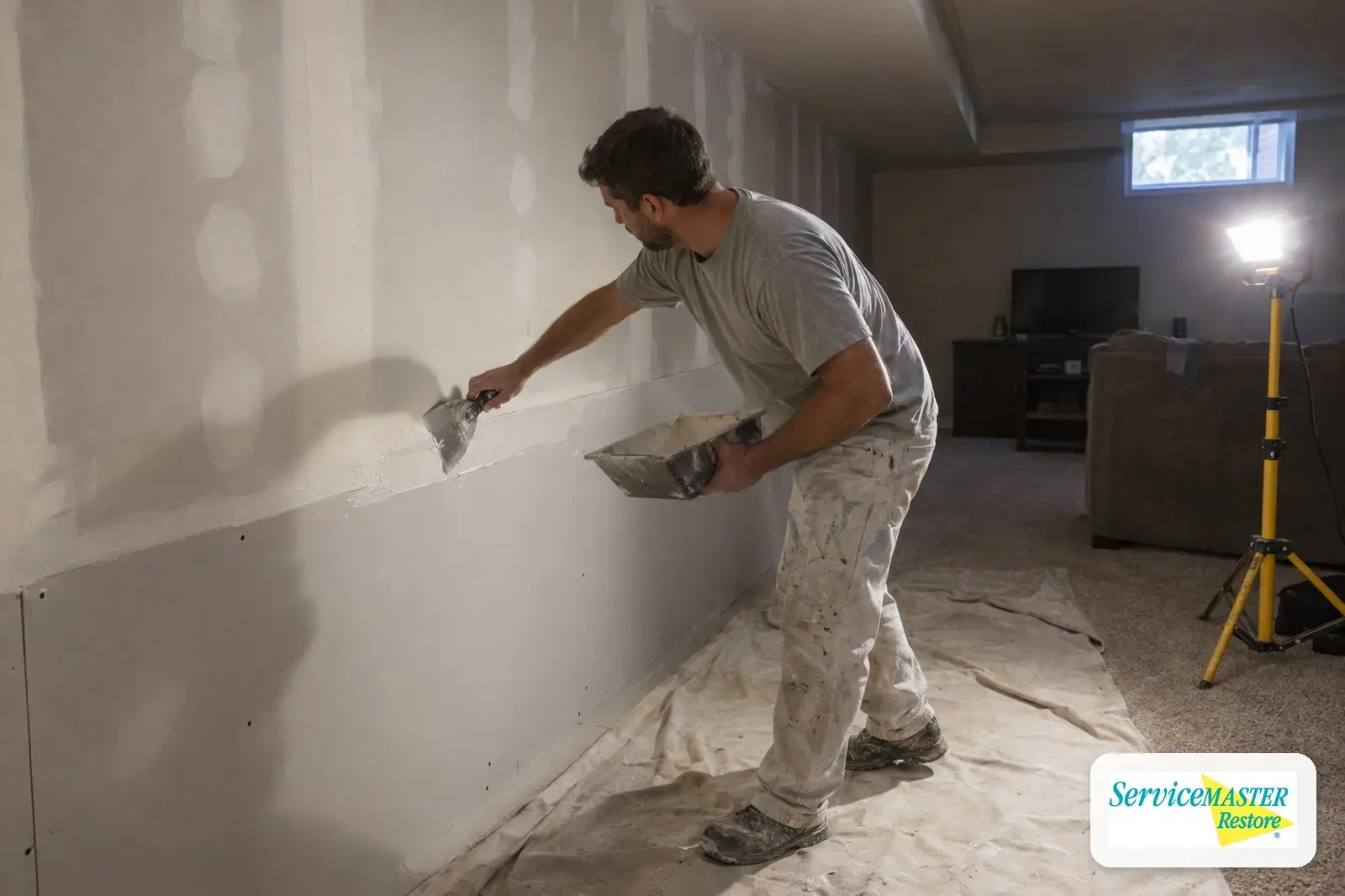
A ceiling water mark is residue that the water carried through wood, insulation and drywall paper and left behind as it dried. Ordinary ceiling paint usually does not hold it back; the brown tint bleeds right through. Getting rid of it for good comes down to doing three things in order: stop the water, prove the ceiling is dry, then seal the stain before you paint.
Step zero: the source is fixed and the ceiling is dry
Painting over an active leak only hides the evidence. Before anything else, find and fix the source. If you are not sure what caused the mark, our answers on what causes a brown ceiling spot that is not wet and why a ceiling leaks after rain walk through the usual suspects.
Then check that the material is dry, not just the surface. Take moisture meter readings on the stain and on a clean part of the same ceiling. When the stain reads the same as the clean area, you are ready. If it reads higher, give it more time with a dehumidifier running, or get help drying it.
Decide: cover it, clean it, or replace it
| What you see | What to do | Why |
|---|---|---|
| Dry, firm drywall with a light ring | Clean lightly, prime with a stain blocker, repaint | The stain is cosmetic once the source is fixed |
| Dry, firm drywall with a dark or large stain | Same steps; may need two coats of primer and a full repaint of the ceiling | Dark residue bleeds more; spot-painting often shows |
| Fuzzy or speckled growth, or a musty smell | Do not paint; deal with the mold first | The EPA says not to paint or caulk moldy surfaces |
| Swollen, sagging or soft drywall, or lifting seams | Cut out and replace the damaged section | The EPA allows drying in place only with no obvious swelling and intact seams |
| Stained acoustic or drop-ceiling tile that got wet | Replace the tile | The EPA’s water damage table says discard and replace |
| Older textured or popcorn ceiling | Do not scrape or sand until it is tested | Some older textured coatings contain asbestos |
The mold and drywall rules come from the EPA’s home moisture guide, which also notes that paint applied over moldy surfaces is likely to peel, and from its water damage response table, which says wet ceiling tiles should be discarded and replaced. For textured ceilings in older homes, the EPA lists textured paint and patching compounds used on walls and ceilings among the places asbestos may be found in homes, and its guidance for families says not to saw, sand, scrape or drill materials that may contain asbestos, and to leave suspect material alone until a trained professional samples it.
Cleaning a light stain safely
Some light, dry stains fade with gentle cleaning before you prime. Keep it simple:
- Protect the floor and furniture, wear eye protection, and open windows.
- Wipe the spot with a barely damp sponge and a mild detergent. Drywall paper soaks up water quickly, so do not saturate it.
- If you choose to use bleach on a stubborn mark, follow the CDC’s cleanup guidance: use no more than 1 cup of bleach in 1 gallon of water, never mix bleach with ammonia or any other cleanser, and keep fresh air moving.
- Let the ceiling dry fully again before priming.
Cleaning only changes the color. It does not fix moisture, and it is not a mold treatment for porous drywall. If growth is present, see our guide to mold remediation.
How long to wait before you paint
There is no fixed number of days. A small stain from a quick drip may be dry in a day or two with a dehumidifier running. A ceiling that held standing water, or one with wet insulation above it, can take much longer and may never dry well enough to keep. The test is the same either way: readings on the stain match readings on the clean ceiling, the surface is firm and flat, and there is no odor.
If you have access to the space above, check it too. Wet insulation lying on top of drywall keeps feeding moisture into it, and the EPA treats wet insulation as material to discard and replace. Pulling it out often lets the ceiling dry in a fraction of the time.
Prime and paint
- Use a stain-blocking primer. Shellac-based and oil-based stain blockers are the traditional choice for water stains; some water-based primers are also labeled for stain blocking. Check the label for water stains.
- Extend past the edge. Prime a few inches beyond the visible ring, since faint residue usually reaches farther than it looks.
- Follow the dry times on the can, and ventilate well, especially with solvent-based primers.
- Repaint the whole plane or out to a natural break. Ceiling paint ages and yellows, so a patch of fresh paint can stand out as much as the stain did.
- Match the sheen. Most ceilings are painted flat. A satin or eggshell patch catches the light and shows the repair even when the color matches.
- Textured ceilings, once tested and cleared, are easier to treat with a spray stain blocker, which reaches into the texture without flattening it.
If a section has to be cut out, the new drywall is taped, finished, primed and painted to match. Our repairs and reconstruction team handles that after drying, and our post on how water damage restoration protects walls from water stains explains how drying first keeps stains from returning.
When the stain is a symptom, not the problem
Stop and look for the cause if the mark comes back after priming, grows after rain or showers, sags, feels soft, or smells musty. Those signs mean water is still getting in or mold is growing above the drywall.
ServiceMaster Restoration Services provides residential water damage restoration across DuPage and Will County. Our IICRC-certified technicians find the source, dry the ceiling cavity, remove what cannot be saved and rebuild it, and we help with insurance claims when the damage is covered. Call (630) 241-1111, 24/7.
More questions
Why does a water stain bleed through new paint?
The residue in the stain dissolves in the water of latex paint and migrates to the surface as the paint dries. A stain-blocking primer seals it in so the topcoat stays clean.
Can I use a spray-can stain blocker on a ceiling?
For a small spot, yes. Mask off the area, ventilate well, wear eye protection, and spray a few inches past the stain. Larger areas are easier to prime with a roller.
What about a stained drop-ceiling tile?
Replace it rather than painting it. Ceiling tiles are porous, and the EPA’s water damage table lists wet tiles as discard and replace. Take the old tile to the store to match the size, edge style and texture, and check the grid and the space above for the leak before you install the new one.
Does a dry water stain mean I have mold?
Not necessarily. Most stains are just residue. Look for fuzzy or speckled growth, soft drywall and a musty smell, and check the space above the ceiling if you can.
Will homeowners insurance pay to repaint a stained ceiling?
If the stain came from a sudden, covered event, such as a burst pipe or storm damage, repairing the resulting damage may be included. Old stains and slow leaks are usually treated as maintenance. Policies vary, so check yours.