
Short answer: A dry brown spot is usually a stain left by water that has since dried: an old roof or plumbing leak, ice-dam meltwater, attic condensation, or a dripping bath fan or air-conditioning line above. Dry today does not mean fixed. Check the space above, test the spot with a moisture meter and watch whether it grows.
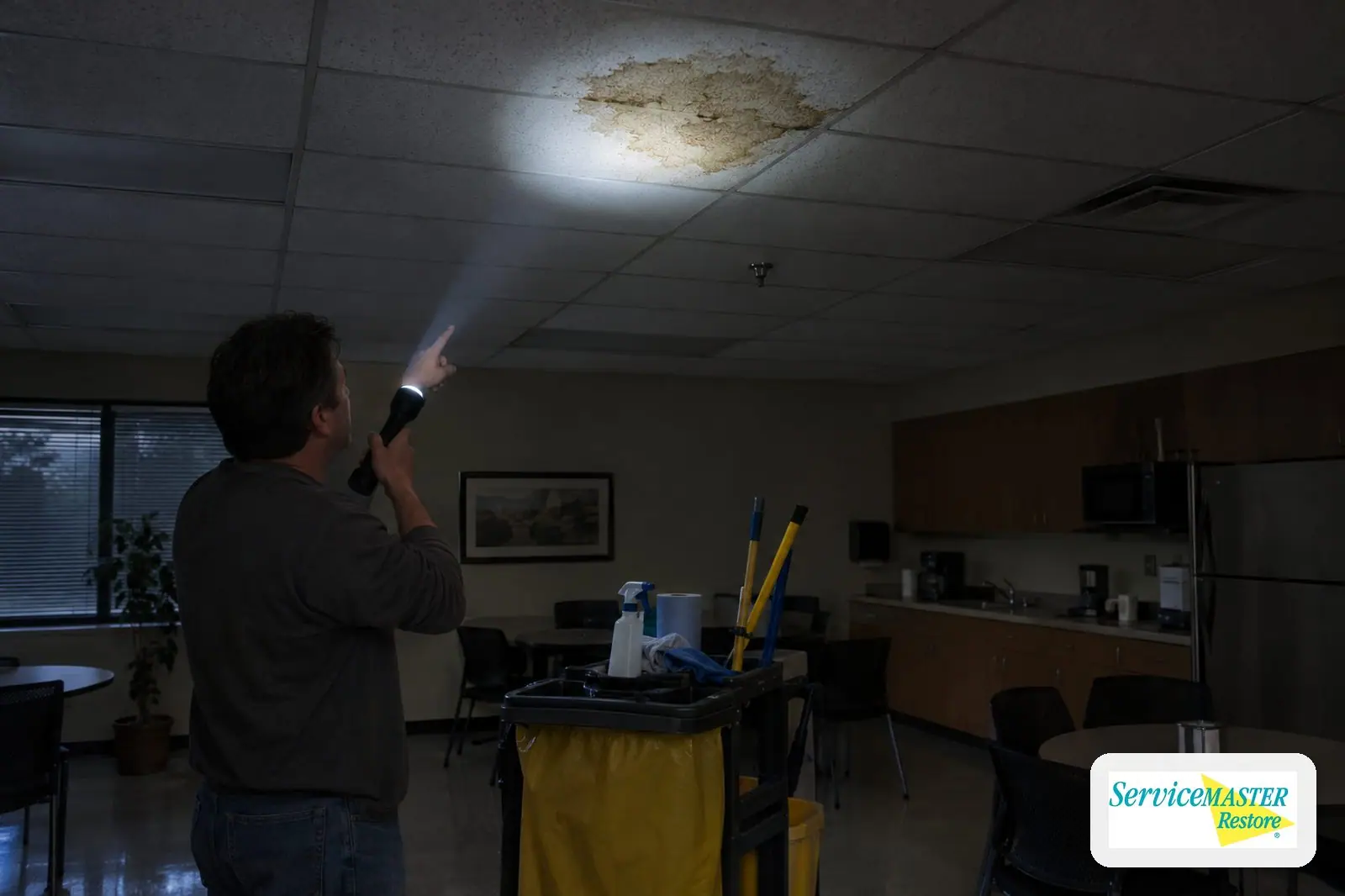
A brown ring on a white ceiling is what water leaves behind as it dries. As it passes through roof sheathing, framing, insulation and the paper face of the drywall, it picks up color, then deposits it at the edges where it evaporates. That is why the ring is often darker than the middle, and why the spot can look the same for months whether the leak stopped long ago or happens a few times a year.
Dry today does not mean the problem is solved
Many ceiling leaks are intermittent. They only run under certain conditions, then dry out before you look. The common ones:
| Possible source | When it tends to show up | Where to look |
|---|---|---|
| Roof or flashing leak | During or after heavy or wind-driven rain from one direction | Roof deck, rafters and flashing above the stain, sometimes several feet uphill |
| Ice dams | Late winter thaws after snow | Ceiling near exterior walls, attic eaves, wet insulation along the edges |
| Attic condensation or frost | Cold snaps, then thaws; also humid weather | Underside of the roof deck, nails, insulation that looks dirty |
| Bathroom above or nearby | After showers, baths or toilet use | Tub and shower seals, toilet base, drain lines, exhaust fan duct |
| Air-conditioning condensate | Summer cooling season | Attic air handler, drain pan and condensate line |
In snowy winters, ice dams are worth ruling out. University of Minnesota Extension explains that the ridge of ice at the roof edge traps meltwater, which finds cracks and openings in the roof covering, flows into the attic, and can run through the ceiling insulation and stain the ceiling finish. The same guide identifies heat loss through air leaks as the major cause of the melting that feeds ice dams.
Attic condensation works more quietly. ENERGY STAR describes warm, moist house air leaking into the attic, condensing and then freezing when it meets cold air, and notes that in warmer weather you might find water staining in those same areas. On the cooling side, EPA guidance points out that moisture can collect in ventilation systems when condensate pans drain poorly.
Checks you can do yourself
- Look above the stain. In an attic, step only on the framing and use a good flashlight. Look for darkened or matted insulation, stained wood on the underside of the roof deck, rusty nail tips, and frost in cold weather. ENERGY STAR notes that dirty-looking insulation is evidence that air is moving through it.
- Test the spot. Take moisture meter readings on the stain and on a clean part of the same ceiling. If the stain reads clearly higher, it is still wet inside even if it feels dry. Our answer on how to tell if drywall is wet explains how to read the comparison.
- Mark and date it. Trace the outline lightly in pencil and write the date. Check it after the next storm, the next long shower and the next stretch of air-conditioning weather.
- Match the timing. Growth after rain points to the roof or flashing. Growth after showers points to the bathroom. Growth in winter thaws points to ice dams or attic frost. Growth in summer points to cooling equipment.
- Check the room above. If there is a bathroom over the stain, look for cracked grout, failed caulk, a loose toilet and slow drains.
- Check outside. From the ground, use binoculars to scan the roof above the stain for missing or lifted shingles, loose flashing around chimneys and vents, and a clogged or sagging gutter at the nearest eave.
When it points to mold or structural risk
Most dry stains are cosmetic once the source is fixed. Treat it as more serious if you notice any of these:
- A musty or earthy smell in the room. EPA guidance says moldy or musty odors should alert you to possible mold.
- Fuzzy, speckled or black, green or white growth on or around the stain.
- Drywall that feels soft, crumbles at the edges or sags. Keep people out from under a sagging ceiling.
- Paint that is bubbling or peeling, or a stain that keeps getting bigger.
If you suspect mold, do not scrape or sand it. The EPA’s home moisture guide says not to paint or caulk moldy surfaces, and it uses about 10 square feet as the rough cutoff for do-it-yourself mold cleanup.
Stains that are not from water
Not every discolored patch is a leak. A few look-alikes are worth ruling out before you open anything up:
- Soot or smoke film. Candles, a fireplace or a furnace malfunction can leave a gray or brownish film, usually spread across a wide area or concentrated near vents rather than in a ring. Our guide to furnace puffback soot cleanup explains one common cause.
- Nicotine or cooking residue. These tend to yellow a whole ceiling evenly, often heaviest above a stove or a favorite chair.
- Ghosting along framing. Faint dark stripes that follow the ceiling joists usually come from dust settling on cooler spots, a sign of missing or thin insulation above rather than a leak.
A water stain almost always has a defined edge or tide line and sits in one area. If yours is spread out, striped or sooty, cleaning and air sealing are more likely answers than roof repair.
Fix the source, dry it, then stain-block
Painting first is the most common mistake. If the leak is still active, fresh paint hides the evidence while the water keeps working. Fix the source, confirm the spot reads the same as the clean ceiling around it, and only then seal it with a stain-blocking primer and repaint. Our answer on how to get rid of water damage marks on a ceiling covers that step by step. If the stain turns out to be part of a bigger pattern, our list of water damage warning signs DuPage owners should never miss can help you spot others.
When to call a professional
Call when the stain is still wet inside, keeps growing, smells musty, or sits under a roof that needs work you cannot safely reach. ServiceMaster Restoration Services provides residential water damage restoration across DuPage and Will County, with IICRC-certified technicians who use moisture meters and thermal imaging to trace a ceiling leak to its source. If storm damage has opened the roof, we also handle roof tarping and structural stabilization so the attic stays dry while repairs are arranged. Call (630) 241-1111, 24/7.
More questions
Can an old water stain come back after I paint it?
Yes. Standard latex paint often lets the brown residue bleed back through within days or weeks. A stain-blocking primer under the paint prevents that. A stain that returns as a larger ring usually means the leak is active again.
Is a brown spot on the ceiling mold?
Usually not. Most brown rings are mineral and tannin stains from water. Mold tends to look fuzzy or speckled, can be black, green or white, and often comes with a musty smell. If you are unsure, test the spot for moisture and avoid scraping it.
Why does the spot only show up in winter?
Winter stains often come from ice dams or attic frost. University of Minnesota Extension and ENERGY STAR both tie these to warm, moist air and heat escaping into the attic. Air sealing and adequate insulation address the cause.
Will homeowners insurance pay for an old ceiling stain?
An old or slowly developing stain is usually treated as a maintenance issue. Damage from a sudden event, such as a storm opening the roof, is handled differently. Our answer on whether homeowners insurance covers water damage in walls explains the distinction.