Short answer: Often, yes. Construction leaves fine drywall, wood and concrete dust on every surface and inside air returns, and dry sweeping tends to spread it around. A small paint-and-patch job is usually fine to clean yourself. For remodels, new builds, tight move-in dates or commercial turnovers, a professional clean using HEPA vacuums and damp wiping is usually worth it.
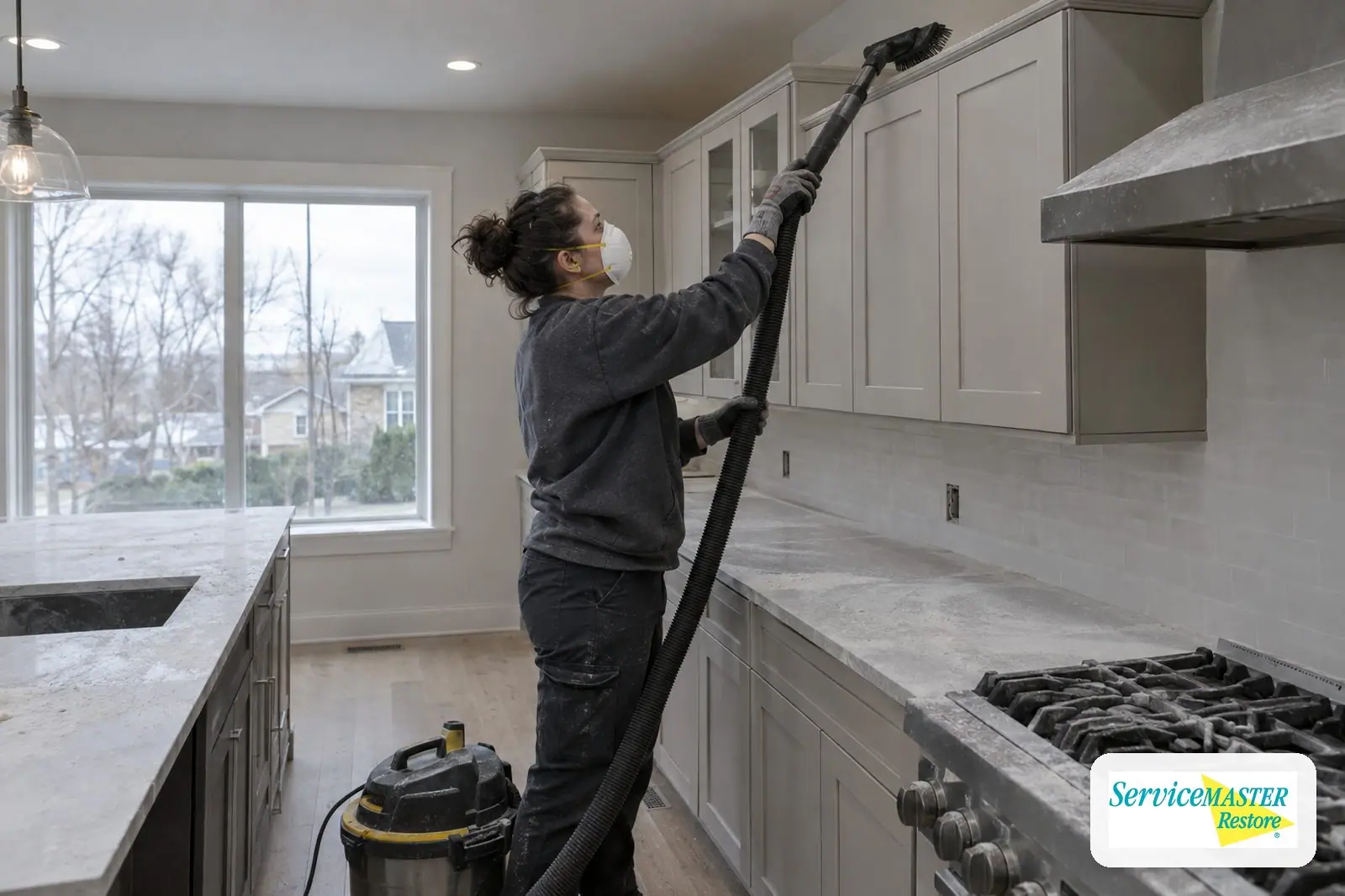
A contractor's last day usually ends with a broom sweep and a dumpster pickup. It doesn't end with a clean house. Fine dust from sanding drywall, cutting wood and grinding concrete hangs in the air, then settles on every ledge, inside cabinets and in the duct system. Whether a professional clean is worth paying for depends on how big the job was, how far the dust traveled and how soon you need the space.
Why construction dust is different
Everyday household dust is mostly a nuisance. Construction dust is finer, there's far more of it, and it reaches places routine cleaning doesn't:
- Drywall dust is fine enough to drift through a house and coat surfaces in rooms nowhere near the work.
- Concrete, tile and mortar dust can contain respirable crystalline silica when those materials are cut or ground, which is why OSHA's construction silica standard regulates how crews control it.
- Residue films from paint overspray, adhesive, caulk and grout haze cling to windows, fixtures, counters and floors.
- Heating and cooling systems pull dust into return vents and ductwork if registers weren't covered. The EPA's guidance on indoor air quality during remodeling recommends taping plastic sheeting over supply and return registers in the work area for this reason.
If the project is still underway, a few steps make the final clean much easier. The EPA suggests a barrier of 6 mil plastic sheeting taped over doorways and other openings, fully sealing off very dusty work such as demolition, misting surfaces with water before sanding or scraping, and using exhaust ventilation, such as a fan blowing out of the work area, to pull dust away from the rest of the home.
If that dust isn't removed properly, it keeps coming back. It resettles on cleaned surfaces, blows out of vents when the system kicks on and gets tracked into finished rooms.
How construction dust should be removed
The method matters more than the effort. Dry sweeping, feather dusting and blowing dust off with compressed air push fine particles back into the air, where they land on surfaces you've already cleaned or get breathed in.
OSHA's silica rule for construction, 29 CFR 1926.1153, is a useful benchmark. It bars employers from allowing dry sweeping or dry brushing where that could add to workers' silica exposure unless wet sweeping, HEPA-filtered vacuuming or other low-exposure methods aren't feasible, and it limits the use of compressed air to clean surfaces. OSHA defines a HEPA filter as one that is at least 99.97% efficient at removing particles 0.3 micrometers in diameter. The rule protects construction workers, not homeowners, but the logic carries over: capture the dust instead of stirring it up.
A thorough post-construction clean generally follows this order:
- Keep registers covered until the heaviest dust is gone, then check or replace the furnace filter.
- HEPA-vacuum from the top down: light fixtures, vents, ledges, trim, window tracks and, where needed, walls.
- Damp-wipe every hard surface, including inside cabinets, drawers and closets, changing cloths and water often.
- Remove paint spots, adhesive, stickers and grout haze from glass, fixtures and counters with products that are safe for each surface.
- HEPA-vacuum and then damp-clean floors, finishing at the exit so you don't walk back through clean rooms.
- Check vent covers and return grilles, and have the duct system looked at if a lot of dust got into it.
The EPA also recommends running as much ventilation as possible during the work and for at least 72 hours afterward, and keeping people, especially children, out of the work area until it has been cleaned.
Older homes: lead comes first
If your home was built before 1978 and the project disturbed painted surfaces, lead dust is a separate concern. Under EPA's Lead Renovation, Repair and Painting Program, anyone paid to do work that disturbs painted surfaces in pre-1978 housing and child-occupied facilities must be certified, and their workers must be trained in lead-safe work practices. EPA's remodeling guidance says to assume paint in homes built before 1978 contains lead, and it notes that its general dust-control tips are not approved for removing or disturbing lead-based paint.
Before anyone cleans up after a renovation in an older home, ask your contractor whether the firm is EPA lead-safe certified and how it handled cleanup at the end of the job. If you aren't sure, hold off on dry sweeping and talk with the contractor or your local health department first.
DIY or professional?
| Factor | DIY is usually fine | A professional clean is usually worth it |
|---|---|---|
| Size of the project | Painting, a new light fixture, a small drywall patch | Kitchen or bath remodels, basement finishes, additions, new construction |
| How far dust spread | Contained to one room with plastic and covered registers | Through the house or into the heating and cooling system |
| Timeline | No firm deadline | Closing, move-in, listing photos or a tenant handover on a set date |
| Equipment | You own a HEPA vacuum and have time to damp-wipe everything | Only a broom or a standard shop vacuum |
| Type of space | Your own home, small job | Tenant build-outs and commercial turnovers that need to be customer-ready |
Cleaning companies often break the work into phases: a rough clean while trades are still finishing, a final clean once construction is done, and a touch-up clean right before move-in or opening. Not every project needs all three. But if sanding or cutting is still happening, a single clean done too early will have to be repeated.
The value of a professional clean is mostly thoroughness and time. A crew with the right equipment works through the whole space systematically, and fewer repeat passes are needed when the dust is captured the first time instead of being pushed around.
Questions to ask before you book
Post-construction cleaning means different things to different companies, so pin down the scope. Ask whether the crew uses HEPA-filtered vacuums, whether the inside of cabinets, drawers and closets is included, how window tracks, light fixtures and vents are handled, whether removing paint spots, adhesive and grout haze is part of the job, and whether a touch-up visit is included or priced separately. For a commercial space, ask whether the crew can meet a set handover date and work around remaining trades.
Getting it done right
If you'd rather hand it off, our post-construction cleaning service is built around capturing fine dust with HEPA vacuums and damp wiping rather than spreading it. For homes that also need detail work on built-up grime, our deep cleaning services cover appliances, grout and fixtures, and builders and property managers can use our commercial cleaning services for tenant turnovers. ServiceMaster Restoration Services serves homes and businesses across DuPage and Will County. Call (630) 241-1111, 24/7, to schedule a walkthrough.
More questions
How soon after construction should I schedule the clean?
Wait until dust-producing work like sanding, cutting and grinding is finished, or plan on a second pass. Fine dust keeps settling for a while after the work stops, so many people book a final clean once the trades are done and a quick touch-up right before move-in.
Should I have my air ducts cleaned after a remodel?
If registers weren't covered during the work, or you see dust blowing out of vents, have the system checked. At minimum, replace the furnace filter once the heavy dust is gone and check it again a few weeks later.
Can I use a regular vacuum on drywall dust?
Many household and shop vacuums aren't designed to capture very fine dust and can blow some of it back into the room. A vacuum with a HEPA filter, used along with damp wiping, is the better choice.
Is post-construction cleaning the same as a deep clean?
They overlap, but the focus differs. Post-construction cleaning removes construction dust and residue such as paint, adhesive and grout haze, while a deep clean targets built-up household grime. A newly built home usually needs the first, not the second.