Short answer: A house deep clean covers everything a routine clean does plus the build-up it skips: inside the microwave and oven, cabinet fronts, the range hood, tile grout and fixtures, baseboards, door frames, vents, ceiling fans, light fixtures, window sills and the floor under and behind movable furniture. Exact scope varies by company, so confirm it in writing.
Routine cleaning keeps a home looking good from week to week. A deep clean is the reset that reaches the grime routine visits skip: grease on the range hood, soap scum in the grout, dust on top of door frames and fan blades. People often book one before a holiday, after a long illness in the house, before listing a home or as the first visit with a new cleaning service.
Room-by-room deep cleaning checklist
| Area | Typically included in a deep clean |
|---|---|
| Kitchen | Degrease cabinet fronts and handles, backsplash and range hood exterior; clean inside the microwave; detail the stovetop and burner areas; wipe small appliances; scrub the sink and faucet; clean inside the oven and refrigerator when they are part of your scope |
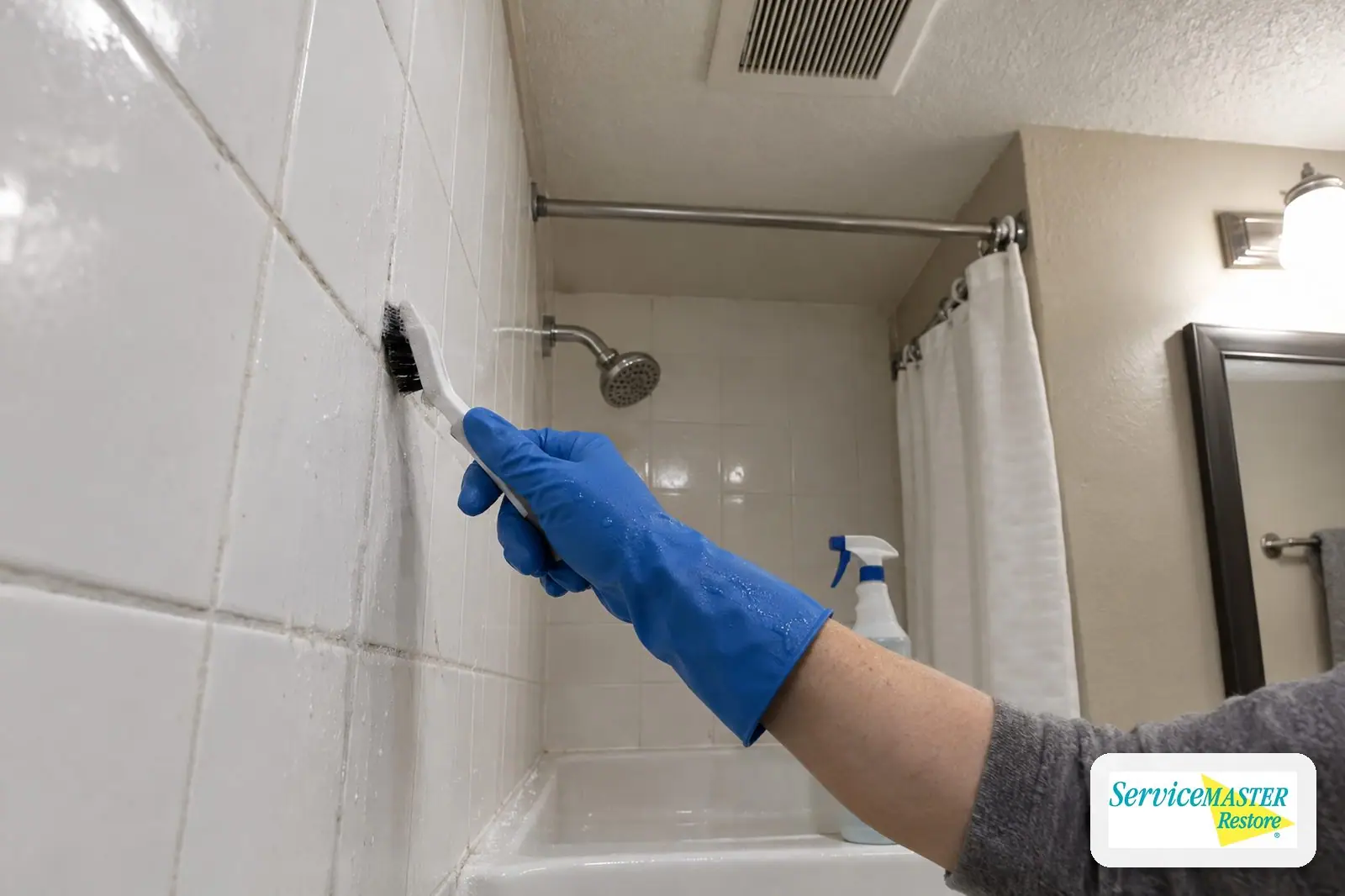
| Bathrooms | Scrub tile and grout; remove soap scum and hard-water spots from glass, tubs, showers and fixtures; clean around the base and back of the toilet; wipe vanity cabinets; dust exhaust fan covers |
| Living areas and bedrooms | Dust ceiling fans, light fixtures and high shelves; wipe baseboards, door frames, doors and switch plates; clean window sills and tracks; vacuum upholstery; vacuum under and behind furniture that can be moved |
| Entry and laundry areas | Wipe the front door, frame and threshold; clean marks from light switches and trim; wipe the outside of the washer and dryer and clear lint and dust from around them |
| Throughout the home | Wipe vent covers and return grilles; detail high-touch surfaces like doorknobs, light switches and railings; vacuum edges and corners; wash hard floors |
Professionals usually work top to bottom and dry to wet: dust high surfaces first, then wipe and scrub, and do floors last, so debris doesn't fall onto areas that are already clean. Kitchens and bathrooms usually take the most time because grease, soap scum and mineral deposits build up in layers. Our kitchen and bathroom cleaning page goes into more detail on those two rooms.
Deep clean vs routine clean vs move-in/move-out clean
| Question | Routine clean | Deep clean | Move-in/move-out clean |
|---|---|---|---|
| Goal | Maintain a clean home | Remove built-up grime | Get an empty home ready for the next occupant |
| When | On a regular schedule | Periodically, or before starting routine service | Once, around a move |
| Inside cabinets and drawers | No | Sometimes | Usually, since they are empty |
| Inside appliances | Rarely | Often the microwave and oven; the refrigerator varies | Usually |
| Baseboards, vents and fixtures | Spot-cleaned | Detailed | Detailed |
Items that are often priced separately or have to be requested include inside the refrigerator and oven, interior windows and screens, washing walls, carpet and upholstery shampooing, garages and basements, and heavy renovation dust. Providers handle these differently, so get the scope in writing before the visit. If you're moving, our move-in and move-out cleaning service is set up for empty homes.
Cleaning vs disinfecting at home
A deep clean is mainly about removing dirt and grime, and that is usually what a home needs. According to the CDC, cleaning regularly is enough to prevent the spread of germs in most situations, and sanitizing or disinfecting is likely not needed unless someone in the home is sick. CDC does recommend disinfecting when someone is sick or at higher risk of getting sick, and cleaning high-touch surfaces like light switches, doorknobs and countertops regularly and after you have visitors.
The EPA explains the difference between product types. Cleaning removes dirt and organic matter with soap or detergent. Sanitizing kills bacteria but is not intended to kill viruses. Disinfecting kills viruses and bacteria. When disinfection is needed, clean first, since dirt can keep the product from working, then follow the label and keep the surface wet for the full contact time.
For everyday cleaning products, EPA's Safer Choice label marks products whose chemical ingredients have all been reviewed against EPA safety criteria for human health and the environment, and that must perform comparably to conventional products. There is also a fragrance-free version of the label for people who prefer to avoid added scents.
Safety rules every deep clean should follow
- Never mix bleach with ammonia or acids. The New Jersey Department of Health warns that bleach mixed with ammonia creates chloramine gases, and bleach mixed with acidic products, such as lime and rust removers, releases chlorine gas. Its list of products never to combine with bleach also includes vinegar and toilet bowl cleaners. Both gases can cause serious breathing problems.
- Don't combine products at all. CDC advises against mixing products or chemicals with each other.
- Ventilate. CDC recommends good ventilation when using disinfecting products indoors, such as opening windows or running a fan.
- Follow the label. Wear the gloves or eye protection it calls for and respect the contact time.
- Store products safely, away from children and pets, in their original labeled containers.
- Mind your cloths and hands. CDC cautions that drying sanitized items with a dish towel can transfer germs back onto them, and recommends washing your hands with soap and water for 20 seconds after using disinfecting products.
What a deep clean usually doesn't cover
A deep clean is still a cleaning service. Some situations call for specialized work instead, and it's worth knowing the difference before you book:
- Renovation dust: fine drywall and concrete dust needs HEPA vacuuming and damp methods throughout, which is the focus of post-construction cleaning.
- Lingering odors, smoke or soot: these usually need source removal and deodorizing, which falls under sanitization and deodorization.
- Mold growth, sewage or biohazards: these need containment, protective equipment and specific procedures beyond a standard deep clean.
Getting ready for a deep clean
A little preparation lets the cleaner spend time on grime instead of clutter. Clear counters, nightstands and bathroom vanities. Put away valuables, papers and medications. Point out surfaces that need special care, such as natural stone, unsealed wood or delicate fixtures, and mention anyone in the home with asthma or chemical sensitivities so products can be chosen with that in mind.
When to book a professional deep clean
A professional deep clean makes the most sense when the build-up is more than a weekend can fix, when you're short on time before an event or a move, when someone in the household has been ill, or as a starting point before regular service. ServiceMaster Restoration Services offers deep cleaning services across DuPage and Will County, along with routine and move-out cleaning through our cleaning services. Tell us what you want covered and ask for the scope in writing. Call (630) 241-1111, 24/7.
More questions
How long does a house deep clean take?
It depends on the size of the home, how much build-up there is and what's in scope. A deep clean takes noticeably longer than a routine visit to the same home because nearly every surface gets detailed attention. Ask for an estimate after a walkthrough or a detailed description of the home.
How often should I deep clean my house?
There's no single rule. Many households schedule one seasonally or before big events, and homes with pets, allergies or heavy daily use may benefit from more frequent deep cleaning between routine visits.
Will a deep clean remove mold?
A deep clean can remove surface mildew on bathroom tile and caulk. Mold that keeps coming back or covers a larger area usually signals a moisture problem that needs to be found and fixed, which is a job for mold remediation rather than routine cleaning.
Do I need to be home during a deep clean?
Not necessarily, but it helps to be there at the start to walk through priorities and point out anything fragile, and at the end to check the work against the agreed scope.