


What does professional kitchen and bathroom cleaning include?
Professional kitchen and bathroom cleaning removes the grime these rooms build fastest: grease film on cabinets and range hoods, soap scum and mineral haze on glass and fixtures, mildew in grout, and residue on the handles everyone touches. It pairs the right product for each surface with enough dwell time, safe ventilation and a final disinfection of high-touch points.
Where does grime build up fastest in kitchens and bathrooms?
These two rooms combine water, heat, food and constant hand contact. That mix is why they look dirty sooner than a bedroom or living room, and why a quick wipe rarely keeps up.
Kitchen trouble spots
- Faucet handles, refrigerator handles, cabinet pulls and appliance buttons touched during food prep
- Sponges, dish cloths and the sink basin, which stay damp and come into contact with food residue
- Range hood filters and the cabinets above the stove, where cooking grease settles
- The gap beside the range and the floor in front of the sink
Bathroom trouble spots
- Toilet flush handles, faucet handles, light switches and door handles
- Shower doors, tile and fixtures where soap residue and minerals dry
- Grout lines, caulk and corners of the tub that stay damp
- The floor around the base of the toilet
Swapping out sponges and dish cloths often, and letting them dry between uses, is one of the simplest habits for keeping a kitchen cleaner between professional visits.
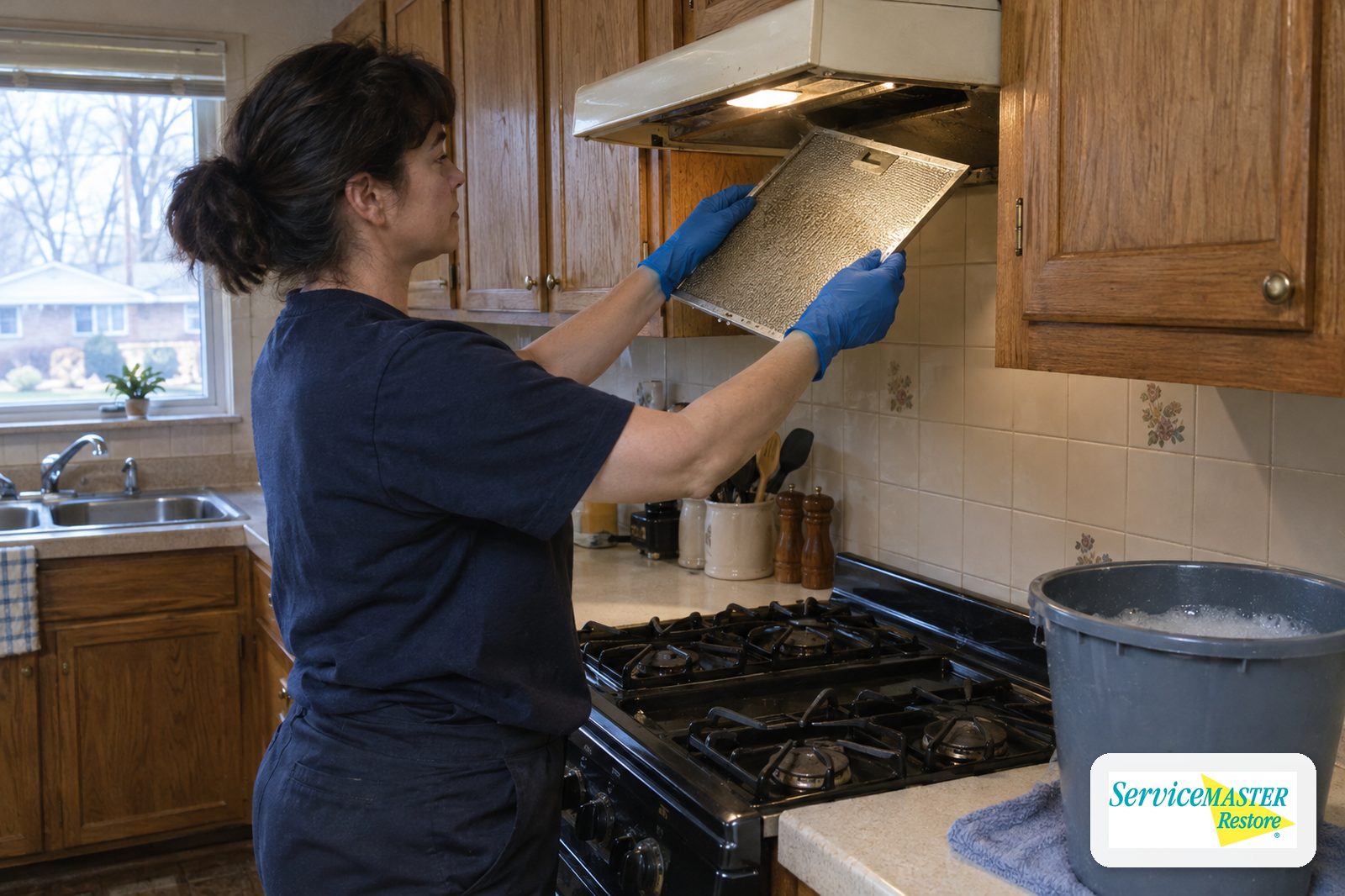
Cutting through kitchen grease
Cooking grease does not stay on the stove. It travels on vapor and settles as a sticky film on cabinet doors, the range hood and the backsplash, where it catches dust and darkens over time. A degreaser left to dwell, then wiped with a clean cloth, removes it without scouring painted or sealed finishes.
Ventilation cuts how much grease reaches those surfaces. The EPA recommends using exhaust fans or opening windows when cooking or running the dishwasher. Range hood filters also need regular washing so the fan can do its job.
Why does soap scum keep coming back?
Soap scum starts with the water. Hard water carries high amounts of dissolved calcium and magnesium, and Nebraska Extension explains that soap used in hard water combines with those minerals to form a sticky soap curd. That curd dries on tile, glass and fixtures, often alongside white mineral buildup around faucets and shower heads.
Because it rebuilds with every shower, removing it is half the work. The other half is slowing it down: squeegeeing glass after showers, wiping fixtures dry and keeping air moving so surfaces do not stay wet. Professional cleaning focuses on breaking the bond with a suitable cleaner and enough dwell time instead of aggressive scrubbing that can dull finishes.
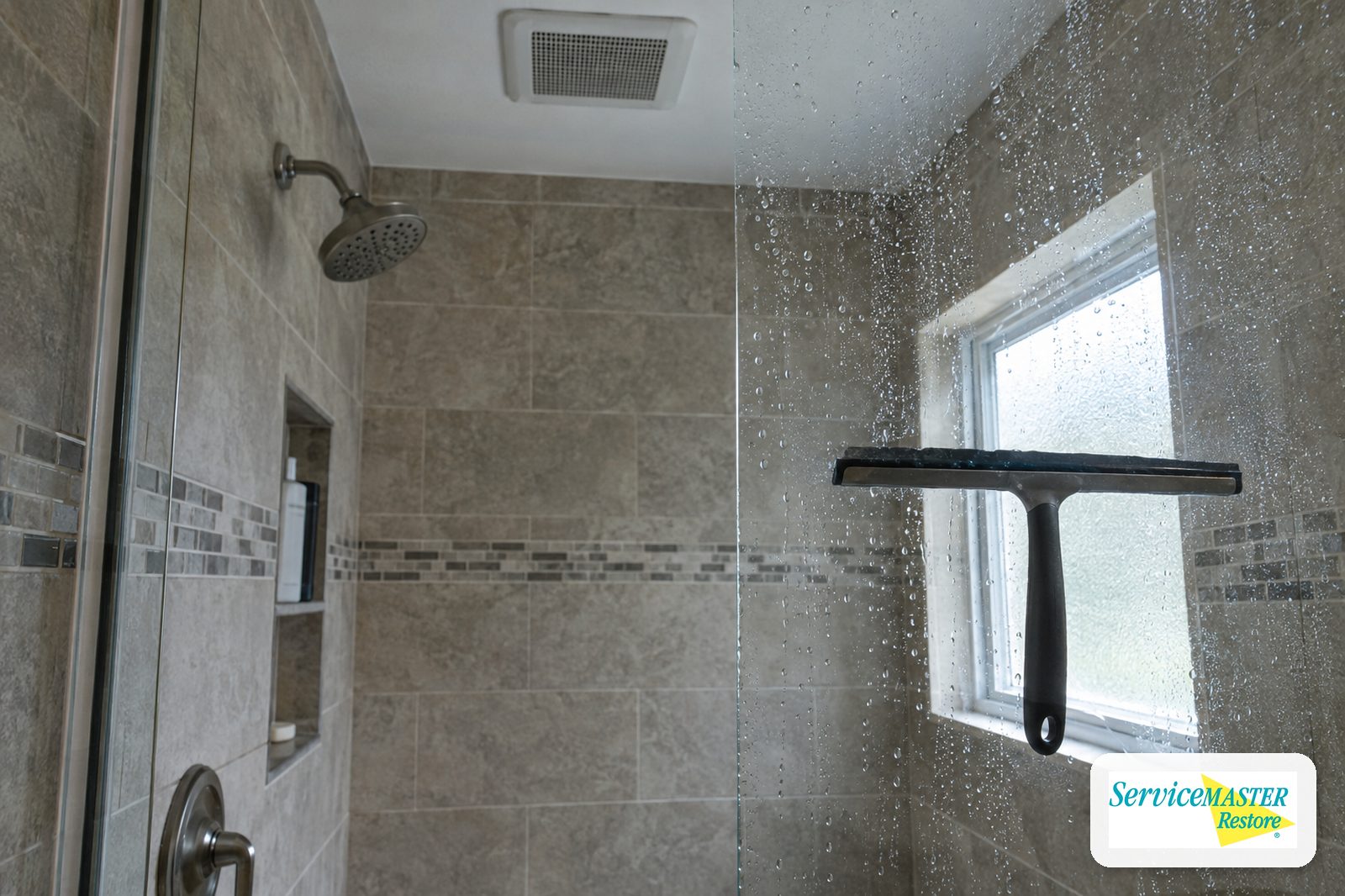
Mildew in showers: moisture is the real cause
The EPA's mold cleanup guidance notes that places that are often or always damp can be hard to keep completely free of mold, and recommends more ventilation and more frequent cleaning. EPA's mold and moisture guide adds: run the bathroom fan or open a window when showering, keep indoor humidity below 60 percent (ideally 30 to 50 percent), and scrub mold off hard surfaces with detergent and water, then dry completely.
EPA also says not to paint or caulk over moldy surfaces. Clean and dry them first.
How do you use kitchen and bathroom cleaners safely?
Bathroom and kitchen products are among the strongest in the house, and most problems come from mixing products or using them in a closed room. These rules come straight from public health and industry guidance.
Beyond that, the American Cleaning Institute advises never mixing cleaning products together, reading and following label directions, and keeping products in their original containers with the label intact. Open a window or run the exhaust fan while you work.
When disinfecting, the label matters most. The EPA stresses contact time, the length of time the surface must stay wet for the product to work.
Common kitchen and bathroom problems at a glance
| Problem | Likely cause | What helps |
|---|---|---|
| Black spots in shower grout | Surfaces that stay damp | Scrub with detergent and water, dry completely, run the fan when showering (EPA) |
| Recurring bathroom mildew | High humidity, poor ventilation | Keep humidity below 60%, ideally 30–50% (EPA); clean more often |
| Sticky film on cabinets | Cooking grease carried by vapor | Exhaust fan or open window while cooking (EPA); degreaser with dwell time |
| Disinfectant "not working" | Surface wiped dry too soon | Follow label contact time (EPA) |
| Fumes while cleaning | Mixed products or a closed room | Never mix products; ventilate (ACI, American Lung Association) |
Sources: U.S. EPA, A Brief Guide to Mold, Moisture and Your Home; EPA disinfectant guidance; American Cleaning Institute; American Lung Association (linked above).
How a kitchen and bath cleaning is typically done
- Clear and ventilate. Counters and tub ledges are cleared, and the fan is turned on or a window opened.
- Dry debris first. Hair, crumbs and dust are removed so cleaners are not turned into paste.
- Apply and dwell. Degreaser goes on the range area and soap-scum cleaner on tile and glass, then is left to work.
- Detail surfaces. Cabinet fronts, backsplash, fixtures, toilet and sink are cleaned top to bottom.
- Rinse and dry. Residue is rinsed off and surfaces are dried, which also slows mildew.
- Disinfect high-touch points. Handles, switches and flush levers are treated per the label's contact time.
- Floors last. Floors are cleaned once everything above them is finished.
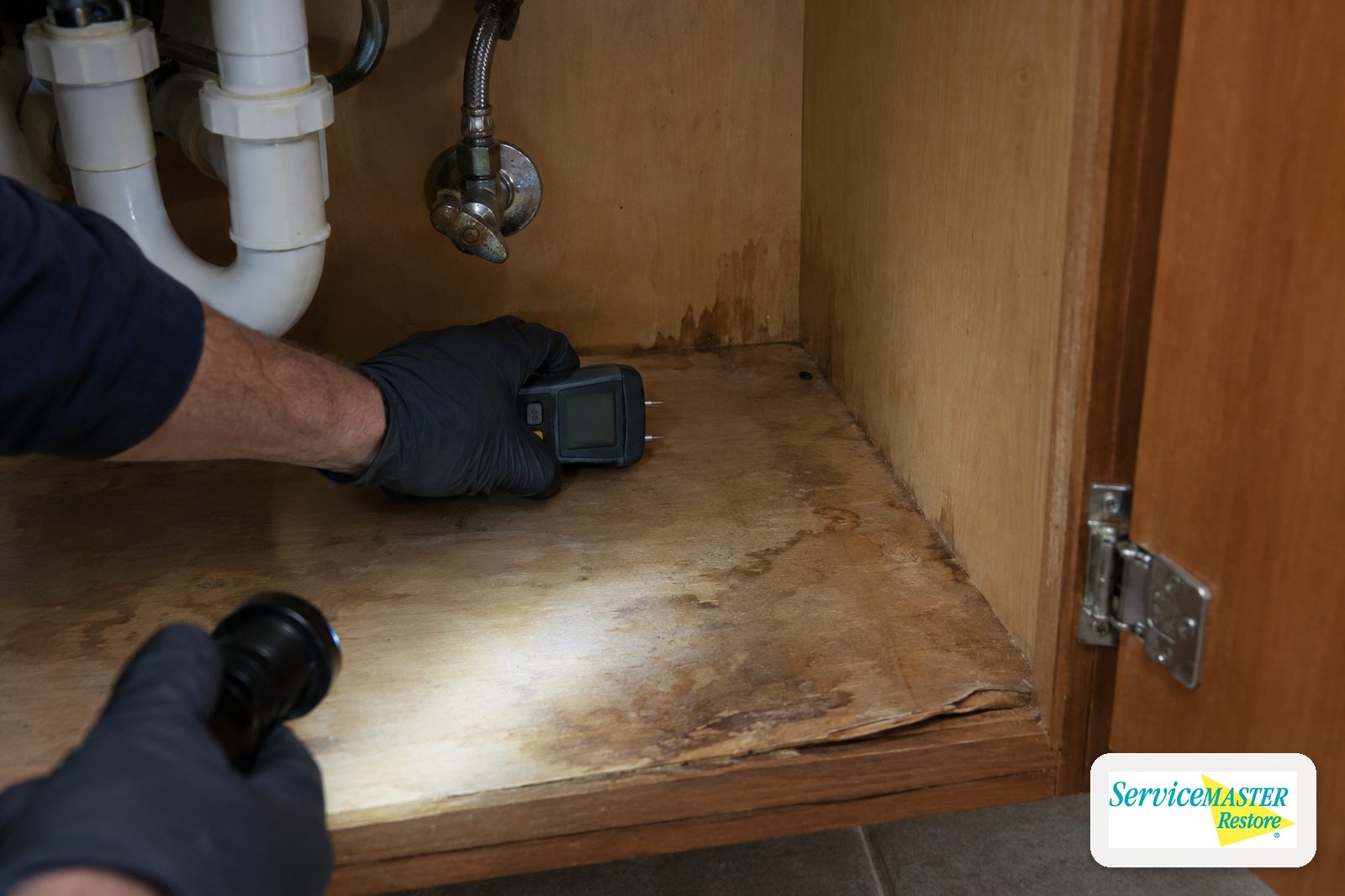
When a stain is really a leak
A warped cabinet floor under the sink, a soft spot by the toilet or a stain spreading across the ceiling below a bathroom is not a cleaning problem. Those are signs of an active leak, and cleaning only hides them.
Shut off the supply valve if you can and look into burst and leaking pipe repair. If mold has spread across drywall, professional mold remediation addresses the source. Our black mold guide explains the warning signs.
Kitchen and bathroom cleaning in DuPage and Will County
Humid Chicago-area summers make bathroom mildew a constant fight, and winter brings the opposite: closed windows, dry furnace air and more cooking indoors. Both seasons show up first in the kitchen and bath.
From our Lisle headquarters, we offer focused kitchen and bath service within our residential cleaning services, including homes covered by our pages for cleaning services in Bolingbrook, Plainfield, Romeoville and Lockport. Pair it with routine house cleaning, schedule a deep clean for grout and appliances, or see the cleaning services overview.
Contact us or call (630) 241-1111 to schedule kitchen and bathroom cleaning.
Frequently asked questions
How do I keep shower glass clear between cleanings?
Squeegee or towel-dry the glass after each shower, run the exhaust fan or open a window, and wipe fixtures dry. Soap curd forms when soap meets hard-water minerals, so the less water left to evaporate on the glass, the slower the film builds. A water softener can also reduce mineral buildup.
Is it safe to use bleach on shower mildew?
EPA's mold guide says scrubbing hard surfaces with detergent and water, then drying completely, is the basic approach. If you do use a bleach product, follow the label, ventilate the room and never mix it with anything containing ammonia, which EPA warns can produce toxic fumes.
How often should the kitchen sink and sponges be cleaned?
Wipe the sink basin and faucet handle daily during regular use, since they stay damp and contact food residue. Rinse sponges and dish cloths well and let them dry between uses, and replace them often. A deeper sink and drain cleaning fits naturally into a weekly cleaning visit.
Can professional cleaning remove hard water stains from fixtures?
Light to moderate mineral buildup usually comes off with a suitable cleaner and dwell time. Heavy scale that has etched glass or pitted chrome finishes may not fully reverse, because the surface itself has changed. Test any product on a small hidden area first and follow the fixture maker's care instructions.
Why does my bathroom smell musty even after cleaning?
A musty odor that returns after cleaning usually means moisture is trapped somewhere: behind tile, under flooring, inside a vanity or in a poorly vented ceiling. EPA notes that damp places are hard to keep free of mold. Check for leaks and ventilation problems, and call a professional if growth spreads beyond surfaces.
Sources
- U.S. Environmental Protection Agency: A Brief Guide to Mold, Moisture and Your Home
- U.S. Environmental Protection Agency: Mold Cleanup in Your Home
- U.S. Environmental Protection Agency: What's the difference between products that disinfect, sanitize, and clean surfaces?
- American Lung Association: Cleaning Supplies and Household Chemicals
- American Cleaning Institute: Cleaning Product Safety
- University of Nebraska-Lincoln Extension: Drinking Water: Hard Water (Calcium and Magnesium), G1274
- National Capital Poison Center: Poison Control (National Capital Poison Center)