Short answer: Neither one is the real answer. EPA does not recommend bleach or other biocides as a routine mold treatment, because dead mold can still cause allergic reactions and the goal is removal. Scrub hard surfaces with detergent and water, dry them completely, replace moldy porous materials, and fix the moisture source first.
Search for mold advice and you will find two camps. One says bleach kills mold. The other says white vinegar works better because it soaks into the surface. Federal guidance from the EPA and CDC points somewhere else entirely. The question that matters is not which liquid kills mold best. It is how you get the mold out of your home and keep it from growing back.
Killing mold is not the same as removing it
The U.S. Environmental Protection Agency answers this directly on its page about whether to use bleach to clean up mold: "Dead mold may still cause allergic reactions in some people." EPA's conclusion is that killing mold is not enough. It has to be removed.
That changes how you should judge any product. A surface that looks lighter after spraying is not necessarily clean. Spores and mold fragments left in place can still bother your nose, eyes and lungs, whether the mold is alive or not.
What the EPA and CDC actually recommend
EPA says that using a biocide, such as chlorine bleach, "is not recommended as a routine practice during mold cleanup." It allows that professional judgment may call for a disinfectant in some cases, for example when people with weakened immune systems live in the home. For everyday cleanup, EPA's Mold Cleanup in Your Home page gives a simpler instruction: scrub mold off hard surfaces with detergent and water, and dry completely.
The CDC's mold cleanup guidance says bleach or dish detergent can be used. If you choose bleach, CDC says to use no more than 1 cup of bleach in 1 gallon of water and to open windows and doors for fresh air.
Neither agency's homeowner guidance names vinegar as a mold treatment. The popular claim that vinegar beats bleach because it reaches deeper into porous materials skips the bigger point: EPA says moldy porous materials often have to be removed, not treated in place.
| Option | What federal guidance says | Where it fits | Watch out for |
|---|---|---|---|
| Detergent and water | EPA's routine method for hard surfaces, followed by complete drying | Tile, glass, metal, sealed counters, finished wood | Surfaces must dry fully afterward |
| Diluted bleach | Not recommended as a routine step (EPA); if used, no more than 1 cup per gallon of water (CDC) | Cases where a professional judges a disinfectant is needed | Never mix with ammonia, vinegar or other cleaners |
| White vinegar | Not named in EPA or CDC homeowner mold guidance | No federal role in mold cleanup | Toxic gas if combined with bleach |
| Removing the material | Moldy porous materials "may have to be thrown away" (EPA) | Drywall, ceiling tile, carpet and pad, insulation | Disturbing large areas can spread spores |
Never mix bleach with vinegar, ammonia or other cleaners
This is the one point every source agrees on. EPA warns never to mix chlorine bleach solution with cleaning products that contain ammonia, because toxic fumes can form. CDC goes further and says never to mix bleach with ammonia "or any other cleanser." The New Jersey Department of Health's fact sheet on bleach lists vinegar and other acids among the chemicals that can create a toxic gas when combined with bleach.
So do not make a "stronger" cleaner by combining products in one bottle or bucket. If you switch products, do not apply the second one on top of the first, and keep the area ventilated.
Porous materials usually have to go
Drywall, ceiling tiles, carpet, carpet pad and insulation absorb water and give mold room to grow inside the material, not just on top of it. EPA's Brief Guide to Mold, Moisture and Your Home says that because mold can grow in the empty spaces and crevices of porous materials, it "may be difficult or impossible to remove completely." That is why EPA says absorbent materials may have to be thrown away once they are moldy.
No spray changes that, bleach or vinegar. If the paper face of drywall is moldy, or a carpet pad smells musty after a leak, plan to cut it out and replace it. EPA also says not to paint or caulk over mold. Paint applied over moldy surfaces is likely to peel, and the growth underneath keeps going.
No cleaner works if the moisture stays
Mold needs water. EPA's first cleanup step is to fix plumbing leaks and other water problems as soon as possible, and it says to dry water-damaged areas and items within 24 to 48 hours to prevent growth. If a basement wall stays damp or a slow drip keeps a sink cabinet wet, mold returns after any cleaning, no matter what product you used.
Look for the source before you scrub: a leaking supply line, a roof or window leak, condensation on cold pipes, or a humid basement. EPA suggests keeping indoor humidity below 60 percent, ideally between 30 and 50 percent. Our page on moisture control and long-term mold prevention covers the fixes that keep growth from coming back.
When it is a DIY job, and how to do it safely
EPA says that if the moldy area is less than about 10 square feet, roughly a 3-foot by 3-foot patch, you can usually handle it yourself. Larger areas, or mold that followed extensive water damage or sewage, call for a professional.
CDC says some people should not take part in cleanup at all: people with allergies, people with weakened immune systems or underlying lung disease, and people with chronic respiratory conditions such as asthma or COPD. If you have health concerns, EPA advises talking with a health professional before you start.
For a small patch, follow this order:
- Find and fix the water problem first.
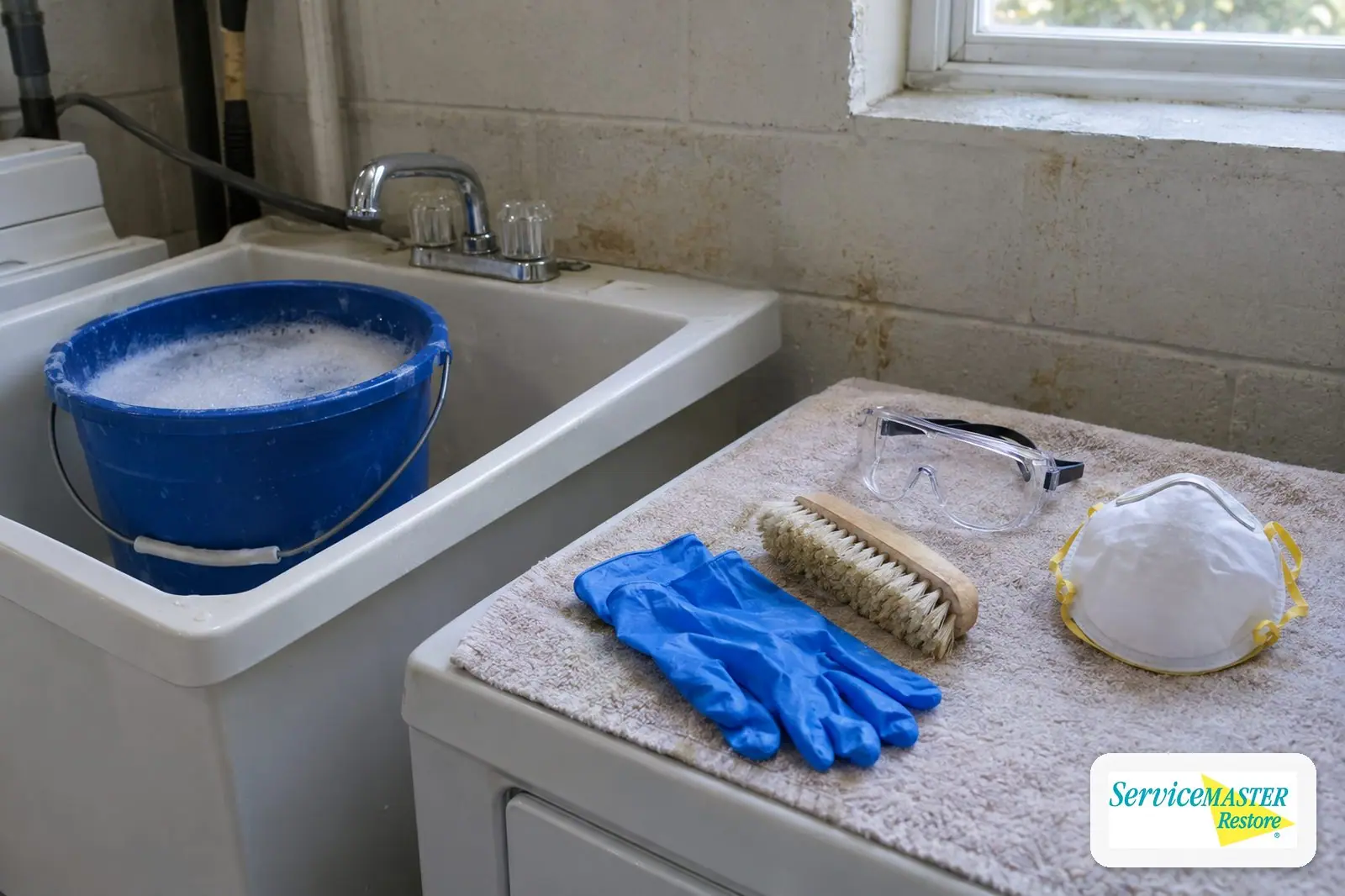
- Put on an N-95 respirator, non-latex gloves (vinyl, nitrile or rubber) and goggles that seal around your eyes (CDC).
- Keep children, pets and sensitive family members out of the area.
- Scrub hard surfaces with detergent and water. Do not mix in other products.
- Bag moldy porous items such as ceiling tile or carpet and take them out.
- Dry everything completely, using fans or a dehumidifier once the mold is gone.
- Check the spot over the next few weeks for regrowth or a musty smell.
When to call a professional
Call for help when growth covers more than about 10 square feet, keeps coming back after cleaning, sits inside walls or ductwork, or followed a flood or sewer backup. Professional work adds containment and HEPA air filtration so spores are not carried through the house while moldy materials come out. Our safe mold removal process and residential mold remediation service explain what that looks like in a home. If you are unsure what level of work you need, our guide to mold removal versus mold remediation sorts out the terms, and our article on black mold health risks and warning signs covers symptoms to watch for.
ServiceMaster Restoration Services in Lisle has served homes and businesses in DuPage and Will County for more than 20 years. Our IICRC-certified technicians handle containment, removal and drying, and we can help you with the insurance claim. For mold remediation help, call (630) 241-1111, 24/7.
More questions
Can I use hydrogen peroxide, baking soda or tea tree oil instead?
EPA and CDC homeowner guidance does not name these products for mold cleanup. The same rules apply to anything you try: the goal is to remove the mold, not just kill it, porous materials that are moldy may need to be replaced, and the moisture source has to be fixed. Never combine any of these with bleach.
Should I spray moldy drywall with bleach before I tear it out?
Usually not. EPA does not recommend biocides as a routine step, and spraying does not make the material safe to leave in place. What matters more is limiting dust: EPA's mold course says unsalvageable moldy materials should be sealed in heavy plastic bags before they are carried out of the work area.
Is it fine to use bleach on mold in a shower or on tile grout?
On hard, nonporous surfaces a diluted bleach solution is one option CDC allows, using no more than 1 cup of bleach per gallon of water with good ventilation. Detergent and water also work. If mold is growing under caulk or behind tile, the caulk or grout may need to be replaced, and the bathroom fan should run during and after showers to keep humidity down.
How do I know the mold is really gone after I clean it?
Look for three things over the following weeks: no visible mold, no musty odor, and no new dampness where the growth was. If the spot comes back, moisture is still reaching it, or growth is hidden behind the surface you cleaned. That is the point to have the area inspected.