
Short answer: Yes. Active mold growth can be removed from a house, and it stays gone when the moisture that fed it is fixed. No one can remove every spore, since EPA says that is impossible indoors. Success means the water problem is repaired, moldy materials are gone, and no visible mold or musty odor remains.
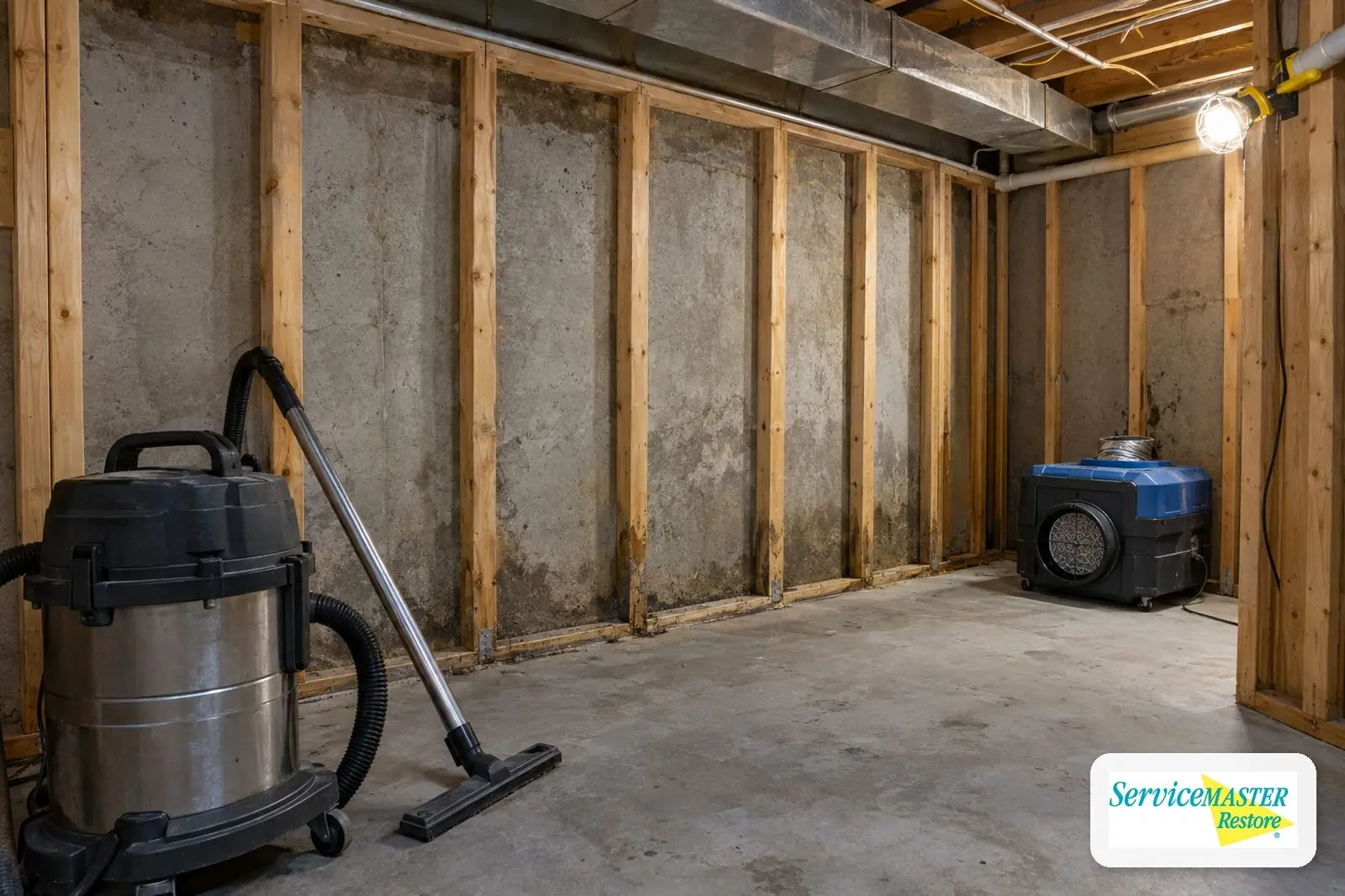
A mold problem can feel permanent, especially if you are buying a house with a history of it or you have already cleaned the same corner twice. The good news is that active mold growth can be removed for good. The catch is in how you define "good." No house is free of mold spores, and a job is judged by whether the growth is gone and the conditions that fed it have changed.
Why "mold-free" is the wrong goal
Mold spores are part of normal outdoor air, and they come inside on clothing, pets and every open door and window. EPA's Brief Guide to Mold, Moisture and Your Home states it directly: "It is impossible to get rid of all mold and mold spores indoors." What EPA asks you to control is moisture, because spores cannot grow into colonies without it.
That shifts the goal. A successful job removes the active growth and the materials it damaged, fixes the water problem, and leaves the indoor environment comparable to a normal home. EPA's mold course notes that if air samples are taken after cleanup, the kinds and concentrations of mold indoors "should be similar to those found outside." Spores will always be present at background levels. Colonies on your drywall, framing or carpet should not be.
That is also why a promise of a "mold-free" or "spore-free" home oversells what any cleanup can do. Better questions for a contractor are what will be removed, how the moisture source will be fixed, and how the result will be checked.
What a successful job looks like
EPA's remediation guide, Mold Remediation in Schools and Commercial Buildings, lists the markers of a finished job. The same criteria work for a house.
| EPA completion marker | How you can check it |
|---|---|
| The water or moisture problem is completely fixed | Ask what caused it and see proof of the repair: plumber's invoice, roof or window work, grading or sump changes |
| No visible mold, mold-damaged materials or moldy odors | Walk the area. It should look clean and smell like the rest of the house |
| A revisit shortly after shows no new water damage or growth | Look again a few weeks later, especially after heavy rain or a humid stretch |
| People can use the space without health complaints or symptoms | Watch for the coughing, congestion or irritation that prompted concern in the first place |
EPA's mold course chapter on evaluating remediation adds an honest note: "Ultimately, this is a judgment call; there is no easy answer." There is no federal numeric standard that declares a house clean. EPA also says a negative sampling report "must not be used in place of a visual survey," so the walk-through and the moisture fix carry the most weight.
How professionals remove it
Professional work follows ANSI/IICRC S520, the industry standard that describes the procedures and precautions for mold remediation in residential, commercial and institutional buildings. In practice, the work breaks down by material:
- Porous materials such as drywall, insulation, ceiling tile, carpet and pad are usually removed when moldy. EPA notes that mold can grow into the spaces and crevices of these materials, so it may be impossible to remove completely.
- Hard surfaces such as tile, metal, glass and sealed wood are cleaned and dried.
- Framing and other solid wood is cleaned and dried in place when it is structurally sound.
Around that work sit the steps that keep spores from spreading: containment with plastic sheeting, HEPA air filtration, sealed bagging of debris, and a final HEPA vacuuming, which EPA recommends for the final cleanup of remediation areas. Before walls or floors are closed up, the area should be confirmed dry with moisture readings, because sealing in damp framing sets up the next problem. Our safe mold removal page walks through each step. If you are trying to sort out the terms people use for this work, our guide to mold removal versus mold remediation explains the difference so we do not repeat it here.
How to keep mold from coming back
EPA's mold course puts the key point plainly: "No matter how good the mold cleanup is, if the water problem is not solved, mold will return." Prevention is mostly about water and humidity.
- Dry any leak or spill within 24 to 48 hours. EPA says that in most cases mold will not grow if wet materials are dried in that window.
- Keep indoor humidity below 60 percent, ideally between 30 and 50 percent, using air conditioning or a dehumidifier when needed.
- Vent clothes dryers and other moisture-producing appliances outdoors, and run bathroom and kitchen exhaust fans.
- Keep gutters clean and make sure the ground slopes away from the foundation.
- Insulate cold surfaces such as cold water pipes so condensation does not form.
- Keep air conditioning drip pans clean and drain lines flowing.
- Check problem areas after storms and humid spells, and act quickly on any new stain or musty smell.
Our page on moisture control and long-term prevention covers these fixes in more detail.
When mold comes back, something was missed
Regrowth after cleanup usually points to one of two things: the moisture source was not fully fixed, or growth was hidden in a cavity, under flooring or in ductwork that was not part of the original work. A musty smell that returns, new spots in the same place, or high moisture readings months later are the signs to look into. Health matters too. The CDC's mold page notes that people with asthma or mold allergies may have severe reactions, so anyone with ongoing symptoms should talk to their doctor.
When to call a professional
If your mold covers more than about 10 square feet, has come back after cleaning, or followed a flood or sewage backup, professional mold remediation is the safer route. ServiceMaster Restoration Services in Lisle has worked with homes and businesses in DuPage and Will County for more than 20 years. Our IICRC-certified technicians find the moisture source, remove the growth under containment and dry the structure, and we can help with your insurance claim. Call (630) 241-1111, 24/7.
More questions
Does mold always come back after remediation?
No. Mold returns when moisture returns. If the leak, seepage or humidity problem was fixed and the damaged materials were removed, the same spot should stay clean. Regrowth is a sign to look for a water source that was missed.
Can a house with a history of mold be safe to buy?
It can be. Ask what caused the mold, what was removed, how the work was checked, and what proof exists that the moisture source was fixed. A home inspector or mold assessor can look at the area before closing, and your agent or attorney can tell you what disclosures apply.
Do foggers or air purifiers remove mold from a house?
No. Fogging a room or running an air purifier does not remove mold growing inside drywall, wood or carpet. EPA does not recommend biocides as a routine step in mold cleanup, because dead mold can still cause allergic reactions. Removal and drying are what work.
How soon can we use the room again after remediation?
Once the moldy materials are out, the area has been cleaned and HEPA-vacuumed, and it is dry, the room can usually be rebuilt and used again. EPA's test is practical: people should be able to occupy the space without health complaints. Rebuild time depends on how much was removed.
Sources
- A Brief Guide to Mold, Moisture and Your Home (EPA)
- Mold Remediation in Schools and Commercial Buildings Guide: Chapter 3 (EPA)
- Mold Course Chapter 7: Evaluating the Remediation (EPA)
- ANSI/IICRC S520 Standard for Professional Mold Remediation (IICRC)
- Mold (CDC)
- Mold Course Chapter 4: General Remediation Issues (EPA)