
Short answer: Look for clues first: a musty smell with no visible source, stains or discoloration, bubbling or peeling paint, and a history of leaks in that wall. A moisture meter, thermal camera or a borescope through a small hole can confirm moisture and growth without tearing the wall open. Opening it should be done with containment.
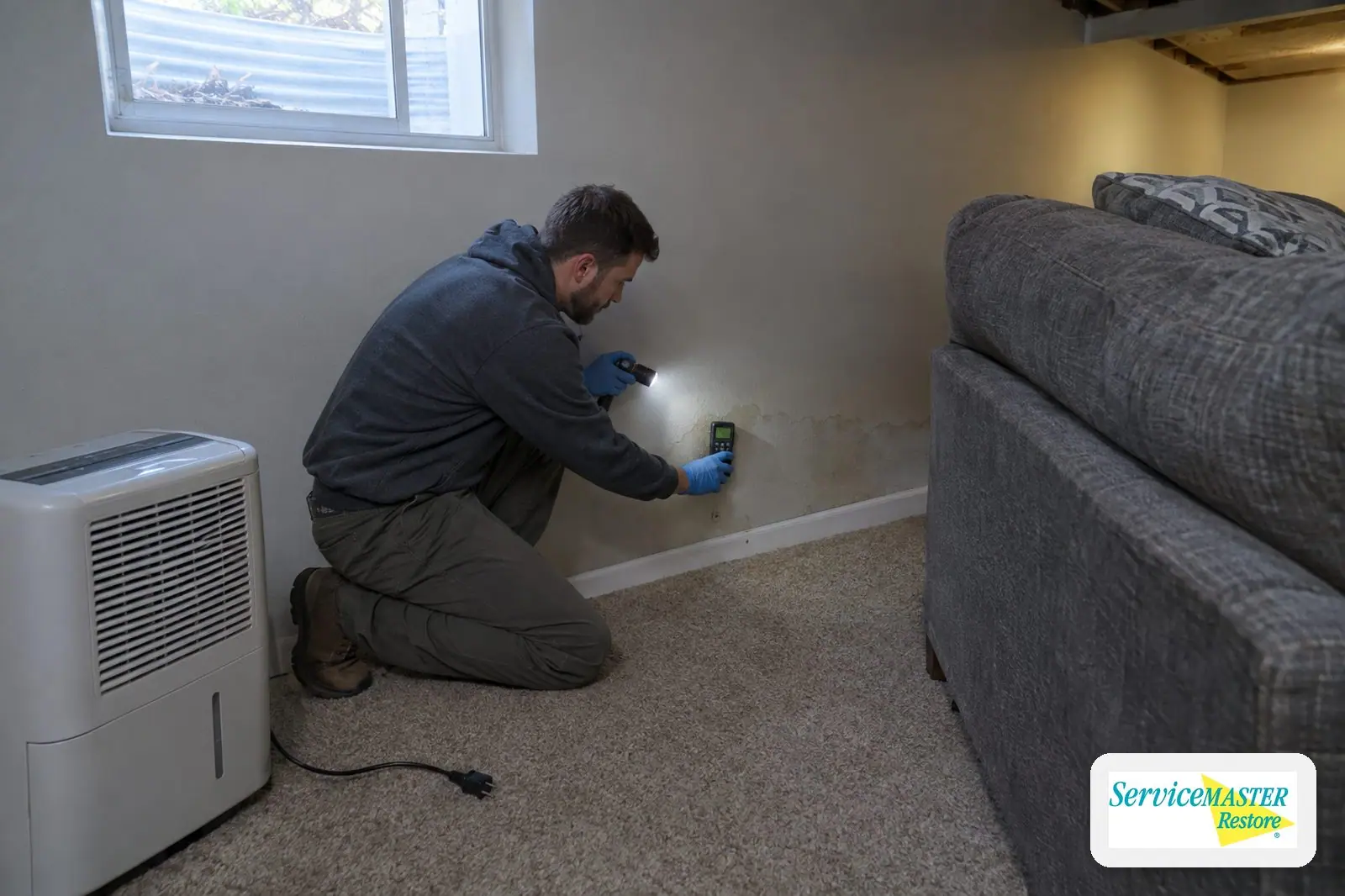
Mold does not need light to grow. Inside a wall it can spread across the back of the drywall paper, the studs and the insulation while the painted side looks fine. EPA's Brief Guide to Mold, Moisture and Your Home lists "the back side of dry wall, wallpaper, or paneling" among the places mold hides. You usually find it by putting several small clues together, then confirming with the right tools before anyone starts cutting.
Warning signs on the outside of the wall
No single sign proves mold is there. Two or three together, especially near a known water source, are worth taking seriously.
| What you notice | What it can mean |
|---|---|
| A musty smell with no mold in sight | EPA says you may suspect hidden mold if a building smells moldy but you cannot see the source |
| Yellow or brown stains, rings or dark spots | Water has reached the wall at some point; growth may be on the back side |
| Bubbling, cracking or peeling paint or wallpaper | Moisture is pushing through from behind |
| Soft, swollen or crumbling drywall, or lifting tape seams | The gypsum or paper has stayed wet long enough to weaken |
| Warped baseboards or trim | Water has wicked up from the floor or run down inside the cavity |
| A past leak in that wall: plumbing, a window, the roof or a bathroom on the other side | Material that was never fully dried is a common place for mold to start |
| People reporting symptoms after water damage | EPA lists health complaints after water damage as a reason to suspect hidden mold |
Walls that share a bathroom, kitchen, laundry room or exterior wall with poor drainage deserve a closer look, as do lower walls in a basement that has flooded.
Tools that check without tearing walls open
Professionals confirm what is going on before they open a wall. EPA's mold course chapter on finding mold and moisture describes the main tools.
- Moisture meters. EPA notes that many investigators "use moisture meters to find wet areas where mold may be growing." Readings taken along the bottom of the wall and around fixtures show where water is, or was recently.
- Thermal imaging cameras. These show temperature differences on the wall surface. Damp areas often read cooler, so a thermal image helps decide where to take meter readings. A thermal image alone does not confirm moisture or mold.
- Borescopes. EPA says some investigators use a borescope, a small camera on a flexible probe, "to look for mold growth behind walls without significantly damaging the drywall." It fits through a small hole that is easy to patch.
One caution from the same EPA course: paint on the back of drywall or wood can look like mold growth. That is one reason a trained eye matters before you decide how much wall to remove.
Opening a wall can release a burst of spores
Cutting into a wall or peeling off wallpaper is where hidden mold becomes a problem for the rest of the house. EPA warns that removing wallpaper "can lead to a massive release of spores if there is mold growing on the underside of the paper," and its mold course says that disturbing moldy areas "may spread mold throughout the building."
That is why EPA suggests considering an experienced professional when you suspect hidden mold. A proper investigation uses plastic containment around the work area, HEPA air filtration to capture airborne spores, and protective gear for the person doing the work. Our page on containment and HEPA air filtration shows how that setup works in a home.
If you decide to take a small look yourself, wear an N-95 respirator, gloves and goggles, keep others out of the room, and stop as soon as you see growth.
Do you need a mold test?
Often not. The CDC's mold guidance says "CDC does not recommend mold testing," and EPA's course says that when mold can be seen, sampling is usually unnecessary. EPA also notes that no federal limits have been set for mold or mold spores, so a lab number cannot tell you whether a level is acceptable.
Hidden mold is the case where sampling can sometimes help, for example when the clues are mixed and you want to know whether a wall cavity has growth before opening it. EPA says sampling "should be conducted by professionals who have specific experience in designing mold sampling protocols." Ask anyone offering a test what question the results will answer and how they will change the plan. Our mold inspection and assessment relies mainly on a visual survey, moisture readings and the building's history rather than lab tests.
Next steps once you know
If the evidence points to mold inside the wall, the order of work matters more than the product used.
- Find and fix the moisture source, whether that is a supply line, drain, window flashing, roof leak or condensation.
- Set up containment and HEPA air filtration around the affected wall.
- Remove moldy drywall and insulation, cutting back past the visible growth and the wet area.
- Clean the studs and framing, then HEPA-vacuum the work area.
- Dry the cavity and confirm with moisture readings before closing it up.
- Rebuild with new insulation, drywall and paint.
Professional remediation follows ANSI/IICRC S520, the industry standard that describes the procedures and precautions for mold remediation in homes and other buildings. If you are weighing a quick cleanup against full remediation, our guide to mold removal versus mold remediation explains the difference, and our article on black mold health risks and signs covers when health symptoms should change your timeline.
When to call a professional
Call when a wall smells musty and you cannot find the source, when meter readings stay high after a leak was fixed, or when you expect to open more than a small section. Our team in Lisle has helped homes and businesses in DuPage and Will County for more than 20 years. IICRC-certified technicians handle inspection, containment, removal and drying, and we can help with the insurance claim. For mold remediation or an inspection, call (630) 241-1111, 24/7.
More questions
Can mold grow inside a wall without a leak?
Yes. Condensation is the usual cause. Warm, humid indoor air meeting a cold exterior wall, cold water pipes or an uninsulated spot can keep the inside of a wall damp. Bathrooms without working exhaust fans and basements with high humidity are common examples.
Is a musty smell always mold?
Not always, but it is a sign of moisture worth checking. EPA's mold course says moldy or musty odors should alert an investigator to the possible presence of mold. Damp carpet, a dry floor drain trap or stored wet items can smell similar, so look for a water source and take moisture readings before deciding.
Will mold behind drywall eventually show through?
Sometimes, as stains, dark spots or paint failure, but not always. Mold can grow on the back of drywall paper for a long time without reaching the front, especially if the wall has a vapor-resistant paint or wallpaper. Waiting for it to appear lets the problem grow.
Does all the drywall have to come out if mold is found?
No. Usually only the affected sections are cut out, along with a margin of material around the growth and any area that stayed wet. Studs and other solid framing can often be cleaned and dried rather than replaced.