What is routine house cleaning?
Routine house cleaning is recurring service, usually weekly or every two weeks, that keeps a home at a steady baseline. Each visit repeats the same core tasks: dusting reachable surfaces, cleaning kitchens and bathrooms, vacuuming and mopping floors, and wiping high-touch spots, so dirt and allergens never get the chance to build up.
What gets cleaned on a weekly or biweekly visit?
A recurring visit is defined by consistency. The checklist stays the same each time, so nothing drifts. Here is what a typical room-by-room routine covers.
Kitchen
- Counters, backsplash and the outside of appliances wiped down
- Sink and faucet scrubbed and rinsed
- Stovetop and microwave interior cleaned of fresh spills
- Cabinet fronts spot-cleaned around handles
- Floor vacuumed and mopped
Bathrooms
- Toilet cleaned inside and out, including the base and flush handle
- Sink, counter and mirror cleaned
- Tub and shower surfaces wiped to slow soap scum
- Floor cleaned, with attention to the area around the toilet
Bedrooms and living areas
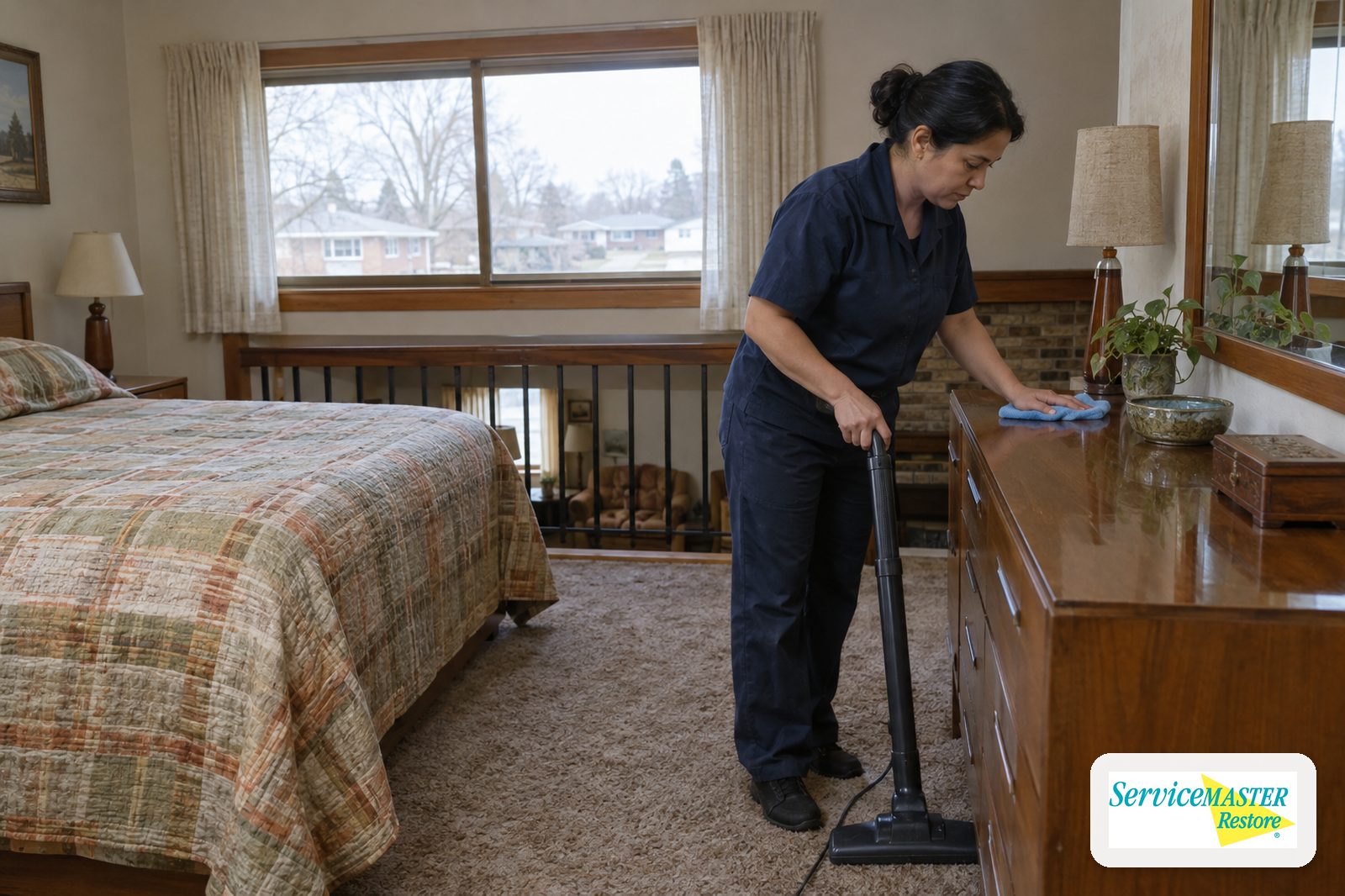
- Dusting of shelves, dressers, tables, lamp bases and window sills
- Upholstered furniture vacuumed, especially where pets sit
- Beds made or linens changed when fresh sheets are left out
- Carpets and rugs vacuumed; hard floors damp-mopped
Entries and halls
- Light switches, door handles and railings wiped
- Entry mats shaken or vacuumed and floors cleaned of tracked-in grit
Top to bottom, dry to wet
Order matters in a routine clean. Dusting comes before vacuuming, so anything knocked loose lands on floors that are about to be cleaned. Dry work comes before wet work, because wiping a damp counter and then dusting a shelf above it drops lint back onto the clean surface.
Following the same sequence every visit is what makes a recurring clean efficient instead of rushed.
How often should each household task happen?
The American Cleaning Institute (ACI), the trade group for the cleaning-products industry, publishes a home cleaning routine broken into daily, weekly, monthly, seasonal and yearly tasks. It is a useful way to see where a weekly visit fits and what still needs a separate plan.
| Frequency | Tasks ACI lists | Who usually handles it |
|---|---|---|
| Daily | Clean high-touch surfaces, quick sweep of high-traffic areas, wipe kitchen counters and tables after meals, put away clutter | Household |
| Weekly | Vacuum or mop floors in all rooms, dust shelves and furniture, clean bathroom sinks, counters, mirrors and toilets, clean out the fridge, change bed linens and towels | Routine cleaning visit |
| Monthly | Clean kitchen appliances and cabinet fronts, dust light fixtures and blinds, wash windows and mirrors, wash blankets and comforters | Rotating add-on to routine visits |
| Seasonal | Wash curtains, windows and screens, wash shower curtain, launder pillows | Seasonal clean |
| Yearly | Clean rugs, upholstery and mattresses; deep clean rooms including ceiling fans, walls and baseboards | Deep clean |
Source: American Cleaning Institute, Home Cleaning Routine (updated 2026). "Who usually handles it" is our general guidance, not part of the ACI list.
Many households rotate one monthly task into each routine visit, such as blinds one week and cabinet fronts the next, so nothing waits a full year.
Does routine cleaning help with dust and allergens?
It can reduce them. According to the Asthma and Allergy Foundation of America (AAFA), dust mites live in nearly every home, no matter how clean, and the bedroom usually has more of them than anywhere else. Their body parts and waste are allergens for many people.
AAFA recommends vacuuming weekly with a HEPA-filter vacuum, washing bedding in water that is at least 130°F, and keeping indoor humidity between 30 and 50 percent. The EPA's asthma trigger guidance gives similar advice: vacuum carpets and furniture every week and wash bedding in hot water once a week. A weekly cleaning schedule lines up with both.
If someone in the home is allergic, AAFA suggests they wear an N95 mask when dusting or vacuuming, or let someone else do it.
What makes a HEPA vacuum different
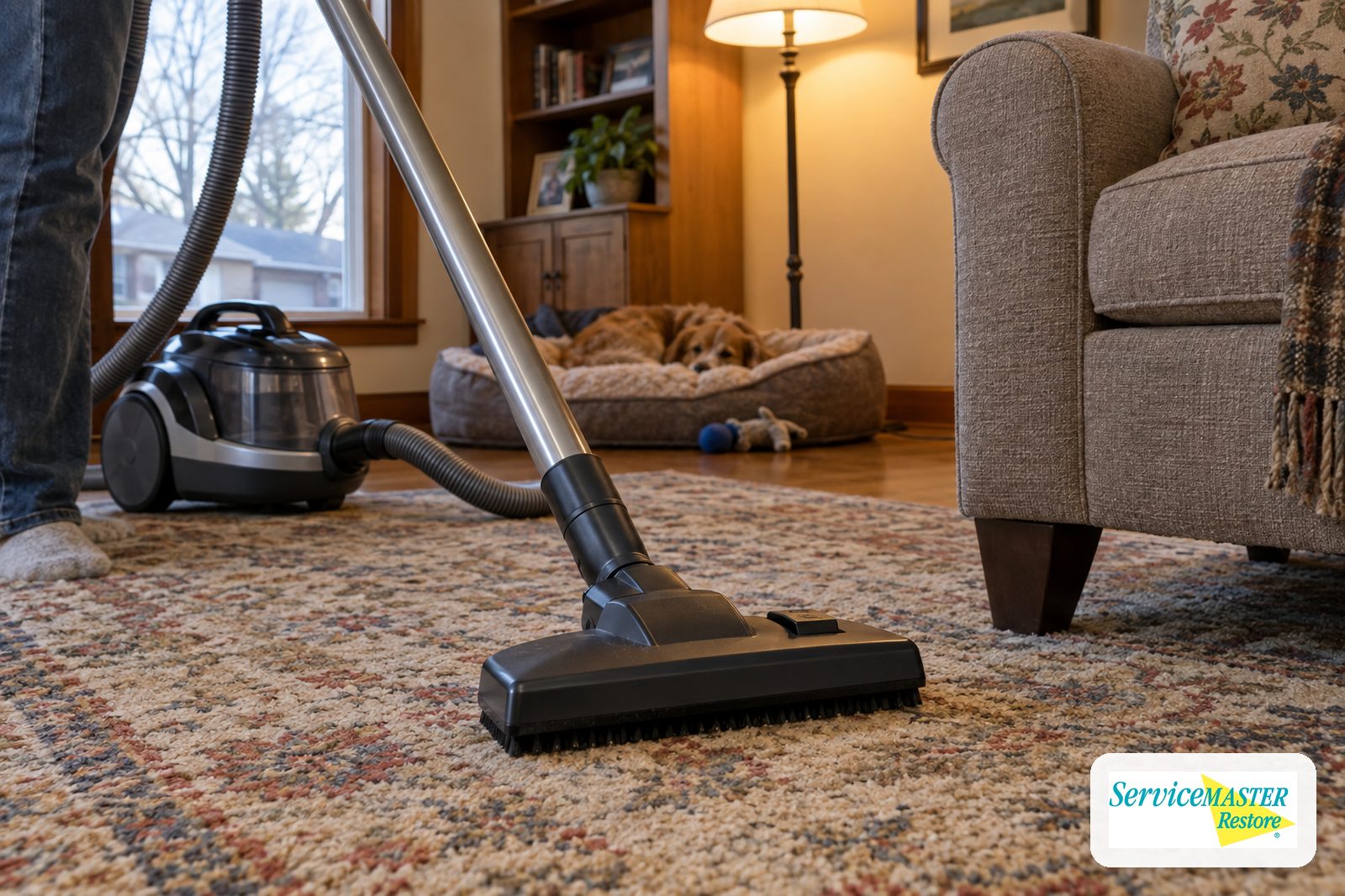
HEPA describes a filter standard, not a brand. The EPA explains that a HEPA filter can theoretically remove at least 99.97 percent of dust, pollen, mold, bacteria and other airborne particles at 0.3 microns, the particle size that is hardest to catch.
In practice, that means fine dust stays in the machine instead of drifting back onto the shelves you just cleaned. Emptying the bin outdoors and replacing filters on schedule keeps it working.
How is routine cleaning different from deep cleaning?
Routine cleaning maintains. Deep cleaning resets. A weekly visit handles the surfaces that get dirty every week, while a deep clean reaches baseboards, inside the oven and refrigerator, grout lines and vent covers that build up over months.
If a home has gone a long stretch without a thorough clean, starting with a deep clean and then moving to recurring service usually gives better results than asking routine visits to catch up. Homes that need extra attention in just two rooms may do better with focused kitchen and bathroom cleaning, and spring or holiday resets fit seasonal or one-time cleaning.
How does recurring service get set up?
Setting up routine cleaning well is mostly about agreeing on priorities before the first visit. The common industry approach looks like this:
- Walkthrough. Rooms, floor types and surfaces that need special care are noted, along with pets and access.
- Priority list. The household names the tasks that matter most, so limited visit time goes where it counts.
- Frequency choice. Weekly or biweekly is set based on traffic, pets and allergies, with a plan to review it after a few visits.
- Consistent checklist. The same room sequence is followed every visit so results are predictable.
- Rotating extras. Monthly tasks such as blinds or appliance fronts are scheduled into visits on a rotation.
- Periodic review. The plan is adjusted as seasons, schedules or household size change.
Older homes and household dust
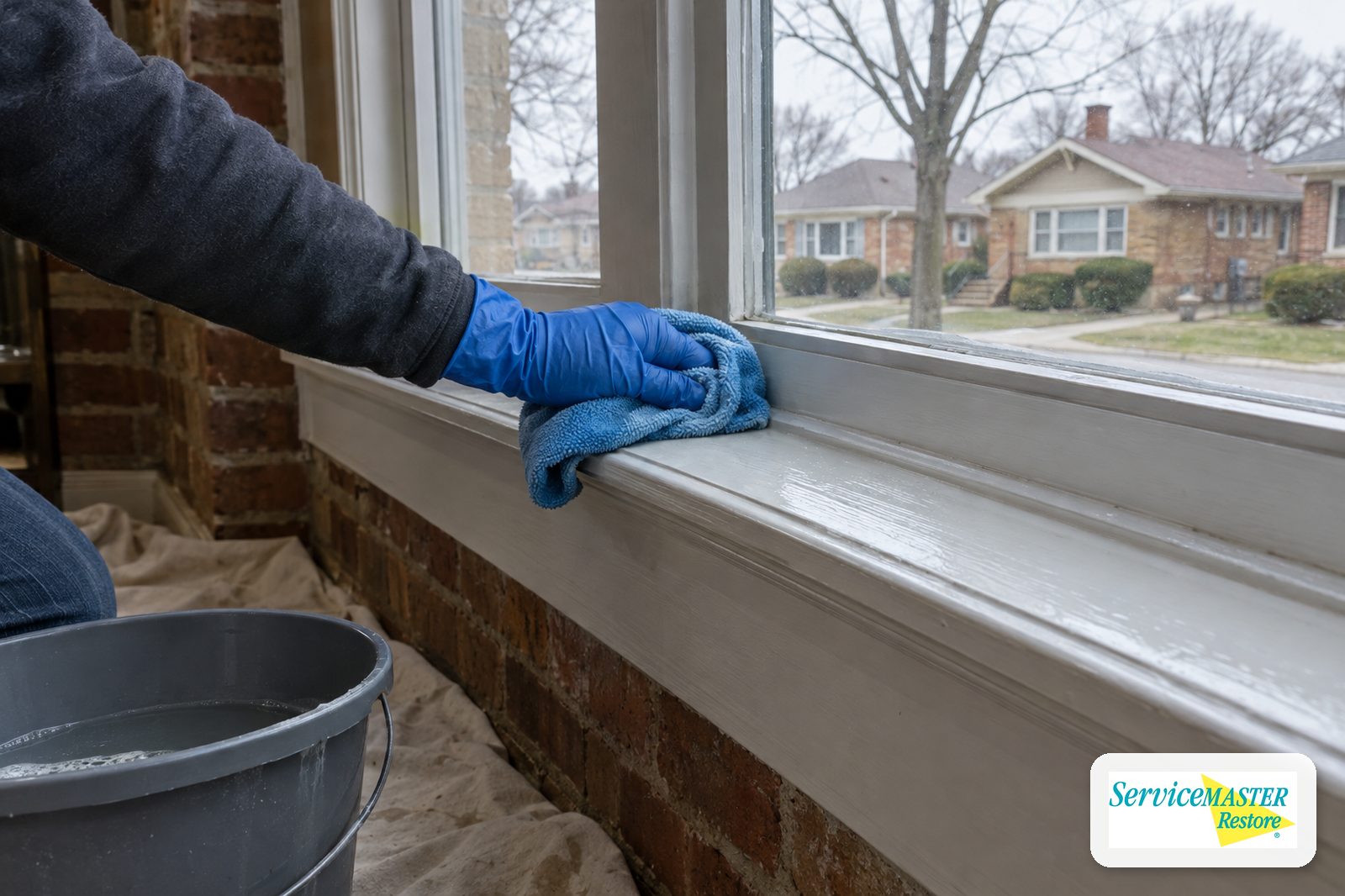
In homes painted before 1978, dust can carry lead from old paint. The EPA notes that dust from lead-based paint used before 1978 is the most common cause of lead exposure, and recommends cleaning weekly with a clean, wet or damp cloth, sponge or mop to minimize dust.
Damp wiping of sills and floors is a standard part of a routine visit, and it fits this guidance well. Peeling paint itself is a repair issue, not a cleaning task.
Routine house cleaning in DuPage and Will County
Recurring service matters most in the months when Chicago-suburb homes stay closed up. From late fall through early spring, windows stay shut, furnaces run, and road salt and slush come in on boots. Weekly floor care at the entry keeps grit from grinding into hardwood.
We provide routine cleaning from our Lisle base as part of our residential cleaning services, including homes covered by our pages for cleaning services in Glen Ellyn, Lombard, Westmont and Darien. See the full cleaning services overview or our home guides and resources for more.
Ready to set a schedule? Contact us or call (630) 241-1111 to set up weekly or biweekly cleaning for your home.
Frequently asked questions
Is weekly or biweekly house cleaning better?
It depends on how quickly your home gets dirty. Weekly service suits homes with pets, young children, allergies or someone working from home all day. Biweekly works for smaller households with lighter traffic. EPA and AAFA both describe weekly vacuuming as part of allergen control, so allergy-prone homes often lean weekly.
Does routine cleaning include laundry or dishes?
Policies differ between companies, so ask before the first visit. Most recurring visits focus on surfaces, bathrooms, kitchens and floors. Some include changing bed linens when fresh sheets are left out or loading a dishwasher on request. Agreeing on these extras in writing avoids surprises and keeps visit time predictable.
What should I do with pets during a recurring cleaning visit?
Keep pets in a closed room, crate or yard during the visit when possible. That keeps doors from being left open, protects pets from cleaning products while surfaces are wet, and lets vacuums and mops reach every floor. Let the cleaner know which room to skip so the pet stays calm.
Can routine cleaning reduce dust mites in bedrooms?
It can help, but no cleaning schedule removes them entirely. AAFA says dust mites live in nearly every home no matter how clean. Weekly HEPA vacuuming, washing bedding in water at least 130°F, allergen-barrier covers on mattresses and pillows, and indoor humidity between 30 and 50 percent together reduce exposure.
Will the same checklist be followed every visit?
That is the point of routine service. A consistent room order and task list makes results predictable and makes it easy to spot anything missed. Ask the company to note your priorities on the checklist and to rotate monthly tasks such as blinds or cabinet fronts into visits on a set schedule.
Sources
- American Cleaning Institute: Home Cleaning Routine
- Asthma and Allergy Foundation of America: Dust Mite Allergy
- U.S. Environmental Protection Agency: Asthma Triggers: Gain Control
- U.S. Environmental Protection Agency: What is a HEPA filter?
- U.S. Environmental Protection Agency: Learn about Lead