
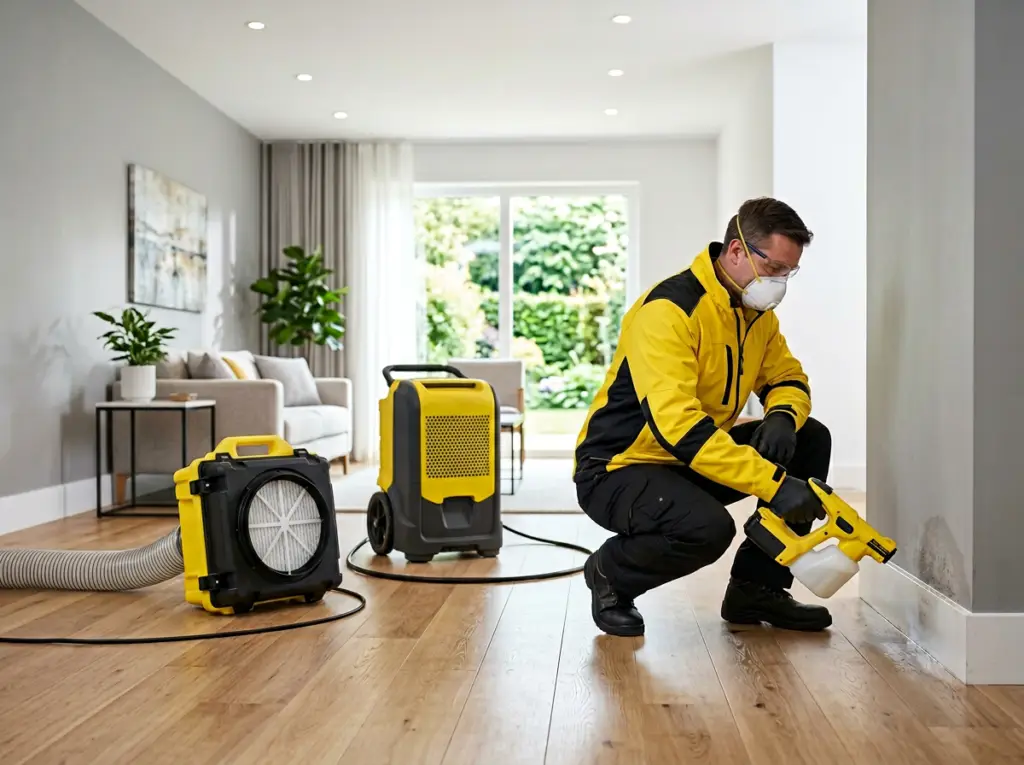

Why does my house smell musty after a leak?
A musty smell after a leak almost always means something is still damp. Wet carpet pad, drywall or insulation is holding moisture, and growth may be starting. The EPA lists a moldy smell with no visible source as a reason to suspect hidden mold. Find and dry the wet material first; deodorizing without drying only masks it.
Homeowners often call us a week or two after a leak was "cleaned up" because the basement or a bathroom has started to smell. The visible water is gone, but the odor says the job isn't. This page explains what that smell is telling you, what can be saved, why sprays and ozone machines aren't the answer, and how to keep mold from following water damage.
Does a musty smell always mean mold?
Not always, but it always means moisture. Damp carpet pad, a wet sump pit, a slow drain leak or condensation behind furniture can all smell musty before any growth is visible. The smell is a reason to look, not a diagnosis.
The EPA's guide to mold, moisture and your home says you may suspect hidden mold if a building smells moldy but you can't see the source. It names the usual hiding places: the back side of drywall, wallpaper or paneling, the top of ceiling tiles, the underside of carpet and pad, inside walls around leaking or condensing pipes, behind furniture and inside ductwork.
Don't tear into it blindly
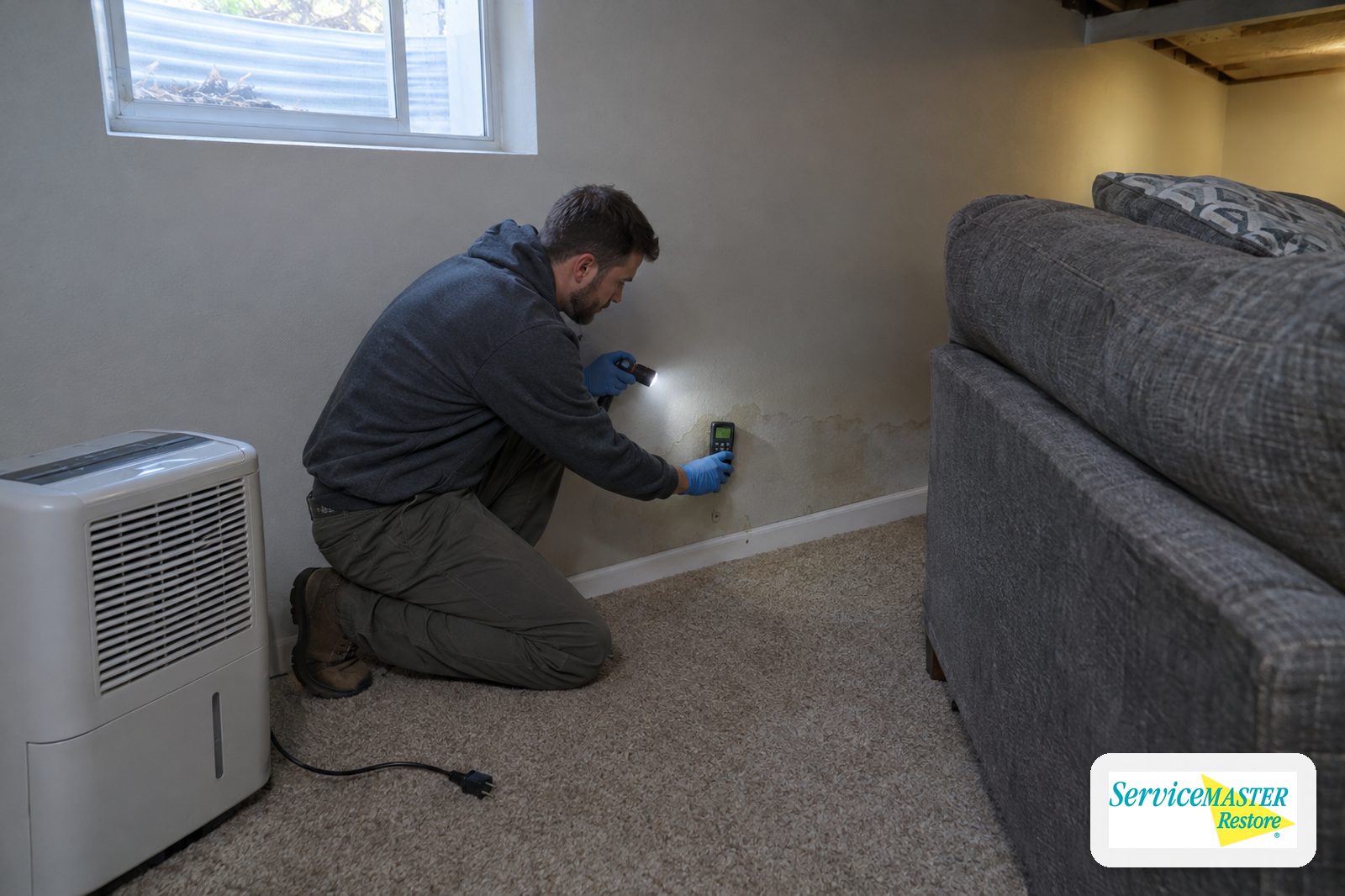
The EPA cautions that investigating hidden mold can release spores. Peeling back wallpaper with mold on its underside, for example, can cause a large release. If you suspect hidden growth, consider an experienced professional for a mold inspection and assessment.
Moisture meters help here too. A wall that reads wet behind a musty smell narrows the search before anything is opened.
What can be dried, cleaned or thrown away after water damage?
The EPA publishes a practical table for responding to water damage within 24 to 48 hours, before mold starts. It was written for schools and commercial buildings, and the EPA says it applies to other building types.
| Material | EPA-recommended action |
|---|---|
| Carpet and backing | Extract water, dehumidify and speed drying with fans; dry within 24–48 hours |
| Wallboard (drywall) | May be dried in place if there is no obvious swelling and seams are intact; otherwise remove and replace |
| Ceiling tiles | Discard and replace |
| Fiberglass or cellulose insulation | Discard and replace |
| Upholstered furniture | Extract and dry; may be hard to dry within 48 hours, so consider a specialist for valuable pieces |
| Wood surfaces | Remove moisture immediately; dry with dehumidifiers, gentle heat and fans, with caution on hardwood floors |
| Books and papers | Discard non-valuable items; freeze or freeze-dry valuable ones |
Two notes in the EPA table matter at home. These actions are for clean water only; sewage or other contaminated water calls for protective equipment, containment and experienced professionals. And if materials stayed wet longer than 48 hours or mold is already growing, the cleanup becomes remediation.
Is cleaning the same as sanitizing in a home?
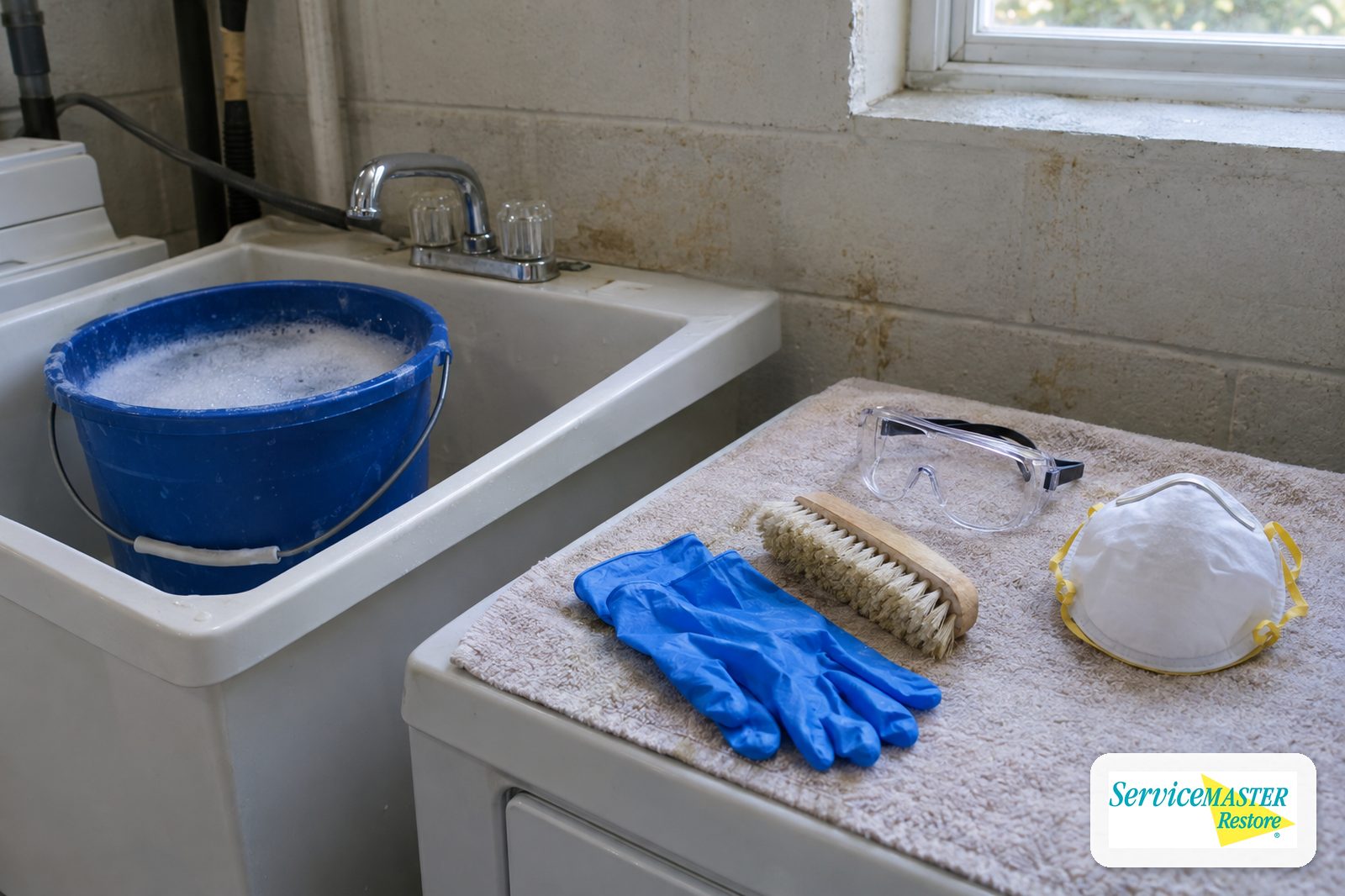
No. Cleaning removes soil, residue and much of what grows on it. Sanitizing reduces the microorganisms left behind. For mold, cleaning is what counts: the EPA advises scrubbing mold off hard surfaces with detergent and water and drying completely, and says porous items such as ceiling tiles and carpet may have to be thrown away once moldy.
Go easy on the bleach
The EPA says killing mold with bleach or another biocide is not recommended as a routine part of mold cleanup, because dead mold can still cause allergic reactions. If you do use a disinfectant, ventilate the room, and never mix bleach with cleaners that contain ammonia, which can produce toxic fumes.
Also from the EPA: don't paint or caulk over moldy surfaces; paint applied over mold is likely to peel. Commercial antimicrobial rules are covered on our sanitizing and moisture control page.
Why won't air fresheners or ozone fix the smell?
They don't remove the source. Fragrance covers odor for hours, and the musty smell returns as long as something stays wet. Ozone generators are often sold as the answer, but the EPA's review of ozone generators sold as air cleaners found that at levels within public health standards, ozone is not effective at removing many odor-causing chemicals and does not effectively remove mold or bacteria. Inhaled ozone can also damage the lungs.
Lasting odor control follows a sequence: remove wet, contaminated materials, clean, dry, and only then deodorize what remains. Our odor removal and air quality treatment service handles that last step.
How do you prevent mold after water damage?
Speed and humidity. The EPA says that if wet materials are dried within 24 to 48 hours of a leak, in most cases mold will not grow, and recommends keeping indoor humidity below 60 percent, ideally 30 to 50 percent.
- Stop the water. Fix the leak or source; drying a space that keeps getting wet doesn't work.
- Dry within 24–48 hours. Extraction and structural drying start as early as possible.
- Remove what can't be saved. Wet insulation, ceiling tile and swollen drywall come out, per the EPA table above.
- Clean surfaces. Detergent and water on hard surfaces; HEPA vacuuming of dust and debris.
- Sanitize where water was contaminated. Registered products, used per label, on surfaces touched by Category 2 or 3 water.
- Deodorize last. Odor treatment after the source is gone, not instead of removing it.
- Confirm and monitor. The EPA says visible mold and moldy odors should not be present once cleanup is finished; check humidity for the following weeks.
When the smell means it's already mold
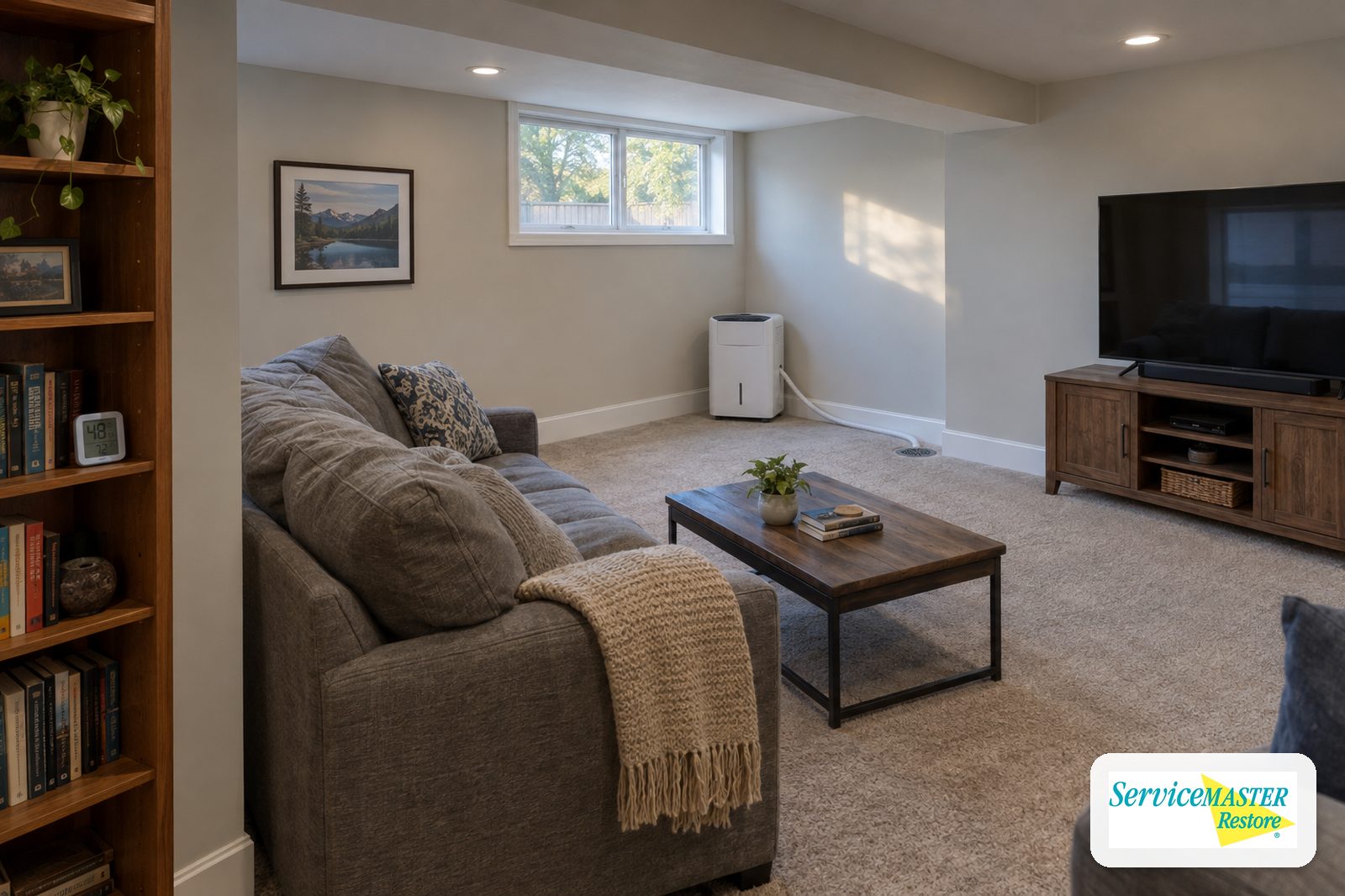
If growth covers more than about 10 square feet, the EPA points to professional remediation guidance, and where mold is found or suspected during a water job, the IICRC refers restorers to the ANSI/IICRC S520 mold remediation standard (2024 edition), as noted in its S500 position statement. That is residential mold remediation.
On health, the EPA says mold may cause allergic reactions in sensitive people and can irritate the eyes, nose, throat and lungs; our guide to black mold health risks and signs explains more.
Musty basements are common in the finished lower levels of homes in Lombard, Glen Ellyn and Westmont. From our Lisle base, certified technicians serve homes across DuPage and Will County as part of our residential water damage restoration and water damage restoration services, including after a burst or leaking pipe.
Not sure what you're smelling? Ask our team, or call 24/7 at (630) 241-1111.
Frequently asked questions
How soon after a leak can mold start to grow?
The EPA's working rule is 24 to 48 hours: if wet materials are dried within that window, in most cases mold will not grow. The EPA also notes it is only a guideline, since growth does not always occur after 48 hours and can sometimes occur sooner. That is why drying should start the same day a leak is found, especially in warm weather or in finished basements.
Can I just spray bleach or vinegar on the musty spot?
Spraying rarely fixes a musty smell because the moisture causing it is usually inside the material. The EPA does not recommend killing mold with bleach or other biocides as a routine step, since dead mold can still cause allergic reactions. Its advice is to fix the moisture, scrub hard surfaces with detergent and water, dry completely, and discard porous items such as moldy ceiling tile or carpet.
Do ozone machines get rid of musty odors?
Not reliably, and they carry risks. The EPA reports that at concentrations within public health standards, ozone is not effective at removing many odor-causing chemicals and does not effectively remove mold or bacteria. Inhaled ozone can damage the lungs and worsen asthma. Removing and drying the wet material, then cleaning, does more for odor than any machine running in an occupied home.
How do I know the cleanup is really finished?
The EPA offers a checklist: the water or moisture problem is completely fixed, mold has been removed, and visible mold and moldy odors are no longer present. A revisit shortly after cleanup should show no new signs of water damage or growth, and people should be able to use the space without health complaints. Staining may remain, which is cosmetic.
Can I clean a small patch of mold myself?
Often, yes. The EPA says that if the moldy area is less than about 10 square feet, roughly a 3-by-3-foot patch, most people can handle it by following its guidelines. Wear gloves, goggles without vents and an N-95 respirator. Larger areas, mold after sewage or contaminated water, mold in HVAC systems, or health concerns in the household are reasons to call a professional.
Sources
- U.S. EPA: A Brief Guide to Mold, Moisture and Your Home
- U.S. EPA: Mold Remediation in Schools and Commercial Buildings, Table 1: Water Damage - Cleanup and Mold Prevention
- U.S. EPA: Ozone Generators that are Sold as Air Cleaners
- IICRC: Category of Water Damage and Weather-related Events (S500 Consensus Body Position Statement, 2026)
- IICRC: ANSI/IICRC S520 Standard for Professional Mold Remediation